Bill Clinton

nkralev on February 7th, 2011

President Obama is very smart and highly intelligent man who knew more about the world than most presidential candidates do before taking office. So why did he appoint a political ambassador whose tenure has been nothing short of a disgrace, just because she was a significant contributor to his election campaign?

There are some excellent political appointees, but Cynthia Stroum, ambassador to Luxembourg, wasn’t one of them. She was forced to resign last week, following a scathing report of her management style and the damage she did to her embassy by the State Department’s Office of the Inspector General (OIG).

I’ve covered the department for a decade and have rarely seen such a categorical, pointed and harsh document. Obama has every reason to be embarrassed.

“Most employees describe the ambassador as aggressive, bullying, hostile and intimidating, which has resulted in an extremely difficult, unhappy, and uncertain work environment,” the OIG report said after a two-month investigation last fall. “The bulk of the mission’s internal problems are linked to her leadership deficiencies, the most damaging of which is an abusive management style.”

Since Stroum assumed her post in December 2009, “most of the senior staff, including two deputy chiefs of mission (DCM) and two section chiefs, has either curtailed or volunteered for service in Kabul and Baghdad. Other U.S. staff members have also departed early,” the OIG said. “Of the seven permanent and temporary staff who served” as DCM, “only one has remained for longer than 6 months.”

Many ambassadors and their wives indulge in costly renovations of their residences, but Stroum apparently went too far. The OIG “believes that too many of the limited resources of this embassy have been allocated to issues related to her personal support,” the report said.

During a six-week period in 2010, an embassy employee spent 80 to 90 percent of his time searching for a temporary residence for Stroum. “In late summer, he and several other staff members, as well as the management officer, spent several days locating and purchasing an umbrella” for the ambassador’s new patio, it said.

Most career diplomats — and many others — think the practice of awarding campaign donors with ambassadorships, which began in the Kennedy administration, should be ended. The infamous WikiLeaks cables showed the general public how complex and intricate the work of U.S. diplomats is. Why do people think that anyone can do it? Would you let someone operate on you if they don’t have the necessary medical training?

In July 2009, I broke a story that the White House, unaware of historic norms, had been on track to give more than the usual 30 percent of ambassadorial posts to political appointees until objections from career diplomats forced it to reconsider. Overall, that number still holds, but according to a list of ambassadors maintained by the American Foreign Service Association (AFSA), so far Obama has appointed 60 percent career and 40 percent political ambassadors.

Although campaign fund-raising is not a sufficient qualification for being a U.S. ambassador, there is a case to be made that political appointees are useful from time to time. I’ve met several good ones over the years, including Howard Baker, a former Republican senator and White House chief of staff under President Reagan, who was President George W. Bush’s ambassador to Japan.

Even Foreign Service officers say that they need an outsider’s point of view and a fresh perspective on things every once in a while. Someone with Baker’s political skills, stature and connections in Washington can actually be a huge asset to an embassy and the country where he serves.

On the other hand, Stroum wasn’t quite qualified for the job — even in tiny Luxembourg — but it seems the White House didn’t much care about that. She is by no means the only one. Bush’s ambassador to Trinidad and Tobago, Roy L. Austin, was the subject of two OIG reports. Before his appointment, Austin was a sociology professor at Pennsylvania State University — but his best achievement was that he befriended Bush when both studied at Yale University. He changed five DCMs during his tenure, but amazingly he survived all the eight years of the Bush administration.

So while I don’t expect political ambassadors to disappear, the White House should take their appointment much more seriously and consider their knowledge and skills before they start acting like kings and queens around the world.

RETURN TO MAIN DIPLOMACY PAGE

Related stories:

Political ambassadorships hold at 30%

Career diplomats protest Obama appointments

Diplomats in the news for wrong reasons

Foreign Service: America’s other army

Continue reading about Why are political ambassadors tolerated?

nkralev on May 7th, 2010

A pushback from the military and a skeptical secretary of defense have dashed the hopes of some Obama administration officials for closer cooperation with a global war-crimes tribunal that some fear could prosecute American service members, current and former U.S. officials say.

Although the United States has rejoined the meetings of the International Criminal Court (ICC) member states after an eight-year absence, it has taken little new action to work more closely with the court.

In fact, many international legal analysts argue that there was a more significant change in U.S. policy toward the ICC from the first to the second term of President George W. Bush than there has been since President Obama took office last year…

Continue reading about Obama keeps distance from tribunal

nkralev on March 3rd, 2010

It was well past the official close of business at NATO headquarters in Brussels on September 11, 2001, but the chamber of the North Atlantic Council, the alliance’s political decision-making body, was anything but dark and quiet.

Hours after the terrorist attacks in New York and suburban Washington, Secretary-General George Robertson had gathered the ambassadors from all 19 member states to discuss how the events that were still unfolding live on television affected the organization and what NATO might do in the immediate aftermath.

“After the meeting, the Canadian ambassador, David Wright, took me aside to ask if Article 5 should be considered,” Nicholas Burns, the U.S. ambassador, recalled last week, referring to a clause in the 1949 Washington Treaty that created the alliance that says an attack on one member is an attack on all…

Continue reading about Diplomacy adapts to new threats

nkralev on March 2nd, 2010

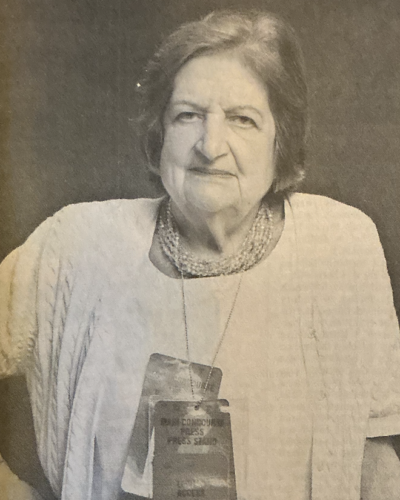
Helen Thomas hoped in vain that her 80th birthday on August 4 — a date she shares with the British Queen Mother and Yasser Arafat, the Palestinian leader — would pass unnoticed. “I don’t want anyone to know,” she said. “I don’t see why people have to be stamped by their age — that’s prejudice.”

But nothing made her angrier than the “congratulations” she received on her “retirement”, when she announced in May that she was leaving her front-row seat in the White House press room, where she had reported on eight presidents for United Press International (UPI) over four decades. She was simply changing jobs, and is now a columnist for Hearst Newspapers, the US chain that owns dozens of publications, including the Houston Chronicle and the San Francisco Examiner…

Continue reading about ‘It’s not how old you are’

nkralev on March 1st, 2010

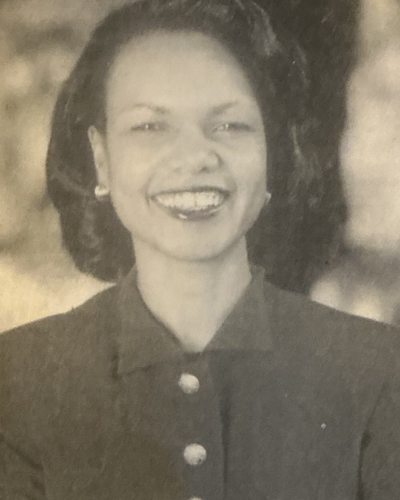
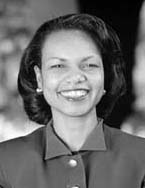
Condoleezza Rice has rarely heard a question she doesn’t know how to answer, from queries about her tumultuous childhood in segregated Alabama to her success in the male world of superpower politics, nuclear weapons and arms control.

She meets me with the friendly smile and easy hospitality of a west-coaster, defying the image of someone anointed by Washington insiders to become the most powerful woman in the world in a year. The chief foreign policy adviser to Republican presidential candidate George W. Bush, Rice is being tipped as a likely secretary of state or national security adviser should Bush win the White House.

As huge a task as this sounds, Rice’s own life story has the word “amazing” written all over it. At 45, she has been the first black woman in just about any job she’s taken on: from special assistant for national security affairs to President George Bush when she was only 34, to provost of California’s prestigious Stanford University (the Harvard of the west coast) where she managed a budget of nearly $2bn…

Continue reading about Political punch in a package of charm