Carol Hazzard was a 20-year-old secretary at the University of Buffalo in 1969, but the life she dreamed about was far removed from the monotony of upstate New York. “My only goal in life was to travel and see the world,” she recalled recently.
One night, her mother asked her to go to the corner grocery store for some milk, and on her way there, she ran into her old high-school basketball coach, who was working as a flight attendant for Eastern Airlines.
Ms. Hazzard thought such a job would help her realize her dream of traveling. But the former coach was not enthusiastic about recommending her new profession to others. Instead, she advised Ms. Hazzard that she could see the world while continuing to work as a secretary…
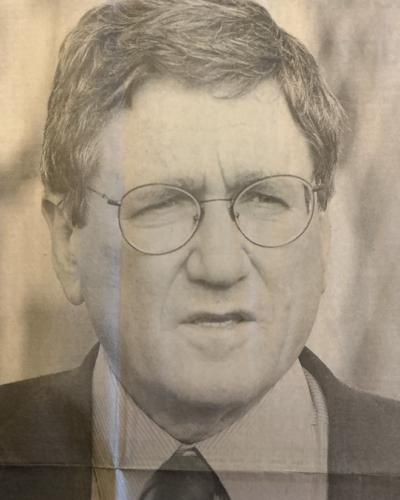
Thomas R. Pickering was a fresh college graduate in 1953 when he braved the notoriously lengthy entrance process at the State Department, prolonged even further by an ongoing investigation of suspected communists in the agency’s ranks.
Although he was offered a job earlier than he expected, Mr. Pickering by then had enrolled in the graduate program of Tufts University’s Fletcher School of Law and Diplomacy in Medford, Mass. He later left for Australia on a Fulbright scholarship to the University of Melbourne, which was followed by three years in the Navy.
So it was 1959 when the 28-year-old finally became a Foreign Service officer — or, to use the better-known term, a diplomat…
It was lunchtime on April 18, 1983, and the cafeteria of the American Embassy in Beirut was buzzing with customers. At about 1 p.m., a powerful blast tore apart the front of the seven-story building. The bomb, hidden in a van reportedly stolen from the embassy 10 months earlier, killed 63 employees, including 17 Americans.
It was the first time that a U.S. embassy had become a terrorist target, and it forever changed the way the Diplomatic Security Service (DSS), the State Department’s law-enforcement division, operates around the world.
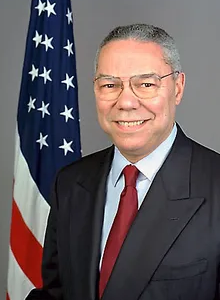
“The bombings of the embassy in West Beirut in 1983 and of the embassy annex in East Beirut in 1984 were a major catalyst for creating the Bureau of Diplomatic Security,” which oversees the DSS, said John C. Murphy, special agent in charge of Secretary of State Colin L. Powell’s protective detail and a DSS agent for 29 years…
At first glance, David T. Donahue’s experience on September 11, 2001, was not much different from that of most other Americans. “I heard the first plane had already hit the World Trade Center, and then watched the second live on television, like everybody else,” he recalled recently.
But while most Americans were at home or at work when the terrorists struck the World Trade Center and the Pentagon, Mr. Donahue was in Kabul, the capital of Afghanistan, where the plot that killed about 3,000 Americans most likely was hatched.
He had been dealing for days with the country’s Taliban regime, which had provided safe haven to Osama bin Laden and his al Qaeda network since 1996…
In September, five Americans took up assignments as English teachers thousands of miles from home, determined that, by the end of the school year, their students would not only speak some English, but know much more about the United States.
“They welcomed us with open arms,” Craig Dicker, a Foreign Service officer who helped to place the newcomers, said of the schools that hired the teachers. “They were thrilled to have Americans teach there.”
There would have been nothing exceptional about the teaching assignments had it not been for the particular schools: Islamic institutes in Indonesia that prepare teachers for the country’s large network of religious high schools, known as madrassas…
Continue reading about Cultural diplomacy pays off, envoys say