nkralev on March 10th, 2010

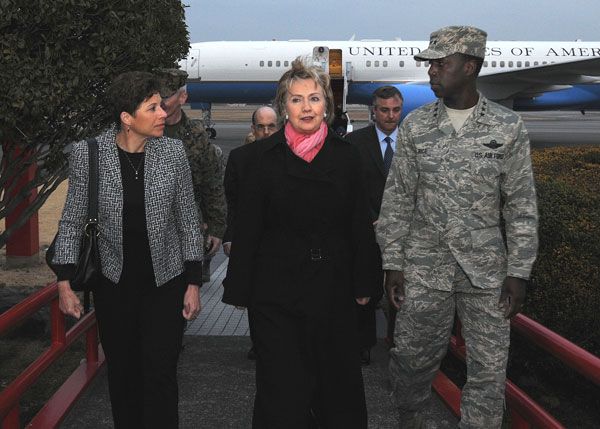
Flying more than 22,000 miles in a week filled with dozens of official meetings, public events and media interviews didn’t seem to have taken a toll on Secretary of State Hillary Rodham Clinton during her much-publicized trip to Asia. How does she do it?

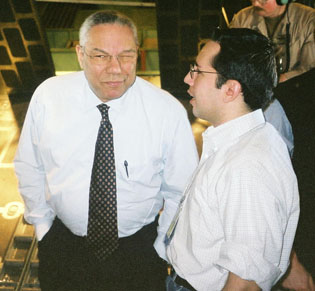
I’ve been asked the same question about three of Mrs. Clinton’s predecessors I’ve traveled with — Condoleezza Rice, Colin L. Powell and Madeleine K. Albright. My answer is always the same, but it’s not the queen-size pullout sofa in their plane’s private cabin, though having a real bed in the air certainly helps.

It’s what Mrs. Albright’s former chief of staff, Elaine Shocas, used to call the “fire in the belly”…

Continue reading about Clinton weathers job’s long flights

nkralev on March 3rd, 2010

In September, five Americans took up assignments as English teachers thousands of miles from home, determined that, by the end of the school year, their students would not only speak some English, but know much more about the United States.

“They welcomed us with open arms,” Craig Dicker, a Foreign Service officer who helped to place the newcomers, said of the schools that hired the teachers. “They were thrilled to have Americans teach there.”

There would have been nothing exceptional about the teaching assignments had it not been for the particular schools: Islamic institutes in Indonesia that prepare teachers for the country’s large network of religious high schools, known as madrassas…

Continue reading about Cultural diplomacy pays off, envoys say

nkralev on March 3rd, 2010

It was well past the official close of business at NATO headquarters in Brussels on September 11, 2001, but the chamber of the North Atlantic Council, the alliance’s political decision-making body, was anything but dark and quiet.

Hours after the terrorist attacks in New York and suburban Washington, Secretary-General George Robertson had gathered the ambassadors from all 19 member states to discuss how the events that were still unfolding live on television affected the organization and what NATO might do in the immediate aftermath.

“After the meeting, the Canadian ambassador, David Wright, took me aside to ask if Article 5 should be considered,” Nicholas Burns, the U.S. ambassador, recalled last week, referring to a clause in the 1949 Washington Treaty that created the alliance that says an attack on one member is an attack on all…

Continue reading about Diplomacy adapts to new threats