nkralev on July 2nd, 2010

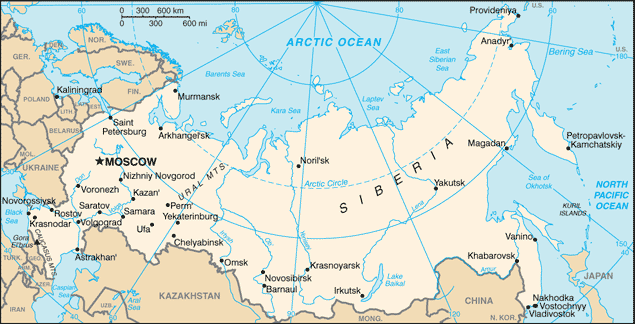
Many people, including famous ex-KGB spies, were shocked this week that Russia is still spying on the United States. Really? Did we forget that even Washington’s allies have been known to engage in such activities?

As I said in three radio and TV interviews, the real surprise in the latest case is that those people were willing to risk so much to gain so little. It appears that they sent no classified information or any other intelligence secrets to Moscow in the decade they operated.

In fact, most of the information they were tasked with collecting can be obtained in perfectly legal ways. What will President Obama’s agenda be during his trip to Russia? What will the U.S. negotiating position be on the new START treaty? Those were among the questions I was trying to answer at the time, along with my colleagues on the diplomatic beat and analysts at various think-tanks. Of course, we all wanted to know the answers before they were made public — no matter whether we intended to publish them or not.

I still don’t fully understand why the Russians had to resort to such complicated and sophisticated methods from the golden age of spying. The best explanation I could come up with is that they didn’t comprehend the rules of the U.S. policy community, or perhaps they were too paranoid to have diplomats at the embassy in Washington try to get the information they needed.

Why do you think foreign diplomats invite U.S. journalists to lunch? Sure, they have their own propaganda to spread, but they also try to learn things, since many Washington reporters are better plugged-in to U.S. policy-making and personalities than the average diplomat.

The main difference in the purpose of the Russians’ activities in this case compared to the Cold War is that, back then, they were trying to harm U.S. interests. Now their goal was to use the collected information to protect and advance Russian interests. A legitimate goal but certainly an illegitimate method to achieve it.

Continue reading about Who thought spying on U.S. was dead?
nkralev on February 25th, 2010

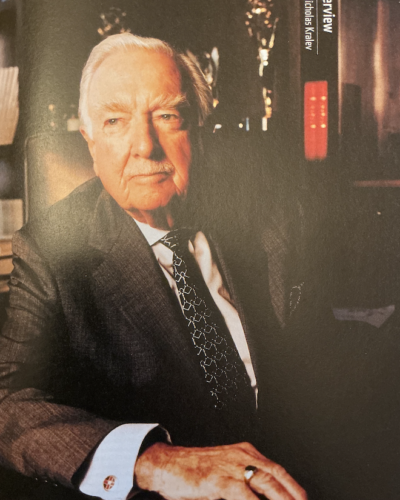
Delayed by a raging New York storm, Walter Cronkite deftly opens the door of his spacious office at the CBS Black Rock television headquarters. “Good morning!” he cheerfully greets his small staff, then adds, matter-of-factly, “But I enjoy saying ‘Good evening’ much more.”

For 19 years, this statesman of the airwaves brought the world into the living rooms of millions of Americans. And, though he stepped down from the “CBS Evening News” in 1981, he remains “the most trusted man” in the US, one whom many fellow journalists call the “original anchorman”.

At 83, the silver-haired legend has allowed little of his imposing figure to succumb to ageing, and his gravelly voice still rings with authority. His schedule is as busy as ever, full of speaking engagements, interviews, high-profile events and journeys across the US and around the world. Television still occupies much of his time — albeit as a viewer — but he’s not impressed with what he sees today on America’s evening news…

Continue reading about Uncle Walter

nkralev on February 19th, 2010

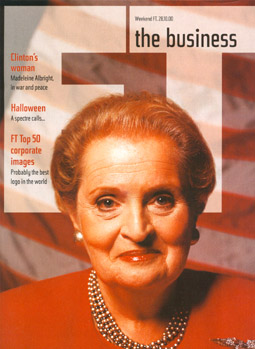
Madeleine Albright is almost shouting. She can’t hear me any more, she says. The noise on her aircraft has, indeed, become more deafening; but she also seems to be deliberately avoiding my question, and with good reason. This very moment is probably her happiest as secretary of state because of “the most important thing that has happened” during her nearly four-year tenure.

She has just received news about the Belgrade revolution and the ousting of Yugoslav president Slobodan Milosevic, and here I am, asking how she feels about having to leave office in three months. We’ve just spent a 30-hour day, having saved six hours by flying east-west from Egypt to Washington, and she says that’s exactly what she intends to continue doing for the rest of her term — “working every minute and extending the days”…

Continue reading about Albright’s final bow