Did you know that hundreds of fictitious flights inhabit airline schedules every day? They don’t exist in real life — just on paper. They are meant to make more money for the airlines by tricking customers and perverting a practice that was actually started to help travelers. In fact, they spell nothing but trouble for passengers.
Those fictitious flights are labeled “direct” by the airlines, which years ago decided to rewrite the dictionary and use that term for flights that weren’t nonstop but made at least one stop on the way to their destination. First, those flights were operated by the same aircraft, but later a “plane change” was introduced. The Department of Transportation has allowed the airlines to abuse the practice any way they like.
On my way back home from Boston last weekend, I was on United Airlines Flight 897, which the purser announced repeatedly was “a nonstop service to Washington Dulles, with continuing service to Beijing.”
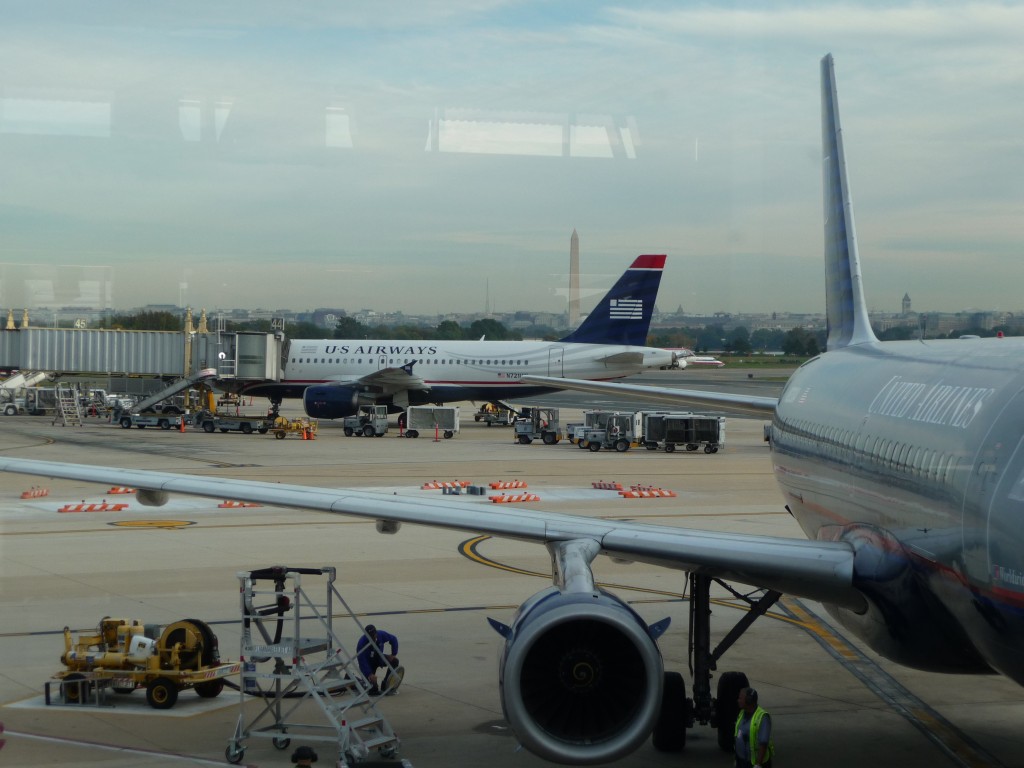
I immediately cringed, because there is nothing “continuing” about the two flights, except for their number. The plane I was on was a two-cabin Boeing 757 and arrived at gate C19 at Dulles. The plane destined for Beijing was a three-cabin Boeing 777 and departed from gate C3. So the passengers connecting to Beijing did exactly what others did connecting to Flight 803 to Tokyo at gate C1 — or any other flight for that matter. They left the first plane and walked to their new gate.
Did the Beijing-bound travelers benefit in any way from the fact that their tickets had one flight from Boston to Beijing? Absolutely not. In fact, many of them were probably surprised to discover they were on two separate flights.
Then why does United even have that fictitious “direct” flight? Because it wants customers to think that they can fly from Boston to Beijing without the hassle of a connection — a competitive advantage no other carrier offers.
Have you tried to upgrade a “direct” flight? That can be a nightmare — not just for passengers but also for those who work in inventory management. They have to create inventory for a flight that doesn’t exist and to balance the load of two separate flights on different aircraft types with a different number of cabins and hugely different number of seats. As a result, the lowest booking classes and upgrades are often unavailable on “direct” flights. Some travelers are willing to pay more to avoid the hassle of transfers, not realizing there is a hidden connection.
Almost every international United flight has a domestic tag attached to it, but United is by no means the only U.S. airline abusing the system. All major carriers do it. Delta pretends to fly “directly” from Minneapolis to Moscow, Continental from Amsterdam to Denver, US Airways from Los Angeles to Zurich and American from Tokyo to Boston.
As I wrote two years ago, United and Delta are the biggest abusers, while American seems to be the most prudent in that most of its “direct” flights are operated by the same aircraft. American is also the only one whose website displays a “direct” flight as two separate segments at the very beginning of the booking process.
In the rare cases when foreign carriers, such as Lufthansa and Singapore Airlines, operate “direct” flights, they are flown on the same plane, so there is no danger you will miss your “continuation,” which happens regularly on U.S. airlines. If my flight from Boston to Washington had been late, United wouldn’t have held the plane for Beijing just because the two flights share the same number.
Related stories:
Airlines abuse ‘direct’ flights
I’m usually cautious about accepting invitations to visit Russia, because of the obscene amount of cigarette smoke I’m forced to put up with, but this time I was rather pleased, indeed.
I was invited by RIA Novosty, the news agency, to attend a conference on Afghan drug production, which was opened by President Dmitry Medvedev. I doubt he was the reason for the smoking ban anywhere in the conference center, but whoever decided to implement that policy deserves a big thank-you. Russian staff and participants actually stood outside the building to smoke and no one violated the ban. Very impressive.
If only the Egyptians could do the same…
The conference center belonged to the Swissôtel Krasnye Holmy in the Russian capital. Usually, if I make hotel decisions when I travel, I choose either a Hilton or Starwood property, because of my top elite status with those two chains. That way, not only do I get bonus points for my stays, but I also enjoy elite benefits, such as free room upgrades, free breakfast even if it’s not included in the room rate, executive lounge access and, with Starwood, free Internet.
This time, the choice wasn’t mine, and I was a bit concerned about how I’d be treated at the Swissôtel as a non-elite guest. But my concerns were unfounded. Although I couldn’t use the lounge, my room had everything an upgraded room would have at a Hilton or Starwood hotel, including a bathrobe and slippers, and breakfast was also provided.
I did have to pay for Internet access — about $25 a day — but I have to do that even as a Diamond Hilton member. As I wrote in March, Hilton is one of the major chains resisting the trend of offering top elites free Internet. In Moscow, free access was provided at the conference center, so I only had to pay for one day, before the forum began.
What most impressed me at the Swissôtel was the peace and quiet I enjoyed in my room. That hotel must have some of the least noisy elevators I’ve ever seen. You could barely hear them, even if you stood right in front of their doors.
In addition, the housekeeping staff was probably the quietest I’ve encountered. Typically, I’d be awaken early in the morning by door banging or maids talking loudly to each other as if they were in a park, and the thin walls of many U.S. hotels make it even worse. This time, had I not seen housekeeping staff in the corridor, I wouldn’t have known there were working.
Continue reading about Great hotel and non-smoking conference in Moscow
It doesn’t happen very often that I fly a new route on United Airlines, especially out of Washington — it seems I’ve flown a huge number of them. But my 467th United flight this week was on the relatively new nonstop service to Moscow.
That flight is flown on a Boeing 767, which means that it’s reconfigured with the new truly flat business-class seats. Even better, upgrading to business on that flight is usually fairly easy, and I was on a pretty high M fare, so I never had any doubt my upgrade would clear.
By the time that happened a week before the flight, I had two choices in terms of window seating: a forward-facing seat in the row before the last or a rear-facing seat in the first row of the business cabin. About six months ago, I would have chosen the first option, but after flying backward from San Francisco to Sydney in December, the direction doesn’t bother me anymore. Each couple of seats feels very much like a private compartment, and you don’t really see anything outside that compartment while seated, so you forget there are other passengers facing in a different direction. I chose the first row because it’s away from the galley and the coach cabin, which makes it quieter and less trafficked.
It was a standard United flight in terms of the service — pretty good, but nothing spectacular. My glass of water never remained empty for too long. A couple of flight attendants asked if I worked for United, because I looked familiar — that tells you how often I’m on those planes.
My routine on long-haul flights begins with changing into my plane pajamas, which are given to first-class passengers on some non-U.S. carriers — this time, I’d taken a set from Lufthansa, but I usually rotate them with sets from SWISS or Singapore Airlines. I used to change after takeoff, but by the time the seat-belt sign is off, the service has already begun, and I’d rather not be in the flight attendants’ way.
During takeoff, I read newspapers — usually the Financial Times, where I used to write, and the International Herald Tribune on flights originating outside the United States. Then I turned on my entertainment system and start a film — “Valentine’s Day” was the first one I watched. It didn’t do well at the box office when it was released in February, despite the all-star cast and the director Gary Marshall, who also did “Pretty Woman.” I thought it was good enough for a plane ride.
After dinner — not-so-tasty chicken breast and cheesecake — and Chardonnay, it was bedtime. The flight left as 5 p.m., so it was too early to sleep. I tried really hard but not very successfully. At least I had a long and nice rest in a flat bed. Later, I watched another film — the very good documentary, “Celine: Through the Eyes of the World.”
Breakfast was disappointing, as it usually is in United business — just a croissant and fruit — and way behind competition, but United has never excelled at its soft product. Only first class gets eggs for breakfast.
This was my seventh time in Moscow, but the first at Domodedovo Airport — I found it much nicer than Sheremetevo. It was my 202th airport overall, according to my profile on FlightMemory.
Continue reading about Flying new United route — rare occurrence