
Fighting for Change in the Face of Prejudice
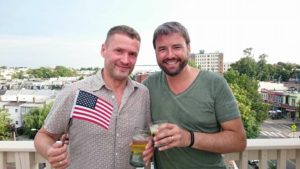 Ken Kero was working in the political section of the U.S. Embassy in Berlin in 2006, when he met a German film editor and photographer named David Mentz. Two years later, they got married and changed both their last names to Kero-Mentz.
At the time, the meaning of “married” was tricky. Germany recognized same-sex marriage “in all but name,” in Ken’s words, but the U.S. government, his employer, didn’t acknowledge such relationships at all. In the State Department’s eyes, he was single.
That was tolerable in Germany, but it became a serious problem when it was time for the couple to move to Ken’s next post in Sri Lanka. David (pictured left) didn’t get any of the benefits that straight Foreign Service spouses enjoyed, such as health insurance, assistance in case of emergency or evacuation and a diplomatic passport ― in fact, he wasn’t allowed to have a U.S. passport of any kind.
What made things worse was that in Sri Lanka homosexuality was ― and still is ― illegal. Although the law is not enforced most of the time, for legal purposes, same-sex relationships don’t exist. So for the Sri Lankan government, David had no reason to reside in the country and was only eligible for a short-term tourist visa, which had to be renewed frequently ― at a Sri Lankan embassy or consulate abroad, forcing otherwise unnecessary trips. “We were traveling in and out of the country, and the fact that the government was being so difficult made it even harder for us to like the place,” Ken said…
>> READ THE FULL STORY ON THE HUFFINGTON POST
