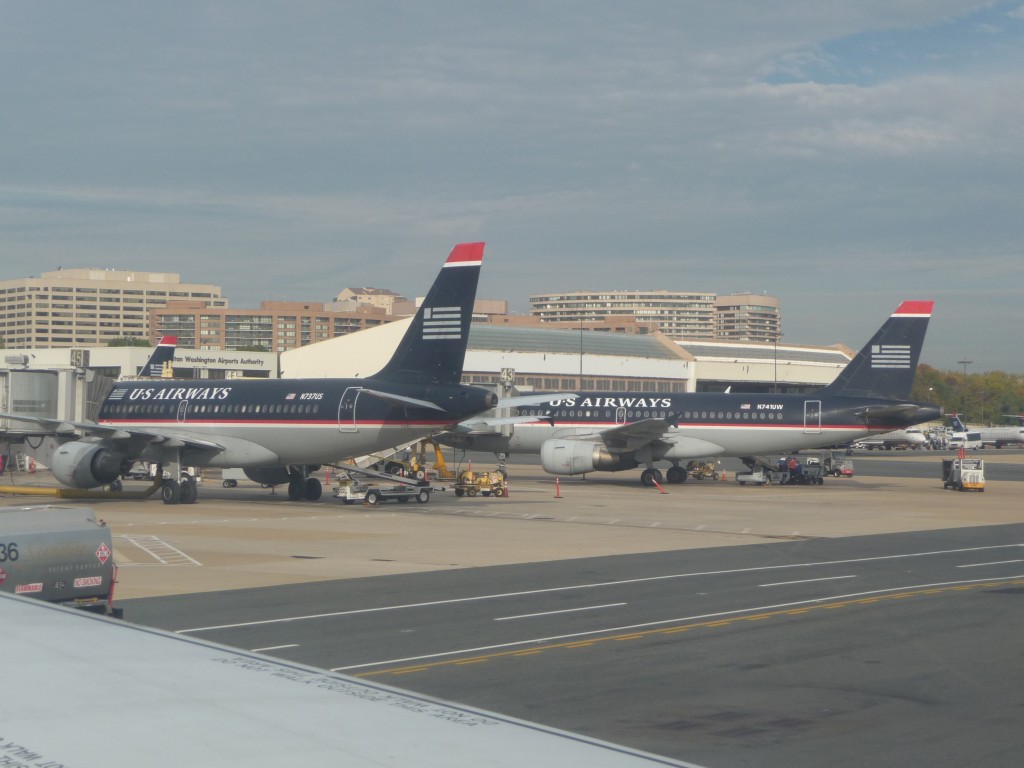
Have you been surprised to discover that your flight itinerary has little to do with your originally booked routing or departure and arrival times? Did you accept the changes, even though you didn’t like them? Next time, you could probably do better.
Schedule changes — those made by airline planning departments in advance, not those resulting from irregular operations — have always existed in the industry, but they used to be relatively rare and caused few major disruptions.
In recent years, however, they have become so common that I’m actually surprised when a week passes without changes in any of my future trips — I usually have about a half-dozen booked at a time…
Continue reading about Flight schedule changes overwhelm agents, travelers

This was supposed to be a column critical of US Airways’ rather peculiar Web site, which is unable to perform basic functions, such as retrieving valid and active tickets. But it also became an appreciation of the carrier’s willingness to explain some of those issues and even try to resolve them.
Every airline’s Web site has limitations and various quirks that annoy travelers — some offer odd routings when you search for flights, others show confusing or even misleading prices, and yet others try to get you to buy things you don’t need instead of taking you straight to the final purchase page.
However, if you simply want to display your itinerary by providing your reservation or ticket number, no major carrier will fail you. Except US Airways. In the past couple of years, I’ve had several tickets with flights on that airline that its Web site was unable to find…
How would you like to fly to Australia in Qantas Airways’ luxurious first class on its new Airbus A380 aircraft for $1,200? You could actually buy such a ticket last week, but as regular readers of this column might have guessed, that was yet another case of a mistake fare.
Just like 2009, the new year began with a major airline making an error when filing a fare, and then deciding not to honor the issued tickets. As I wrote last January, Swiss International Air Lines published a $300 business-class fare from Toronto to several European and Indian cities. In November, British Airways filed a $560 round-trip coach fare from the United States to India.
On Wednesday, it was American Airlines’ turn. A frequent flier noticed that the $1,200 fare from Los Angeles to Sydney, which is typically an economy price, now booked into first class — not even business. Similar fares were available from other U.S. cities…
Continue reading about Airlines refuse to honor mistake fares
Have you ever had to cancel a planned trip and lose your nonrefundable plane ticket? Next time, you don’t actually have to lose the ticket. In most cases, even if it’s nonrefundable, its value — except for any penalties — can be applied toward another ticket, and not necessarily on the same airline.
The first and most important thing you need to do is cancel your original itinerary before your first flight takes off. If you don’t, you’ll really lose the ticket’s value.
After cancellation, you have two options. You can either use the old ticket’s “residual value” — the total price minus the penalty — to purchase a new ticket if you have another trip coming up, or you can use that amount any time until one year from the date your original ticket was issued. You don’t have to travel by that date — just buy the new ticket…
Who says that cheap plane tickets are a thing of the past? How would you like to go skiing in Utah this winter for less than $150 round trip from the East coast, including all taxes? Rather visit a warmer place? How about a ticket to Hawaii for less than $300?
Yes, these are real prices, but you might need to do some homework to get them. Airlines now publish low fares less frequently and often pull them off the market within hours.
We’ve all heard travel experts warning that air fares have nowhere else to go but up, mainly because of record-high jet-fuel prices, as well as predictions that the era of affordable air travel is over. That may well be what the future holds. The present, however, begs to differ…