Brussels

nkralev on March 9th, 2011

As United and Continental prepare to become one airline, they are making changes that, though necessary, are affecting negatively their customers. One consequence is that upgrades on international flights will be harder to get in the short run, and more expensive in the long run.

The carriers announced last month that they would begin “cross-fleeting” — swapping routes in each other’s network — and some of those changes have already been loaded in their schedules. Both United and Continental will be serving certain routes in the next several months, but each of them is taking over other routes entirely.

For example, all Anchorage flying goes to Continental, as do the Washington-Paris and Washington-Amsterdam routes, now operated by United. The current Continental flights from Newark to Zurich and Brussels, as well as its Houston-Lima flights, will be flown by United.

That practice is not unusual in airline pre-merger situations. While the United-Continental merger was legally completed late last year, they will be operating as separate airlines until they secure a single certificate from the Federal Aviation Administration, which is expected to happen by early next year.

However, United and Continental are implementing the route changes before resolving some technical issues that will harm their customers.

If you are a United 1K flier and have system-wide upgrade certificates, you can’t use them on the previously United flights now operated by Continental — and the other way around. The same applies to your confirmed regional upgrade certificates on domestic flights. As of now, it’s technically impossible for the carriers’ reservations systems to accept upgrade certificates from the other airline’s frequent-flier program.

Mary Clark, a Continental spokeswoman in Houston, confirmed that certificates will be “carrier-specific” for the time being. “We are in the process of aligning the programs, and changes to the current policies will be announced as they are rolled out throughout the year. We aim to fully combine the programs by 2012.”

United is expected to adopt Continental’s reservations system eventually, but until then, there may be another way to resolve the issue. The carriers announced this week that miles can now be transferred between United and Continental accounts. I wonder if they can make it possible for upgrades to be transferred as well. It’s unclear if they looking into such an option yet.

There is another issue with the United system-wide upgrades whose impact is just now becoming apparent. For years, they have been allowed only on tickets booked in W class or higher, which makes S, T, L and K classes ineligible. Continental recently adopted the same rules.

This means that customers often have to spend hundreds of dollars more than the lowest available fare, just to qualify for an upgrade request — and if the upgrade doesn’t clear, they are left with a lot less money and the same coach seat they would have had if they had paid much less for it.

Things are getting even worse. In January, because of the merger, United added a 14th coach booking class, G, which was a regular published booking class on Continental, but on United it was previously an unpublished travel-industry discount class — it didn’t earn miles and was ineligible for upgrades.

Now, instead of four, there are five booking classes ineligible for system-wide upgrades. So what? you might ask — just a small technicality. Not quite. As a result of this change, W fares are getting more expensive. For example, a base fare of $800 that might have booked in W class before, now books in S or T. A few days ago, I helped a friend with a ticket from Washington to Bangkok, and the W base fare was more than $1,400 round trip — including taxes and surcharged, it came up to $1,900.

There is no question that fares have been going up for some time. A few years ago, a W fare to Bangkok was about $900, including taxes. In 2002, an H fare was $900. So the trend is clear and it didn’t start yesterday. But adding one more booking class makes things even worse.

It’s worth pointing out that American Airlines system-wide upgrades are allowed on all published booking classes.

Another negative change as a result of the United-Continental merger is that, similarly to the upgrades, discount vouchers from one airline cannot be used on the other. So if you want to use a United voucher for a ticket to Anchorage, you can’t, because United has given its seasonal service to Continental.

This week, the United website seems to be including Continental flights in electronic certificate-discounted itineraries, but the official policy hasn’t changed. It may be a website glitch, given that it also allows Lufthansa flights, and the vouchers’ terms and conditions specifically say that they are not valid on code-share flights.

One positive merger-related change is that United customers can now avoid StarNet blocking — it has diminished but still exists — by transferring their miles to Continental, which doesn’t block Star Alliance partner award seats.

NOTE: Several months after this column was published, United and Continental made it possible to use upgrades on flights operated by the other airline, including on mixed itineraries.

RETURN TO MAIN COLUMN PAGE

Related stories:

United, Continental execs at odds over loyalty program

United executive breaks old barriers

Keeping United international first class

United StarNet blocking

Continue reading about United fliers hit by pre-merger changes

nkralev on September 17th, 2010

If anyone had any doubts that putting together the European Union’s new diplomatic service would be an utterly messy task, that is now an undisputed fact. A high-profile ambassadorial list released this week provoked publicly aired quarrels rather uncharacteristic of diplomats, and it raised questions about the future effectiveness of the EU corps.

The long-anticipated list, unveiled by EU foreign policy chief Catherine Ashton in Brussels, was apparently based not on merit, but on what Polish Foreign Minister Radoslaw Sikorski called “esoteric considerations.”

What are those? A quick look at the list shows that the most important ambassadorships are going to diplomats from the oldest EU members in the West — China was given to the Germans, Japan to the Austrians and South Africa to the Dutch. What about less important but plush posts? Of those, the Spanish got Argentina and Singapore went to Luxembourg.

So the considerations Sikorski referred to had more to do with where the diplomats come from, rather than what they can accomplish in their respective positions. “Appointments should be made on merit,” he said. “We in the new member-countries have people who speak the languages of the former Soviet Union, we have expertise there.”

Four posts out of 29 went to diplomats from Central and Eastern Europe. Despite Sikorski’s protest, Poland did better than any other former communist country, winning South Korea and Jordan. The Bulgarians got Georgia, and Afghanistan had gone to the Lithuanians earlier.

“I have appointed the best people for the right jobs,” said Ashton, whose official title is EU high representative for foreign affairs and security policy, as well as vice president of the European Commission, the EU’s executive body. She was also criticized for choosing only eight women.

“We have made a start to address the important issues of geographical and gender balance,” Ashton said in an apparent admission that those problems are not yet resolved.

The nominees, who have to be approved by the European Parliament, may be the “best people” for the jobs from their country, but it’s questionable whether they are the best from any EU state. It’s not clear, either, that the top criteria during the selection process were actually skills, qualifications and experience.

“We are deeply disappointed,” said Slovenian Foreign Minister Samuel Zbogar. “We expected more transparent decisions and that geographic balance would be taken into account, in particular for those states, like Slovenia, which have no presence at all in the EU’s foreign institutions.”

Creating the European External Action Service — the diplomatic corps’ official name — is a daunting task, and Ashton has an impossible job. She won’t be able to please everyone even if she really wants to. But more consultation with Eastern European members would go a long way.

If there is hostility among diplomats from different countries even before the foreign service’s launch, which is expected in December, it will likely affect trust and their ability to work together at the dozens of missions they are setting up around the world.

Here is the full list released by Ashton’s office on Wednesday:

China — Markus Ederer (Germany)
Japan — Hans Dietmar Schweisgut (Austria)
South Africa — Roeland van de Geer (Netherlands)
Afghanistan — Vygaudas Usackas (Lithuania)
Albania — Ettore Sequi (Italy)
Argentina — Alfonso Diez Torres (Spain)
Macedonia — Peter Sorensen (Denmark)
Bangladesh — William Hanna (Ireland)
Jordan — Joanna Wronecka (Poland)
Uganda — Roberto Ridolfi (Italy)
Senegal — Dominique Dellicour (Belgium)
Angola — Javier Puyol Pinuela (Spain)
Botswana — Gerard McGovern (Ireland)
Burundi — Stephane de Loecker (Belgium)
South Korea — Tomasz Kozlowski (Poland)
Gabon — Cristina Martins Barreira (Portugal)
Georgia — Philip Dimitrov (Bulgaria)
Guinea-Bissau — Joaquin Gonzalez-Ducay (Spain)
Haiti — Lut Fabert-Goossens (Luxembourg)
Lebanon — Angelina Eichhorst (Netherlands)
Mozambique — Paul Malin (Ireland)
Namibia — Raúl Fuentes Milani (Spain)
Pakistan — Lars-Gunnar Wigemark (Sweden)
Philippines — Guy Ledoux (France)
Singapore — Marc Ungeheuer (Luxembourg)
Chad — Helene Cave (France)
Zambia — Gilles Hervio (France)
China (Deputy) — Carmen Cano de Lasala (Spain)
Papua New Guinea — Martin Dihm (Germany)

RETURN TO MAIN DIPLOMACY PAGE

Related stories:

Political ambassadorships hold at 30%

U.S., EU face off over travel, again

Career diplomats protest Obama appointments

Continue reading about EU diplo corps gets messy before launch

nkralev on March 17th, 2010

Access to a wide network of special military hotels around the country is a well-known benefit for members of the U.S. armed forces and their families, but apparently few of them know that they can stay at hundreds of similar hotels throughout Europe at bargain prices.

It’s natural that most service members spend their vacation in the United States — it’s easier, cheaper, and soldiers just back from an overseas tour are not that keen on heading abroad again. There are many decent domestic military hotels offering very attractive rates, often half of what you can find on the regular market.

Then there are a few properties that seem to be known by just about everyone. Among them is the Hale Koa Hotel on Honolulu’s Waikiki Beach, where room rates start at $87. Since its 1975 opening, it has been “an all-ranks, all-service hotel bent on providing first-class service without regard to an individual’s status,” its Web site says…

Continue reading about NATO hotels greet America’s military

nkralev on March 3rd, 2010

It was well past the official close of business at NATO headquarters in Brussels on September 11, 2001, but the chamber of the North Atlantic Council, the alliance’s political decision-making body, was anything but dark and quiet.

Hours after the terrorist attacks in New York and suburban Washington, Secretary-General George Robertson had gathered the ambassadors from all 19 member states to discuss how the events that were still unfolding live on television affected the organization and what NATO might do in the immediate aftermath.

“After the meeting, the Canadian ambassador, David Wright, took me aside to ask if Article 5 should be considered,” Nicholas Burns, the U.S. ambassador, recalled last week, referring to a clause in the 1949 Washington Treaty that created the alliance that says an attack on one member is an attack on all…

Continue reading about Diplomacy adapts to new threats

nkralev on March 2nd, 2010

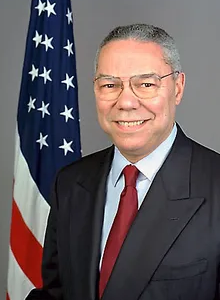
Colin Powell listened with growing but controlled anger. He saw the question coming. After all, there is no charge against a secretary of state more serious than the one leveled by some members of his own Republican Party — and even in the administration he serves.

They accuse him of leading a government agency that not only opposes President Bush’s foreign policy, but also tries to undermine it. His response came out in a single well-known barnyard expletive. Then, to emphasize the point, he added: “That’s quotable.”

“I can show you people in Washington who claim to be pushing the president’s agenda, [but] who are not,” Mr. Powell continued, sitting in his small inner office on the seventh floor of the State Department…

Continue reading about Powell: ‘I am on the president’s agenda’