Flights

nkralev on October 5th, 2010

Are you one of those travelers who wait until they get to the airport to find out that their flight has been delayed or canceled? It’s time to become a proactive flier and learn how to predict disruptions, so you can get rebooked before anyone else on your flight, with a minimum impact on your travel plans.

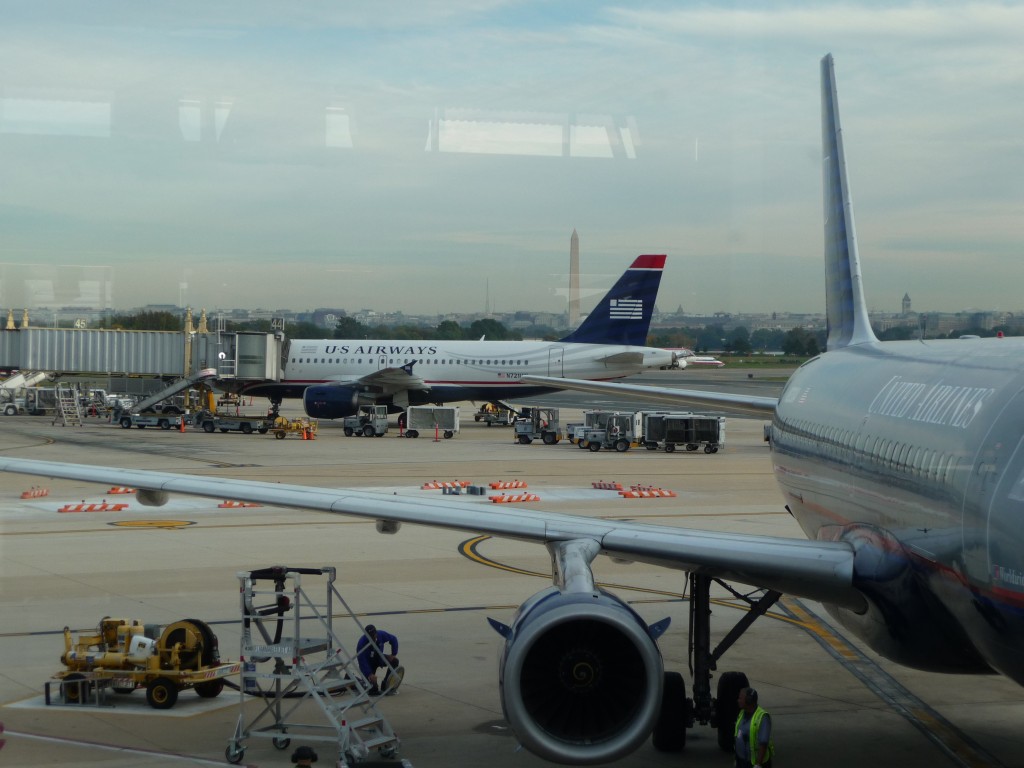
Although there is no guarantee that your prediction success rate will be 100 percent, because airlines often swap aircraft, the method I’ve adopted works most of the time. It’s actually rather simple: I track the planes assigned to my flights by matching arrival and departure gates. Continental Airlines makes it even easier by providing the most advanced data in the industry, but more on that later.

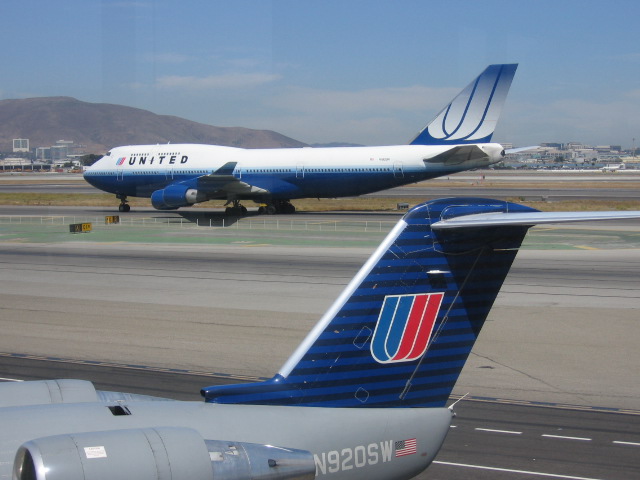
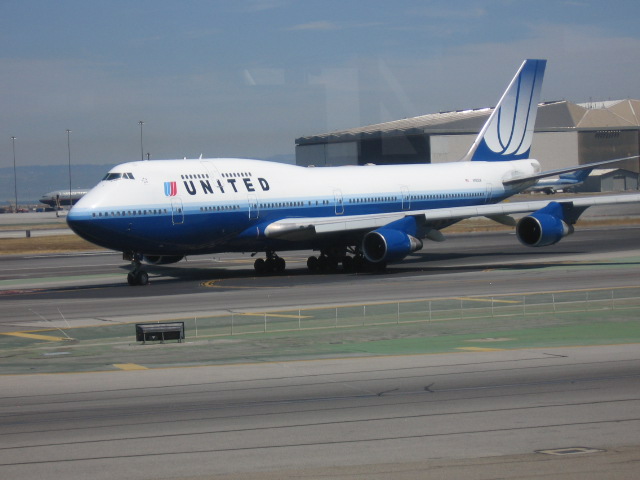
The aircraft for a United Airlines flight I recently took from Washington to San Francisco came from Sao Paulo. Had the flight from Brazil been late, I would have known hours in advance, which would have allowed me to get rebooked on the phone before even leaving home.

You might ask why you need to waste time tracking planes and matching gates, when airlines usually send e-mail and phone alerts in case of delays and cancellations. I find that I’m usually ahead of them, because for some reason their systems often take hours to update.

If I see that United 952 from Washington to Frankfurt is four hours late, I know immediately that the return flight 953 will be delayed, too. But I’ve seen United take hours to reflect that in its system, perhaps hoping that the plane will make time in the air. That can be a valid reason to wait for a final determination, as can be the possibility that another aircraft may be found to replace the delayed one.

So why am I so sure Flight 953 won’t depart on time if Flight 952 is four hours late? There is only one Boeing 767 flying to Frankfurt daily, and it operates both 952 and 953, which leaves no room for aircraft substitution. In addition, the turnaround time for that plane on the ground in Frankfurt is less than two hours, so there is no way the plane will leave Frankfurt on time after arriving from Washington four hours late.

Knowing the type of aircraft assigned to your flight would make the gate-matching exercise much faster, especially at a hub like Washington Dulles or Chicago. To make it even easier, you can use your departing airport’s website, which will display all arriving flights in a certain time frame with their gates on the same page. If you know your flight leaves from Gate 72 in Los Angeles, save yourself time by going to the LAX website, rather than the United site.

Most planes, of course, operate several flights a day, so if I have time, I track my planes since their first voyage in the morning. Yesterday, for example, the Boeing 767 I flew on from LA to Chicago had started the day in LA, flown to Denver and Chicago before returning to LA to pick me up. By the way, the tail number of that plane was N666UA.

What about aircraft replacement? That’s another reason to do your homework. That flight from Washington to San Francisco I mentioned earlier was scheduled to be operated on a Boeing 767 — with a domestic seat configuration, which means two cabins and those utterly unimpressive domestic first-class seats. As soon as I learned my plane was coming from Sao Paulo, I knew there had been a swap to an internationally configured, three-cabin Boeing 777, so I’d sit in a much more comfortable business-class seat. Since the substitution changed seat assignments, I quickly logged in and grabbed my favorite seat in the business cabin.

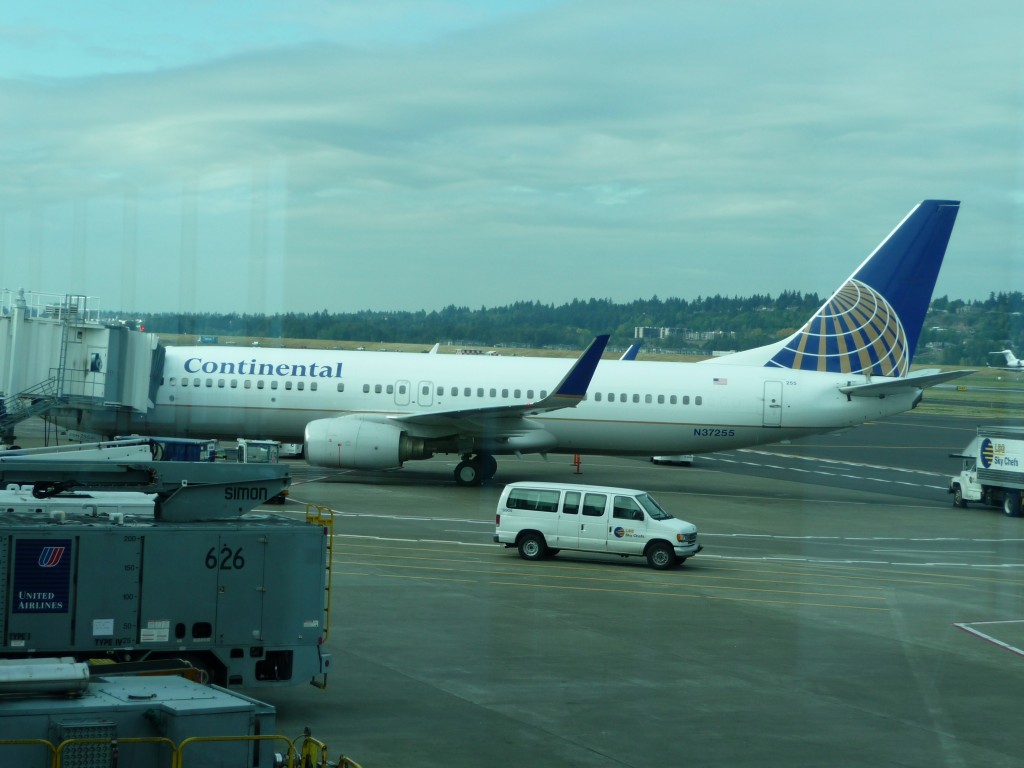
All major U.S. carriers’ websites show gate information, but Continental beats them all to the punch by displaying much more valuable data — it actually shows the tail number of the specific aircraft assigned to your flight and tells you where it’s coming from, including the inbound flight’s number. For instance, you are flying from Newark to Berlin on Flight 96 today, your Boeing 767′s tail number is N158CO, and it’s coming from Zurich as Flight 79. Right next to that information on the Continental site is a link to the real-time status of that flight.

Continental goes even further, offering descriptions of beverage and meal services for that particular flight, as well as data on in-seat power, entertainment, aircraft features and seat configuration.

This is a great example of a customer-friendly policy, which the merged United should adopt on its website. In fact, all airlines should provide that information — it would certainly make our lives much easier.

RETURN TO MAIN COLUMN PAGE

Related stories:

Preserving upgrades in case of rebooking

Flight schedule changes overwhelm agents, travelers

Dulles Airport enters the modern age

Continental shows new transparency

Lufthansa agent’s ‘mistake’ stacks up

Continue reading about Predicting flight delays and cancellations
nkralev on September 28th, 2010

Did you know that hundreds of fictitious flights inhabit airline schedules every day? They don’t exist in real life — just on paper. They are meant to make more money for the airlines by tricking customers and perverting a practice that was actually started to help travelers. In fact, they spell nothing but trouble for passengers.

Those fictitious flights are labeled “direct” by the airlines, which years ago decided to rewrite the dictionary and use that term for flights that weren’t nonstop but made at least one stop on the way to their destination. First, those flights were operated by the same aircraft, but later a “plane change” was introduced. The Department of Transportation has allowed the airlines to abuse the practice any way they like.

On my way back home from Boston last weekend, I was on United Airlines Flight 897, which the purser announced repeatedly was “a nonstop service to Washington Dulles, with continuing service to Beijing.”

I immediately cringed, because there is nothing “continuing” about the two flights, except for their number. The plane I was on was a two-cabin Boeing 757 and arrived at gate C19 at Dulles. The plane destined for Beijing was a three-cabin Boeing 777 and departed from gate C3. So the passengers connecting to Beijing did exactly what others did connecting to Flight 803 to Tokyo at gate C1 — or any other flight for that matter. They left the first plane and walked to their new gate.

Did the Beijing-bound travelers benefit in any way from the fact that their tickets had one flight from Boston to Beijing? Absolutely not. In fact, many of them were probably surprised to discover they were on two separate flights.

Then why does United even have that fictitious “direct” flight? Because it wants customers to think that they can fly from Boston to Beijing without the hassle of a connection — a competitive advantage no other carrier offers.

Have you tried to upgrade a “direct” flight? That can be a nightmare — not just for passengers but also for those who work in inventory management. They have to create inventory for a flight that doesn’t exist and to balance the load of two separate flights on different aircraft types with a different number of cabins and hugely different number of seats. As a result, the lowest booking classes and upgrades are often unavailable on “direct” flights. Some travelers are willing to pay more to avoid the hassle of transfers, not realizing there is a hidden connection.

Almost every international United flight has a domestic tag attached to it, but United is by no means the only U.S. airline abusing the system. All major carriers do it. Delta pretends to fly “directly” from Minneapolis to Moscow, Continental from Amsterdam to Denver, US Airways from Los Angeles to Zurich and American from Tokyo to Boston.

As I wrote two years ago, United and Delta are the biggest abusers, while American seems to be the most prudent in that most of its “direct” flights are operated by the same aircraft. American is also the only one whose website displays a “direct” flight as two separate segments at the very beginning of the booking process.

In the rare cases when foreign carriers, such as Lufthansa and Singapore Airlines, operate “direct” flights, they are flown on the same plane, so there is no danger you will miss your “continuation,” which happens regularly on U.S. airlines. If my flight from Boston to Washington had been late, United wouldn’t have held the plane for Beijing just because the two flights share the same number.

RETURN TO MAIN COLUMN PAGE

Related stories:

Airlines abuse ‘direct’ flights

Target: Fake ‘direct’ flights

Continue reading about DOT should ban fictitious flights

nkralev on April 26th, 2010

Have you been surprised to discover that your flight itinerary has little to do with your originally booked routing or departure and arrival times? Did you accept the changes, even though you didn’t like them? Next time, you could probably do better.

Schedule changes — those made by airline planning departments in advance, not those resulting from irregular operations — have always existed in the industry, but they used to be relatively rare and caused few major disruptions.

In recent years, however, they have become so common that I’m actually surprised when a week passes without changes in any of my future trips — I usually have about a half-dozen booked at a time…

Continue reading about Flight schedule changes overwhelm agents, travelers

nkralev on April 12th, 2010

Meal choices in first and business class are hardly a concern for most air travelers, who have much more basic things to worry about these days, such as never-ending extra fees. Still, premium fliers are essential for an airline’s well-being, and they have certain expectations from the product they pay for.

It’s true that many passengers end up in the front cabins — especially on domestic U.S. flights — thanks to free upgrades, but they get them because of their loyalty to the respective carrier. Of course, there are also people who pay to sit up front — as few as they may be — so those cabins deserve serious attention.

Dining in first and business class is not the luxurious experience it once was, but if you are a frequent traveler with a confirmed seat there, you probably rely on those meals to save you the time and hassle of trying to grab a bite before boarding…

Continue reading about Who gets first meal choice on board?

nkralev on March 18th, 2010

Having covered American diplomacy for a decade now, I’ve received many “diplomatic” answers to my questions — but none more so than “Yes, but not really.” I was reminded of it by the recently negotiated Open Skies aviation agreement between the United States and Japan.

The idea of the Open Skies accords, which Washington has with more than 90 countries, was to liberalize air travel between the signatories, allowing flights from any city in the first country to any city in the second without the previously imposed government restrictions.

However, the deal reached with Japan in December has one glaring exception — U.S. carriers can have only four pairs of takeoff and landing slots at Tokyo’s Haneda Airport, and only between 10 p.m. and 7 a.m. Even though the document hasn’t been signed yet, there are no plans to change the Haneda limits…

Continue reading about When ‘open skies’ aren’t really open