New Delhi
The Indian government is engaging in apparent blackmail of the Star Alliance, following the global airline group’s rejection of Air India’s membership application. New Delhi’s threat to take away traffic rights from Star members is about to test the diplomatic skills of both the affected carriers and the alliance leadership.
As I wrote in August, Star really, really wanted to add Air India to its network, because of the large and fast-growing Indian market. It spent more time, effort and money on helping Air India meet the membership requirements than it has with any other candidate. At the end, however, Air India’s entrenched corporate culture and internal Indian politics became unbearable, and the alliance gave up.
New Delhi wasted no time devising retaliation. Within weeks of Air India’s rejection, the government informed Austrian Airlines and Swiss International Airlines that their traffic rights are in danger, as reported extensively in the Indian press. The official reason was the two carriers’ ownership, in which Germany’s Lufthansa has controlling stakes.
That, of course, has been the case for years, and no one believed this was the real reason for India’s threat. It made another move, refusing to grant landing rights in New Delhi to Lufthansa’s Airbus 380. This time, Indian officials didn’t even try to hide the linkage to Air India’s failed Star application, accusing Lufthansa of sabotaging the Indian bid.
A couple of weeks later, reports appeared in Indian newspapers that Star and Air India had resumed negotiations. That sort of made sense, given India’s multiple threats, but the only sources in those stories were Indian officials — confirmation from Star was suspiciously missing.
So I did a little digging, and it turns out Air India has had no official contacts with the alliance since talks broke down in the summer. There may have been unofficial contacts, but a resumption of negotiations doesn’t happen unofficially.
It’s high time the Indians rethought their priorities and tactics. Blackmail is not the best strategy to earn international respect and recognition for your national carrier.
In the very first column I wrote about Star in 2008, I argued that leading an airline alliance is essentially practicing international diplomacy. The main subject in that piece, then-Star CEO Jaan Albrecht, recently became CEO of Austrian Airlines, so one of his first orders of business was dealing with India again. As if he didn’t have enough of that in the last four years.
Related stories:
AirIndia had no chance with Star Alliance
Is India going too far in curbing airfares?
UAE mixes aviation and foreign policy
Continue reading about India tries to blackmail Star Alliance
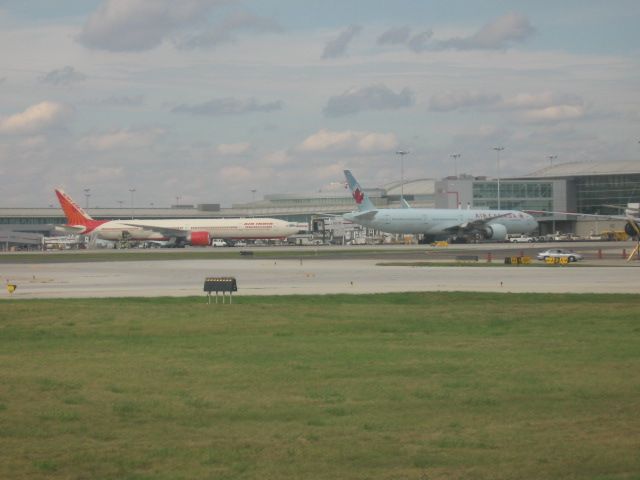
The Indian government has done what authorities in most market economies would rarely dare to try — it has forced Indian carriers to slash domestic airfares by as much as a quarter, and to publish fare ranges on every route on their websites regardless of travel dates. While helping consumers is admirable, is New Delhi crossing a line?
Angered by the pricing policies of India’s airlines, including low-cost carriers IndiGo, SpiceJet and GoAir, the Directorate General of Civil Aviation (DGCA) gave them an ultimatum last weekend to lower fares or face severe consequences, the Indian press reported. Within hours, fares dropped between 20 and 25 percent.
On Monday, the DGCA ordered airline chiefs to start posting on their websites at the beginning of every month fares on specific routes with advance-purchase requirements of 21, 14 and seven days before departure, as well as last-minute prices.
“We just want everything to be made public, including giving DGCA the parameters of number of seats getting sold and fare moving to next higher level. In case of any sudden jump, we will be able to check if lower bucket fare seats have been sold, and then spot fares are at the highs or is it something else,” DGCA chief E. K. Bharat Bhushan was quoted as saying by the Times of India.
This column has been critical of several dishonest and manipulative practices in the airline industry, including misleading fare advertising. Transparency is essential in an era of ever-growing airline fees and heavy fuel surcharges. In October, I wrote about new ways some carriers have found to overcharge unsuspecting customers.
It’s well-known that Indian domestic fares had become ridiculously high, but was such a drastic government intervention necessary? The DGCA plans to micromanage airline fare-setting and inventory, which will effectively end dynamic pricing, the very essence of today’s industry model.
“In case of any sudden jump to the highest fare level, the DGCA will be able to check if the spurt is due to seats at lower price levels having been sold out or whether it is manipulation by the travel industry,” the Times of India wrote on Tuesday.
The U.S. Department of Transportation will be happy if American carriers advertise actual fares on their websites — not $200 to Europe each way, based on a required round-trip purchase, when taxes and surcharges bring the total price to $800. But an attempt by DOT to follow India’s examples would probably lead to a revolution.
Related stories:
Airlines find new way to overcharge fliers
When an airfare sale is not quite a sale
Fare sales often lost in translation
DOT should ban fictitious flights
Continue reading about Is India going too far in curbing airfares?
The United States has made new concessions as part of its civilian nuclear agreement with India, further angering arms control advocates, while New Delhi has yet to make it possible for U.S. companies to benefit from the unprecedented deal.
In the most recent accord completed late last month, Washington agreed to Indian demands to increase the number of plants allowed to reprocess U.S.-supplied nuclear fuel from one to two, with the option of another two if India’s needs grow in the future.
At the same time, India thus far has failed to pass legislation that would release U.S. companies from liability in case of accidents related to equipment they have provided for two reactors expected to be built under the 2007 U.S.-Indian Nuclear Cooperation Agreement. That effectively prevents those firms from starting businesses in the South Asian country…
Continue reading about U.S. offers India new nuke concessions
An automatic upgrade to a hotel’s executive floor, including free access to its executive lounge, is one of the most cherished benefits of top elite status with large chains, such as Hilton and Starwood. So what do you do when it’s denied to you?
I tried to find the right answer to that question in Bangkok last week, but, of course, it depends on the reason for the denial — perhaps a lounge closure due to renovation or cost-saving by reducing staff — so I wanted to make sure I understood it well before complaining too much and asking for an alternative benefit during my one-night stay.
Many hotel programs used to offer free upgrades and lounge access to their gold members, but in the last year or so, they have limited them to the highest elite level — Platinum or Diamond, depending on the chain…