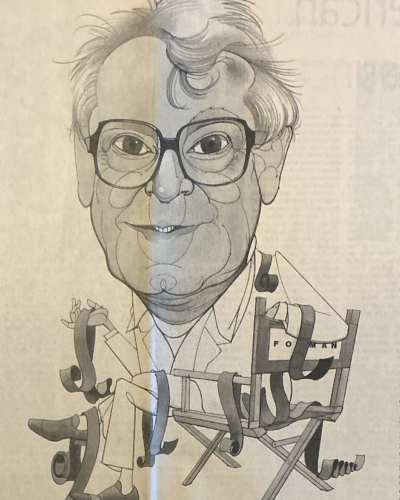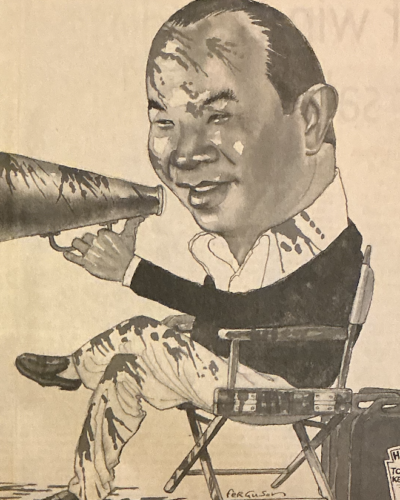
John Woo is concerned that he will go down in cinema history only as an action film director, albeit one of the masters. So the man who made his name in Hong Kong with the distinctive balletic style of his blood-soaked movies, and then conquered Hollywood with “Face/Off” and “Mission: Impossible 2″, has decided to move away from what he does best and try his hand at drama and — maybe even a musical.
“I want to do a film without violence,” he says in his office at the MGM complex in Santa Monica, California, “and a musical is one of my biggest dreams. There is so much confusion in the world today, so much hatred and lack of understanding, and I’d love to make noble and spiritual films”…
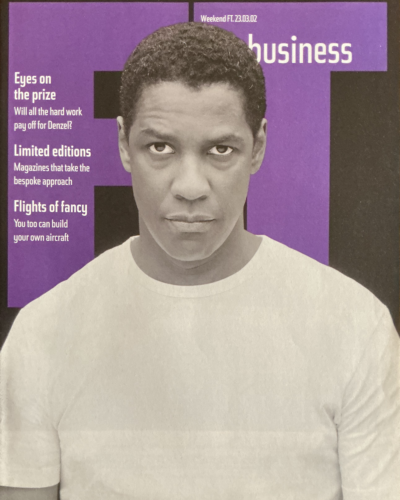
Jeffrey Wigand still can’t believe he is the main character in a Hollywood blockbuster. “Are you kidding me? I didn’t think I’d survive.”
It has been more than five years since the man now known as the first tobacco industry whistleblower became the most senior executive to break ranks. But neither “The Insider”, the Oscar-nominated film starring Al Pacino, nor the publicity that surrounded Wigand’s crusade against big tobacco companies has bestowed on him even the slightest touch of celebrity.
I expected to meet a bitter and emotionally withered man who, after an infamous 1995 interview with CBS’s Mike Wallace, would carefully measure every word he uttered to a reporter. But I couldn’t have been more wrong…
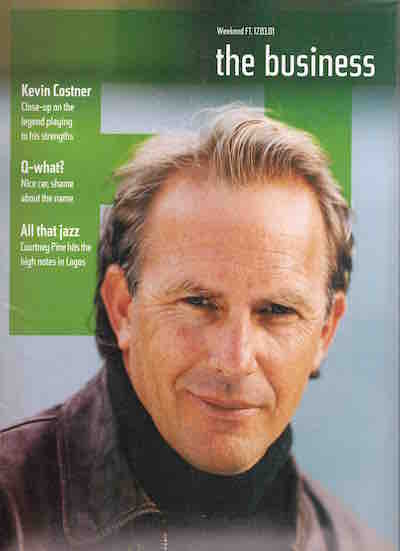
Just after 3 pm on an unseasonably hot spring day, an elegant, black sports car pulls up in front of a posh, downtown hotel in San Francisco, and out steps Sharon Stone. Sporting a stylish red scarf, she takes off her sunglasses and walks towards a virile-looking man in a dark suit and cowboy boots. This is Phil Bronstein, her husband of two years and executive editor of the San Francisco Examiner.
Stone and Bronstein then sit down for their first interview together since their wedding on Valentine’s Day, 1998. At the time, gossip columnists were quick to give their marriage no more than a year. They were wrong, but the couple acknowledge the difficulties of a marriage involving two of the most fickle of all professions.
“You work really, really hard at it, because that’s what’s required for a successful relationship,” Stone says, once the waiters in the hotel’s restaurant finally retire, having assured her of the pleasure of her presence…
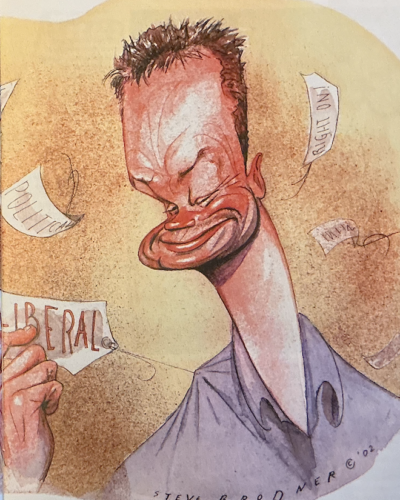
Tim Robbins seems a man of contrasts at first, but what appear to be conflicting sides of his personality actually complement each other in a character of the rarest type. He has the ability to engage in the most profound conversation while provoking a genuine and contaminating laughter. On screen, he has been naively stupid (in “Bull Durham” and “The Hudsucker Proxy”) as well as shrewdly slick (in “The Player” and “The Shawshank Redemption”). And, of course, his dimpled babyish face tops a nearly 6’5” body.
So no wonder the actor-writer-director-producer Robbins is crusading against labels and stereotypes, the most common of which in his case have been “political” and “liberal”. He says he doesn’t “buy the liberal thing”, but appreciates progressivism and libertarianism. He also notes that he has a hard time distinguishing between Democrats and Republicans.
“The great illusion in America is that we have a choice, because if we don’t have that illusion, we don’t have a democracy,” he says…