SkyTeam

nkralev on May 15th, 2012

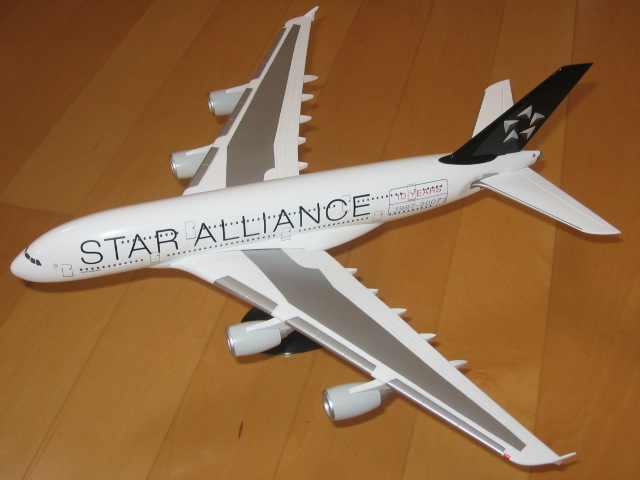
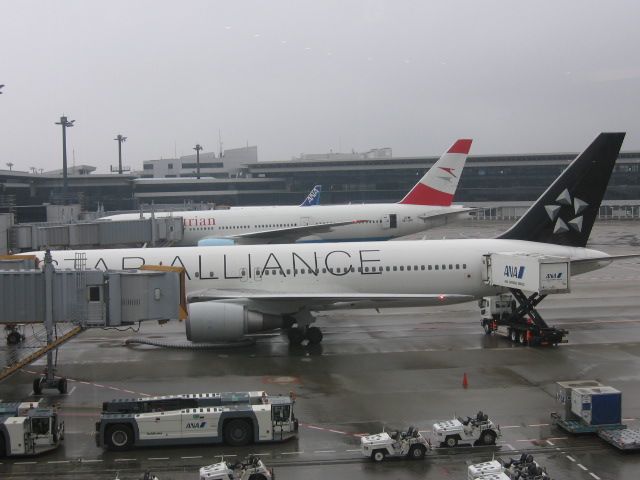
The Star Alliance’s 15th birthday this month reminds me that a global airline alliance is one of the most fascinating concepts in the history of commercial aviation. It’s also an example of the airline industry’s creative thinking aimed at increasing revenues. However, unlike some of the questionable practices I described in “Decoding Air Travel,” this one has dramatically improved the customer experience.

It’s fascinating for me personally, because it combines my two passions and areas of expertise, international affairs and air travel. In fact, what alliance executive teams do every day is nothing short of diplomacy. International negotiations and dispute resolution are two of their specialties, and a big part of their duties is selecting new members, not unlike NATO and the European Union.

When Star was formed in 1997, the idea was not only to represent its members’ best interests — that’s primarily the job of trade associations — but to boost business by feeding passengers from one carrier to another in the smoothest possible way. Soon, airline diplomacy began in earnest — first among alliance members, which after all are rivals in a fiercely competitive industry, and then with airports, transportation authorities and governments around the world. The other two global alliances are Oneworld and SkyTeam.

“Much of what we do is diplomacy,” Jaan Albrecht, Star’s former CEO, told me when I first met him in the alliance’s Frankfurt office in 2008. “We try to educate airports, publics and governments about the benefits that come from a network like ours.” Albrecht is now CEO of Austrian Airlines, a Star member.

The benefits for customers that come with an alliance membership are both tangible and intangible. The first category includes interline ticketing and check-in, harmonized schedules to provide seamless connections, worldwide lounge access, mileage-earning and redemption opportunities, as well as elite-status recognition across the alliance, and round-the-world and other special-fare products.

It’s also important to appreciate the intangible benefits. The most important to me is that the experience on an alliance’s various carriers is so similar and yet so different. I like the predictability created by consistent and aligned policies — knowing how things work and what to expect gives me comfort at the airport and in the air. At the same time, I love the individual touches that each airline adds to the travel experience, based on its national, cultural and even corporate uniqueness.

For example, Scandinavian Airlines and Thai Airways are both Star members, and technically there is no difference which one you are booked on — you will earn miles, check-in all the way through to your final destination and access their lounges anywhere in the world. But when you enter a lounge or board a plane, you will never confuse Scandinavian with Thai.

Critics of the alliance concept usually argue that consumers suffer, because closer cooperation among airlines leads to higher fares. They refer to special arrangements, known as anti-trust immunity exceptions, which are granted to some carriers so they can coordinate fares, schedules and inventory on certain routes. The largest members of the three alliances have received such waivers on intercontinental routes. Some have gone a step further, securing approval to operate certain routes as a joint venture. Price-fixing is illegal, so these carriers needed the exceptions to publish identical fares — and if you compare their tariffs, you will see they are indeed identical.

When granting the immunity, the Department of Transportation is careful to exclude routes on which the only existing service is provided by the carriers seeking the waiver — those exclusions are known as “carve-outs.” So the government is supposed to protect consumers, and it seems it’s doing its job. Overall, there is no question in my mind that airline alliances have had a positive impact on customers.

All three alliances have had troubles lately, as member-carriers have experienced hard times, filed for bankruptcy or disappeared all together. But that’s the nature of the airline business. My only criticism is that none of the groups has done a good job at reaching out to a broad audience to explain and promote the benefits I described above.

Here is the current membership of each alliance:

Star Alliance

Adria, Aegean, Air Canada, Air China, Air New Zealand, All Nippon, Asiana, Austrian, Blue1, Brussels, Croatia, EgyptAir, Ethiopian, LOT Polish, Lufthansa, SAS, Singapore, South African, Swiss, TAM, TAP Portugal, Thai, Turkish, United, US Airways.

Accepted future members: Copa, Eva, Shenzhen, TACA.

Oneworld

AirBerlin, American, British, Cathay Pacific, Finnair, Iberia, Japan, LAN, Qantas, Royal Jordanian, S7.

Accepted future members: Kingfisher, Malaysia.

SkyTeam

Aeroflot, AeroMexico, AirEuropa, Air France, Alitalia, China Airlines, China Eastern, China Southern, Czech, Delta, Kenya, KLM, Korean, Tarom, Vietnam.

Accepted future members: Garuda Indonesia, Aerolíneas Argentinas, Saudi Arabian, Middle East, Xiamen.

Continue reading about Why airline alliances are good for fliers
nkralev on September 6th, 2010

Three major travel-industry organizations begin a campaign on Tuesday to compel the airlines to disclose all fees not included in the ticket price at the same time as the actual fare — and before the ticket is issued. But will such a campaign succeed?

The groups — the Business Travel Coalition (BTC), the American Society of Travel Agents and the Consumer Travel Alliance — want consumers to sign a petition to Transportation Secretary Ray LaHood. The text urges him “to require airlines to fully disclose their fees, whether airfares are purchased on an airline’s website or through an online or brick-and-mortar travel agency.”

The organizations plan to deliver the petition to LaHood on Sept. 23, which they have designated as “Mad As Hell Day.” They have created a special website and a YouTube channel.

“It is imperative that we, as consumers, have the ability to comparison-shop and know the full cost of a trip before committing to a purchase,” BTC Chairman Kevin Mitchell said in an e-mail message on Monday. The “airline hidden fees can surprise us at the airport, ruining our holidays, or vanquishing our business travel budgets. For example, check baggage fees can add 30%, 40% or more to the price of a ticket.”

The campaign is in support of the Department of Transportation’s Notice of Proposed Rule Making, regarding airline-passenger protections, Mitchell said.

What’s the likelihood that this initiative will be more successful than previous attempts to extract similar disclosures from the airlines? How long has the battle over false airfare advertising been going on? To this day, you see examples like this one on most U.S. airline websites: $199 each way, based on a required round-trip purchase, plus taxes and surcharges.

If a round trip is mandatory, why on earth are they quoting half of the price? It’s actually less than half, given the extra taxes. As I’ve written before, such deception is not tolerated in Europe and most other parts of the world.

If you can’t get the airlines to be open and honest about their fares, how are you supposed to force them to disclose additional fees? While everyone has to pay for the fare, many passengers are exempt from luggage, standby and other fees — an argument the airlines will no doubt use against the new campaign.

Getting those fees waived is easier than most travelers think. As I wrote in July, all you need is the lowest level of elite status on any member of one of the three global airline alliances — Oneworld, SkyTeam or the Star Alliance — to have your bags fly for free alliance-wide. And sometimes, it takes as little as 3,000 miles to achieve that.

As often happens, my advice has to do with travel education. Air travel has become a maze of rules, fees and restrictions that’s hard to keep up with. So travelers need to invest time to learn the system and find ways to work around it. My experience so far with “On the Fly” Seminars shows that most people don’t think they need to get educated. How many more fees and other frustrations will it take to change their mind?

RETURN TO MAIN COLUMN PAGE

Related stories:

Avoiding luggage and other airline fees

When an airfare sale is not quite a sale

Fare sales often lost in translation

Continue reading about 9/23 is ‘mad as hell day’ over airline fees

nkralev on June 8th, 2010

Doing something no one has ever done before is both exciting and scary at the same time. In other words, I can use all the help I can get to spread the word.

The “On the Fly” Seminars I mentioned in my column last week are now officially open for registration. The first classes will take place on June 25 and 26 in Washington. If you come, you will learn now to travel cheaply but luxuriously.

For a long time, one of my missions has been to encourage more people to travel — both domestically and internationally. I realize travel has become difficult in recent years, and most of the pleasure that used to come with it has been sucked out by the airline industry’s desperate attempts to lower costs.

There was a time — more than a decade ago — when sitting in the coach cabin didn’t bother me too much. Planes and air travel always excited me, and the promise of what awaited at the other end of my journey left me little time for self-pity. Plus, I’d take only a couple of trips a year.

But then I began traveling around the world for work, as the Washington Times’ diplomatic correspondent, and flying between three continents in a week in coach and enduring today’s airport routine started to seem really ugly. So I decided to look for ways to travel in business class — paying for it wasn’t an option, given my budget limitations, and the only alternative was to achieve the highest elite status by flying 100,000 miles a year.

At the beginning, that wasn’t too easy — it required me to fly on the same airline or its alliance partners. The global alliances — Star, Oneworld and SkyTeam — were not as big as they are today, and none of their member-carriers served some of the countries I went to. Even when they did, that option might not have been the cheapest.

With some creativity and strategic planning, however, I managed pretty well — and the benefits of top elite status changed my life. At the airport, priority lines, business lounges and red-carpet boarding have made the experience much less of a hassle. On board, I’ve enjoyed flat beds, great meals and on-demand entertainment, thanks to complimentary upgrades I’ve been able to confirm long before a flight.

The real challenge was how to maintain that combination of paying low fares and flying in luxury year after year. Since knowledge means power, I decided to take the power in my own hands and stop relying on travel agents or online booking engines to find me the best deals — by learning all I could about airfares and airline inventory, and by accessing raw, real-time airline data right from the source where it’s published.

Now I’ve decided to share my knowledge and experience with others. Come see for yourself.

Continue reading about Announcing ‘On the Fly’ Seminars

nkralev on May 24th, 2010

Trying to figure out how airlines determine fares is utterly futile, but that doesn’t necessarily dampen my curiosity. On a recent visit to the Star Alliance headquarters in Frankfurt, I sought insights into how the global group sets its popular round-the-world fares.

I always enjoy dropping by the alliance’s modest office — not only because it’s an easy walk from the airport terminal, but also because just about everything it does is unique and pioneering in the industry. With 27 member-carriers, one would think it’s a grand operation, so I was surprised that fewer than 80 people work there.

As regular readers of this column have no doubt noticed, I’m a fan of airline alliances. Skeptics often point out the potential negative impact on competition and fares, but government regulators have designed mechanisms to maintain fair practices. Obviously, airlines have formed groups like Star, Oneworld and SkyTeam to boost their business, but, as I’ve written before, what is good for a company doesn’t necessarily have to be bad for customers… MORE

Continue reading about Round-the-world fare mysteries revealed

nkralev on March 18th, 2010

Having covered American diplomacy for a decade now, I’ve received many “diplomatic” answers to my questions — but none more so than “Yes, but not really.” I was reminded of it by the recently negotiated Open Skies aviation agreement between the United States and Japan.

The idea of the Open Skies accords, which Washington has with more than 90 countries, was to liberalize air travel between the signatories, allowing flights from any city in the first country to any city in the second without the previously imposed government restrictions.

However, the deal reached with Japan in December has one glaring exception — U.S. carriers can have only four pairs of takeoff and landing slots at Tokyo’s Haneda Airport, and only between 10 p.m. and 7 a.m. Even though the document hasn’t been signed yet, there are no plans to change the Haneda limits…

Continue reading about When ‘open skies’ aren’t really open