Air Canada
While most U.S. airlines have learned to be relatively honest with their best customers, many of their foreign peers have not yet realized that travelers are not as stupid as to fall for their PR spin and questionable practices.
It’s time for those carriers to wake up to the fact that it’s the end of 2011, and much in the airline industry is rather transparent to those of us who pay attention. Trying to persuade customers that bad news is actually good may be an essential PR trick, but in today’s hyper-connected world, it’s not hard to figure out someone’s true intentions.
Among the airlines still using the old playbook is British Airways, which is surprising for such a major and quite good global carrier. Last month, it drastically devalued its award redemption chart, but it tried to present that negative change as a positive one.
The clue came with the usage of the world “revitalizing” to describe the changes to the carrier’s frequent-flier program, Executive Club. At least they steered clear of “enhancement,” which is what many U.S. carriers used in the past, inviting much derision from frequent fliers.
British Airways announced a few weeks before the changes took effect that they were coming, but what those changes actually were going to be remained a secret until the very day they were implemented. That move showed gross disrespect for the company’s best customers who deserved much better for their loyalty.
In contrast, many U.S. airlines and hotel companies publish their new charts, as well as other program changes, months in advance. One recent exception was Delta Airlines, which didn’t really have an official global chart for more than a year, until it finally published one in February, effective immediately — actually, much of it was already in use unofficially.
Apparently, British Airways was afraid that many Executive Club members would rush to burn their miles before the last change — after all, there were plenty of miles on its books, partly thanks to its giving away 100,000 miles as a credit-card sign-up bonus. So it said that the number of award miles required for “97 percent of our routes” will stay the same or even go down.
In fact, that turned out to be false. In an attempt to save face when the new chart came out, the airline said it had meant 97 percent of the nonstop routes out of London.
While some of those nonstop routes have indeed become cheaper, there are many Executive Club members outside London who earned their miles hoping to use them for trips to cities other than London. Unfortunately, they are the big losers — the increases in those cases can be over 80 percent. Substantial premiums have been added to connecting and partner flights across the board.
Those changes, along with the huge amounts British Airways charges in taxes and fees on award tickets, have drastically devalued its miles. Just this week, I booked award tickets to Asia for two clients, and I really wanted to help them burn their British Airways miles. However, that particular award had almost doubled in price, and the taxes were over $1,200 per person. So I booked with another airline for nearly half the miles and $85 in taxes.
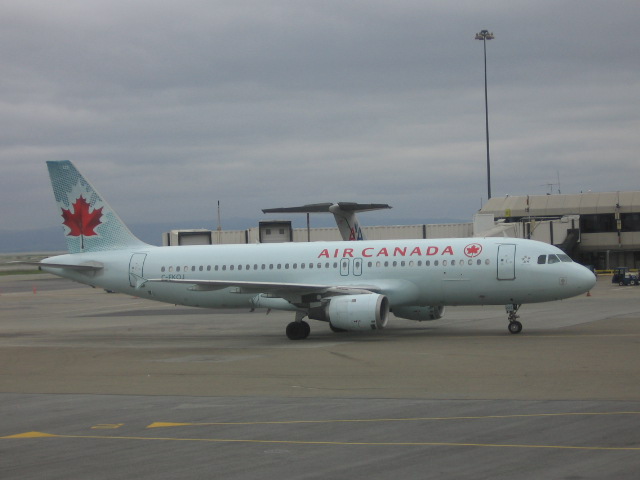
British Airways in certainly not alone in thinking that customers are stupid. Air Canada quietly started charging fuel surcharges on some partner award tickets earlier this fall. Did it hope no one would notice that they were asked to pay hundreds of dollars more than before? Finally, after Air Canada was exposed on various blogs, it admitted what it was doing and said that even more partner flights would be included in the new program.
And then there is the scandalous behavior of the United Arab Emirates’ Etihad Airways last month.
For two days in October, it advertised a First Class fare from Spain to Australia on its website for less than 400 euro. According to Spanish media reports, about 300 people bought tickets. The first of them traveled 10 days later, when an agent in Brussels noticed the fare and alerted the appropriate department. It was then determined that the fare was a mistake, and the passenger was downgraded to coach without any compensation. The rest of the tickets were canceled.
I’ve written about mistake fares before, but the issue here is not whether Etihad was wrong not to honor the tickets. I said scandalous because of a letter the airline sent to the passengers who decided to put up a fight and wanted to defend their rights through the media.
Etihad hired a law firm in Spain that in no uncertain terms threatened those customers in writing with litigation, if they dared to go to the media. The last time I checked, Spain was a democracy with freedom of speech, and the United Arab Emirates was something quite different. I don’t believe anything has changed since.
Related stories:
Airlines neglect non-flying experience
How much slack do the airlines deserve?
U.S. warns airlines on fare mistakes
Singapore Air’s inept agents, dark side
Continue reading about Airlines still think customers are stupid
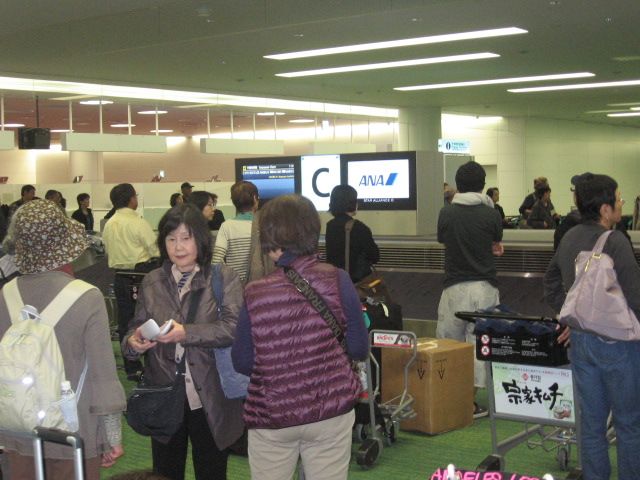
When I landed at Tokyo’s Haneda Airport today, I had one of my easiest, fastest and smoothest international arrival experiences. But I wondered where all those airlines that last year fought and won a fierce battle over the right to fly to Haneda actually were.
It appears the industry overestimated Haneda’s appeal to travelers, and it also might have miscalculated how many passengers remain in Tokyo, as opposed to those who connect to other destinations.
It’s true that the March earthquake and tsunami had a negative impact on travel to Japan in general, but traffic to and from the much bigger Narita Airport has largely recovered.
Haneda’s smaller size and proximity to central Tokyo provide a significant advantage. However, as I first wrote two years ago, most medium- and long-haul flights arrive and depart between 10 p.m. and 7 a.m. — not exactly the most preferred time by the majority of travelers. In addition, onward flight connections from Haneda are extremely limited.
That didn’t seem to bother most airlines last year, when the rights to fly from various foreign cities to Haneda were being awarded by the Japanese and other governments. U.S. carriers in particular made rather bold proposals. In the end, the Department of Transportation gave American Airlines the right to fly from New York, Delta from Detroit and Los Angeles, and Hawaiian Airlines from Honolulu.
American’s flights are nowhere to be found in its winder schedule, though they are planned for next summer. The same goes for Delta’s Detroit flights. It does operate the LA flight throughout the year, as does Hawaiian on the Honolulu route. Air Canada has postponed indefinitely its plan for flights from Vancouver, even though it started selling tickets late last year.
The Japanese carriers have trimmed their plans, too. All Nippon Airways has kept only LA in North America, while Japan Airlines serves San Francisco. European and other long-haul routes are also very few.
British Airways is the only foreign carrier outside Asia and the United States that currently flies to Haneda — and not every day. The Asian carriers include Air China, Asiana, Cathay Pacific, China Airlines, AirAsia, China Eastern, Eva Airways, Korean Air, Malaysia Airlines, Shanghai Airlines, Singapore Airlines and Thai Airways.
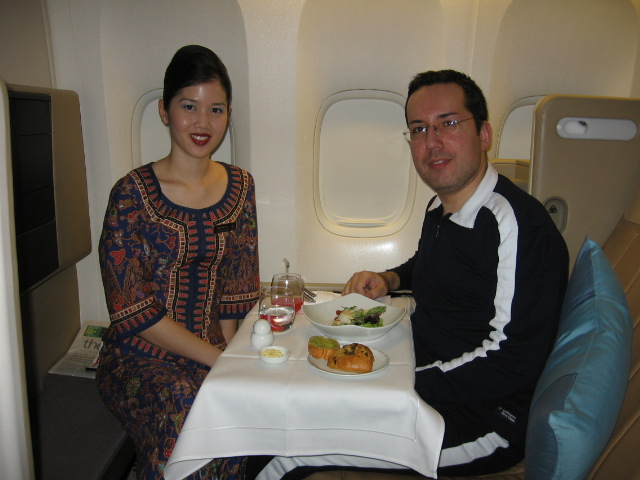
Flights loads to and from Haneda are not what those carriers expected — my Singapore Airlines flight was less than half-full in Economy and about two-thirds full in Business Class, where I had two lie-flat seats to myself, though even one would have been just fine.
Related stories:
When ‘open skies’ aren’t really open
U.S. flights likely to Tokyo Haneda
Continue reading about Carriers lose appetite for Tokyo Haneda
Air India’s entrenched corporate culture and internal Indian politics cost the carrier membership in the global Star Alliance. Although Star’s leadership went out of its way to help the airline meet the group’s more than 200 requirements, it finally gave up the futile effort last week and suspended accession talks.
Not surprisingly, Air India has been trying to assign blame to anyone but itself, pointing a finger at Lufthansa and accusing it of sabotaging the Indian carrier’s potential membership. Regrettably, it appears the airline has learned little from the nearly four-year experience. It needs to do some serious soul-searching if it wants to survive.
Star showed remarkable patience and continued to hope against hope that Air India would live up to its promise and achieve the necessary standards in safety, customer service, on-board experience, operations, etc. The alliance makes decisions based on consensus, and all its members voted to invite Air India in late 2007. The accession process is rather costly for both the candidate and the alliance, so no member voted lightly and fully expected the invitee to become to join the group.
They all underestimated the problems they would encounter. Air India was initially supposed to come on board in March 2009, but Star agreed to extend the qualification period. It really wanted its carriers to gain broader access to the large Indian market.
Star CEO Jaan Albrecht, about whom I’ve written several times, has been saying for years that one of his top priorities is filling the three major “white spots” in the alliance’s network: Brazil, India and Russia. Brazil’s TAM joined in 2010, though its merger with Chile’s LAN has created uncertainty about the new airline’s future allegiance. There is no obvious Russian carrier to be seriously considered at this time.
So it was very important for Star to full the big South Asia “white spot.” Albrecht himself made repeated trips to India in the last year in a tortuous effort to save Air India’s faltering bid.
However, the reality is that Air India never truly had a chance with the oldest and largest global alliance. I felt several times during this process that having Air India as a member anytime soon was more wishful thinking than a realistic expectation. In fact, many frequent travelers feared that Star might lower its standards to accommodate India’s national carrier.
To the alliance’s credit, that didn’t happen. Rejecting Air India’s application was the right decision, no matter how the carrier tries to spin the outcome. The group’s attention in India is now focused on Jet Airways, which is already a code-share partner of several Star carrier, and possibly Kingfisher Airlines — they both have a much stellar reputation than Air India’s.
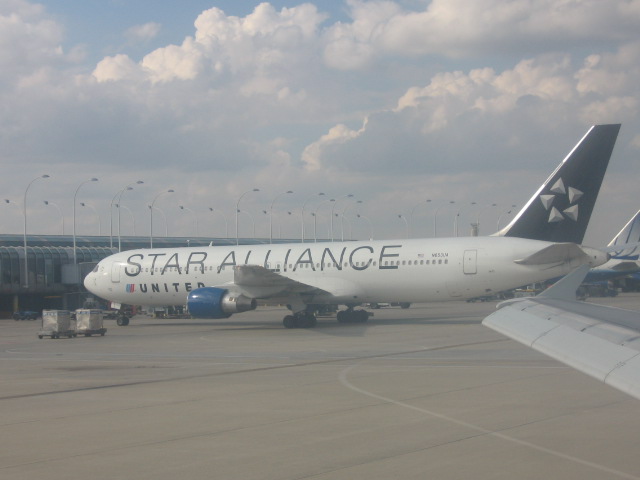
Star was founded by United Airlines, Lufthansa, Air Canada, Scandinavian (SAS) and Thai Airways. Today, it has 27 members from 25 countries, which have more than 4,000 aircraft in their fleets and fly over 600 million passengers a year on 21,000 daily flights to 1,160 airports in 181 countries.
Related stories:
Round-the-world fare mysteries revealed
Is India going too far in curbing airfares?
Continue reading about AirIndia had no chance with Star Alliance
My previously high regard for Singapore Airlines has been sinking quickly in the last week. Dealing with its agents regarding an award ticket has been one of my worst airline experiences in years. Now we learn that the carrier did little to help a passenger who suffered a heart attack during a flight last month.
When I wrote about Singapore’s “maddening perfection” in September, I pointed out that it deserves all the accolades it gets for its on-board products and in-flight services. However, the airline hasn’t quite understood that being a global first-class company means much more than that.
I usually try to stay calm with airline agents on the phone and give them the time they need, even when it’s clear they are not very good. That turned out to be a serious challenge last week with Singapore agents assigned to the carrier’s frequent-flier program, KrisFlyer. It’s stunning how poorly trained they are, even though they are based in Singapore — not India, as their accents suggest. A few years ago, the carrier closed its Los Angeles call center, where agents were much better.
I wanted to change the dates of three out of four flight segments on an award ticket entirely on Air Canada, Singapore’s partner in the global Star Alliance. I booked it a few months ago with the last KrisFlyer miles I’ll ever have. As usual, I’d done my homework using the All Nippon Airways’ website, which is the only site showing award availability on every Star carrier. All flights I requested had an open seat.
Normally, if a Star airline has provided a seat for mileage redemption on StarNet, the alliance’s “middleware,” any member has access to that seat on a first-come-first-served basis. You probably know how that system works from my columns about United’s StarNet blocking.
Still, there is a small chance an agent may not see exactly what I see, due to using different systems, time delays and other variables. So when I called Singapore, I gave the agent my first segment and asked him to check for availability. He wanted to know all three flights. I said I couldn’t book the return unless I knew for sure on what day my outbound flight would be. He responded that he couldn’t look for seats one by one, but had to collect all the information from me before searching.
Most airline agents can tell you immediately whether an award seat is available on a certain flight — they either look at inventory or, in rare cases, request a partner seat and see if the other airline confirms it. I later verified with several other Singapore agents that what my first agent told me is indeed how they do things over there. So I gave him all my three new flights. Having written them down, he wanted to read them back to me before starting his search. That took over a minute of odd stumbling over what one would have thought was someone else’s handwriting.
My patience was almost running out when the real shocker came — he asked on what number he could call me back once he had looked for seats. Seriously? Award seats could vanish in seconds, let alone in whatever time he needed to perform what apparently amounted to a rather complex task. I said I preferred to hold while he was searching.
After keeping me on hold for 15 minutes, he disconnected the call without coming back. I called again and went through the same motions with another agent. Following a 10-minute hold, he said one of the new flights wasn’t available. I went back to the All Nippon website — that seat was gone indeed. After all, it had been more than half an hour since I’d first called.
Make no mistake about it — I lost a seat because of the incompetence and poor training of the Singapore agents, as well as the carrier’s inefficient system. Such lack of professionalism is to be expected from a third-world airline, but not from a carrier that is often named the best in the world in various rankings.
Slightly off point, the second agent also said that another one of the flights I wanted was not available — however, the All Nippon site was still showing an open seat. Even now, several days later, that flight shows as available on the site. I just called Singapore and a third agent said she couldn’t see it. I wonder if Singapore does its own blocking these days, taking its cue from United.
In my September column, I also wrote about Singapore employees narrowly following rules and not applying their own best judgment to specific situations that inevitably arise during air travel. In other words, they don’t really exhibit much humane behavior.
I was still surprised to learn this week about an utterly puzzling Singapore decision in March.
Max Pearson, a co-host of “The World Today” BBC program to which I listen almost every day, flew to London on Singapore on his way back home from covering the Japan earthquake and tsunami. Shortly after taking off from Singapore, he suffered a heart attack. The airline refused his request to return to Singapore or divert the flight to the nearest appropriate airport, so he could get the care he needed.
Singapore says it took the measures it deemed necessary, implying that Pearson’s condition was not serious enough to justify a diversion. Obviously, diversions are very expensive for an airline, but they are covered by insurance. Plus, Pearson had what has been described by media reports as a “life-saving surgery” as soon as he arrived in London.
It remains to be determined if the more than 12 hours Pearson had to endure on the Singapore plane might have complicated his condition.
Related stories:
Singapore Airlines’ maddening perfection
What to do with empty premium seats?
Airlines require credit cards at check-in
Airlines want budget, premium fliers
Continue reading about Singapore Air’s inept agents, dark side
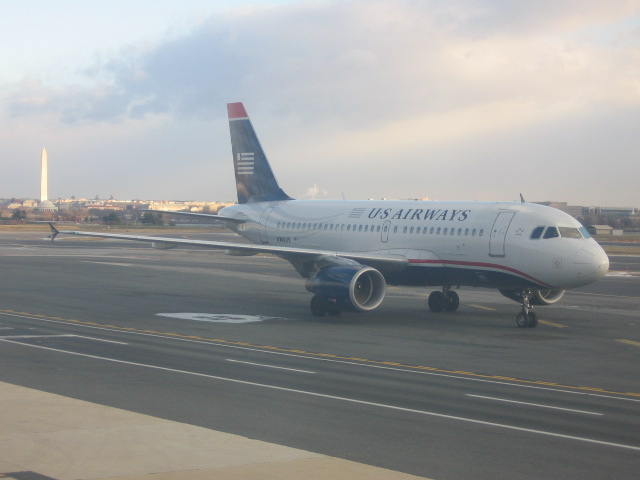
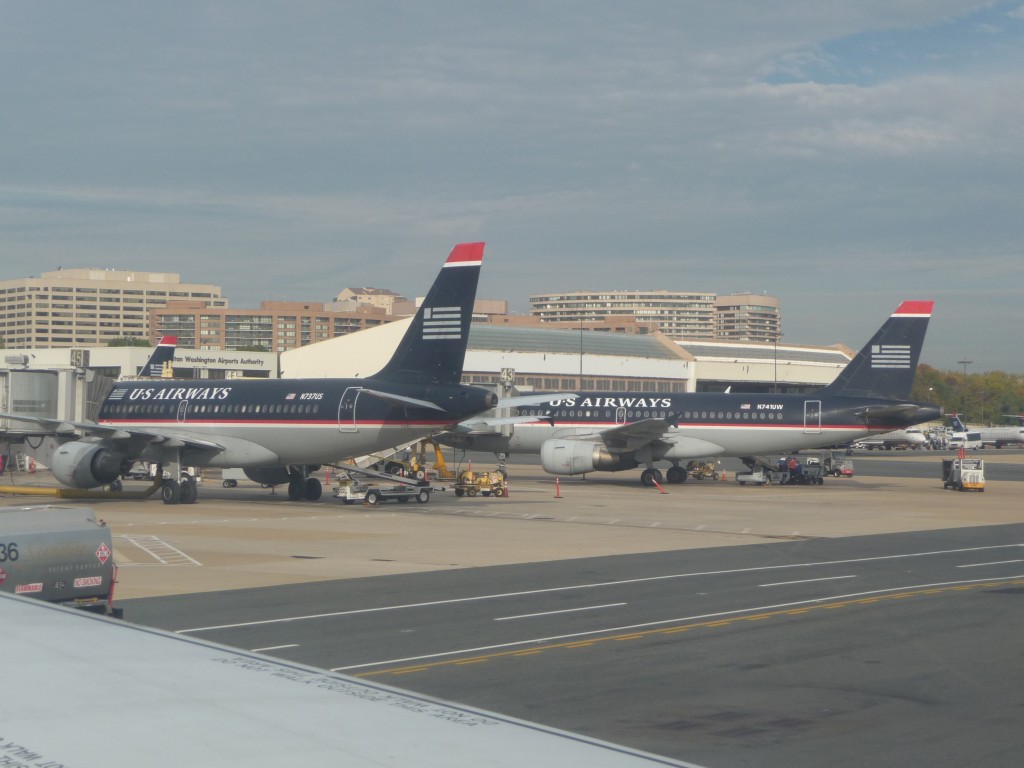
US Airways has denied recent suspicion that it has begun to block award seats made available by its Star Alliance partners for mileage redemption by members of its Dividend Miles program — a practice pioneered by United Airlines, which I first exposed in 2008.
The airline has been silent on the issue since reports about apparent blocking surfaced last fall. Many travelers said they found award inventory on various Star carriers, using one or more of the publicly available sources — the websites of All Nippon Airways, Continental Airlines and Air Canada — but US Airways agents were unable to see those available seats.
To some of us, that looked very much like StarNet blocking — manipulating the alliance’s award “middleware,” which provides access to any Star partner’s inventory on a first-come-first-served basis, to avoid paying other carriers for seats booked on their flights. The patterns resembled those on United, with the most filtering applied to Business and First Class cabins, though some fliers stumbled on coach seats as well. The most affected availability appeared to be on Lufthansa, but also on Swiss, United and others.
In addition, it made financial sense for US Airways to be limiting access to premium partner awards. In the last couple of years, it has in effect been printing miles with lightening speed, as a result of extraordinary promotions it has had, including selling miles at 100-percent bonus. Many Dividend Miles members bought miles and redeemed them for Business and First Class on partner flights, which likely weighed heavily on US Airways’ budget.
Several travel bloggers wrote about the issue, including Gary Leff on “View from the Wing” and Ben Schlappig on “One Mile at a Times.” Leff was more inclined to give the airline the benefit of the doubt, suggesting the problem might have been caused by technical glitches, as well as US Airways agents’ ignorance that some of their partners have First Class in addition to Business.
I’m not a big Dividend Miles fan, though I did help my sister buy miles for a trip to Europe with her family last summer, so it took me some time to look into the issue. I finally got around to it and alerted a US Airways contact at its Phoenix headquarters who has been very helpful in the past — Valerie Wunder, associate manager of media relations. She asked the powers that be and gave me the following response:
“We don’t block award inventory on other airlines, nor do we do the inverse — other Star partners block us from seeing their inventory to maximize their revenues.”
Probably the most frequent difficulty Dividend Miles members have been experiencing has to do with intercontinental First Class awards on Lufthansa, Swiss and others, so I asked Wunder if US Airways may be trying to restrict access to those specific seats.
“We have no restrictions on redemptions, regardless of class,” she said.
However, she offered no explanation for the problem. The mystery continues.
Related stories:
Clarifying United’s StarNet blocking
US Airways hears feedback, fixes website
New Lufthansa business class in a year
Continental shows new transparency