Air New Zealand
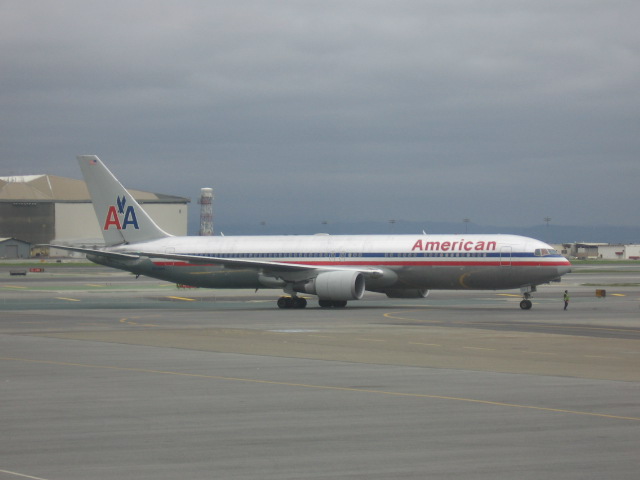
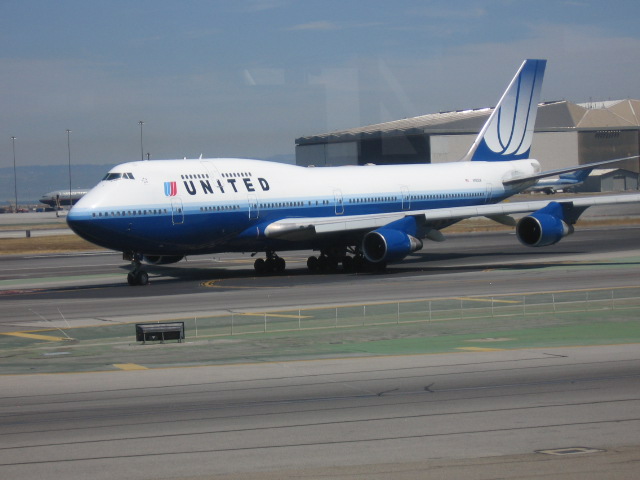
American Airlines has finally decided to take advantage of the problems many United Airlines fliers have experienced since the merger with Continental Airlines was completed on March 3. In an extremely rare move, American is now offering conditions-free top-elite status match to United’s most loyal customers.
Having read and heard about many United customers’ troubles after the carrier adopted Continental’s reservations system — and having encountered some problems myself — I e-mailed American spokesman Tim Smith on March 16. Smith has been the best PR person to deal with at any airline since I started writing my column in the Washington Times in 2008. I asked him whether American had any intention of capitalizing on United customers’ dissatisfaction by stealing some of them away through a status-match offer.
He involved his colleague Stacey Frantz, who works directly with American’s AAdvantage program. She said she couldn’t comment on “marketing strategies,” but it was apparent from her and Smith’s messages that American wasn’t considering such a move at the time. More than a month later, however, it decided to follow my suggestion — not that I’m taking any credit.
When the promotion first started last week, elite United fliers at all levels were eligible, but on Friday, American decided to limit participation only to United Premier 1K members, the highest published level. A memo was sent out to customer service agents on that day. So if you are a 1K, you can get Executive Platinum status on American.
The carrier is not advertising the promotion, so you need to call AAdvantage Customer Service to request an e-mail outlining the offer. Status is valid through February 2013, and all you have to do is submit proof of your current elite status with United. On the rare occasions when American has offered matches in the past, it has extended challenges, meaning you had to fly a certain number of miles during a certain period to qualify. There are no conditions this time. Challenges to Executive Platinum have been even rarer than to other levels.
But is Executive Platinum better than 1K, and is American better than United? Let’s review.
Executive Platinum advantages
This is truly American’s top elite level. Concierge Key, the unpublished super status that George Clooney’s character had in “Up in the Air,” is awarded only by invitation to very few hyper-frequent and high-paying travelers. In contract, United’s Global Services status has been given to so many people — albeit still “by invitation” — that it has somewhat devalued the 1K level.
Executive Platinum members are the only ones eligible for complimentary domestic upgrades that clear as early as 100 hours before a flight — at United, all elite fliers are, and lower-level elites on full-fare tickets trump 1K members on discounted fares. United also aggressively sells domestic upgrades at check-in for as little as tens of dollars to non-elites, while elites linger on waiting lists. As a result, the upgrade rates for 1Ks have gone down significantly.
As for international — or systemwide — upgrades, American is much more generous than United. Executive Platinum members get eight of those so-called eVIP certificates each year, compared to six for 1Ks. More importantly, on American, they are valid on all published fares, while United excludes its five lowest booking classes — S, T, L, K and G — requiring at least W class. That means you need to pay hundreds of dollars more on W class, and if your upgrade doesn’t clear, you’ve wasted your money.
American has the best domestic First Class soft product. It’s the only airline to still use linens and menus during meal service, as well as pillows and blankets on transcontinental flights. United used to have linens, pillows and blankets before the merger with Continental, but it lost them. The food also tends to be better on American. Many of its domestic planes have no in-flight entertainment at all, though wi-fi has been installed on a big part of its fleet.
As an Executive Platinum, you get Emerald status on the global Oneworld alliance, which gives you access to First Class lounges on foreign Oneworld members, such as Cathay Pacific and Qantas. The Star Alliance has only two levels, instead of Oneworld’s three, so United Gold, Platinum and 1K members get the same access to Business Class lounges.
American has dedicated agents working on the Executive Platinum phone line, and they are not only the best trained agents in the airline industry, but also the ones given the most authority and discretion to help customers in any way possible, even if that means sometimes bending the rules. United’s so-called 1K Desk is not really a dedicated desk — those agents service all callers, but 1Ks get priority in the queue.
No one knows if any of the above might change as a result of American’s Chapter 11 restructuring or in a potential merger with US Airways, but this is where things stand right now. For me, American’s main disadvantages are the limits of Oneworld, whose size is about half the Star Alliance’s, the hefty fuel surcharges imposed on award tickets with British Airways flights, and those old McDonnell Douglas planes American still flies. In addition, if you live in a United hub, it might be hard to give up nonstop flights to many destinations in favor of connections on American. That said, American often offers very low fares out of United hubs, while United does the same out of American hubs.
Premier 1K advantages
United offers 1K members so-called regional upgrade certificates, which can be used to confirm an upgrade on North and Central American flights at the time of ticketing — just like using miles or systemwide upgrades. Unfortunately, this year, United reduced the regional certificates from eight to four a year. It also eliminated the two upgrades million-mile fliers used to get annually. It’s worth noting that the Executive Platinum exclusive perk of complimentary upgrades on American compensates for the lack of certificates to a large extent, though those can be confirmed only within 100 of departure.
United offers instant upgrades without requiring any “instrument” to 1Ks on domestic M fares — all elites get the same benefit on the higher Y and B fares — as soon as the time of ticketing. The inventory is controlled separately and is not the same as regular First Class availability (it books in PN class).
United waives same-day confirmed changes on domestic flights for 1Ks, while American doesn’t for Executive Platinums. United also waives award booking, change and redeposit fees on tickets issued with 1K members’ miles — regardless of who the passenger is. American does so only if the Executive Platinum member is the passenger.
United allows stopovers on round-trip international award tickets. American permits those only in U.S. gateways — the city where you leave or arrive in the United States.
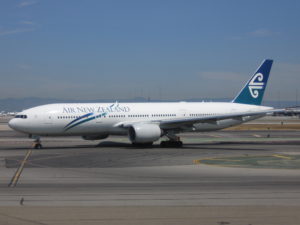
The biggest advantage United has is its membership in the Star Alliance, which has 25 member-carriers, including some of the best in the world, such as All Nippon, Asiana, Singapore, Air New Zealand and Swiss.
The biggest problem with United is that its new management doesn’t value long-term loyalty nearly as much as American’s — or United’s previous leadership team, for that matter. Unfortunately, my prediction in 2010, based on warnings from departing United executives at the time, came true after the merger was finalized. The current management apparently cares much more about making a quick buck. It prefers to sell an upgrade seat from Seattle to Washington Dulles to a non-elite flier for $99, as reported on FlyerTalk by a passenger who took advantage of that offer, rather than give the seat to a 1K member who spends tens of thousands of dollars on United a year. So much for complimentary upgrades.
At the end of the day, the choice is yours. If I’ve missed anything on either airline, feel free to let me know.
Related stories:
Did United choose the best rez system?
United, Continental execs at odds over loyalty program
American ends stopovers on ‘awards’
Continental shows new transparency
United executive breaks old barriers
Continue reading about American tries to entice top United fliers
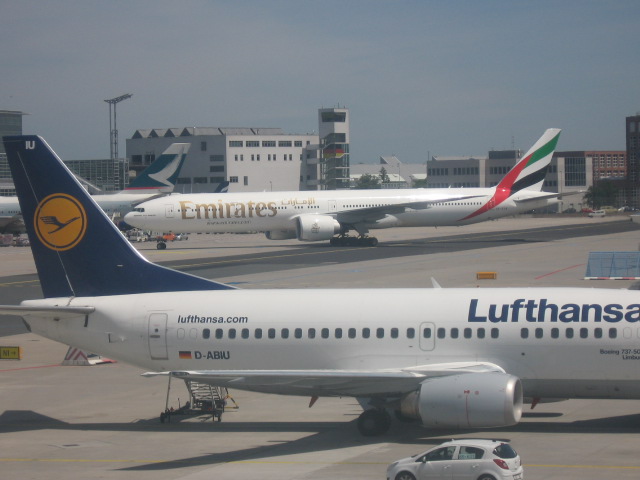
Lufthansa appears to have listened to the recent criticism of its decision to install its old angled business-class seats on the newly arrived Airbus 380 aircraft — finally, truly flat seats are planned when its first Boeing 747-800 enters service in late 2011.
Many Lufthansa customers were puzzled and disappointed when the German carrier didn’t bother to introduce fully flat beds on the A380. It was the perfect opportunity — the current seats have been inferior to those of many competitors for years and don’t quite fit the image of a leading airline, which Lufthansa certainly is. In addition, it rolled out brand-new first-class seats on the A380.
“The next major overhaul will be with delivery of the 747-8I in late 2011,” Lufthansa spokesman Martin Riecken said in an e-mail message. “We already have a test seat on one route, but the final design decisions are still not taken. We improved the current business class slightly with the introduction of the A380 in May this year — mainly ergonomic improvements.”
The company has attributed its decision to stick with the old seats to the delayed A380 delivery, saying they were appropriate when the aircraft orders were first made. It’s unclear, however, if Airbus would have allowed Lufthansa to changed its mind, given that interior work didn’t start until just months before the first delivery in May.
It’s unlikely Lufthansa tried to amend its order, judging by its leadership’s previous comments that the old seats, which are lie-flat but not horizontal to the floor and were first installed in 2003, were sufficient for the time being.
“Our existing seat is not at the very top of the market compared with certain [business class] seats offered by some carriers,” Marianne Sammann, general manager for Lufthansa and Austrian Airlines in Britain and Ireland, was quoted as saying in a Wednesday article in Britain’s Business Traveller magazine. “Perhaps with hindsight we would have considered an alternative, but at the time of ordering the A380 our existing seat was the right product.”
Among Lufthansa’s partners in the global Star Alliance, Air New Zealand, Singapore Airlines, Air Canada, United Airlines and Swiss International Airlines offer truly flat beds in business class.
Interestingly, Singapore reacted to the A380 delay differently from Lufthansa — instead of waiting, it installed the new seats on an order of new Boeing 777-300ER aircraft, which began arriving in 2006.
United Airlines rolled out its new seats in 2008, though it has retrofitted only about half of its fleet so far. Still, those seats are much better than Lufthansa’s, and while United’s soft product may not be as good as Lufthansa’s, United is my choice on an overnight flight to Europe.
Last year, Swiss International Airlines put fully flat beds on its new Airbus 330-300 planes, but it currently has only eight of them. Both Swiss and Austrian are owned by Lufthansa, though Austrian’s hard product is inferior to the other two.
Outside the Star Alliance, Air France, Australia’s Qantas Airways and Emirates all introduced new truly flat beds on their A380 aircraft. Air France, however, also disappointed its customers recently by announcing plans not to install the new seats on other aircraft types.
Lufthansa has 15 A380 planes on order, with the option to buy another five. No details about the new business-class seats are available yet, but it’s clear it will take a few years for its entire fleet to be reconfigured.
Related stories:
What to do with empty premium seats?
Airlines cut back on first-class service
Lufthansa agent’s ‘mistake’ stacks up
Continue reading about New Lufthansa business class in a year
Just as many loyal United Airlines customers hoped that its expected merger with Continental Airlines would put an end to United’s massive blocking of “award” seats made available for mileage redemption by its partners in the global Star Alliance, the carrier made a government filing that raised new questions about its filtering policy.
With all the complex issues United and Continental have to resolve before completing their merger, which would create the world’s largest airline, the “award” blocking is hardly a top agenda item. In fact, I’d be surprised if it has come up at all in their negotiations so far.
However, it’s an important matter for many elite members of United’s Mileage Plus program, as shown by the overwhelming response to my original column exposing the previously secret practice in September 2008. A thread on FlyerTalk.com, the largest online travel community, that was started at the time has had more than 100,000 views and over 2,000 responses to date…
Continue reading about United’s award blocking an issue in Continental merger
Do travel blogs influence your decision-making when booking a trip? Does it make a difference to you whether an airline a blogger writes about has treated him to a free flight? When it comes to ethics, should readers be less strict with blogs than with the mainstream media?
There are hundreds, if not thousands, of blogs covering all aspects of travel — both from a business and leisure perspective. Most of them haven’t had a new post in months. As all initial enthusiasts eventually discover, maintaining a blog in any field is much more difficult than starting one.
Many travel blogs are dominated by the author’s personal experiences on the road and feature numerous photographs of airplane seats, in-flight meals and hotel rooms. They are informative — even educational — and sometimes entertaining, but their readership tends to be relatively limited…