Elite Status
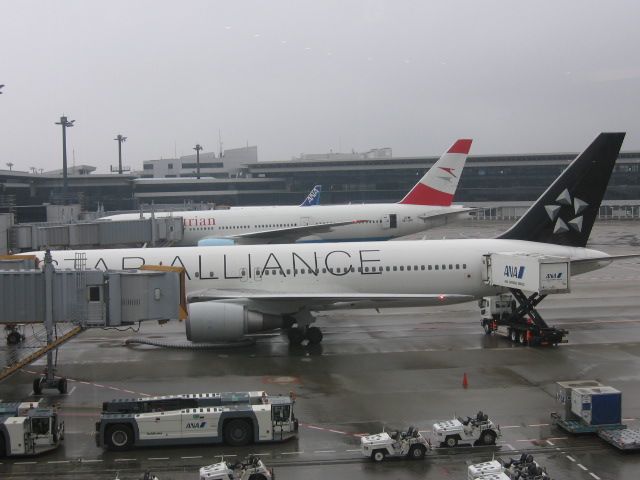
The Star Alliance’s 15th birthday this month reminds me that a global airline alliance is one of the most fascinating concepts in the history of commercial aviation. It’s also an example of the airline industry’s creative thinking aimed at increasing revenues. However, unlike some of the questionable practices I described in “Decoding Air Travel,” this one has dramatically improved the customer experience.
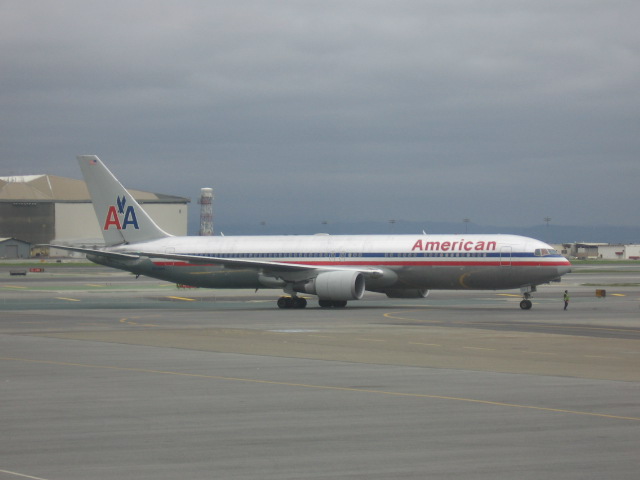
It’s fascinating for me personally, because it combines my two passions and areas of expertise, international affairs and air travel. In fact, what alliance executive teams do every day is nothing short of diplomacy. International negotiations and dispute resolution are two of their specialties, and a big part of their duties is selecting new members, not unlike NATO and the European Union.
When Star was formed in 1997, the idea was not only to represent its members’ best interests — that’s primarily the job of trade associations — but to boost business by feeding passengers from one carrier to another in the smoothest possible way. Soon, airline diplomacy began in earnest — first among alliance members, which after all are rivals in a fiercely competitive industry, and then with airports, transportation authorities and governments around the world. The other two global alliances are Oneworld and SkyTeam.
“Much of what we do is diplomacy,” Jaan Albrecht, Star’s former CEO, told me when I first met him in the alliance’s Frankfurt office in 2008. “We try to educate airports, publics and governments about the benefits that come from a network like ours.” Albrecht is now CEO of Austrian Airlines, a Star member.
The benefits for customers that come with an alliance membership are both tangible and intangible. The first category includes interline ticketing and check-in, harmonized schedules to provide seamless connections, worldwide lounge access, mileage-earning and redemption opportunities, as well as elite-status recognition across the alliance, and round-the-world and other special-fare products.
It’s also important to appreciate the intangible benefits. The most important to me is that the experience on an alliance’s various carriers is so similar and yet so different. I like the predictability created by consistent and aligned policies — knowing how things work and what to expect gives me comfort at the airport and in the air. At the same time, I love the individual touches that each airline adds to the travel experience, based on its national, cultural and even corporate uniqueness.
For example, Scandinavian Airlines and Thai Airways are both Star members, and technically there is no difference which one you are booked on — you will earn miles, check-in all the way through to your final destination and access their lounges anywhere in the world. But when you enter a lounge or board a plane, you will never confuse Scandinavian with Thai.
Critics of the alliance concept usually argue that consumers suffer, because closer cooperation among airlines leads to higher fares. They refer to special arrangements, known as anti-trust immunity exceptions, which are granted to some carriers so they can coordinate fares, schedules and inventory on certain routes. The largest members of the three alliances have received such waivers on intercontinental routes. Some have gone a step further, securing approval to operate certain routes as a joint venture. Price-fixing is illegal, so these carriers needed the exceptions to publish identical fares — and if you compare their tariffs, you will see they are indeed identical.
When granting the immunity, the Department of Transportation is careful to exclude routes on which the only existing service is provided by the carriers seeking the waiver — those exclusions are known as “carve-outs.” So the government is supposed to protect consumers, and it seems it’s doing its job. Overall, there is no question in my mind that airline alliances have had a positive impact on customers.
All three alliances have had troubles lately, as member-carriers have experienced hard times, filed for bankruptcy or disappeared all together. But that’s the nature of the airline business. My only criticism is that none of the groups has done a good job at reaching out to a broad audience to explain and promote the benefits I described above.
Here is the current membership of each alliance:
Star Alliance
Adria, Aegean, Air Canada, Air China, Air New Zealand, All Nippon, Asiana, Austrian, Blue1, Brussels, Croatia, EgyptAir, Ethiopian, LOT Polish, Lufthansa, SAS, Singapore, South African, Swiss, TAM, TAP Portugal, Thai, Turkish, United, US Airways.
Accepted future members: Copa, Eva, Shenzhen, TACA.
Oneworld
AirBerlin, American, British, Cathay Pacific, Finnair, Iberia, Japan, LAN, Qantas, Royal Jordanian, S7.
Accepted future members: Kingfisher, Malaysia.
SkyTeam
Aeroflot, AeroMexico, AirEuropa, Air France, Alitalia, China Airlines, China Eastern, China Southern, Czech, Delta, Kenya, KLM, Korean, Tarom, Vietnam.
Accepted future members: Garuda Indonesia, Aerolíneas Argentinas, Saudi Arabian, Middle East, Xiamen.
Continue reading about Why airline alliances are good for fliers
American Airlines has finally decided to take advantage of the problems many United Airlines fliers have experienced since the merger with Continental Airlines was completed on March 3. In an extremely rare move, American is now offering conditions-free top-elite status match to United’s most loyal customers.
Having read and heard about many United customers’ troubles after the carrier adopted Continental’s reservations system — and having encountered some problems myself — I e-mailed American spokesman Tim Smith on March 16. Smith has been the best PR person to deal with at any airline since I started writing my column in the Washington Times in 2008. I asked him whether American had any intention of capitalizing on United customers’ dissatisfaction by stealing some of them away through a status-match offer.
He involved his colleague Stacey Frantz, who works directly with American’s AAdvantage program. She said she couldn’t comment on “marketing strategies,” but it was apparent from her and Smith’s messages that American wasn’t considering such a move at the time. More than a month later, however, it decided to follow my suggestion — not that I’m taking any credit.
When the promotion first started last week, elite United fliers at all levels were eligible, but on Friday, American decided to limit participation only to United Premier 1K members, the highest published level. A memo was sent out to customer service agents on that day. So if you are a 1K, you can get Executive Platinum status on American.
The carrier is not advertising the promotion, so you need to call AAdvantage Customer Service to request an e-mail outlining the offer. Status is valid through February 2013, and all you have to do is submit proof of your current elite status with United. On the rare occasions when American has offered matches in the past, it has extended challenges, meaning you had to fly a certain number of miles during a certain period to qualify. There are no conditions this time. Challenges to Executive Platinum have been even rarer than to other levels.
But is Executive Platinum better than 1K, and is American better than United? Let’s review.
Executive Platinum advantages
This is truly American’s top elite level. Concierge Key, the unpublished super status that George Clooney’s character had in “Up in the Air,” is awarded only by invitation to very few hyper-frequent and high-paying travelers. In contract, United’s Global Services status has been given to so many people — albeit still “by invitation” — that it has somewhat devalued the 1K level.
Executive Platinum members are the only ones eligible for complimentary domestic upgrades that clear as early as 100 hours before a flight — at United, all elite fliers are, and lower-level elites on full-fare tickets trump 1K members on discounted fares. United also aggressively sells domestic upgrades at check-in for as little as tens of dollars to non-elites, while elites linger on waiting lists. As a result, the upgrade rates for 1Ks have gone down significantly.
As for international — or systemwide — upgrades, American is much more generous than United. Executive Platinum members get eight of those so-called eVIP certificates each year, compared to six for 1Ks. More importantly, on American, they are valid on all published fares, while United excludes its five lowest booking classes — S, T, L, K and G — requiring at least W class. That means you need to pay hundreds of dollars more on W class, and if your upgrade doesn’t clear, you’ve wasted your money.
American has the best domestic First Class soft product. It’s the only airline to still use linens and menus during meal service, as well as pillows and blankets on transcontinental flights. United used to have linens, pillows and blankets before the merger with Continental, but it lost them. The food also tends to be better on American. Many of its domestic planes have no in-flight entertainment at all, though wi-fi has been installed on a big part of its fleet.
As an Executive Platinum, you get Emerald status on the global Oneworld alliance, which gives you access to First Class lounges on foreign Oneworld members, such as Cathay Pacific and Qantas. The Star Alliance has only two levels, instead of Oneworld’s three, so United Gold, Platinum and 1K members get the same access to Business Class lounges.
American has dedicated agents working on the Executive Platinum phone line, and they are not only the best trained agents in the airline industry, but also the ones given the most authority and discretion to help customers in any way possible, even if that means sometimes bending the rules. United’s so-called 1K Desk is not really a dedicated desk — those agents service all callers, but 1Ks get priority in the queue.
No one knows if any of the above might change as a result of American’s Chapter 11 restructuring or in a potential merger with US Airways, but this is where things stand right now. For me, American’s main disadvantages are the limits of Oneworld, whose size is about half the Star Alliance’s, the hefty fuel surcharges imposed on award tickets with British Airways flights, and those old McDonnell Douglas planes American still flies. In addition, if you live in a United hub, it might be hard to give up nonstop flights to many destinations in favor of connections on American. That said, American often offers very low fares out of United hubs, while United does the same out of American hubs.
Premier 1K advantages
United offers 1K members so-called regional upgrade certificates, which can be used to confirm an upgrade on North and Central American flights at the time of ticketing — just like using miles or systemwide upgrades. Unfortunately, this year, United reduced the regional certificates from eight to four a year. It also eliminated the two upgrades million-mile fliers used to get annually. It’s worth noting that the Executive Platinum exclusive perk of complimentary upgrades on American compensates for the lack of certificates to a large extent, though those can be confirmed only within 100 of departure.
United offers instant upgrades without requiring any “instrument” to 1Ks on domestic M fares — all elites get the same benefit on the higher Y and B fares — as soon as the time of ticketing. The inventory is controlled separately and is not the same as regular First Class availability (it books in PN class).
United waives same-day confirmed changes on domestic flights for 1Ks, while American doesn’t for Executive Platinums. United also waives award booking, change and redeposit fees on tickets issued with 1K members’ miles — regardless of who the passenger is. American does so only if the Executive Platinum member is the passenger.
United allows stopovers on round-trip international award tickets. American permits those only in U.S. gateways — the city where you leave or arrive in the United States.
The biggest advantage United has is its membership in the Star Alliance, which has 25 member-carriers, including some of the best in the world, such as All Nippon, Asiana, Singapore, Air New Zealand and Swiss.
The biggest problem with United is that its new management doesn’t value long-term loyalty nearly as much as American’s — or United’s previous leadership team, for that matter. Unfortunately, my prediction in 2010, based on warnings from departing United executives at the time, came true after the merger was finalized. The current management apparently cares much more about making a quick buck. It prefers to sell an upgrade seat from Seattle to Washington Dulles to a non-elite flier for $99, as reported on FlyerTalk by a passenger who took advantage of that offer, rather than give the seat to a 1K member who spends tens of thousands of dollars on United a year. So much for complimentary upgrades.
At the end of the day, the choice is yours. If I’ve missed anything on either airline, feel free to let me know.
Related stories:
Did United choose the best rez system?
United, Continental execs at odds over loyalty program
American ends stopovers on ‘awards’
Continental shows new transparency
United executive breaks old barriers
Continue reading about American tries to entice top United fliers
How do you make sure a whirlwind trip round the world in just a week doesn’t wear you out and affect your productivity? Things went surprisingly well for me last week, as I flew from Washington to Munich to Paris to Bangkok to Islamabad, back to Bangkok, on to Seoul and back to Washington, so I thought I’d share the experience.
The first thing I have to say is that I don’t drink coffee or take sleeping pills. My only medicine when it comes to air travel is securing the best comfort and luxury I can — I need my flat beds, gourmet meals, lounges with showers, and sometimes even chauffeur-driven cars to connecting flights. I certainly can’t pay for them, but we’ll come to that momentarily.
Second, if you are going to circle the planet in a week, fly to the east, not the west. As much as I dislike those overnight flights from the U.S. East coast to Europe, because they are too short to get decent sleep, moving in that direction is much better in terms of adjusting to time differences. I was never jet-lagged during or after my journey.
The trip, which was blessed by the State Department, was part of the final research phase for my upcoming book on the U.S. Foreign Service, “America’s Other Army,” during which I visited the U.S. embassies in France, Thailand and Pakistan. Overall, I’ve visited almost 60 diplomatic and consular missions for this project, which began with my 2004 newspaper series, and interviewed more than 600 diplomats and other officials.
I used frequent-flier miles, but instead of getting what would have been a very expensive and restrictive round-the-world ticket, I issued two one-way tickets: One in First Class from Washington to Asia over the Atlantic, with a 24-hour stop in Europe, and another one in Business Class from Asia back home over the Pacific.
As I wrote in my first book, “Decoding Air Travel,” the best use of miles is for premium cabins. But why did I book First Class on the outbound for 80,000 miles, and not Business for 60,000? When I use miles, I make an effort to fly on the world’s best airlines. Of those, on my departure date Lufthansa was the only option, but it has some of the worst Business Class seats in the civilized world. First Class, on the other hand, is quite good, except for the small TV screen — that’s not the case with a few aircraft that have the new First seats with much bigger screens.
The more important reason for choosing First Class, however, was Thai Airways, which operates its Paris-Bangkok flights on planes leased from India’s Jet Airways that have private cabins with sliding doors in First. I had flown in one of those cabins from Tokyo to Bangkok a couple of months earlier and wanted to experience a much longer flight in such luxury. In addition, Thai Airways offers First Class passengers complimentary full-body massages in its Royal Orchid Spa at the Bangkok airport.
My Lufthansa flight from Washington to Munich was excellent, as expected, with top-notch flight attendants, which can’t be said of the ground staff at Dulles airport. I liked the new design of the pajamas they give First Class passengers. The food was consistent with my previous experiences, including the signature black caviar and several other appetizers. Although the seats are rather old by now, I always found the bed very comfortable.
I broke my habit of not having breakfast on overnight flights to Europe so I could have enough time for a shower in the First Class lounge in Munich before my connecting flight, since I had a full schedule as soon as I arrived in Paris. When it was time to board, I was whisked to my Paris plane in a Porsche.
The ambassador to France, Charles Rivkin, one of the best non-career ambassadors I know, couldn’t have been a better host, opening the doors of both his embassy and residence, and having a dinner in my honor, according to the elegant menu, with some of the top French journalists. My 24 hours in Paris were very productive, thanks to everyone I met, and especially spokesman Paul Patin, who put together my schedule at a very short notice.
It was time for the 11-hour flight to Bangkok, which didn’t disappoint, except for turbulence during most of it — and a 90-minute delay because of a flight attendant who fell ill just as we prepared to take off. After great meals, three films and a few hours of sleep behind closed doors, I was met by a Thai representative upon arrival in Bangkok and driven in a gold cart to the First Class lounge, where I took a shower before heading to the embassy.
Another full day of meetings and interviews followed, including two sessions with Ambassador Kristie Kenney, a career Foreign Service officer and one of the most capable, according to her colleagues — I hadn’t met her before. With the help of embassy spokesman Walter Braunohler, I covered enough ground with employees in several embassy buildings. The only slightly unpleasant part of the day was the 90°F temperature, especially after 20°F in Paris just hours earlier.
There was no time for a massage at the airport in the morning, but I managed to squeeze one in just before I flew to Islamabad in the evening. Unlike my plane from Paris, most Thai aircraft have old unimpressive seats in Business Class — and no First Class. Still, the food and service were up to standard, and I got some sleep before my 10:30 p.m. arrival in Pakistan.
My visit to Embassy Islamabad was the longest part of the trip — two full days and nights — and I was hosted by Ambassador Cameron Munter, whom I’ve known for eight years and consider one of the most brilliant serving U.S. diplomats. I also think he has possibly the most challenging job in the Foreign Service. He has assembled an outstanding team at the embassy, which actually surprised me, given the perception in Washington that few good officers volunteer to serve in Pakistan.
Munter went out of his way to accommodate my research needs, as did his chief of staff, Scott Kofmehl, with help from embassy spokesman Mark Stroh and many others.
On my flight back to Bangkok, I managed to get one of the embassy employees on a coach ticket into Business Class, thanks to an oversold Economy cabin. I had a long enough layover in Bangkok for a light breakfast in the lounge, some work and a foot massage, which is offered to Business Class passengers.
Then my Thai flight to Beijing had a significant mechanical delay, causing me to miss my connection to Washington on United Airlines.
While the Thai staff in the Business lounge scrambled for two hours to find an alternative way to get me home, I decided to apply in practice one of the things I preach in “Decoding Air Travel”: How to turn a negative airline situation into a positive one. In any case, I was looking at an arrival in Washington more than 12 hours later than scheduled, so the goal was to minimize my delay and stay in Business Class — preferably on an airline that has fully flat beds.
Korean Air met those requirements, and I added to my list a very good airline I’d never flown before — in fact, the 52nd carrier on that list. Korean Air is not in the Star Alliance, but to their credit, the Thais agreed to pay the Koreans a full Business Class fare in order to accommodate me, even though I was on an award ticket. They also agreed to let me spend the remaining 10 hours before my flight to Seoul in the First Class lounge, where I had a great lunch, did more work and slept for a few hours in a real bed, in one of their sleeping rooms.
Of course, they wouldn’t have done any of those things had I not been insistent — actually, a pain may be a better description. But I felt it was their fault, and they were responsible for rectifying the situation. I also knew they wouldn’t offer any compensation — Asia doesn’t have the rules Europe, and to some extent the United States, have — so I had to get whatever I could in other forms.
To sum up, my weeklong round-the-world trip didn’t wear me out — and now you know why.
Related stories:
Round-the-world fare mysteries revealed
Foreign Service series: America’s other army
The greatest understated U.S. diplomat
Who qualifies to be a U.S. ambassador?
In air with Clinton on first trip abroad
Continue reading about Round the world in a week, without pain
In my 18 years in journalism, I always believed that the media’s role is to inform, entertain and educate. These days, the education part seems to be missing in many cases, and one area where that’s quite evident is air travel. With the airline system being so complex and frustrating, should the media be more helpful in guiding travelers through the maze?
I asked myself that question as I was preparing for an interview about my book, “Decoding Air Travel,” on NPR’s Weekend Edition last week. The overwhelming positive response to the interview and the sales numbers — more than 500 books sold in two days — show that the public badly needs help in navigating the airline universe.
But does the media have a responsibility to provide such help? When it reported recently that a frequent flier had flown 10 million miles on United Airlines, should it have used the opportunity — or news peg, as we call it — to tell readers or viewers how they can achieve elite status and accumulate a lot of miles? When it covers various problems passengers experience during a trip, should it offer advice on how to avoid those problems?
That was exactly my intention when I began writing my “On the Fly” Column in the Washington Times three years ago. The newspaper format required me to cover news at times — and not quite “news you can use” — but I did my best to produce columns that educated travelers, based mostly on my own experience and the extensive knowledge I’d acquired while flying around the world for a decade.
I also started paying more attention to other travel writers, which I hadn’t done before because my primary job was covering diplomacy and foreign affairs. I was astonished how little many writers knew about the airline system — and even more astonished that they didn’t realize it.
I later learned that the main reason for that is their limited experience as normal travelers — people like you and me who travel for work or leisure. Those writers get lots of free trips from the industry, and many call in favors during personal travel as well. Most of them have never had top-tier elite status, haven’t had to strategize how to get upgrades or figure out how airfares work.
I keep reading stories that don’t make a difference between nonstop and direct flights, as well as statements that a certain airline will begin to fly to a new destination when it has simply signed a code-sharing agreement with another carrier to put its own number on already existing flights.
The airline system is dysfunctional enough for the media to be adding to the confusion and just entertain the public instead of educating it.
Related stories:
My book ‘Decoding Air Travel’ is out
‘Decoding’ eBook and new Book Club
Continue reading about Is media coverage of air travel helpful?
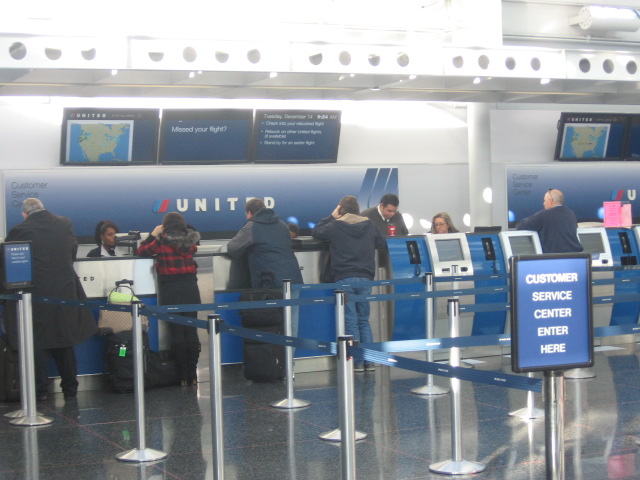
It’s one of the unavoidable realities of airline customer service that three agents will often give you three different answers to the same question. But I recently discovered a more rare phenomenon: Dozens of agents consistently doing something the wrong way. Was it lack of knowledge or deliberately ignoring the rules?
Before I continue, let me say that there are numerous superb airline agents to whom I’m grateful for unknowingly teaching me the ropes of the complex air travel system for years by satisfying my insatiable curiosity. I’ve also praised U.S. agents for handling rebooking during irregular operations better than their colleagues at foreign airlines.
As with any profession or company, all agents undergo various levels of training and professional development. It’s only human that they don’t remember everything they are taught, as long as they know where to find the answer when they need it. It’s also natural that different agents remember certain parts of the material better than others.
However, the examples of agents convinced they have the right answer when they don’t — and not bothering to check it — are more than I care to count. One of the most common is not knowing the rules of airport business lounge access, and turning away customers who have every right to be there. That happened to me last month in Phoenix, where an agent called a supervisor who agreed with her. Of course, I asked to speak with the supervisor, and when he arrived, all he had to do was read the rules taped on the agent’s desk — then he told me I was right.
Now that I know the system inside out and teach seminars about it — I’ve been told by reservations supervisors that I know much more than most of their agents — I’ve learned how to straighten out an ignorant agent politely and as patiently as time allows. Sometimes, if they are stubborn and I know they are wrong, I resort to one of my cardinal rules: Hang up and call again.
But it turns out there was something even I wasn’t aware of — because no agent I’ve dealt with has ever done it correctly.
In April, I wrote about the numerous airline schedule changes that significantly affect customers’ travel plans and waste them — as well as airline employees — considerable amount of time. One of the issues when a flight is taken off the schedule or you misconnect is what happens to your upgrade.
As regular readers of this column know, I mostly fly on United Airlines, because I’ve had top elite status (1K) for a decade. This year alone, I’ve had dozens of serious schedule changes that have necessitated rebooking and rerouting. If an upgrade has been previously confirmed, the United system automatically rebooks you in the upgraded class — the codes are NF for First Class and NC for Business — even if there is no upgrade space on your new flight.
This is all done by a computer, without human intervention. Very often, however, I don’t like the new routing the system has suggested, so I call reservations to get booked on more sensible flights. For years, agents have said, “We can put you on that flight, but you’d be waitlisted for the upgrade.” Not one, including supervisors, has ever offered to open up an upgrade seat, even when the cabin was completely empty.
Last week, I happened to look at the so-called Rule 260, which governs schedule changes, for a different purpose. I was surprised to read the following under “Protection guidelines” (SD refers to service director, the first supervisory level):
UPGRADED PSGRS AFFECTED BY A SCHEDULE CHANGE SHOULD BE PROTECTED IN THE UPGRADED CLASS IF AVAILABLE.
IF NF/NC IS NOT AVAILABLE — PROTECT CUSTOMER IN F/C IF AVAILABLE AND CONTACT SD FOR CONVERSION.
So as long as the airline is still selling revenue seats in the premium cabin, you are entitled to your upgrade, even if upgrade space is currently not available. In essence, a seat should be opened up for you, provided you had a confirmed upgrade on your original flight that was affected by the schedule change.
When I saw this rule, I called United to clear a waitlist I’d been put on after a schedule change a week earlier. The agent sounded unaware of the rule, but he found it on his computer, booked an F seat and called a service director to convert it to NF, as instructed in Rule 260.
Is it possible that no agent knew about this? Could it be that their training doesn’t cover this particular detail? If it does, are they told not to offer such protection to customers proactively?
When I asked those questions, I was told that agents should know the rule — and that a message was sent to the service director who had waitlisted me the week before to make sure she knows the right procedure.
Related stories:
Flight schedule changes overwhelm agents, travelers
U.S. airlines handle disruptions best
Travel companies teach customer-service lessons
Preserving upgrades in case of rebooking
Continue reading about The peculiarities of airline agent training