First Class

nkralev on April 30th, 2012

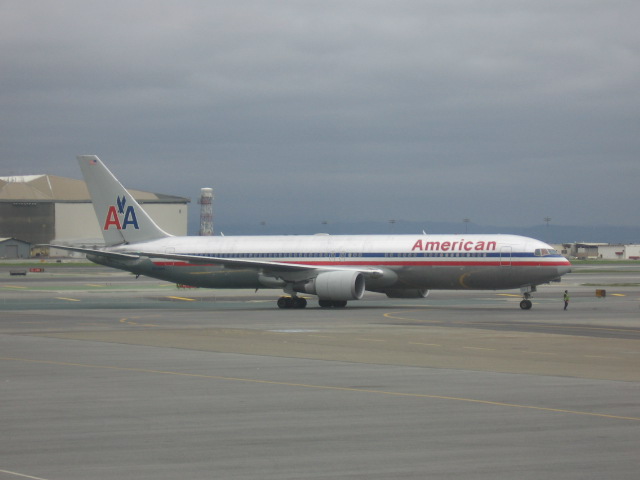
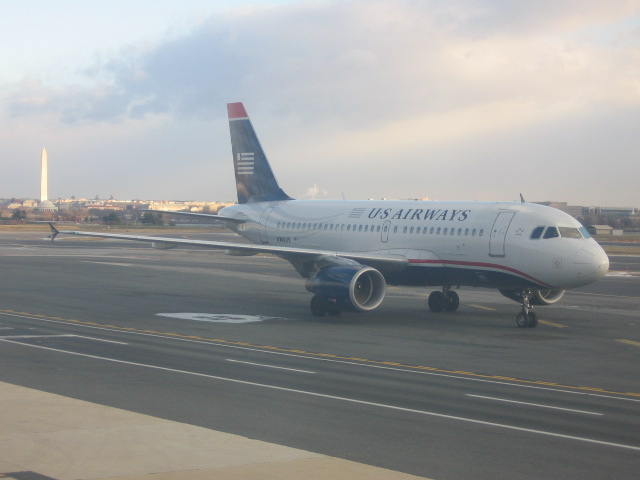
American Airlines has finally decided to take advantage of the problems many United Airlines fliers have experienced since the merger with Continental Airlines was completed on March 3. In an extremely rare move, American is now offering conditions-free top-elite status match to United’s most loyal customers.

Having read and heard about many United customers’ troubles after the carrier adopted Continental’s reservations system — and having encountered some problems myself — I e-mailed American spokesman Tim Smith on March 16. Smith has been the best PR person to deal with at any airline since I started writing my column in the Washington Times in 2008. I asked him whether American had any intention of capitalizing on United customers’ dissatisfaction by stealing some of them away through a status-match offer.

He involved his colleague Stacey Frantz, who works directly with American’s AAdvantage program. She said she couldn’t comment on “marketing strategies,” but it was apparent from her and Smith’s messages that American wasn’t considering such a move at the time. More than a month later, however, it decided to follow my suggestion — not that I’m taking any credit.

When the promotion first started last week, elite United fliers at all levels were eligible, but on Friday, American decided to limit participation only to United Premier 1K members, the highest published level. A memo was sent out to customer service agents on that day. So if you are a 1K, you can get Executive Platinum status on American.

The carrier is not advertising the promotion, so you need to call AAdvantage Customer Service to request an e-mail outlining the offer. Status is valid through February 2013, and all you have to do is submit proof of your current elite status with United. On the rare occasions when American has offered matches in the past, it has extended challenges, meaning you had to fly a certain number of miles during a certain period to qualify. There are no conditions this time. Challenges to Executive Platinum have been even rarer than to other levels.

But is Executive Platinum better than 1K, and is American better than United? Let’s review.

Executive Platinum advantages

This is truly American’s top elite level. Concierge Key, the unpublished super status that George Clooney’s character had in “Up in the Air,” is awarded only by invitation to very few hyper-frequent and high-paying travelers. In contract, United’s Global Services status has been given to so many people — albeit still “by invitation” — that it has somewhat devalued the 1K level.

Executive Platinum members are the only ones eligible for complimentary domestic upgrades that clear as early as 100 hours before a flight — at United, all elite fliers are, and lower-level elites on full-fare tickets trump 1K members on discounted fares. United also aggressively sells domestic upgrades at check-in for as little as tens of dollars to non-elites, while elites linger on waiting lists. As a result, the upgrade rates for 1Ks have gone down significantly.

As for international — or systemwide — upgrades, American is much more generous than United. Executive Platinum members get eight of those so-called eVIP certificates each year, compared to six for 1Ks. More importantly, on American, they are valid on all published fares, while United excludes its five lowest booking classes — S, T, L, K and G — requiring at least W class. That means you need to pay hundreds of dollars more on W class, and if your upgrade doesn’t clear, you’ve wasted your money.

American has the best domestic First Class soft product. It’s the only airline to still use linens and menus during meal service, as well as pillows and blankets on transcontinental flights. United used to have linens, pillows and blankets before the merger with Continental, but it lost them. The food also tends to be better on American. Many of its domestic planes have no in-flight entertainment at all, though wi-fi has been installed on a big part of its fleet.

As an Executive Platinum, you get Emerald status on the global Oneworld alliance, which gives you access to First Class lounges on foreign Oneworld members, such as Cathay Pacific and Qantas. The Star Alliance has only two levels, instead of Oneworld’s three, so United Gold, Platinum and 1K members get the same access to Business Class lounges.

American has dedicated agents working on the Executive Platinum phone line, and they are not only the best trained agents in the airline industry, but also the ones given the most authority and discretion to help customers in any way possible, even if that means sometimes bending the rules. United’s so-called 1K Desk is not really a dedicated desk — those agents service all callers, but 1Ks get priority in the queue.

No one knows if any of the above might change as a result of American’s Chapter 11 restructuring or in a potential merger with US Airways, but this is where things stand right now. For me, American’s main disadvantages are the limits of Oneworld, whose size is about half the Star Alliance’s, the hefty fuel surcharges imposed on award tickets with British Airways flights, and those old McDonnell Douglas planes American still flies. In addition, if you live in a United hub, it might be hard to give up nonstop flights to many destinations in favor of connections on American. That said, American often offers very low fares out of United hubs, while United does the same out of American hubs.

Premier 1K advantages

United offers 1K members so-called regional upgrade certificates, which can be used to confirm an upgrade on North and Central American flights at the time of ticketing — just like using miles or systemwide upgrades. Unfortunately, this year, United reduced the regional certificates from eight to four a year. It also eliminated the two upgrades million-mile fliers used to get annually. It’s worth noting that the Executive Platinum exclusive perk of complimentary upgrades on American compensates for the lack of certificates to a large extent, though those can be confirmed only within 100 of departure.

United offers instant upgrades without requiring any “instrument” to 1Ks on domestic M fares — all elites get the same benefit on the higher Y and B fares — as soon as the time of ticketing. The inventory is controlled separately and is not the same as regular First Class availability (it books in PN class).

United waives same-day confirmed changes on domestic flights for 1Ks, while American doesn’t for Executive Platinums. United also waives award booking, change and redeposit fees on tickets issued with 1K members’ miles — regardless of who the passenger is. American does so only if the Executive Platinum member is the passenger.

United allows stopovers on round-trip international award tickets. American permits those only in U.S. gateways — the city where you leave or arrive in the United States.

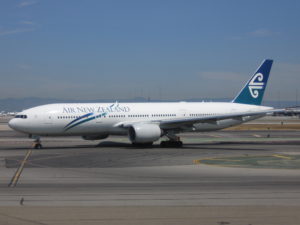
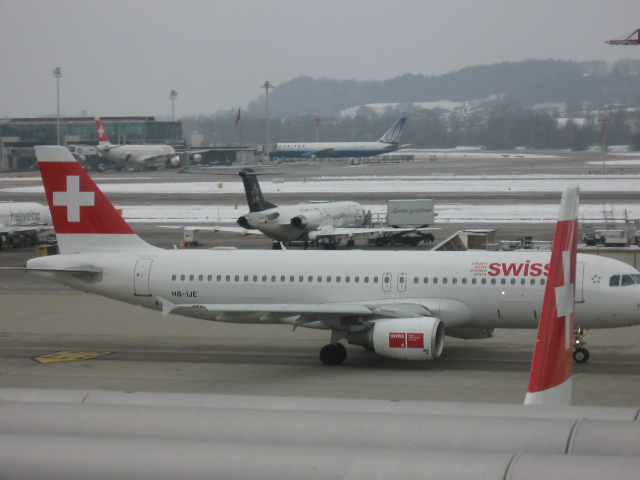
The biggest advantage United has is its membership in the Star Alliance, which has 25 member-carriers, including some of the best in the world, such as All Nippon, Asiana, Singapore, Air New Zealand and Swiss.

The biggest problem with United is that its new management doesn’t value long-term loyalty nearly as much as American’s — or United’s previous leadership team, for that matter. Unfortunately, my prediction in 2010, based on warnings from departing United executives at the time, came true after the merger was finalized. The current management apparently cares much more about making a quick buck. It prefers to sell an upgrade seat from Seattle to Washington Dulles to a non-elite flier for $99, as reported on FlyerTalk by a passenger who took advantage of that offer, rather than give the seat to a 1K member who spends tens of thousands of dollars on United a year. So much for complimentary upgrades.

At the end of the day, the choice is yours. If I’ve missed anything on either airline, feel free to let me know.

RETURN TO MAIN COLUMN PAGE

Related stories:

Did United choose the best rez system?

United, Continental execs at odds over loyalty program

American ends stopovers on ‘awards’

Continental shows new transparency

United executive breaks old barriers

Continue reading about American tries to entice top United fliers

nkralev on April 17th, 2012

Turkish Airlines has built an impressive business lounge at its hub is Istanbul, with the best sleeping rooms I’ve seen anywhere in the world, including in First Class lounges. The best, that is, until you try to sleep — unless you don’t mind loud noise that even Bose headphones on top of earplugs can’t block out.

As I’ve written before, Turkish has made significant progress in recent years toward becoming a world-class carrier, but it’s still a long way from being anywhere close to the top. It rushes to do something it deems top-notch but doesn’t really think it through — and for high-end customers, a little glitz doesn’t sparkle brightly enough if the entire experience is inconsistent and unpredictable.

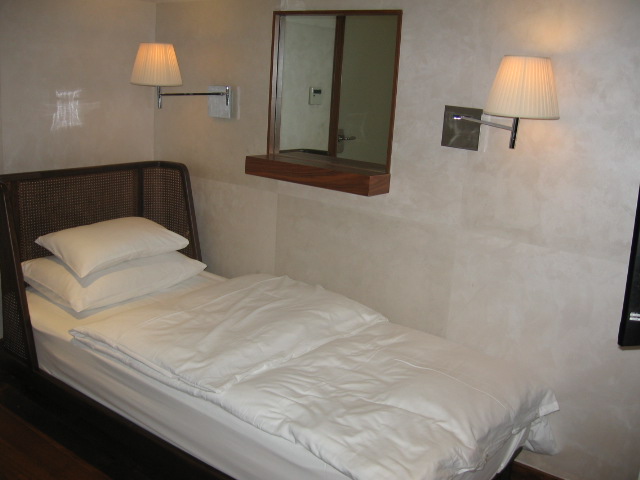
So Turkish designed these fabulous sleeping rooms in its relatively new Istanbul lounge, which are no different from really nice, albeit small, hotel rooms — with a real bed, comfortable and clean linens, desk, closet, bathrobe and slippers. But then it put shower suites right across from the sleeping-room doors, just a few feet away.

Admittedly, my first thought when I saw that setup was, “How convenient.” I used one of those rooms in the early morning hours several weeks ago after misconnecting on my way to Iraq. I took a shower and hoped to get at least three hours of sleep. Unfortunately, halfway through my rest, I was awoken by loud noise coming from passengers using the showers and staff cleaning the suites — not the actual showering and cleaning, but the talking and laughing right outside my door.

Since my earplugs were obviously not helping, I added my Bose headphones as reinforcement, even though sleeping with them is not exactly comfortable — all in vein. There was no more sleep. The glass divide that served as a wall also prevented the room from becoming sufficiently dark, but there are eyeshades for that.

At the end of the day, a great idea and superb product didn’t leave me with a great overall experience because of poor floor design and execution. Perhaps better soundproofing would have minimized the noise, if there was no way to isolate the sleeping room at least somewhat from the main lounge area. One could argue that lying in a real bed is still a luxury at an airport, even if you can’t sleep, but that’s not the point. Why not just put open beds right in the middle of the lounge? Or why have beds at all?

Two weeks earlier, I had used a sleeping room in Thai Airways’ First Class lounge in Bangkok. The rooms and beds weren’t nearly as fancy and comfortable as those in Istanbul, but the main lounge area was much farther away. Both Turkish and Thai are members of the global Star Alliance.

I suppose we can’t have it all.

RETURN TO MAIN COLUMN PAGE

Related stories:

Airlines neglect non-flying experience

Round the world in a week, without pain

Dulles Airport enters the modern age

Military lounges are airport oases

Delayed at the airport? Enjoy!

Continue reading about Rare airport luxury, almost wasted

nkralev on February 15th, 2012

How do you make sure a whirlwind trip round the world in just a week doesn’t wear you out and affect your productivity? Things went surprisingly well for me last week, as I flew from Washington to Munich to Paris to Bangkok to Islamabad, back to Bangkok, on to Seoul and back to Washington, so I thought I’d share the experience.

The first thing I have to say is that I don’t drink coffee or take sleeping pills. My only medicine when it comes to air travel is securing the best comfort and luxury I can — I need my flat beds, gourmet meals, lounges with showers, and sometimes even chauffeur-driven cars to connecting flights. I certainly can’t pay for them, but we’ll come to that momentarily.

Second, if you are going to circle the planet in a week, fly to the east, not the west. As much as I dislike those overnight flights from the U.S. East coast to Europe, because they are too short to get decent sleep, moving in that direction is much better in terms of adjusting to time differences. I was never jet-lagged during or after my journey.

The trip, which was blessed by the State Department, was part of the final research phase for my upcoming book on the U.S. Foreign Service, “America’s Other Army,” during which I visited the U.S. embassies in France, Thailand and Pakistan. Overall, I’ve visited almost 60 diplomatic and consular missions for this project, which began with my 2004 newspaper series, and interviewed more than 600 diplomats and other officials.

I used frequent-flier miles, but instead of getting what would have been a very expensive and restrictive round-the-world ticket, I issued two one-way tickets: One in First Class from Washington to Asia over the Atlantic, with a 24-hour stop in Europe, and another one in Business Class from Asia back home over the Pacific.

As I wrote in my first book, “Decoding Air Travel,” the best use of miles is for premium cabins. But why did I book First Class on the outbound for 80,000 miles, and not Business for 60,000? When I use miles, I make an effort to fly on the world’s best airlines. Of those, on my departure date Lufthansa was the only option, but it has some of the worst Business Class seats in the civilized world. First Class, on the other hand, is quite good, except for the small TV screen — that’s not the case with a few aircraft that have the new First seats with much bigger screens.

The more important reason for choosing First Class, however, was Thai Airways, which operates its Paris-Bangkok flights on planes leased from India’s Jet Airways that have private cabins with sliding doors in First. I had flown in one of those cabins from Tokyo to Bangkok a couple of months earlier and wanted to experience a much longer flight in such luxury. In addition, Thai Airways offers First Class passengers complimentary full-body massages in its Royal Orchid Spa at the Bangkok airport.

My Lufthansa flight from Washington to Munich was excellent, as expected, with top-notch flight attendants, which can’t be said of the ground staff at Dulles airport. I liked the new design of the pajamas they give First Class passengers. The food was consistent with my previous experiences, including the signature black caviar and several other appetizers. Although the seats are rather old by now, I always found the bed very comfortable.

I broke my habit of not having breakfast on overnight flights to Europe so I could have enough time for a shower in the First Class lounge in Munich before my connecting flight, since I had a full schedule as soon as I arrived in Paris. When it was time to board, I was whisked to my Paris plane in a Porsche.

The ambassador to France, Charles Rivkin, one of the best non-career ambassadors I know, couldn’t have been a better host, opening the doors of both his embassy and residence, and having a dinner in my honor, according to the elegant menu, with some of the top French journalists. My 24 hours in Paris were very productive, thanks to everyone I met, and especially spokesman Paul Patin, who put together my schedule at a very short notice.

It was time for the 11-hour flight to Bangkok, which didn’t disappoint, except for turbulence during most of it — and a 90-minute delay because of a flight attendant who fell ill just as we prepared to take off. After great meals, three films and a few hours of sleep behind closed doors, I was met by a Thai representative upon arrival in Bangkok and driven in a gold cart to the First Class lounge, where I took a shower before heading to the embassy.

Another full day of meetings and interviews followed, including two sessions with Ambassador Kristie Kenney, a career Foreign Service officer and one of the most capable, according to her colleagues — I hadn’t met her before. With the help of embassy spokesman Walter Braunohler, I covered enough ground with employees in several embassy buildings. The only slightly unpleasant part of the day was the 90°F temperature, especially after 20°F in Paris just hours earlier.

There was no time for a massage at the airport in the morning, but I managed to squeeze one in just before I flew to Islamabad in the evening. Unlike my plane from Paris, most Thai aircraft have old unimpressive seats in Business Class — and no First Class. Still, the food and service were up to standard, and I got some sleep before my 10:30 p.m. arrival in Pakistan.

My visit to Embassy Islamabad was the longest part of the trip — two full days and nights — and I was hosted by Ambassador Cameron Munter, whom I’ve known for eight years and consider one of the most brilliant serving U.S. diplomats. I also think he has possibly the most challenging job in the Foreign Service. He has assembled an outstanding team at the embassy, which actually surprised me, given the perception in Washington that few good officers volunteer to serve in Pakistan.

Munter went out of his way to accommodate my research needs, as did his chief of staff, Scott Kofmehl, with help from embassy spokesman Mark Stroh and many others.

On my flight back to Bangkok, I managed to get one of the embassy employees on a coach ticket into Business Class, thanks to an oversold Economy cabin. I had a long enough layover in Bangkok for a light breakfast in the lounge, some work and a foot massage, which is offered to Business Class passengers.

Then my Thai flight to Beijing had a significant mechanical delay, causing me to miss my connection to Washington on United Airlines.

While the Thai staff in the Business lounge scrambled for two hours to find an alternative way to get me home, I decided to apply in practice one of the things I preach in “Decoding Air Travel”: How to turn a negative airline situation into a positive one. In any case, I was looking at an arrival in Washington more than 12 hours later than scheduled, so the goal was to minimize my delay and stay in Business Class — preferably on an airline that has fully flat beds.

Korean Air met those requirements, and I added to my list a very good airline I’d never flown before — in fact, the 52nd carrier on that list. Korean Air is not in the Star Alliance, but to their credit, the Thais agreed to pay the Koreans a full Business Class fare in order to accommodate me, even though I was on an award ticket. They also agreed to let me spend the remaining 10 hours before my flight to Seoul in the First Class lounge, where I had a great lunch, did more work and slept for a few hours in a real bed, in one of their sleeping rooms.

Of course, they wouldn’t have done any of those things had I not been insistent — actually, a pain may be a better description. But I felt it was their fault, and they were responsible for rectifying the situation. I also knew they wouldn’t offer any compensation — Asia doesn’t have the rules Europe, and to some extent the United States, have — so I had to get whatever I could in other forms.

To sum up, my weeklong round-the-world trip didn’t wear me out — and now you know why.

RETURN TO MAIN COLUMN PAGE

Related stories:

Round-the-world fare mysteries revealed

Foreign Service series: America’s other army

The greatest understated U.S. diplomat

Who qualifies to be a U.S. ambassador?

In air with Clinton on first trip abroad

Continue reading about Round the world in a week, without pain

nkralev on January 17th, 2012

It’s no secret that the U.S. government wastes huge amounts of money on airfare, and that waste has been institutionalized. So it’s hardly a surprise that Republican presidential candidate Ron Paul has done the same, as an Associated Press story pointed out yesterday.

The reason for the story was the apparent discrepancy between Paul’s crusade against excessive government spending and his own spending. But while he did waste taxpayers’ money, he didn’t break any rules. So perhaps it’s time for the rules to change.

Government employees are usually required to buy full-fare tickets — meaning Y or B booking class — when traveling on business. The main reason for that is to have the flexibility to change and cancel those tickets for free.

Because of the massive amount of business the federal government gives the airlines, they provide it with special fares, which still carry the Y and B codes but are much cheaper than the regular published Y and B fares. For instance, the discount on a round-trip coach ticket to Europe can be over $2,500. I gave a specific example in a column last July.

However, those special fares are still much more expensive than the lowest published fares, which of course come with penalties for changes and cancellations — and while most of them are non-refundable, one can almost always use the amount paid, minus the change fee, for a future ticket.

I would guess that buying regular non-special fares and paying the penalty if necessary would be much cheaper than purchasing full-fare tickets. History shows that changes are not made too frequently.

There is another source of waste. Although the government fares are free to change and cancel, that “free” applies only to the airlines, meaning there are no airline-imposed penalties. Booking government travel is handled by large travel agencies, which charge as much as $90 per transaction — every time one of their agents touches a ticket to issue, change or cancel it.

First and Business Class tickets are usually allowed only on very long intercontinental flights, though each government agency can set its own policy. The rules are often bent for top management, and members of Congress certainly fall in that category.

The AP story said that Paul flew in paid First Class dozens of times since May 2009 on Continental flights between Washington and his Texas district. In addition, even when his office bough coach tickets, he often got upgraded, because Continental offers instant upgrades on Y and B fares, depending on availability.

So while it may be more prudent for Paul to put his money where his mouth is, the much bigger question is whether the current rules for government air travel need a fresh look.

In fact, any government agency could probably save millions if it used the Kralev Method from “Decoding Air Travel.” Pardon the shameless plug, but I’d be happy to teach them.

RETURN TO MAIN COLUMN PAGE

Related stories:

ExpertFlyer boosts airfare transparency

Myths vs. realities of celebrity travel

In air with Clinton on first trip abroad

Clinton weathers job’s long flights

Continue reading about Rethinking government air travel costs

nkralev on October 5th, 2011

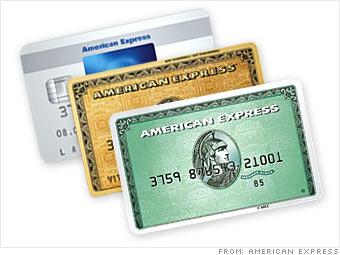
You may have seen TV commercials featuring American Express or Capital One credit cards that promise points or miles with the clout to get you any seat on any airline without blackout dates. Those financial services companies try to distinguish their own loyalty schemes from airline programs, which restrict access to award seats.

Non-airline programs are not affected by award seat limits, because they don’t need award availability to book you on a flight. Instead, they sell you a regular revenue ticket, charge the ticket price on your credit card, then credit the cash amount back to your card and take miles or points out of your account, whose number is based on a standard formula.

Let’s say that you want to use your Capital One miles for a free ticket. The Capital One website performs a flight search and you choose a flight that costs $100. Once the ticket is issued, 10,000 miles will be deducted from your account.

While Capital One values $1 at 100 miles, the American Express Membership Rewards program converts $1 into about 80 points, though the precise number varies based on the type of card you have.

By any measure, that is a lot of points. If we assume that the average U.S. domestic round-trip ticket costs about $500, Capital One will charge you 50,000 miles and American Express 40,000 points. In comparison, you need only 25,000 miles from most airline programs — if there is award availability, which is a big if.

Of course, many airlines will also give you any open revenue seat on any flight, but for double the miles required for a “saver award” — they call it “standard” or “anytime” award. If you need a First or Business Class ticket, the airlines will actually give you a better rate even on a “standard award.” Such an award from North America to Europe in Business Class will be about 200,000 miles. Assuming that the average revenue ticket costs about $5,000, Capital One will charge you 500,000 miles and American Express 400,000 points.

It’s worth noting that the airline mantra about giving you the last available seat on a flight as a “standard award” is changing, and that privilege is no longer available to everyone. For example, it’s one of the benefits of United’s new Mileage Plus Explorer Visa card from Chase, which means that customers who don’t have the card — and are not elite fliers — won’t have access to that last seat.

The real advantage of the tickets purchased with non-airline miles or points is that they earn miles, because they are in effect revenue tickets — the airlines will never know that you didn’t pay money for them.

That same model is used by some hotel loyalty programs, including Starwood and Priority Club, which allow points to be redeemed for flights. Even some airlines offer such options, in addition to their regular award redemption opportunities. For example, United’s Mileage Plus Choices program is very similar to Capital One’s scheme, valuing $1 at 100 miles — only miles earned from Mileage Plus co-branded credit cards can be used for such tickets.

RETURN TO MAIN COLUMN PAGE

Related stories:

All your loyalty programs on one screen

Flying with Obama and earning miles

Donate miles or money to Haiti?


Continue reading about The benefits of non-airline credit cards