New York
United Airlines fulfilled its promise this week by finally allowing one-way mileage awards on its partners in the global Star Alliance. More importantly, it showed that its Mileage Plus program is truly an industry leader — it didn’t follow American Airlines in taking away stopovers on award tickets, which will save travelers many frequent-flier miles.
Mileage Plus has become one of the most customer-friendly loyalty programs in the world. As odd as it sounds, offering one-way awards is a rather progressive step, given how rare it is in the industry — for no good reason. United has been offering one-way awards on its own flights since February.
Stopovers on international awards are incredibly useful — they are usually not permitted on domestic tickets. I don’t use them all the time, but I do often enough to mourn their loss on United. They are partly responsible for my visits to 82 countries.
When American banned stopovers last year, its justification was that the introduction of one-way awards eliminated the need for stopovers — one can now visit two cities or countries by booking three one-way segments. The problem for customers was that such an award now costs many more miles.
It would have been easy for United to copy American’s move. After all, taking stopovers away would have taken more miles off its books and decrease its liabilities. United has historically matched various practices initiated by its arch rival, but this time it made its own decision. Mileage Plus members should be grateful — preserving stopovers will save them tens of thousands of miles per trip.
I must admit, I was a bit confused about the stopover policy, and an earlier version of this column said United was doing away with them. I was misled by a reservations agent last weekend, and by a sentence on United’s website, saying “That means no stopovers.” It appears that only applies to one-way awards.
I received a comment from a reader who had seen a thread about the column on FlyerTalk.com, which prompted me to speak with a supervisor at Mileage Plus. He checked his resources and assured me that stopover are still permitted on round trips.
I’ve been praising Mileage Plus repeatedly since Graham Atkinson became president two years ago. In February, I wrote about all the right things Atkinson did — one negative thing he couldn’t change was the infamous StarNet award blocking. At the time, he told me that no decision had been made about stopovers.
Atkinson left United in September, as part of the management changes resulting from the merger with Continental, but I’m glad to see that his approach to customer loyalty lives on.
By the way, don’t forget the 24-hour international connection rule, which lets us do a mini-stop en route, so look for those day-long layovers if you want to sample a new country on the cheap.
Continue reading about United keeps free stopovers on awards
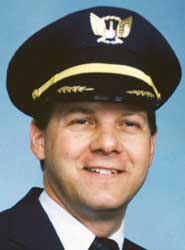
Captain Dennis Flanagan, the United Airlines pilot I profiled last year, just reminded me about the upcoming anniversary of the September 11 attacks and the scholarship fund in the name of his former colleague, Captain Jason Dahl, who was at the controls of United Flight 93 that crashed in Pennsylvania.
The charity, whose official name is the Captain Jason Dahl Scholarship Fund, was established soon after the pilot’s death by his wife Sandy. Each year, two aviation students — one at Dahl’s Alma Mater, San Jose State University, and one at Metro State University in Denver, where Dahl lived — are awarded $5,000 grants. There have been 16 recipients so far.
The fund’s ambition is to expand and offer scholarships nationally, and it uses this time of year to do fund-raising, said Flanagan, who is better known as Captain Denny. “It seems the farther we get away from that tragic day, the less people remember. Our goal is to keep Jason’s memory alive and not let anyone forget,” Flanagan said.
You can learn more about the fund, its board of directors and past scholarship winners on its website, where you can also make a contribution.
“Jason Dahl represented the best in the American aviation community, always providing assistance to others in both his chosen vocation and his community,” the site says. “The family and friends of Captain Jason Dahl strive to be more like him.”
As has been well documented in press reports, Dahl, who was 43, wasn’t originally scheduled to work that fatal flight on Sept. 11, 2001. He traded trips with a colleague so he can take time off for his wedding anniversary on Sept. 14. Still, he seems to have had second thoughts, as he later sent out an e-mail message looking for another pilot to replace him on Flight 93.
The hijacked flight, a scheduled service from Newark, N.J., to San Francisco and the subject of the film “United 93,” is believed to have been headed to Washington. The Boeing 757 aircraft was ultimately brought down by passengers who apparently stormed the cockpit and attacked the hijackers. The plane crashed in a field in Stonycreek Township, near Shanksville, Pa.
Most of us remember where we were and what we were doing when we first heard of or saw those planes smashing into the World Trade Center. Each year on Sept. 11, commemorative ceremonies take place in New York, Washington and in that Pennsylvania field.
As it happens, this year I’ll be teaching an “On the Fly” Seminar in New York on that day, and two weeks later in Boston, from where the two planes that hit the Twin Towers departed. We have our own ways of remembering and paying respects, and mine is helping travelers make their journey less stressful and more enjoyable.
Related stories:
Support for seminars from two famous pilots
Continue reading about 9/11 pilot scholarship plans expansion
Air travel is one of those topics that no radio or TV show can go wrong with — it’s certain to touch a nerve with many people and provoke numerous comments and questions. That’s what happened yesterday on NPR’s Diane Rehm Show, which I was on for the first time.
I always thought the reason to be invited would be to talk about foreign policy on the Friday news roundup, where Diane has three Washington journalists discussing issues from the passing week. That never happened, but a couple of weeks ago I suggested to one of the show’s producers that the summer is a good time for a program on travel.
The Diane Rehm Show is widely considered the best talk show on NPR, with more than 2 million listeners a week. It’s produced by WAMU, the NPR station in DC, and airs in dozens of markets across the U.S. Diane is on vacation this week, so the guest-host was Frank Sesno, a former CNN bureau chief in DC who now heads the George Washington University’s School of Media and Public Affairs.
There were two other guests except me: from Dallas, Scott McCartney, who writes “The Middle Seat” column for The Wall Street Journal, and from New York, Susan Stellin, a New York Times contributor.
You can listen to the show and read some of the comments left by listeners on its website. We actually got hundreds of comments and questions by phone, e-mail and on Facebook and Twitter.
We talked about various familiar topics, such as airline fees, seats, delays, the proposed Passengers’ Bill of Rights, re-regulation prospects and others.
Since the show’s topic was “Navigating the not-so-friendly skies,” I wanted to offer some advice on how to do that. The main point I tried to make was about the need for travel education, realizing that most people don’t see such a need because they think they know how to travel. But if that were true, we’d be hearing many fewer complaints and horror stories about air travel.
It’s convenient and popular to blame the airlines all the time — and they often deserve much of that blame — but there is a lot travelers can do to make their own experience less stressful and more seamless.
The airlines have made the system very complex, confusing and frustrating. It is what it is, and we can’t changed it that much. However, we can find ways to make the system work for us — and to do that, we need to know it really well. That’s why I believe every traveler can use a bit of education.
My other main point was about the importance of elite airline status, which is the only decent way to travel today. The reality is that airlines don’t even pretend to try taking care of you if something goes wrong unless you are a loyal customer. More practically, elite passengers are exempt from luggage and other fees.
Unfortunately, most people don’t even try to achieve elite status, because they only travel a couple of times a year. As I wrote last month, you only need 4,000 miles on Greece’s Aegean Airlines to get silver status on the Star Alliance, and Aegean gives you 1,000 miles just for signing up. You don’t have to fly on Aegean — just to credit your miles from flights on any of the 28 Star carriers to that program. Silver status waives baggage fees on United Airlines, US Airways and Continental Airlines.
I was amused to read in the comments on the Diane Rehm Show’s website that a listener accused me of being unpatriotic for recommending membership in a foreign airline’s frequent-flier program.
Related stories:
Media coverage of travel seminars
Continue reading about Talking air travel for an hour on NPR
How do airlines decide what fares qualify as “sales,” and why do they advertise certain fares, but not other, much lower ones? Why is United Airlines promoting a “sale” between Washington and Boston for $109 each way, when there are currently six published lower fares in that market, beginning with $49 each way?
For the most part, I don’t bother to figure out why airlines do certain things anymore. I just gather all the information I need about what they do and try to work with it — or around it. Years of watching fares have taught me not to fall for those “sales,” because in many cases, I can find a much lower price to the same destination, on the same dates and on the same carrier.
Both United and American Airlines are currently advertising two fall sales on their websites. My review of the American fares showed that most of them are indeed the lowest available prices at this time. There are a few small exceptions — for example, I found a fare from New York to San Diego that is $5 lower than the advertised $164.
There are many more and much bigger differences on United. The unadvertised — but published — fares between Washington and Boston, in addition to $49 each way, are $54, $64, $74, $84 and $99. They all have fewer restrictions than the $109 “sale” price.
I say between Washington and Boston — not from Washington to Boston — because domestic fares are the same in either direction, unlike international fares, which are usually very different.
Let’s take another example. The advertised fares between Denver and Los Angeles in two separate United “sales” are $99 and $89 each way. However, I found $68 each way. In addition, Denver-New Orleans is on “sale” for $123 each way, but there is also $109, and even $89.
Some of the advertised United fares are truly the lowest published at this time. For example, $88 each way for Washington-Chicago, $108 for Chicago-Denver, and $157 for Chicago-Los Angeles.
There is another catch that could increase the benefit of the unadvertised fares to you. Typically, “sale” prices require a round-trip purchase. In contrast, most of the lower fares I found have no such condition. In fact, the major U.S. carriers have been publishing more and more truly one-way fares in recent months, which has always been the case with Southwest Airlines and other low-cost carriers.
To United’s credit, some of its current sales don’t require a round-trip purchase. That is, indeed, the prudent thing to do. If a round trip is mandatory, why advertise one-way fares? Of course, for marketing purposes, but I’ve always found that a bit dishonest and deliberately misleading.
I mean no criticism of United for promoting as “sales” fares that are higher than other published fares. I wrote this to warn travelers that they should check all existing fares between two cities before settling for what they think is a “sale” or the best deal.
Those of you who have attended my “On the Fly” Seminars know how easy it is to bring up on your computer screen all fares published by every airline on a certain route in just seconds.
Related stories:
Fare sales often lost in translation
Continue reading about When an airfare sale is not quite a sale