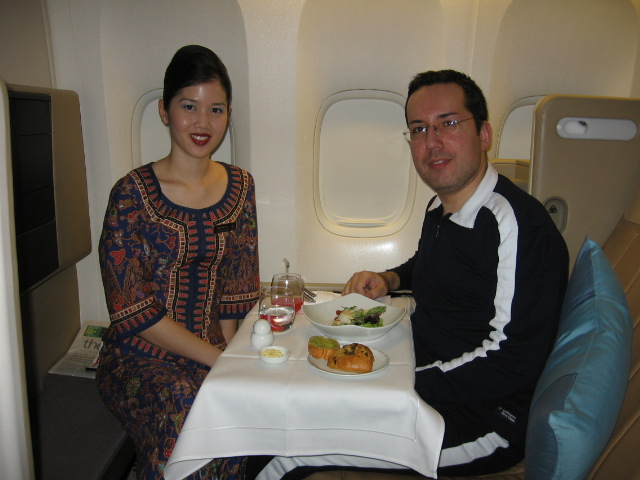
Singapore Airlines
There are so many travel-industry rankings at year’s end, it’s hard to keep track. It’s even harder to figure out which — if any — of them are credible and meaningful. Looking at some of the results, one has to wonder when some of the respondents last flew on the airlines and through the airports they assessed.
Rankings are usually administered by various magazines — one exception are the new Frequent Traveler Awards. In the last several years, I’ve made it a habit to look at the Global Traveler Magazine‘s so-called Tested Awards, most of which make sense. However, as I was reading this year’s results during a flight last week, I couldn’t help but gasp in astonishment at some of the results.
Many of the categories are certainly subjective, and different people’s experiences could easily be different. For example, the in-flight service on the same airline could vary depending on the cabin crew — or even your particular flight attendant.
Still, Lufthansa’s second place for best First Class is surprising. For comparison, Emirates is fifth, Korean Air sixth, and Singapore Airlines eighth. Seriously? Lufthansa is a great airline and it deserves to be in the top 10 — it came out fifth overall in the “Best Airline in the World” category.
But anyone who has flown in Lufthansa First Class in the last couple of years knows that its hard product lags behind most of its competitors. The most glaring example of that is the tiny TV screen. On the carrier’s Boeing 747 aircraft, First Class is on the upper deck, with 16 seats in a 2-2 configuration, which is the standard for Business Class on most other airlines operating the same aircraft type.
To its credit, Lufthansa has recognized the limits of its product and has undertaken steps to improve it. The above-mentioned 2-2 configuration is about to change to 1-1, which will no doubt disappoint some fliers because it will reduce the number of First Class seats by half, but eight seats is the industry standard and makes a lot of sense.
Lufthansa has finally come out with a new First Class seat on its Airbus 380 planes. Could it be that Global Traveler readers were evaluating those seats? No, because surveys were collected between January and August, and the first Airbus 380 didn’t enter service until late August.
There is one First Class feature on Lufthansa that beats all other airlines to the punch: its First Class Terminal in Frankfurt. But it’s used almost exclusively by Frankfurt-originating passengers, so it’s unlikely its weight in assessing the overall product was predominant for all survey respondents.
Lufthansa was also ranked fifth for best Business Class. Again, if you’ve had a chance to compare its hard product with other Business cabins, you’d probably disagree. One could argue that Lufthansa’s service is better than that of United Airlines, but United’s truly flat seats are among the best in the industry. Lufthansa made the short-sighted decision to install the old Business seats on the Airbus 380, but later announced it would roll out a new hard product next year.
United is the only U.S. carrier in the top 10 of any of the leading overall global categories, taking 10th place for best Business Class and best Business seat design, and fourth place for best First Class design. Its “new” hard product, which was first introduced three years ago, has so far been installed on less than 60 percent of its long-haul fleet.
Deservedly, Lufthansa is missing from the top 10 in any of the best-seat categories. But another perplexing presence in the best Business seat category — ahead of United — is South Korea’s Asiana Airlines. Not only are its current seats not truly flat, but they are less comfortable than comparable products on other carriers, such as Thai Airways. Asiana’s service is, of course, superb, but this is strictly a seat-related category.
In the best global airport category, another surprising result: in third place, Amsterdam has beat out Hong Kong and Munich. In North America, Atlanta came out ahead of San Francisco. Really?
Oh, and did you know that Delta Airlines has the best airport lounges in the world? That’s right, and Lufthansa and Singapore Airlines have been shut out of the top 10 completely. If that’s not madness, I don’t know what is.
Related stories:
Airlines cut back on first-class service
Delayed at the airport? Enjoy!
New Lufthansa business class in a year
Singapore Airlines’ maddening perfection
Continue reading about What’s the real point of airline rankings?
As if the existing methods to overcharge travelers weren’t enough, some airlines have just found a new way deeper into your pockets. It comes in the form of sophisticated software designed to increase prices based on your desperation and lack of choice. Will you fall for the latest gimmick?
The new application is courtesy of Amadeus, one of the major distributors of airline and other travel-related data worldwide. This week, it announced the launch of “Active Valuation,” an “IT solution that enables airlines to maximize revenues across multiple channels,” or to charge you more for something you can otherwise get at a lower price.
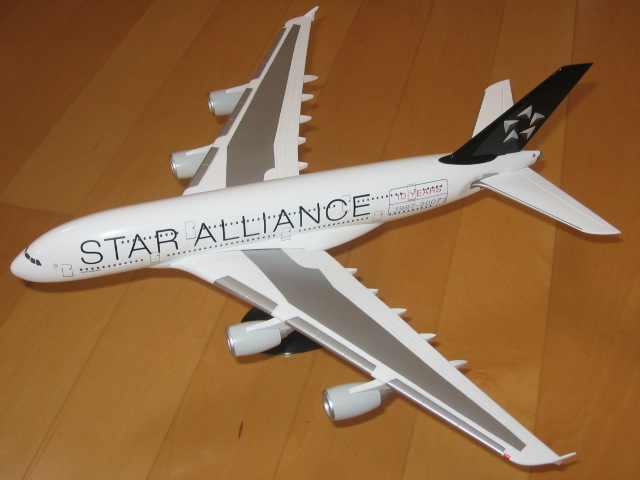
Amadeus was surprisingly open about how it will help carriers to take more of your money, although it makes marketing sense to point that out in order to attract airlines to sign up. Amadeus already has contracts with several major airlines, including Lufthansa, Singapore Airlines, Brazil’s TAM, the United Arab Emirates’ Etihad and Air Baltic. The first three carriers are members of the global Star Alliance.
“‘Active Valuation’ works by enabling the application of sophisticated business logic to dynamically adjust the yield (revenue expected) of an airline product, according to the context in which a booking is made,” Amadeus said in a statement posted on several travel news sites.
“These yield modifiers are used in a seamless manner in order to perform an origin and destination calculation,” it added. “This allows a dynamic segmentation of customers, taking into consideration their characteristics, the point of sale used and any connecting flight data, in order to better capture their willingness to pay.”
My feelings about this statement are strong and mixed at the same time. On one hand, Amadeus obviously deserves credit for developing a new product that will no doubt boost its business. On the other hand, “Active Valuation” sounds like a recipe for screwing consumers over big time.
How does this work? If you live in the United States and want to buy a plane ticket between two European cities, you may be paying more than someone who makes the purchase in Europe. The airlines are banking on your lack of knowledge about European fares and betting on your willingness to spend more money than a European traveler, who can distinguish a good fare from a bad one.
As Amadeus pointed out this week, airlines have been doing similar tricks for years through their inventory management and are now simply expanding them. “For example, when a customer requests availability information for a multi-leg journey, the solution automatically considers the complete value of the trip and delivers appropriate availability information to the customer,” it said.
What does that mean? Let’s say you need to go from Washington to Hong Kong — there are no nonstop flights on that route, so you’ll connect in Chicago. Let’s assume that the Washington-Chicago flight has availability in the lowest booking class, as does Chicago-Hong Kong. However, when those two segments are “married up” to produce your connection, the lowest-priced seats would often disappear, and you’d have to pay for a higher booking class, which could mean hundreds of dollars more.
None of the major U.S. carriers uses Amadeus, but American Express and Carlson Wagonlit, two of the country’s largest travel agencies, do. It also powers online booking engines, such as Expedia and CheapTickets. Plus, if Amadeus figured out how to do those new gimmicks, its competitors won’t be far behind.
So how would you fight against all those airline attempts to “maximize revenue”? Demand an addition to the Passengers Bill of Rights? Complain to your congressman? Good luck. We live in a capitalist society, and every company has the right to maximize revenue in any legal way it can find — although some have found questionable methods, such as the fake “direct” flights I wrote about last month.
As you might have guessed, my approach is education — learn as much as possible about what the airlines do, and about the entire air travel system, and beat them at their own game. If you don’t know that something is happening, how would you know how to avoid it?
In my last column, I explained why corporate travel lacks innovation. One of the reasons is companies’ heavy reliance on old-style travel agencies, which in turn rely on computers to tell them what to do. The result is millions of dollars in unnecessary spending.
The Amadeus announcement is another reminder that if you keep using the old approach, you will continue to waste money. My method is simple: having mastered the system and its intricacies, I rely on my knowledge and experience buying tickets and flying around the world — that’s how I beat the computer.
Is that good enough advertising for my “On the Fly” Seminars and the Kralev International advisory services?
In all seriousness, this summer I decided to dedicate myself to travel education, even though such a concept doesn’t even exist, and I’m probably the only person who uses the words “travel” and “education” together. I’ll continue to preach it until people start listening.
Related stories:
Corporate travel’s lack of innovation
Announcing Kralev International travel advisory business
Time for travel school — you are invited
Continue reading about Airlines find new way to overcharge fliers
Lufthansa appears to have listened to the recent criticism of its decision to install its old angled business-class seats on the newly arrived Airbus 380 aircraft — finally, truly flat seats are planned when its first Boeing 747-800 enters service in late 2011.
Many Lufthansa customers were puzzled and disappointed when the German carrier didn’t bother to introduce fully flat beds on the A380. It was the perfect opportunity — the current seats have been inferior to those of many competitors for years and don’t quite fit the image of a leading airline, which Lufthansa certainly is. In addition, it rolled out brand-new first-class seats on the A380.
“The next major overhaul will be with delivery of the 747-8I in late 2011,” Lufthansa spokesman Martin Riecken said in an e-mail message. “We already have a test seat on one route, but the final design decisions are still not taken. We improved the current business class slightly with the introduction of the A380 in May this year — mainly ergonomic improvements.”
The company has attributed its decision to stick with the old seats to the delayed A380 delivery, saying they were appropriate when the aircraft orders were first made. It’s unclear, however, if Airbus would have allowed Lufthansa to changed its mind, given that interior work didn’t start until just months before the first delivery in May.
It’s unlikely Lufthansa tried to amend its order, judging by its leadership’s previous comments that the old seats, which are lie-flat but not horizontal to the floor and were first installed in 2003, were sufficient for the time being.
“Our existing seat is not at the very top of the market compared with certain [business class] seats offered by some carriers,” Marianne Sammann, general manager for Lufthansa and Austrian Airlines in Britain and Ireland, was quoted as saying in a Wednesday article in Britain’s Business Traveller magazine. “Perhaps with hindsight we would have considered an alternative, but at the time of ordering the A380 our existing seat was the right product.”
Among Lufthansa’s partners in the global Star Alliance, Air New Zealand, Singapore Airlines, Air Canada, United Airlines and Swiss International Airlines offer truly flat beds in business class.
Interestingly, Singapore reacted to the A380 delay differently from Lufthansa — instead of waiting, it installed the new seats on an order of new Boeing 777-300ER aircraft, which began arriving in 2006.
United Airlines rolled out its new seats in 2008, though it has retrofitted only about half of its fleet so far. Still, those seats are much better than Lufthansa’s, and while United’s soft product may not be as good as Lufthansa’s, United is my choice on an overnight flight to Europe.
Last year, Swiss International Airlines put fully flat beds on its new Airbus 330-300 planes, but it currently has only eight of them. Both Swiss and Austrian are owned by Lufthansa, though Austrian’s hard product is inferior to the other two.
Outside the Star Alliance, Air France, Australia’s Qantas Airways and Emirates all introduced new truly flat beds on their A380 aircraft. Air France, however, also disappointed its customers recently by announcing plans not to install the new seats on other aircraft types.
Lufthansa has 15 A380 planes on order, with the option to buy another five. No details about the new business-class seats are available yet, but it’s clear it will take a few years for its entire fleet to be reconfigured.
Related stories:
What to do with empty premium seats?
Airlines cut back on first-class service
Lufthansa agent’s ‘mistake’ stacks up
Continue reading about New Lufthansa business class in a year
Did you know that hundreds of fictitious flights inhabit airline schedules every day? They don’t exist in real life — just on paper. They are meant to make more money for the airlines by tricking customers and perverting a practice that was actually started to help travelers. In fact, they spell nothing but trouble for passengers.
Those fictitious flights are labeled “direct” by the airlines, which years ago decided to rewrite the dictionary and use that term for flights that weren’t nonstop but made at least one stop on the way to their destination. First, those flights were operated by the same aircraft, but later a “plane change” was introduced. The Department of Transportation has allowed the airlines to abuse the practice any way they like.
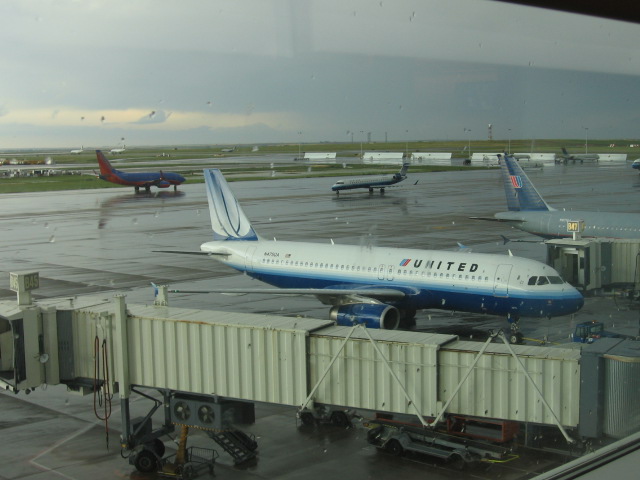
On my way back home from Boston last weekend, I was on United Airlines Flight 897, which the purser announced repeatedly was “a nonstop service to Washington Dulles, with continuing service to Beijing.”
I immediately cringed, because there is nothing “continuing” about the two flights, except for their number. The plane I was on was a two-cabin Boeing 757 and arrived at gate C19 at Dulles. The plane destined for Beijing was a three-cabin Boeing 777 and departed from gate C3. So the passengers connecting to Beijing did exactly what others did connecting to Flight 803 to Tokyo at gate C1 — or any other flight for that matter. They left the first plane and walked to their new gate.
Did the Beijing-bound travelers benefit in any way from the fact that their tickets had one flight from Boston to Beijing? Absolutely not. In fact, many of them were probably surprised to discover they were on two separate flights.
Then why does United even have that fictitious “direct” flight? Because it wants customers to think that they can fly from Boston to Beijing without the hassle of a connection — a competitive advantage no other carrier offers.
Have you tried to upgrade a “direct” flight? That can be a nightmare — not just for passengers but also for those who work in inventory management. They have to create inventory for a flight that doesn’t exist and to balance the load of two separate flights on different aircraft types with a different number of cabins and hugely different number of seats. As a result, the lowest booking classes and upgrades are often unavailable on “direct” flights. Some travelers are willing to pay more to avoid the hassle of transfers, not realizing there is a hidden connection.
Almost every international United flight has a domestic tag attached to it, but United is by no means the only U.S. airline abusing the system. All major carriers do it. Delta pretends to fly “directly” from Minneapolis to Moscow, Continental from Amsterdam to Denver, US Airways from Los Angeles to Zurich and American from Tokyo to Boston.
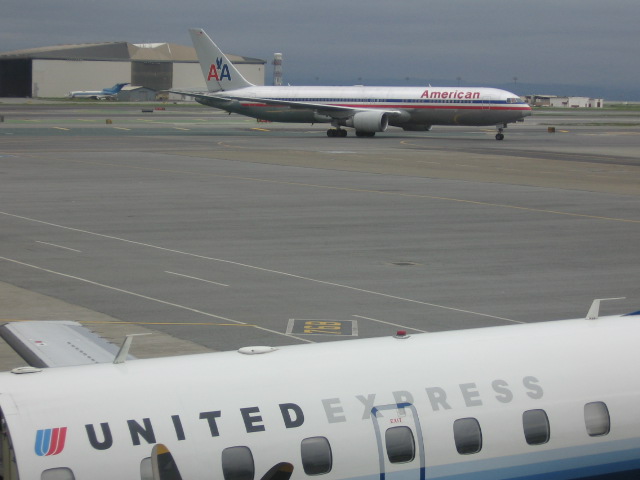
As I wrote two years ago, United and Delta are the biggest abusers, while American seems to be the most prudent in that most of its “direct” flights are operated by the same aircraft. American is also the only one whose website displays a “direct” flight as two separate segments at the very beginning of the booking process.
In the rare cases when foreign carriers, such as Lufthansa and Singapore Airlines, operate “direct” flights, they are flown on the same plane, so there is no danger you will miss your “continuation,” which happens regularly on U.S. airlines. If my flight from Boston to Washington had been late, United wouldn’t have held the plane for Beijing just because the two flights share the same number.
Related stories:
Airlines abuse ‘direct’ flights
Singapore Airlines topped yet another industry ranking this week, and while it usually deserves the awards it wins, there are a few aspects of the way it does business that drive some customers and partner-carriers crazy. Still, don’t expect those practices to change anytime soon.
The latest awards were bestowed by Britain’s Business Traveller Magazine. Singapore was named best airline overall and also won best economy and business class. Best first class went to Emirates, probably because of the shower on its Airbus 380 aircraft.
I have yet to meet anyone who has flown Singapore and didn’t like it, regardless of which cabin they were in. It has long been the world’s leading carrier in hard-product innovation and luxury, often years ahead of its competitors. One of my favorite features is the “Book the Cook” service, which allows passengers to order meals from a long and diverse menu as soon as they buy a ticket.
Many travelers point out the incredible attention to detail that Singapore flight attendants pay, but that is not uncommon among top Asian airlines, such as Asiana and All Nippon Airways. What has impressed me the most is that, in first class, the flight attendants anticipate your next need or wish and are ready to satisfy it before you even ask.
Once during a flight, I stood up from my seat to go to the lavatory, which was behind me, and when I turned around, I saw a flight attendant dashing toward the lavatory to open the door for me. I had just enjoyed black caviar as part of a five-course dinner I probably couldn’t afford on the ground, and I loved the bedding of the fully flat seat, but for some reason that gesture meant more than the luxuries.
The trouble with perfection is that it’s impossible 100 percent of the time, and most of Singapore’s policies are written for a perfect world, which is also impossible in the airline industry. Employees of every airline must follow certain rules, but Singapore’s staff has almost no flexibility in making exceptions or bending the rules to respond to a specific case or situation.
A couple of years ago, I flew from New to Singapore, with an hour-long layover in Frankfurt. Even though there was no plane change, all passengers had to get off and re-board. As soon as I reached the gate area, I realized I’d forgotten my cell phone in my seat pocket. I wasn’t allowed back because the cleaning crew had begun working, but a gate agent went to look for the phone. She came back and said it wasn’t there.
I was the last first-class passenger to deplane, and coach and business class passengers weren’t allowed in the first-class cabin, so most likely the phone was stolen by a cleaning crew members. But after a lengthy process that involved more paperwork than I’d expected, the airline refused to offer any good-will gesture or compensation.
There is no question that Singapore has some of the best premium products in the sky, but it may be overvaluing them a bit too much.
Let’s say you’ve paid more than $10,000 for a Star Alliance round-the-world ticket in business class. If you want to fly between Singapore and Los Angeles nonstop, you have to pay an additional $900 surcharge just for that one flight for the privilege of enjoying the “new” business class seats, which are now almost four years old. Charges of $500 and $600 apply to most flight between Singapore and both Europe and North America.
In addition, Singapore often blocks access to those flights by zeroing out the inventory in D booking class, which is the one required for round-the-world tickets.
It’s no secret that Singapore thinks the current round-the-world fares are too low. There are suspicions that it’s one of the driving forces behind the drastic increases in those prices in recent years, although there is no way to know this for a fact, because the Star Alliance uses a blind process based on input from its members to determine the fares.
Even more maddeningly for customers, Singapore bans members of the frequent-flier programs of its partners in the Star Alliance, such as Lufthansa, Air Canada or United Airlines, from using miles on flights with the “new” business-class seats. While the seats are the most spacious in the industry, the ban makes redeeming miles to Europe and North America virtually impossible — there are only two flights with the old seats.
Relations between Singapore and some of its Star partners — especially United — have long been sour, mainly because Singapore thinks it’s superior and doesn’t hide it. I’ve always been amazed that Singapore doesn’t code-share any of United’s flights, but it does code-sharing with US Airways.
There have been rumors that Singapore wants to leave the alliance, but so far they are just rumors.
Related stories:
Round-the-world fare mysteries revealed
What to do with empty premium seats?
Airlines require credit cards at check-in
Airlines want budget, premium fliers
Continue reading about Singapore Airlines’ maddening perfection