nkralev on November 14th, 2011

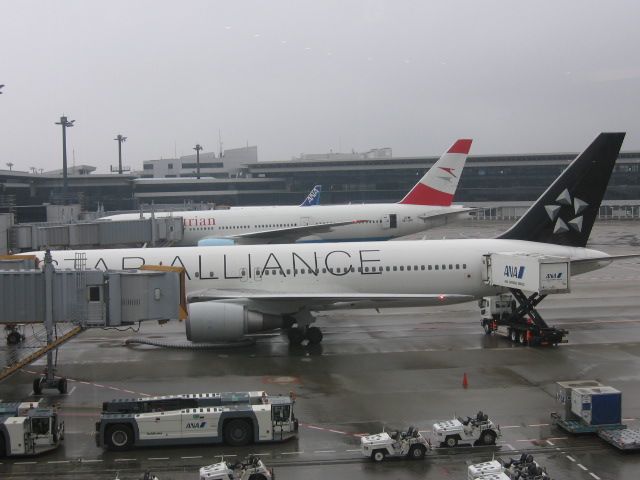
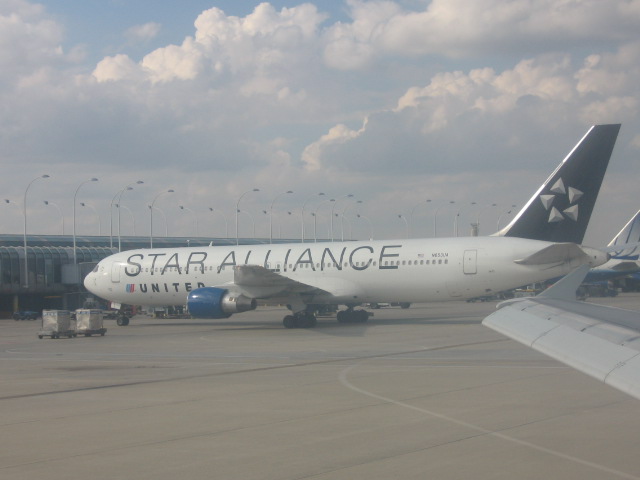
The Indian government is engaging in apparent blackmail of the Star Alliance, following the global airline group’s rejection of Air India’s membership application. New Delhi’s threat to take away traffic rights from Star members is about to test the diplomatic skills of both the affected carriers and the alliance leadership.

As I wrote in August, Star really, really wanted to add Air India to its network, because of the large and fast-growing Indian market. It spent more time, effort and money on helping Air India meet the membership requirements than it has with any other candidate. At the end, however, Air India’s entrenched corporate culture and internal Indian politics became unbearable, and the alliance gave up.

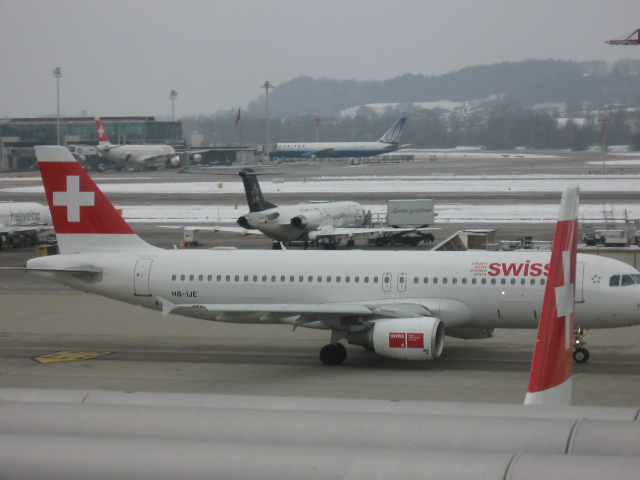
New Delhi wasted no time devising retaliation. Within weeks of Air India’s rejection, the government informed Austrian Airlines and Swiss International Airlines that their traffic rights are in danger, as reported extensively in the Indian press. The official reason was the two carriers’ ownership, in which Germany’s Lufthansa has controlling stakes.

That, of course, has been the case for years, and no one believed this was the real reason for India’s threat. It made another move, refusing to grant landing rights in New Delhi to Lufthansa’s Airbus 380. This time, Indian officials didn’t even try to hide the linkage to Air India’s failed Star application, accusing Lufthansa of sabotaging the Indian bid.

A couple of weeks later, reports appeared in Indian newspapers that Star and Air India had resumed negotiations. That sort of made sense, given India’s multiple threats, but the only sources in those stories were Indian officials — confirmation from Star was suspiciously missing.

So I did a little digging, and it turns out Air India has had no official contacts with the alliance since talks broke down in the summer. There may have been unofficial contacts, but a resumption of negotiations doesn’t happen unofficially.

It’s high time the Indians rethought their priorities and tactics. Blackmail is not the best strategy to earn international respect and recognition for your national carrier.

In the very first column I wrote about Star in 2008, I argued that leading an airline alliance is essentially practicing international diplomacy. The main subject in that piece, then-Star CEO Jaan Albrecht, recently became CEO of Austrian Airlines, so one of his first orders of business was dealing with India again. As if he didn’t have enough of that in the last four years.

RETURN TO MAIN COLUMN PAGE

Related stories:

AirIndia had no chance with Star Alliance

Is India going too far in curbing airfares?

UAE mixes aviation and foreign policy

Continue reading about India tries to blackmail Star Alliance

nkralev on October 26th, 2011

Why do numerous airlines, including those aspiring to be among the world’s best, keep focusing on improving the in-flight experience, but don’t seem to care what kind of service their customers receive before they even step foot on a plane?

It’s high time they understood that travelers are getting smarter, and mediocre reservation agents won’t be tolerated much longer.

In April, I wrote about my disastrous experience with Singapore Airlines’ award-booking agents, who were so poorly trained they might as well have worked for a third-world carrier. In May, I mentioned British Airways’ arrogance and refusal to offer the slightest apology after losing the luggage of two First Class passengers who had paid $12,500 per ticket.

This month, it was Turkish Airlines’ turn. The Star Alliance member has improved significantly in recent years, and spent a lot of money on advertising and public relations. Actor Kevin Costner, who ironically flies mostly on his own private plane — and flew me on it a decade ago for a Financial Times story — was hired to do TV commercials for Turkish. So was NBA star Kobe Bryant. The carrier’s motto is “Globally yours.”

However, in many respects Turkish remains a rather backward regional airline. It’s not that its reservations agents are not well-trained — that’s the case with much more advanced carriers. The bad experience with Turkish begins as soon as you dial the number of its call center.

Even though the center is open only during U.S. business hours, all agents are in Istanbul. There is certainly nothing wrong with that, except that many of them have a very poor command of English, and the connection is so bad you’d think it’s 1950. It sounds as if the airline uses cheap Internet-based technology to keep costs low. Many companies around the world do that, but I haven’t experienced such poor quality in years.

I called Turkish to change the date of a flight, and I knew the original booking class wasn’t available on the new flight, so the ticket would have to be repriced in the higher class. There was no change fee, so only a $265 fare difference had to be paid.

The truly global airlines have a very simple procedure in such cases: The agent reprices the ticket and — often with the help of a supervisor or the rate and ticketing desks — reissues it within minutes. To my utter shock, however, a supervisor informed me that the Turkish reservations center is not capable of reissuing tickets. So the ticket in question could only be reissued at an airport, no later than two hours before departure for a $20 fee — and that’s full-fare Business Class.

Seriously, Turkish Airlines? What year do you think this is? Do you really want to increase lines at airport ticket counters when something this simple can be done over the phone? So much for spending millions of dollars (educated guess) on advertising and PR — you’d be much smarter to invest that money in a 21st century reservations center.

A few days before the above-described experience, I noticed that Turkish doesn’t allow seat assignments to be made on its website, even in long-haul Business Class, and even when a booking is created on the site. I posted that on the carrier’s Facebook page and was informed that seats can be assigned no earlier than seven days before departure.

Why? Isn’t it more complicated to set such artificial deadlines than just allow customers to get a seat as soon as they buy a ticket? This is not a question of charging for seat assignments, because Turkish doesn’t do that. But why waste time calling reservations only to get a seat? It’s not like you’ll have a pleasant experience.

RETURN TO MAIN COLUMN PAGE

Related stories:

Singapore Air’s inept agents, dark side

British Air loses bags on $12,000 ticket

The peculiarities of airline agent training

American’s antiquated ticketing process

Continue reading about Airlines neglect non-flying experience

nkralev on August 8th, 2011

Air India’s entrenched corporate culture and internal Indian politics cost the carrier membership in the global Star Alliance. Although Star’s leadership went out of its way to help the airline meet the group’s more than 200 requirements, it finally gave up the futile effort last week and suspended accession talks.

Not surprisingly, Air India has been trying to assign blame to anyone but itself, pointing a finger at Lufthansa and accusing it of sabotaging the Indian carrier’s potential membership. Regrettably, it appears the airline has learned little from the nearly four-year experience. It needs to do some serious soul-searching if it wants to survive.

Star showed remarkable patience and continued to hope against hope that Air India would live up to its promise and achieve the necessary standards in safety, customer service, on-board experience, operations, etc. The alliance makes decisions based on consensus, and all its members voted to invite Air India in late 2007. The accession process is rather costly for both the candidate and the alliance, so no member voted lightly and fully expected the invitee to become to join the group.

They all underestimated the problems they would encounter. Air India was initially supposed to come on board in March 2009, but Star agreed to extend the qualification period. It really wanted its carriers to gain broader access to the large Indian market.

Star CEO Jaan Albrecht, about whom I’ve written several times, has been saying for years that one of his top priorities is filling the three major “white spots” in the alliance’s network: Brazil, India and Russia. Brazil’s TAM joined in 2010, though its merger with Chile’s LAN has created uncertainty about the new airline’s future allegiance. There is no obvious Russian carrier to be seriously considered at this time.

So it was very important for Star to full the big South Asia “white spot.” Albrecht himself made repeated trips to India in the last year in a tortuous effort to save Air India’s faltering bid.

However, the reality is that Air India never truly had a chance with the oldest and largest global alliance. I felt several times during this process that having Air India as a member anytime soon was more wishful thinking than a realistic expectation. In fact, many frequent travelers feared that Star might lower its standards to accommodate India’s national carrier.

To the alliance’s credit, that didn’t happen. Rejecting Air India’s application was the right decision, no matter how the carrier tries to spin the outcome. The group’s attention in India is now focused on Jet Airways, which is already a code-share partner of several Star carrier, and possibly Kingfisher Airlines — they both have a much stellar reputation than Air India’s.

Star was founded by United Airlines, Lufthansa, Air Canada, Scandinavian (SAS) and Thai Airways. Today, it has 27 members from 25 countries, which have more than 4,000 aircraft in their fleets and fly over 600 million passengers a year on 21,000 daily flights to 1,160 airports in 181 countries.

RETURN TO MAIN COLUMN PAGE

Related stories:

Round-the-world fare mysteries revealed

Is India going too far in curbing airfares?

United StarNet blocking

Continue reading about AirIndia had no chance with Star Alliance

nkralev on July 5th, 2011

One of this column’s goals is to point out nuisances in the air travel system and help you avoid them or minimize their negative impact. As I welcome the many readers who have become subscribers since my book, “Decoding Air Travel,” came out, I’d like to tell you about one such nuisance.

As my regular readers are well aware by now, I always know in what booking class a future ticket will be issued. I search for availability in that booking class and choose flights with available seats. That’s why, even if I have to make a reservations with an agent on the phone, I know how much the ticket will cost before I make the call.

The only time when this strategy fails is when I need an airline to book a seat on a partner-carrier, and the ticketing airline’s agent can’t “see” availability in the respective booking class in the partner’s inventory. I’m not talking about award seats, so comparisons with United’s StarNet blocking practice would be misplaced — this is about revenue tickets fully paid for with money, not miles.

So why don’t agents see availability in a certain booking class or fare bucket on another carrier? It usually has to do with the Global Distribution System (GDS) they use to book tickets. For example, United currently uses Apollo and Lufthansa Amadeus. Although most of the time the two systems show identical data, there may be occasional delays, and a United agent may not see a Lufthansa seat displayed as available on Amadeus.

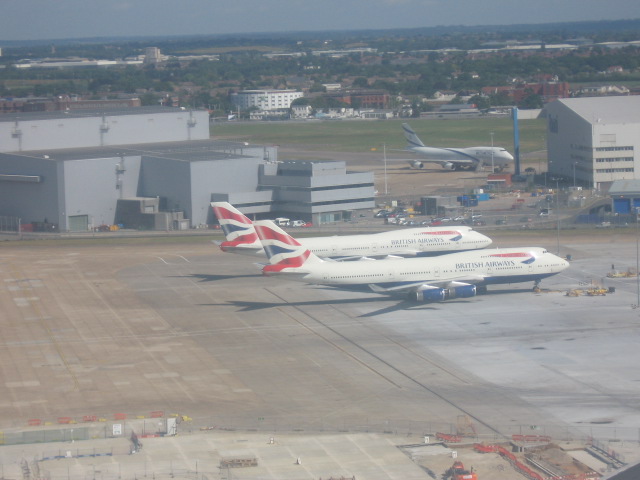
I can explain most things in the airline world, but British Airways and Iberia posed a new challenge last month that left me utterly perplexed. The two companies and Oneworld alliance members merged last fall, and they both use Amadeus, which would mean that their agents should see the same data on their screens — at least it would mean so to a logically thinking person. That person, however, would be wrong.

I was booking a trip for a friend, who is also a client, from Washington to Africa in Business Class. He has Gold status with BA and wanted to fly BA to London and connect to Madrid and on to Africa on Iberia.

According to the BA website, his destination doesn’t exist — many airline sites don’t show cities they don’t fly to, but it’s high time BA added the airports served by Iberia now that they are one company. Fine, I thought, what’s the other option? Naturally, the Iberia site, as the Washington-London BA flight could be booked as an Iberia code-share. There was one problem, though: Iberia priced the desired itinerary almost $4,000 higher than BA.

Clearly, the only thing left to do was to call BA — an exercise I don’t look forward to because of the long waiting time. When I finally got an agent at BA’s call center in Jacksonville, Fla., she said there were no available seats in Business Class on Iberia’s flight from Madrid to the African destination, which I’m not revealing on purpose.

I thought she was joking. Amadeus was showing seven open seats in the full-fare Business booking class I needed, which is J class on Iberia. BA doesn’t code-share that particular flight, so it had to be booked a “true” Iberia flight number.

I started scratching my head. How was it possible for BA’s Amadeus-powered computers to show no seats at all when there were seven? Perhaps it had to do with the point of sale (POS) — I’ve seen airlines alter the inventory on the same flight, depending on where you view the data. But both the BA agent in Florida and I were in the U.S. Still, I changed the POS from the U.S. to Europe, but there was no difference. I also called Iberia to verify the seats were indeed available, and Iberia’s agent in Miami saw exactly what I did.

The BA agent tried to explain the discrepancy by telling me that Iberia hadn’t “given” BA any seats, but I immediately asked her to stop making stuff up. There is no such thing as one airline “giving seats” to another — anyone can book a seat if the operating airline has published it in its inventory, even if the second carrier is not a partner of the first.

Despite all the mystery and frustration, that wasn’t the end of the world, I thought. I asked the BA agent to waitlist the segment in question. My plan was to call back in case another agent could find a way to “see” the seat I needed, and if that failed, I would call Iberia and have them clear the waitlist, since their agent had confirmed availability earlier.

I’ve done just that with Star Alliance carriers several times. For example, Singapore Airlines tends to be stingy with D class availability on intercontinental flights. Star uses D class on round-the-world Business Class tickets, and Singapore deems those fixed fares too cheap. If I issue a ticket with another carrier, it might waitlist a Singapore segment. I’d then call Singapore and ask a supervisor to clear the waitlist if he or she found it appropriate. I’ve also done that with Lufthansa, Japan’s All Nippon Airways, South Korea’s Asiana and others.

However, that simple procedure proved too hard for the merged BA and Iberia, both of which use Amadeus, as mentioned earlier. When I called Iberia back, the agent saw available J seats but said that only BA could clear the waitlist. Except that BA couldn’t, because its agents saw no seats. The Iberia agent’s claim sounded odd, because Iberia controls its own inventory, and I thought it had a way to indicate electronically to BA that a waitlisted seat can be confirmed. So I called back but got the same response from another agent.

Then I phoned BA again and asked the agent to call Iberia, hoping the waitlist could be cleared that way. After keeping me on hold for about 20 minutes, the agent hung up without coming back on the line.

I’d had enough of both carriers’ nonsense, so I took matters in my own hands. I called Iberia yet again and asked the agent to book just that one segment in question separately from the original booking. He gave me the new record locator, and I called BA again, explained the situation and asked that agent if she could incorporate the second booking into the initial one and issue the ticket that way.

She couldn’t but a supervisor was able to do it. Part of me was grateful, but the other part was frustrated that the previous BA agents I’d spoken with never offered me the option I eventually thought of, and wasted hours of my time.

What sort of a merger have BA and Iberia created if they can’t perform the most basic airline function — booking available seats on each other’s flights?

RETURN TO MAIN COLUMN PAGE

Related stories:

British Air loses bags on $12,000 ticket

The peculiarities of airline agent training

American’s antiquated ticketing process

United fliers hit by pre-merger changes

Continue reading about British Air, Iberia’s dysfunctional merger

nkralev on April 19th, 2011

My previously high regard for Singapore Airlines has been sinking quickly in the last week. Dealing with its agents regarding an award ticket has been one of my worst airline experiences in years. Now we learn that the carrier did little to help a passenger who suffered a heart attack during a flight last month.

When I wrote about Singapore’s “maddening perfection” in September, I pointed out that it deserves all the accolades it gets for its on-board products and in-flight services. However, the airline hasn’t quite understood that being a global first-class company means much more than that.

I usually try to stay calm with airline agents on the phone and give them the time they need, even when it’s clear they are not very good. That turned out to be a serious challenge last week with Singapore agents assigned to the carrier’s frequent-flier program, KrisFlyer. It’s stunning how poorly trained they are, even though they are based in Singapore — not India, as their accents suggest. A few years ago, the carrier closed its Los Angeles call center, where agents were much better.

I wanted to change the dates of three out of four flight segments on an award ticket entirely on Air Canada, Singapore’s partner in the global Star Alliance. I booked it a few months ago with the last KrisFlyer miles I’ll ever have. As usual, I’d done my homework using the All Nippon Airways’ website, which is the only site showing award availability on every Star carrier. All flights I requested had an open seat.

Normally, if a Star airline has provided a seat for mileage redemption on StarNet, the alliance’s “middleware,” any member has access to that seat on a first-come-first-served basis. You probably know how that system works from my columns about United’s StarNet blocking.

Still, there is a small chance an agent may not see exactly what I see, due to using different systems, time delays and other variables. So when I called Singapore, I gave the agent my first segment and asked him to check for availability. He wanted to know all three flights. I said I couldn’t book the return unless I knew for sure on what day my outbound flight would be. He responded that he couldn’t look for seats one by one, but had to collect all the information from me before searching.

Most airline agents can tell you immediately whether an award seat is available on a certain flight — they either look at inventory or, in rare cases, request a partner seat and see if the other airline confirms it. I later verified with several other Singapore agents that what my first agent told me is indeed how they do things over there. So I gave him all my three new flights. Having written them down, he wanted to read them back to me before starting his search. That took over a minute of odd stumbling over what one would have thought was someone else’s handwriting.

My patience was almost running out when the real shocker came — he asked on what number he could call me back once he had looked for seats. Seriously? Award seats could vanish in seconds, let alone in whatever time he needed to perform what apparently amounted to a rather complex task. I said I preferred to hold while he was searching.

After keeping me on hold for 15 minutes, he disconnected the call without coming back. I called again and went through the same motions with another agent. Following a 10-minute hold, he said one of the new flights wasn’t available. I went back to the All Nippon website — that seat was gone indeed. After all, it had been more than half an hour since I’d first called.

Make no mistake about it — I lost a seat because of the incompetence and poor training of the Singapore agents, as well as the carrier’s inefficient system. Such lack of professionalism is to be expected from a third-world airline, but not from a carrier that is often named the best in the world in various rankings.

Slightly off point, the second agent also said that another one of the flights I wanted was not available — however, the All Nippon site was still showing an open seat. Even now, several days later, that flight shows as available on the site. I just called Singapore and a third agent said she couldn’t see it. I wonder if Singapore does its own blocking these days, taking its cue from United.

In my September column, I also wrote about Singapore employees narrowly following rules and not applying their own best judgment to specific situations that inevitably arise during air travel. In other words, they don’t really exhibit much humane behavior.

I was still surprised to learn this week about an utterly puzzling Singapore decision in March.

Max Pearson, a co-host of “The World Today” BBC program to which I listen almost every day, flew to London on Singapore on his way back home from covering the Japan earthquake and tsunami. Shortly after taking off from Singapore, he suffered a heart attack. The airline refused his request to return to Singapore or divert the flight to the nearest appropriate airport, so he could get the care he needed.

Singapore says it took the measures it deemed necessary, implying that Pearson’s condition was not serious enough to justify a diversion. Obviously, diversions are very expensive for an airline, but they are covered by insurance. Plus, Pearson had what has been described by media reports as a “life-saving surgery” as soon as he arrived in London.

It remains to be determined if the more than 12 hours Pearson had to endure on the Singapore plane might have complicated his condition.

RETURN TO MAIN COLUMN PAGE

Related stories:

Singapore Airlines’ maddening perfection

What to do with empty premium seats?

Airlines require credit cards at check-in

Airlines want budget, premium fliers

Continue reading about Singapore Air’s inept agents, dark side