My previously high regard for Singapore Airlines has been sinking quickly in the last week. Dealing with its agents regarding an award ticket has been one of my worst airline experiences in years. Now we learn that the carrier did little to help a passenger who suffered a heart attack during a flight last month.
When I wrote about Singapore’s “maddening perfection” in September, I pointed out that it deserves all the accolades it gets for its on-board products and in-flight services. However, the airline hasn’t quite understood that being a global first-class company means much more than that.
I usually try to stay calm with airline agents on the phone and give them the time they need, even when it’s clear they are not very good. That turned out to be a serious challenge last week with Singapore agents assigned to the carrier’s frequent-flier program, KrisFlyer. It’s stunning how poorly trained they are, even though they are based in Singapore — not India, as their accents suggest. A few years ago, the carrier closed its Los Angeles call center, where agents were much better.
I wanted to change the dates of three out of four flight segments on an award ticket entirely on Air Canada, Singapore’s partner in the global Star Alliance. I booked it a few months ago with the last KrisFlyer miles I’ll ever have. As usual, I’d done my homework using the All Nippon Airways’ website, which is the only site showing award availability on every Star carrier. All flights I requested had an open seat.
Normally, if a Star airline has provided a seat for mileage redemption on StarNet, the alliance’s “middleware,” any member has access to that seat on a first-come-first-served basis. You probably know how that system works from my columns about United’s StarNet blocking.
Still, there is a small chance an agent may not see exactly what I see, due to using different systems, time delays and other variables. So when I called Singapore, I gave the agent my first segment and asked him to check for availability. He wanted to know all three flights. I said I couldn’t book the return unless I knew for sure on what day my outbound flight would be. He responded that he couldn’t look for seats one by one, but had to collect all the information from me before searching.
Most airline agents can tell you immediately whether an award seat is available on a certain flight — they either look at inventory or, in rare cases, request a partner seat and see if the other airline confirms it. I later verified with several other Singapore agents that what my first agent told me is indeed how they do things over there. So I gave him all my three new flights. Having written them down, he wanted to read them back to me before starting his search. That took over a minute of odd stumbling over what one would have thought was someone else’s handwriting.
My patience was almost running out when the real shocker came — he asked on what number he could call me back once he had looked for seats. Seriously? Award seats could vanish in seconds, let alone in whatever time he needed to perform what apparently amounted to a rather complex task. I said I preferred to hold while he was searching.
After keeping me on hold for 15 minutes, he disconnected the call without coming back. I called again and went through the same motions with another agent. Following a 10-minute hold, he said one of the new flights wasn’t available. I went back to the All Nippon website — that seat was gone indeed. After all, it had been more than half an hour since I’d first called.
Make no mistake about it — I lost a seat because of the incompetence and poor training of the Singapore agents, as well as the carrier’s inefficient system. Such lack of professionalism is to be expected from a third-world airline, but not from a carrier that is often named the best in the world in various rankings.
Slightly off point, the second agent also said that another one of the flights I wanted was not available — however, the All Nippon site was still showing an open seat. Even now, several days later, that flight shows as available on the site. I just called Singapore and a third agent said she couldn’t see it. I wonder if Singapore does its own blocking these days, taking its cue from United.
In my September column, I also wrote about Singapore employees narrowly following rules and not applying their own best judgment to specific situations that inevitably arise during air travel. In other words, they don’t really exhibit much humane behavior.
I was still surprised to learn this week about an utterly puzzling Singapore decision in March.
Max Pearson, a co-host of “The World Today” BBC program to which I listen almost every day, flew to London on Singapore on his way back home from covering the Japan earthquake and tsunami. Shortly after taking off from Singapore, he suffered a heart attack. The airline refused his request to return to Singapore or divert the flight to the nearest appropriate airport, so he could get the care he needed.
Singapore says it took the measures it deemed necessary, implying that Pearson’s condition was not serious enough to justify a diversion. Obviously, diversions are very expensive for an airline, but they are covered by insurance. Plus, Pearson had what has been described by media reports as a “life-saving surgery” as soon as he arrived in London.
It remains to be determined if the more than 12 hours Pearson had to endure on the Singapore plane might have complicated his condition.
Related stories:
Singapore Airlines’ maddening perfection
What to do with empty premium seats?
Airlines require credit cards at check-in
Airlines want budget, premium fliers
Continue reading about Singapore Air’s inept agents, dark side
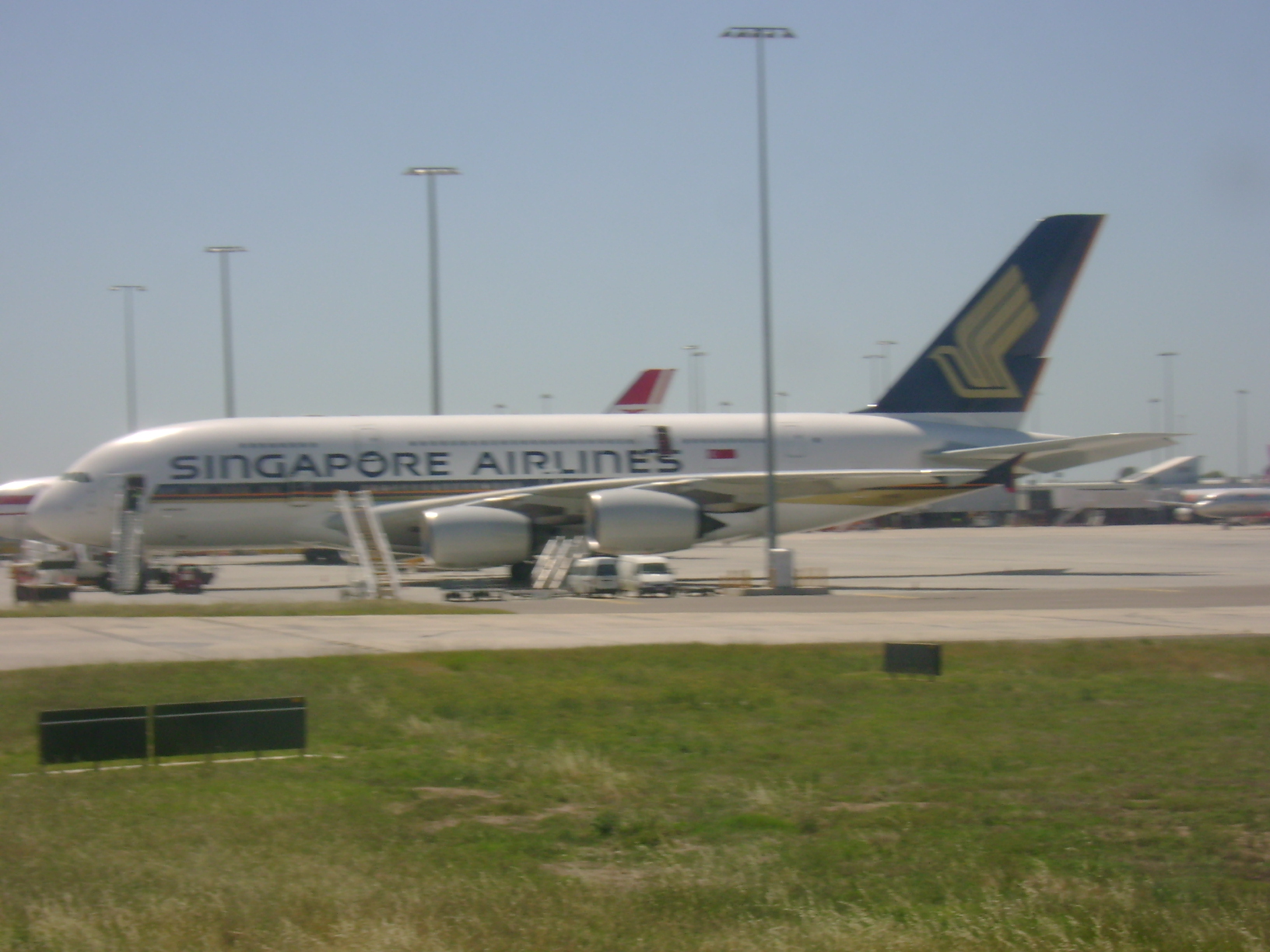
As United and Continental prepare to become one airline, they are making changes that, though necessary, are affecting negatively their customers. One consequence is that upgrades on international flights will be harder to get in the short run, and more expensive in the long run.
The carriers announced last month that they would begin “cross-fleeting” — swapping routes in each other’s network — and some of those changes have already been loaded in their schedules. Both United and Continental will be serving certain routes in the next several months, but each of them is taking over other routes entirely.
For example, all Anchorage flying goes to Continental, as do the Washington-Paris and Washington-Amsterdam routes, now operated by United. The current Continental flights from Newark to Zurich and Brussels, as well as its Houston-Lima flights, will be flown by United.
That practice is not unusual in airline pre-merger situations. While the United-Continental merger was legally completed late last year, they will be operating as separate airlines until they secure a single certificate from the Federal Aviation Administration, which is expected to happen by early next year.
However, United and Continental are implementing the route changes before resolving some technical issues that will harm their customers.
If you are a United 1K flier and have system-wide upgrade certificates, you can’t use them on the previously United flights now operated by Continental — and the other way around. The same applies to your confirmed regional upgrade certificates on domestic flights. As of now, it’s technically impossible for the carriers’ reservations systems to accept upgrade certificates from the other airline’s frequent-flier program.
Mary Clark, a Continental spokeswoman in Houston, confirmed that certificates will be “carrier-specific” for the time being. “We are in the process of aligning the programs, and changes to the current policies will be announced as they are rolled out throughout the year. We aim to fully combine the programs by 2012.”
United is expected to adopt Continental’s reservations system eventually, but until then, there may be another way to resolve the issue. The carriers announced this week that miles can now be transferred between United and Continental accounts. I wonder if they can make it possible for upgrades to be transferred as well. It’s unclear if they looking into such an option yet.
There is another issue with the United system-wide upgrades whose impact is just now becoming apparent. For years, they have been allowed only on tickets booked in W class or higher, which makes S, T, L and K classes ineligible. Continental recently adopted the same rules.
This means that customers often have to spend hundreds of dollars more than the lowest available fare, just to qualify for an upgrade request — and if the upgrade doesn’t clear, they are left with a lot less money and the same coach seat they would have had if they had paid much less for it.
Things are getting even worse. In January, because of the merger, United added a 14th coach booking class, G, which was a regular published booking class on Continental, but on United it was previously an unpublished travel-industry discount class — it didn’t earn miles and was ineligible for upgrades.
Now, instead of four, there are five booking classes ineligible for system-wide upgrades. So what? you might ask — just a small technicality. Not quite. As a result of this change, W fares are getting more expensive. For example, a base fare of $800 that might have booked in W class before, now books in S or T. A few days ago, I helped a friend with a ticket from Washington to Bangkok, and the W base fare was more than $1,400 round trip — including taxes and surcharged, it came up to $1,900.
There is no question that fares have been going up for some time. A few years ago, a W fare to Bangkok was about $900, including taxes. In 2002, an H fare was $900. So the trend is clear and it didn’t start yesterday. But adding one more booking class makes things even worse.
It’s worth pointing out that American Airlines system-wide upgrades are allowed on all published booking classes.
Another negative change as a result of the United-Continental merger is that, similarly to the upgrades, discount vouchers from one airline cannot be used on the other. So if you want to use a United voucher for a ticket to Anchorage, you can’t, because United has given its seasonal service to Continental.
This week, the United website seems to be including Continental flights in electronic certificate-discounted itineraries, but the official policy hasn’t changed. It may be a website glitch, given that it also allows Lufthansa flights, and the vouchers’ terms and conditions specifically say that they are not valid on code-share flights.
One positive merger-related change is that United customers can now avoid StarNet blocking — it has diminished but still exists — by transferring their miles to Continental, which doesn’t block Star Alliance partner award seats.
NOTE: Several months after this column was published, United and Continental made it possible to use upgrades on flights operated by the other airline, including on mixed itineraries.
Related stories:
United, Continental execs at odds over loyalty program
United executive breaks old barriers
Keeping United international first class
Continue reading about United fliers hit by pre-merger changes
Delta Airlines has cemented its status as the network U.S. carrier with the worst frequent-flier program, further devaluing its long-cheapened SkyMiles. The leadership of the program or the airline — or perhaps both — doesn’t seem to understand what the loyalty business in 2011 is about. It may be time for a new team at the top.
For more than a year, Delta failed to publish an award redemption chart for most of the world, resulting in lack of transparency about how many miles were really needed for an award ticket.
When it finally unveiled a chart this week, the mileage rates on many routes were increased significantly. Many loyal SkyMiles members felt cheated and disrespected, calling Delta’s move a “stunt” in comments posted on FlyerTalk, the largest online travel community.
If you wondered why Delta announced last week the elimination of miles’ expiration, my guess is that it tried to soften the blow of what was coming — and to claim that it cares about its customers. In reality, almost everything SkyMiles has done in recent years has been decidedly customer-unfriendly. I’m not an active SkyMiles member and have no dog in this flight, but I’ve been appalled enough to write about it.
In comparison to its two largest competitors, American and United, Delta’s upgrade and award policies are the most restrictive and inflexible. Its system-wide upgrade certificates are only valid on tickets booked in Y, B and M class, and are not transferable. American’s upgrades can be used on just about any fare and gifted to other people. United’s certificates exclude only the lowest booking classes and can also be transferred.
In 2008, Delta devalued its miles by adding a third award tier, in an attempt to mask its very poor award availability at the lowest level. A year later, it devalued its elite status when it introduced a fourth tier, Diamond, on top of Silver, Gold and Platinum. If that’s not bad enough, Delta also charges some fees that are hard to justify, such as $50 for booking an award originating outside the United States.
The main reason frequent-flier programs exist is not to make customers happy, but to make money — and most of them do. I’ve never considered that a problem. A successful business deserves all the rewards it can get. My problem has been with the way airlines have been trying to make money through their so-called loyalty businesses. For decades, they have had an utterly peculiar philosophy, which can be best described at a “screw the customer” approach, which I explain with a misguided view of what the loyalty business is about.
Fortunately, a few airline executives recently saw the light, and things are starting to change. I’ve written several times about what Graham Atkinson did when he was president of United Mileage Plus for less than two years, beginning in the fall of 2008. He understood the essence of customer loyalty and showed that what’s good for the company doesn’t necessarily have to be bad for customers. While he wasn’t able to end StarNet blocking, he actually listened to customers and reversed decisions based on their feedback.
American’s AAdvantage program also has progressive leadership that rewards top fliers appropriately and has tried to make it easier for members to use their miles. There is still a lot to be desired, but it’s on the right track.
Delta, on the other hand, has been stuck in the 20th century. It seems it’s working hard to perfect the “screw the customer” approach.
Related stories:
United executive breaks old barriers
US Airways hears feedback, fixes website
Customers gain sway over airlines
United keeps free stopovers on awards
US Airways has denied recent suspicion that it has begun to block award seats made available by its Star Alliance partners for mileage redemption by members of its Dividend Miles program — a practice pioneered by United Airlines, which I first exposed in 2008.
The airline has been silent on the issue since reports about apparent blocking surfaced last fall. Many travelers said they found award inventory on various Star carriers, using one or more of the publicly available sources — the websites of All Nippon Airways, Continental Airlines and Air Canada — but US Airways agents were unable to see those available seats.
To some of us, that looked very much like StarNet blocking — manipulating the alliance’s award “middleware,” which provides access to any Star partner’s inventory on a first-come-first-served basis, to avoid paying other carriers for seats booked on their flights. The patterns resembled those on United, with the most filtering applied to Business and First Class cabins, though some fliers stumbled on coach seats as well. The most affected availability appeared to be on Lufthansa, but also on Swiss, United and others.
In addition, it made financial sense for US Airways to be limiting access to premium partner awards. In the last couple of years, it has in effect been printing miles with lightening speed, as a result of extraordinary promotions it has had, including selling miles at 100-percent bonus. Many Dividend Miles members bought miles and redeemed them for Business and First Class on partner flights, which likely weighed heavily on US Airways’ budget.
Several travel bloggers wrote about the issue, including Gary Leff on “View from the Wing” and Ben Schlappig on “One Mile at a Times.” Leff was more inclined to give the airline the benefit of the doubt, suggesting the problem might have been caused by technical glitches, as well as US Airways agents’ ignorance that some of their partners have First Class in addition to Business.
I’m not a big Dividend Miles fan, though I did help my sister buy miles for a trip to Europe with her family last summer, so it took me some time to look into the issue. I finally got around to it and alerted a US Airways contact at its Phoenix headquarters who has been very helpful in the past — Valerie Wunder, associate manager of media relations. She asked the powers that be and gave me the following response:
“We don’t block award inventory on other airlines, nor do we do the inverse — other Star partners block us from seeing their inventory to maximize their revenues.”
Probably the most frequent difficulty Dividend Miles members have been experiencing has to do with intercontinental First Class awards on Lufthansa, Swiss and others, so I asked Wunder if US Airways may be trying to restrict access to those specific seats.
“We have no restrictions on redemptions, regardless of class,” she said.
However, she offered no explanation for the problem. The mystery continues.
Related stories:
Clarifying United’s StarNet blocking
US Airways hears feedback, fixes website
New Lufthansa business class in a year
Continental shows new transparency
Readers’ interest in United Airlines’ practice of massively blocking award seats otherwise made available for mileage redemption by United’s partners in the global Star Alliance doesn’t seem to subside, judging by the feedback I get and the web traffic on this site’s pages dedicated to the issue. So it’s time to clarify some misconceptions about the infamous StarNet blocking.
Earlier this week, I received a complaint from Norma Brandsberg, a reader from Virginia, that United is “blocking an award through Continental” Airlines. “United’s own site is showing availability,” but “Continental is not seeing the open seats in their system,” she wrote.
Brandsberg mistakenly thought that what she discovered was part of StarNet blocking. However, the controversial practice doesn’t involve seats on United flights — only seats on flights operated by other Star carriers, such as Lufthansa, Thai Airways, Singapore Airlines and others. United denies members of its Mileage Plus program access to those seats to avoid paying its partners for them.
What Brandsberg is comparing are two completely different things. First, she looked at award seats United has made available to book with United miles — inventory reserved only for Mileage Plus members. But then she tried to use Continental miles to book those same seats, only to find out that they are not available to members of Continental’s OnePass or any other Star Alliance program.
Every airline in the alliance has the right to set aside certain award inventory only for its own frequent fliers, and it has no obligation to offer that inventory to its Star partners. The seats it decides to provide to partners are published on the common IT platform known as StarNet. So contrary to Brandsberg’s understanding, United wasn’t “blocking an award through Continental” — rather, United wasn’t offering those seats on StarNet to any of its Star partners.
In a related misunderstanding, many travelers wrongly accuse United of blocking partner seats. For example, they call Swiss International Airlines and are told that seats are available on a certain Swiss flight — they can also see those seats on ExpertFlyer. Then they call United, which is not seeing availability, and conclude that “StarNet blocking” is in force.
That conclusion would be correct only if you confirm that Swiss is offering the seats in question on StarNet. The best way to do that is to consult the All Nippon Airways (ANA) website, which has the most comprehensive free online StarNet tool but requires that you have an ANA account with miles in it. The paid KVS tool is another option, and the Continental and Air Canada websites show limited partner inventory. ExpertFlyer tends to display seats offered by an airline only to its own customers and not to partners.
There have been recent reports from United customers that United is less aggressive with StarNet blocking these days, and of course we all hope that the practice will be discontinued after the merger with Continental.
Related stories:
United, Continental execs at odds over loyalty program
United’s ‘award’ blocking an issue in Continental merger
United executive breaks old barriers
Continental shows new transparency
‘Award’ blocks still irk United fliers
United risks customer loyalty over ‘award’ blocking
United yields on ‘award’ blocking