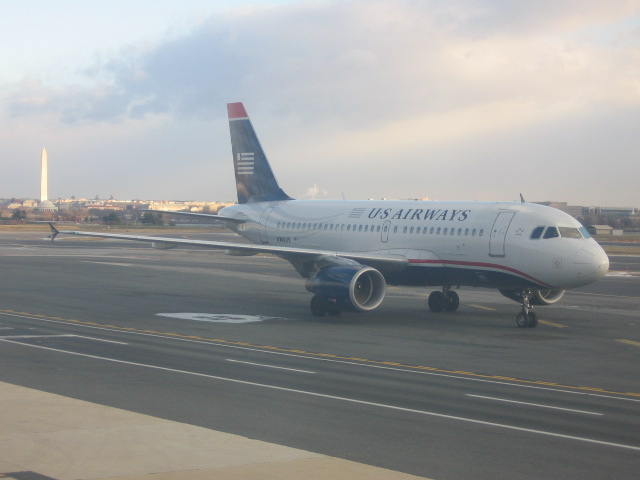
US Airways has denied recent suspicion that it has begun to block award seats made available by its Star Alliance partners for mileage redemption by members of its Dividend Miles program — a practice pioneered by United Airlines, which I first exposed in 2008.
The airline has been silent on the issue since reports about apparent blocking surfaced last fall. Many travelers said they found award inventory on various Star carriers, using one or more of the publicly available sources — the websites of All Nippon Airways, Continental Airlines and Air Canada — but US Airways agents were unable to see those available seats.
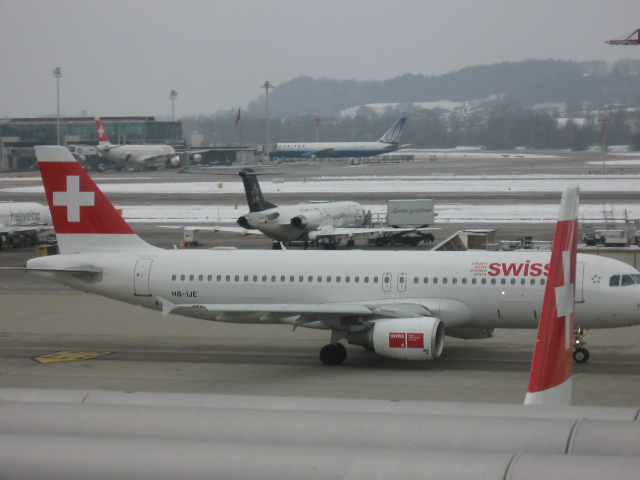
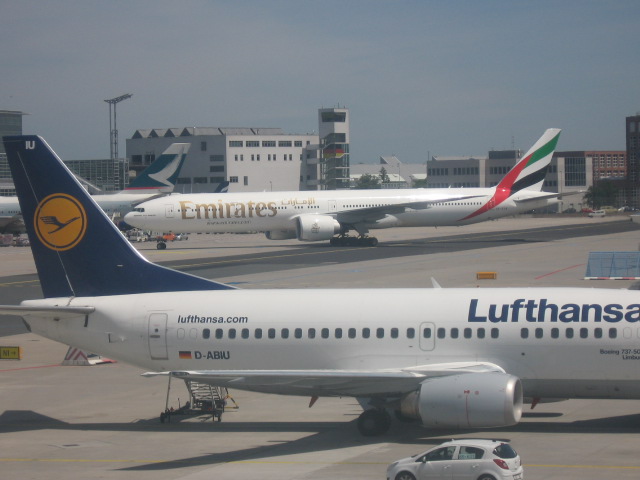
To some of us, that looked very much like StarNet blocking — manipulating the alliance’s award “middleware,” which provides access to any Star partner’s inventory on a first-come-first-served basis, to avoid paying other carriers for seats booked on their flights. The patterns resembled those on United, with the most filtering applied to Business and First Class cabins, though some fliers stumbled on coach seats as well. The most affected availability appeared to be on Lufthansa, but also on Swiss, United and others.
In addition, it made financial sense for US Airways to be limiting access to premium partner awards. In the last couple of years, it has in effect been printing miles with lightening speed, as a result of extraordinary promotions it has had, including selling miles at 100-percent bonus. Many Dividend Miles members bought miles and redeemed them for Business and First Class on partner flights, which likely weighed heavily on US Airways’ budget.
Several travel bloggers wrote about the issue, including Gary Leff on “View from the Wing” and Ben Schlappig on “One Mile at a Times.” Leff was more inclined to give the airline the benefit of the doubt, suggesting the problem might have been caused by technical glitches, as well as US Airways agents’ ignorance that some of their partners have First Class in addition to Business.
I’m not a big Dividend Miles fan, though I did help my sister buy miles for a trip to Europe with her family last summer, so it took me some time to look into the issue. I finally got around to it and alerted a US Airways contact at its Phoenix headquarters who has been very helpful in the past — Valerie Wunder, associate manager of media relations. She asked the powers that be and gave me the following response:
“We don’t block award inventory on other airlines, nor do we do the inverse — other Star partners block us from seeing their inventory to maximize their revenues.”
Probably the most frequent difficulty Dividend Miles members have been experiencing has to do with intercontinental First Class awards on Lufthansa, Swiss and others, so I asked Wunder if US Airways may be trying to restrict access to those specific seats.
“We have no restrictions on redemptions, regardless of class,” she said.
However, she offered no explanation for the problem. The mystery continues.
Related stories:
Clarifying United’s StarNet blocking
US Airways hears feedback, fixes website
New Lufthansa business class in a year
Continental shows new transparency
Lufthansa appears to have listened to the recent criticism of its decision to install its old angled business-class seats on the newly arrived Airbus 380 aircraft — finally, truly flat seats are planned when its first Boeing 747-800 enters service in late 2011.
Many Lufthansa customers were puzzled and disappointed when the German carrier didn’t bother to introduce fully flat beds on the A380. It was the perfect opportunity — the current seats have been inferior to those of many competitors for years and don’t quite fit the image of a leading airline, which Lufthansa certainly is. In addition, it rolled out brand-new first-class seats on the A380.
“The next major overhaul will be with delivery of the 747-8I in late 2011,” Lufthansa spokesman Martin Riecken said in an e-mail message. “We already have a test seat on one route, but the final design decisions are still not taken. We improved the current business class slightly with the introduction of the A380 in May this year — mainly ergonomic improvements.”
The company has attributed its decision to stick with the old seats to the delayed A380 delivery, saying they were appropriate when the aircraft orders were first made. It’s unclear, however, if Airbus would have allowed Lufthansa to changed its mind, given that interior work didn’t start until just months before the first delivery in May.
It’s unlikely Lufthansa tried to amend its order, judging by its leadership’s previous comments that the old seats, which are lie-flat but not horizontal to the floor and were first installed in 2003, were sufficient for the time being.
“Our existing seat is not at the very top of the market compared with certain [business class] seats offered by some carriers,” Marianne Sammann, general manager for Lufthansa and Austrian Airlines in Britain and Ireland, was quoted as saying in a Wednesday article in Britain’s Business Traveller magazine. “Perhaps with hindsight we would have considered an alternative, but at the time of ordering the A380 our existing seat was the right product.”
Among Lufthansa’s partners in the global Star Alliance, Air New Zealand, Singapore Airlines, Air Canada, United Airlines and Swiss International Airlines offer truly flat beds in business class.
Interestingly, Singapore reacted to the A380 delay differently from Lufthansa — instead of waiting, it installed the new seats on an order of new Boeing 777-300ER aircraft, which began arriving in 2006.
United Airlines rolled out its new seats in 2008, though it has retrofitted only about half of its fleet so far. Still, those seats are much better than Lufthansa’s, and while United’s soft product may not be as good as Lufthansa’s, United is my choice on an overnight flight to Europe.
Last year, Swiss International Airlines put fully flat beds on its new Airbus 330-300 planes, but it currently has only eight of them. Both Swiss and Austrian are owned by Lufthansa, though Austrian’s hard product is inferior to the other two.
Outside the Star Alliance, Air France, Australia’s Qantas Airways and Emirates all introduced new truly flat beds on their A380 aircraft. Air France, however, also disappointed its customers recently by announcing plans not to install the new seats on other aircraft types.
Lufthansa has 15 A380 planes on order, with the option to buy another five. No details about the new business-class seats are available yet, but it’s clear it will take a few years for its entire fleet to be reconfigured.
Related stories:
What to do with empty premium seats?
Airlines cut back on first-class service
Lufthansa agent’s ‘mistake’ stacks up
Continue reading about New Lufthansa business class in a year
Readers’ interest in United Airlines’ practice of massively blocking award seats otherwise made available for mileage redemption by United’s partners in the global Star Alliance doesn’t seem to subside, judging by the feedback I get and the web traffic on this site’s pages dedicated to the issue. So it’s time to clarify some misconceptions about the infamous StarNet blocking.
Earlier this week, I received a complaint from Norma Brandsberg, a reader from Virginia, that United is “blocking an award through Continental” Airlines. “United’s own site is showing availability,” but “Continental is not seeing the open seats in their system,” she wrote.
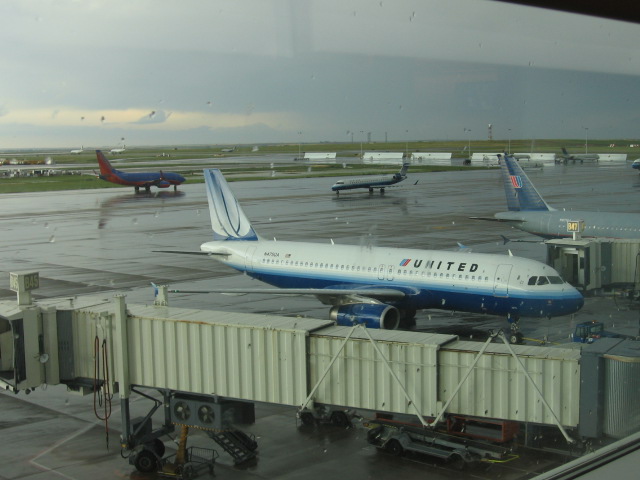
Brandsberg mistakenly thought that what she discovered was part of StarNet blocking. However, the controversial practice doesn’t involve seats on United flights — only seats on flights operated by other Star carriers, such as Lufthansa, Thai Airways, Singapore Airlines and others. United denies members of its Mileage Plus program access to those seats to avoid paying its partners for them.
What Brandsberg is comparing are two completely different things. First, she looked at award seats United has made available to book with United miles — inventory reserved only for Mileage Plus members. But then she tried to use Continental miles to book those same seats, only to find out that they are not available to members of Continental’s OnePass or any other Star Alliance program.
Every airline in the alliance has the right to set aside certain award inventory only for its own frequent fliers, and it has no obligation to offer that inventory to its Star partners. The seats it decides to provide to partners are published on the common IT platform known as StarNet. So contrary to Brandsberg’s understanding, United wasn’t “blocking an award through Continental” — rather, United wasn’t offering those seats on StarNet to any of its Star partners.
In a related misunderstanding, many travelers wrongly accuse United of blocking partner seats. For example, they call Swiss International Airlines and are told that seats are available on a certain Swiss flight — they can also see those seats on ExpertFlyer. Then they call United, which is not seeing availability, and conclude that “StarNet blocking” is in force.
That conclusion would be correct only if you confirm that Swiss is offering the seats in question on StarNet. The best way to do that is to consult the All Nippon Airways (ANA) website, which has the most comprehensive free online StarNet tool but requires that you have an ANA account with miles in it. The paid KVS tool is another option, and the Continental and Air Canada websites show limited partner inventory. ExpertFlyer tends to display seats offered by an airline only to its own customers and not to partners.
There have been recent reports from United customers that United is less aggressive with StarNet blocking these days, and of course we all hope that the practice will be discontinued after the merger with Continental.
Related stories:
United, Continental execs at odds over loyalty program
United’s ‘award’ blocking an issue in Continental merger
United executive breaks old barriers
Continental shows new transparency
‘Award’ blocks still irk United fliers
United risks customer loyalty over ‘award’ blocking
United yields on ‘award’ blocking
It doesn’t happen very often that I fly a new route on United Airlines, especially out of Washington — it seems I’ve flown a huge number of them. But my 467th United flight this week was on the relatively new nonstop service to Moscow.
That flight is flown on a Boeing 767, which means that it’s reconfigured with the new truly flat business-class seats. Even better, upgrading to business on that flight is usually fairly easy, and I was on a pretty high M fare, so I never had any doubt my upgrade would clear.
By the time that happened a week before the flight, I had two choices in terms of window seating: a forward-facing seat in the row before the last or a rear-facing seat in the first row of the business cabin. About six months ago, I would have chosen the first option, but after flying backward from San Francisco to Sydney in December, the direction doesn’t bother me anymore. Each couple of seats feels very much like a private compartment, and you don’t really see anything outside that compartment while seated, so you forget there are other passengers facing in a different direction. I chose the first row because it’s away from the galley and the coach cabin, which makes it quieter and less trafficked.
It was a standard United flight in terms of the service — pretty good, but nothing spectacular. My glass of water never remained empty for too long. A couple of flight attendants asked if I worked for United, because I looked familiar — that tells you how often I’m on those planes.
My routine on long-haul flights begins with changing into my plane pajamas, which are given to first-class passengers on some non-U.S. carriers — this time, I’d taken a set from Lufthansa, but I usually rotate them with sets from SWISS or Singapore Airlines. I used to change after takeoff, but by the time the seat-belt sign is off, the service has already begun, and I’d rather not be in the flight attendants’ way.
During takeoff, I read newspapers — usually the Financial Times, where I used to write, and the International Herald Tribune on flights originating outside the United States. Then I turned on my entertainment system and start a film — “Valentine’s Day” was the first one I watched. It didn’t do well at the box office when it was released in February, despite the all-star cast and the director Gary Marshall, who also did “Pretty Woman.” I thought it was good enough for a plane ride.
After dinner — not-so-tasty chicken breast and cheesecake — and Chardonnay, it was bedtime. The flight left as 5 p.m., so it was too early to sleep. I tried really hard but not very successfully. At least I had a long and nice rest in a flat bed. Later, I watched another film — the very good documentary, “Celine: Through the Eyes of the World.”
Breakfast was disappointing, as it usually is in United business — just a croissant and fruit — and way behind competition, but United has never excelled at its soft product. Only first class gets eggs for breakfast.
This was my seventh time in Moscow, but the first at Domodedovo Airport — I found it much nicer than Sheremetevo. It was my 202th airport overall, according to my profile on FlightMemory.
Continue reading about Flying new United route — rare occurrence
Ever since electronic permits for foreign travelers to the United States who don’t need a regular visa became mandatory in January, I’ve been getting reports about confusion among both passengers and airport agents about some of the new rules. So I thought I’d try to clear things up.
It’s a particularly good time to do that, because after March 20, the Department of Homeland Security will impose fines on airlines that transport visitors with neither a visa in their passport nor approval by the new Electronic System for Travel Authorization (ESTA).
The fines will be $3,300 for each non-compliant passenger, said Joanne Ferreira, a spokeswoman for the department’s Customs and Border Protection (CBP) division…
Continue reading about Airline agents make up U.S. entry rules