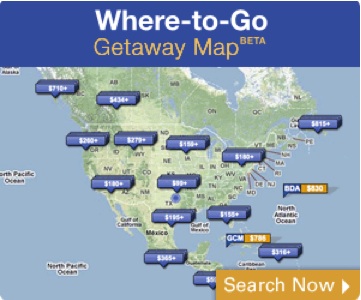
How do airlines decide what fares qualify as “sales,” and why do they advertise certain fares, but not other, much lower ones? Why is United Airlines promoting a “sale” between Washington and Boston for $109 each way, when there are currently six published lower fares in that market, beginning with $49 each way?
For the most part, I don’t bother to figure out why airlines do certain things anymore. I just gather all the information I need about what they do and try to work with it — or around it. Years of watching fares have taught me not to fall for those “sales,” because in many cases, I can find a much lower price to the same destination, on the same dates and on the same carrier.
Both United and American Airlines are currently advertising two fall sales on their websites. My review of the American fares showed that most of them are indeed the lowest available prices at this time. There are a few small exceptions — for example, I found a fare from New York to San Diego that is $5 lower than the advertised $164.
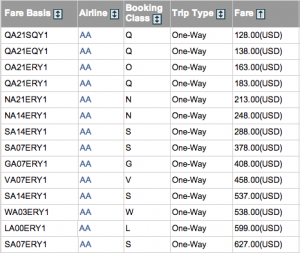
There are many more and much bigger differences on United. The unadvertised — but published — fares between Washington and Boston, in addition to $49 each way, are $54, $64, $74, $84 and $99. They all have fewer restrictions than the $109 “sale” price.
I say between Washington and Boston — not from Washington to Boston — because domestic fares are the same in either direction, unlike international fares, which are usually very different.
Let’s take another example. The advertised fares between Denver and Los Angeles in two separate United “sales” are $99 and $89 each way. However, I found $68 each way. In addition, Denver-New Orleans is on “sale” for $123 each way, but there is also $109, and even $89.
Some of the advertised United fares are truly the lowest published at this time. For example, $88 each way for Washington-Chicago, $108 for Chicago-Denver, and $157 for Chicago-Los Angeles.
There is another catch that could increase the benefit of the unadvertised fares to you. Typically, “sale” prices require a round-trip purchase. In contrast, most of the lower fares I found have no such condition. In fact, the major U.S. carriers have been publishing more and more truly one-way fares in recent months, which has always been the case with Southwest Airlines and other low-cost carriers.
To United’s credit, some of its current sales don’t require a round-trip purchase. That is, indeed, the prudent thing to do. If a round trip is mandatory, why advertise one-way fares? Of course, for marketing purposes, but I’ve always found that a bit dishonest and deliberately misleading.
I mean no criticism of United for promoting as “sales” fares that are higher than other published fares. I wrote this to warn travelers that they should check all existing fares between two cities before settling for what they think is a “sale” or the best deal.
Those of you who have attended my “On the Fly” Seminars know how easy it is to bring up on your computer screen all fares published by every airline on a certain route in just seconds.
Continue reading about When an airfare sale is not quite a sale
Nicholas Kralev talks about saving on airfare, achieving elite airline status and his upcoming “On the Fly” Seminars on FOX 5 in Washington, DC, on July 22, 2010.
US Airways has set a good example of listening to customer feedback and fixing a problem. In my case, there was added criticism in a newspaper column, but instead of complaining, the airline rolled up sleeves and started working.
In March, I wrote in my Washington Times column about its website’s inability to display many itineraries, even when booked directly with US Airways. At the time, spokeswoman Valerie Wunder at the company’s headquarters in Phoenix arranged a conference call with two in-house experts, who told me that the reason for the glitch was the site’s failure to recognize some foreign airport codes.
I’m happy to report that now I can view reservations containing some of the same airport codes I wasn’t able to see before. I hope the problem has been fixed across the system. That said, there are other issues with the US Airways site, but most other airlines have them, too.
Another company that has taken my criticism constructively is RCN, the cable operator. In a May column, I wrote about a massive April 26 outage that reportedly affected not only D.C. but several states. Because most customers have “bundled” services, they lost all of them for about five hours beginning in early afternoon on a Monday — those included businesses and many people working from home, who could do little with no phone and Internet in the middle of a weekday.
I concluded that RCN hadn’t improved its customer-service policies since a previous incident, which I reported a year earlier. In that case, my entire building lost phone, TV and Internet service around 7 p.m. on a Saturday. Service was not restored for more than 18 hours. Customer-service agents in the Philippines gave me and my neighbors conflicting information about the problem and how long it would take to fix it.
After my latest column, I received a call from Richard Beville, vice president and general manager for the D.C. area, who invited me to lunch to discuss how RCN can improve its customer service.
I try to hold companies in different sectors to the same standards everyone expects from airlines, which probably get more criticism than any other industry. While some of that criticism is deserved, the high visibility of thousands of front-line employees with customers around the world every day magnifies even a mundane incident, especially if splashed on Facebook or Twitter.
Continue reading about US Airways hears feedback, fixes website
A new survey by the Consumer Travel Alliance released this week found that luggage and other additional airline fees increase the average ticket price by up to 50 percent. The truth is, there is a relatively easy way to have most of those fees waived — if only travelers were better educated and more open-minded.
My impression during almost constant global travel for most of the last decade is that people think they know how to travel — but then they complain about being “scammed” by the airlines. My approach has been to learn as much as possible about rules, restrictions and fees, and then to look for ways to waive them and generally make the system work for me.
One of the reasons I started the “On the Fly” Seminars was to educate people how to be better travelers — and to change negative attitudes toward travel. In fact, my FLY 201 class covers exactly how to get those extra fees waived: by achieving elite airline status.
Many people think they don’t travel enough to get elite status or it’s cheaper to fly a different airline every time. I find both of these arguments valid in very few cases.
First, you don’t need to fly 100,000 miles a year. The first elite level in most frequent-flier programs will get your baggage fees waived. Moreover, because of elite benefits offered and recognized across global airline alliances, a silver membership with one carrier will secure those waivers on every member-airline. You can fly on any Star member and credit your miles to any of the Star loyalty programs.
However, mileage requirements to achieve status vary greatly. For example, you need 25,000 miles for Premier on United Airlines, which will give you Star Alliance silver status — but you only need 4,000 miles on the alliance’s newest member, Greece’s Aegean Airlines. Not all fares on United earn 100 percent mileage in Aegean’s program, but right now it gives you 1,000 miles just for signing up. I’m sure if most of you looked at your flight history in the past year, you’d see that you could have qualified had you kept your miles in the same place.
Second, relying on Travelocity or Priceline to tell you which airline has the cheapest ticket and go to a different carrier every time is not the best way to fly in the current environment. Even if you had to pay a bit extra to stay within the same alliance — but if you managed to secure elite status — at the end of the year you most likely spent less money because you didn’t pay luggage fees.
There is no question that airlines should make all those extra fees more transparent earlier in the booking process. There is also little doubt that their frequent-flier programs were created to make money. But they do reward their loyal customers, so if you are going to give them your money, why not learn how to benefit from your loyalty as much as you can?
Continue reading about Avoiding luggage and other airline fees
How many busloads of passengers does it take to fill a Boeing 747? Ask the Frankfurt Airport.
With all the innovations and conveniences brought to modern airports, it’s inexplicable to me why airports in some of the most developed countries on the planet remind one of the Third World. Many travelers often complain about London’s Heathrow, but I find Frankfurt no less frustrating.
I realize there are not enough gates with jet bridges, and some airlines prefer “remote” gates because their use is cheaper, but I can’t remember flying through Frankfurt and not being taken to or from a plane by bus at least once. As of this week, I’ve had 111 takeoffs and landings at that airport.
As much as I hate the buses, by now I’m used to the prospect of having to put up with them, especially for flights to certain destinations. Most of the time, such flights are flown on narrow-body aircraft, such as Boeing 737 and Airbus 320, which can be filled with just two busloads.
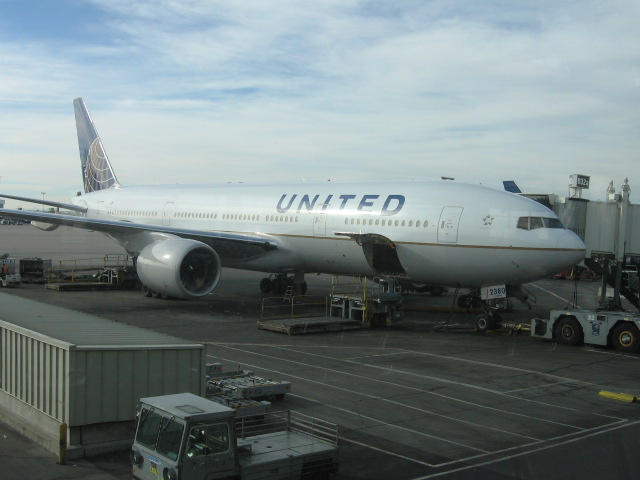
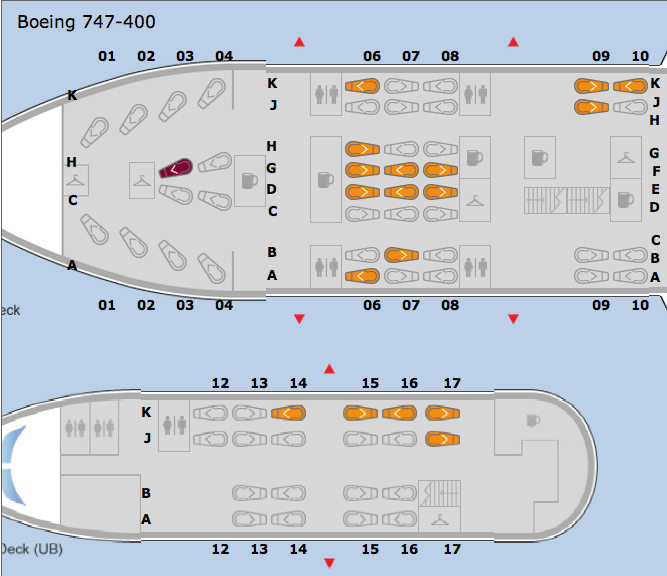
This week, however, I experienced boarding a United Airlines Boeing 747 by bus. I was sure the flight wouldn’t leave on time, and I was right. I can hardly wait for the expansion of Terminal 1 to be completed.
What’s even harder for me to understand is why there aren’t enough gates with jetways at the much newer Munich Airport. I was also disappointed by the transfer experience there this week. With 52 takeoffs and landings, this was the first time I had to change terminals. I arrived at Terminal 1 — courtesy of another bus — and it took me about 45 minutes to reach Terminal 2. The signage was very poor, and the shuttle bus between the terminals runs only once every 20 minutes.
U.S. airports may have their problems, but when was the last time you were taken to the plane by bus?


Social media