Airlines
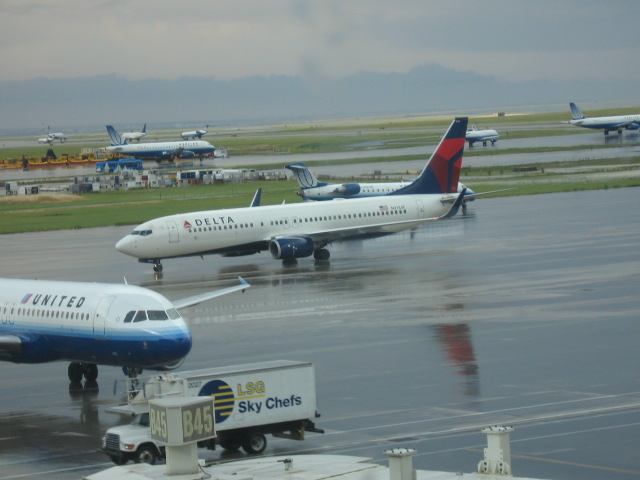
Delta Airlines has cemented its status as the network U.S. carrier with the worst frequent-flier program, further devaluing its long-cheapened SkyMiles. The leadership of the program or the airline — or perhaps both — doesn’t seem to understand what the loyalty business in 2011 is about. It may be time for a new team at the top.
For more than a year, Delta failed to publish an award redemption chart for most of the world, resulting in lack of transparency about how many miles were really needed for an award ticket.
When it finally unveiled a chart this week, the mileage rates on many routes were increased significantly. Many loyal SkyMiles members felt cheated and disrespected, calling Delta’s move a “stunt” in comments posted on FlyerTalk, the largest online travel community.
If you wondered why Delta announced last week the elimination of miles’ expiration, my guess is that it tried to soften the blow of what was coming — and to claim that it cares about its customers. In reality, almost everything SkyMiles has done in recent years has been decidedly customer-unfriendly. I’m not an active SkyMiles member and have no dog in this flight, but I’ve been appalled enough to write about it.
In comparison to its two largest competitors, American and United, Delta’s upgrade and award policies are the most restrictive and inflexible. Its system-wide upgrade certificates are only valid on tickets booked in Y, B and M class, and are not transferable. American’s upgrades can be used on just about any fare and gifted to other people. United’s certificates exclude only the lowest booking classes and can also be transferred.
In 2008, Delta devalued its miles by adding a third award tier, in an attempt to mask its very poor award availability at the lowest level. A year later, it devalued its elite status when it introduced a fourth tier, Diamond, on top of Silver, Gold and Platinum. If that’s not bad enough, Delta also charges some fees that are hard to justify, such as $50 for booking an award originating outside the United States.
The main reason frequent-flier programs exist is not to make customers happy, but to make money — and most of them do. I’ve never considered that a problem. A successful business deserves all the rewards it can get. My problem has been with the way airlines have been trying to make money through their so-called loyalty businesses. For decades, they have had an utterly peculiar philosophy, which can be best described at a “screw the customer” approach, which I explain with a misguided view of what the loyalty business is about.
Fortunately, a few airline executives recently saw the light, and things are starting to change. I’ve written several times about what Graham Atkinson did when he was president of United Mileage Plus for less than two years, beginning in the fall of 2008. He understood the essence of customer loyalty and showed that what’s good for the company doesn’t necessarily have to be bad for customers. While he wasn’t able to end StarNet blocking, he actually listened to customers and reversed decisions based on their feedback.
American’s AAdvantage program also has progressive leadership that rewards top fliers appropriately and has tried to make it easier for members to use their miles. There is still a lot to be desired, but it’s on the right track.
Delta, on the other hand, has been stuck in the 20th century. It seems it’s working hard to perfect the “screw the customer” approach.
Related stories:
United executive breaks old barriers
US Airways hears feedback, fixes website
Customers gain sway over airlines
United keeps free stopovers on awards
US Airways has denied recent suspicion that it has begun to block award seats made available by its Star Alliance partners for mileage redemption by members of its Dividend Miles program — a practice pioneered by United Airlines, which I first exposed in 2008.
The airline has been silent on the issue since reports about apparent blocking surfaced last fall. Many travelers said they found award inventory on various Star carriers, using one or more of the publicly available sources — the websites of All Nippon Airways, Continental Airlines and Air Canada — but US Airways agents were unable to see those available seats.
To some of us, that looked very much like StarNet blocking — manipulating the alliance’s award “middleware,” which provides access to any Star partner’s inventory on a first-come-first-served basis, to avoid paying other carriers for seats booked on their flights. The patterns resembled those on United, with the most filtering applied to Business and First Class cabins, though some fliers stumbled on coach seats as well. The most affected availability appeared to be on Lufthansa, but also on Swiss, United and others.
In addition, it made financial sense for US Airways to be limiting access to premium partner awards. In the last couple of years, it has in effect been printing miles with lightening speed, as a result of extraordinary promotions it has had, including selling miles at 100-percent bonus. Many Dividend Miles members bought miles and redeemed them for Business and First Class on partner flights, which likely weighed heavily on US Airways’ budget.
Several travel bloggers wrote about the issue, including Gary Leff on “View from the Wing” and Ben Schlappig on “One Mile at a Times.” Leff was more inclined to give the airline the benefit of the doubt, suggesting the problem might have been caused by technical glitches, as well as US Airways agents’ ignorance that some of their partners have First Class in addition to Business.
I’m not a big Dividend Miles fan, though I did help my sister buy miles for a trip to Europe with her family last summer, so it took me some time to look into the issue. I finally got around to it and alerted a US Airways contact at its Phoenix headquarters who has been very helpful in the past — Valerie Wunder, associate manager of media relations. She asked the powers that be and gave me the following response:
“We don’t block award inventory on other airlines, nor do we do the inverse — other Star partners block us from seeing their inventory to maximize their revenues.”
Probably the most frequent difficulty Dividend Miles members have been experiencing has to do with intercontinental First Class awards on Lufthansa, Swiss and others, so I asked Wunder if US Airways may be trying to restrict access to those specific seats.
“We have no restrictions on redemptions, regardless of class,” she said.
However, she offered no explanation for the problem. The mystery continues.
Related stories:
Clarifying United’s StarNet blocking
US Airways hears feedback, fixes website
New Lufthansa business class in a year
Continental shows new transparency
Don’t be afraid — this is the message I have for travelers who may be concerned about losing the ability for comparison-shopping because of the war between American Airlines and online travel agencies. The longtime Global Distribution Systems (GDS) model is about to change, and many people stand to lose lots of money. That’s why they are trying to scare you.
For decades, the GDS model has been the norm for distributing airline data and booking flights, which has given the three main GDS companies in the world — Sabre, Amadeus and Travelport — enormous power.
You might have heard that American was on Sabre and United on Apollo, which is now part of Traveport. That means that the respective GDS hosts the airline’s data and controls its content, delivery, display, and most of its sales. The airline gives the GDS its data in parts, but it’s the GDS that in effect manufactures the airline’s product.
When an airline is so much dependent on a GDS, it ends up paying a high price. With all the money the industry has been losing in recent years, it was no surprise that airline executives began looking for ways to lower distribution costs.
In the meantime, technology companies like Farelogix and Datalex were hard at work trying to build channels through which airlines could distribute and sell their products directly to buyers — a capability that would free them from the grip of their GDS and significantly reduce costs.
In late January, I visited Farelogix’s main office in Miami to learn more about the company’s game-changing products. Jim Davidson, the president and CEO, told me that a dozen airlines now use a “Direct Connect” channel, including American, United, US Airways, Air Canada, Lufthansa, Emirates and Singapore Airlines. So far, that direct channel has been implemented on the carriers’ websites and in their reservations departments.
However, that’s not where the majority of airline tickets are sold. According to Farelogix, about 60 percent of the roughly 1 billion tickets issued worldwide each year are sold through indirect channels, and virtually all of them use a GDS. The average GDS fee paid by the airlines is about $12 per ticket, or more than $7 billion a year in distribution costs, Davidson said. In contrast, Farelogix’s “Direct Connect” offers a carrier the opportunity to spend only between $2 and $3 per ticket, saving about 80 percent of the current costs.
Does it then surprise anyone that American wants to expand usage of its direct channel to third-party providers, such as traditional and online travel agencies? The direct model offers more benefits than cost-saving. It allows the carrier to control the search results when you look for a flight, and to display extra products like priority check-in and boarding, which bring in hundreds of millions of dollars in annual ancillary revenue.
“American’s approach will allow travel agencies the freedom to communicate reservation data directly with the airline, in the same way that many agencies work with hotel and car rental companies today,” the carrier said about “Direct Connect” on its website in December 2010. It advised customers to use sites like Kayak, which shows flight data but doesn’t have booking capabilities, to compare fares and then book a ticket on the carrier’s website.
The biggest irony in this saga so far has been the January announcement by Sabre, the GDS American created more than four decades ago and the host of its data until recently, that it intended to drop American data from its offering later in the year. Litigation followed, but later the two companies agreed to cool it off and negotiate.
Farelogix’s Davidson predicted that the future standard will probably be a hybrid model, because the GDS system is not going anywhere, and airlines need that system’s capability to reach the vast and lucrative business market.
But the carriers don’t need to outsource the “manufacturing of their products” to a GDS anymore, Davidson said. They can host their own data, do all the packaging, and deliver their final product to the GDS, which can just display and sell it. Farelogix calls “Direct Connect” an airline’s “merchandising engine.” The carriers will still have to pay GDS fees, but they would be much smaller than $12 per ticket, because the GDS function would be much more limited.
Orbitz and Expedia are resisting American’s attempts to move to a direct channel, which have proven successful with Priceline and other sites, due to financial considerations. Although not publicly known, the revenue they get from their GDS kickbacks is most likely higher than what American has offered them for flight displays and bookings through “Direct Connect.”
Why are the GDS companies resisting the direct model? Obviously, because they would lose billions of dollars in revenues. In fact, “Direct Connect” can be easily integrated into a GDS, Davidson said, with some airlines taking advantage of all current GDS functionalities, and others using only the ones they need. Not only have the GDS companies rejected that, but they have began penalizing travel agencies and other providers that use direct channels in addition to their GDS. In turn, American has started imposing fees on GDS bookings.
The GDS companies and other supporters of the current system have been crying fowl about American’s demands, accusing the airline of trying to suppress data transparency and make comparison-shopping more difficult for consumers.
But is that a fair criticism? If you examine the direct model closely and see how it works, which I’ve done, you might disagree with the status-quo advocates. Integrating “Direct Connect” properly with or in a GDS would do nothing to prevent comparison-shopping. Actually, there would be an added benefit for travelers, because they would be able to see not only airfares but any extra fees and charges, as well as products like preferred seating and priority boarding.
There is only one thing about “Direct Connect” that concerns me a bit. In October, I wrote about airlines finding new ways to overcharge unsuspecting fliers by using sophisticated software designed to increase prices based on customers’ “willingness to pay.” One of the direct model’s features is that it allows carriers to display search results based on “who’s asking,” as Farelogix puts it. I fear that when they have full control of their product-making and distribution, the airlines might come up with even more ways to “maximize revenue.”
If that happens, we’ll have to become more knowledgeable and sophisticated travelers to make sure we aren’t taken for a ride.
Related stories:
New seminar on travel-booking war
Airlines find new way to overcharge fliers
The risks of third-party airline bookings
Corporate travel’s lack of innovation
When airfares jump on you for no reason
Continue reading about GDS travel-booking model faces change
There are so many travel-industry rankings at year’s end, it’s hard to keep track. It’s even harder to figure out which — if any — of them are credible and meaningful. Looking at some of the results, one has to wonder when some of the respondents last flew on the airlines and through the airports they assessed.
Rankings are usually administered by various magazines — one exception are the new Frequent Traveler Awards. In the last several years, I’ve made it a habit to look at the Global Traveler Magazine‘s so-called Tested Awards, most of which make sense. However, as I was reading this year’s results during a flight last week, I couldn’t help but gasp in astonishment at some of the results.
Many of the categories are certainly subjective, and different people’s experiences could easily be different. For example, the in-flight service on the same airline could vary depending on the cabin crew — or even your particular flight attendant.
Still, Lufthansa’s second place for best First Class is surprising. For comparison, Emirates is fifth, Korean Air sixth, and Singapore Airlines eighth. Seriously? Lufthansa is a great airline and it deserves to be in the top 10 — it came out fifth overall in the “Best Airline in the World” category.
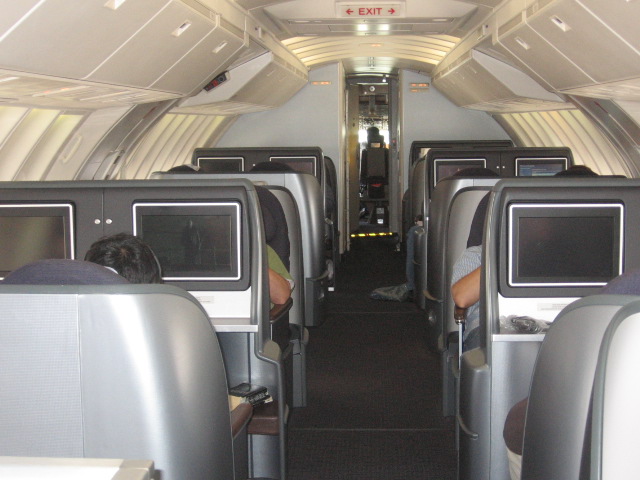
But anyone who has flown in Lufthansa First Class in the last couple of years knows that its hard product lags behind most of its competitors. The most glaring example of that is the tiny TV screen. On the carrier’s Boeing 747 aircraft, First Class is on the upper deck, with 16 seats in a 2-2 configuration, which is the standard for Business Class on most other airlines operating the same aircraft type.
To its credit, Lufthansa has recognized the limits of its product and has undertaken steps to improve it. The above-mentioned 2-2 configuration is about to change to 1-1, which will no doubt disappoint some fliers because it will reduce the number of First Class seats by half, but eight seats is the industry standard and makes a lot of sense.
Lufthansa has finally come out with a new First Class seat on its Airbus 380 planes. Could it be that Global Traveler readers were evaluating those seats? No, because surveys were collected between January and August, and the first Airbus 380 didn’t enter service until late August.
There is one First Class feature on Lufthansa that beats all other airlines to the punch: its First Class Terminal in Frankfurt. But it’s used almost exclusively by Frankfurt-originating passengers, so it’s unlikely its weight in assessing the overall product was predominant for all survey respondents.
Lufthansa was also ranked fifth for best Business Class. Again, if you’ve had a chance to compare its hard product with other Business cabins, you’d probably disagree. One could argue that Lufthansa’s service is better than that of United Airlines, but United’s truly flat seats are among the best in the industry. Lufthansa made the short-sighted decision to install the old Business seats on the Airbus 380, but later announced it would roll out a new hard product next year.
United is the only U.S. carrier in the top 10 of any of the leading overall global categories, taking 10th place for best Business Class and best Business seat design, and fourth place for best First Class design. Its “new” hard product, which was first introduced three years ago, has so far been installed on less than 60 percent of its long-haul fleet.
Deservedly, Lufthansa is missing from the top 10 in any of the best-seat categories. But another perplexing presence in the best Business seat category — ahead of United — is South Korea’s Asiana Airlines. Not only are its current seats not truly flat, but they are less comfortable than comparable products on other carriers, such as Thai Airways. Asiana’s service is, of course, superb, but this is strictly a seat-related category.
In the best global airport category, another surprising result: in third place, Amsterdam has beat out Hong Kong and Munich. In North America, Atlanta came out ahead of San Francisco. Really?
Oh, and did you know that Delta Airlines has the best airport lounges in the world? That’s right, and Lufthansa and Singapore Airlines have been shut out of the top 10 completely. If that’s not madness, I don’t know what is.
Related stories:
Airlines cut back on first-class service
Delayed at the airport? Enjoy!
New Lufthansa business class in a year
Singapore Airlines’ maddening perfection
Continue reading about What’s the real point of airline rankings?
It’s one of the unavoidable realities of airline customer service that three agents will often give you three different answers to the same question. But I recently discovered a more rare phenomenon: Dozens of agents consistently doing something the wrong way. Was it lack of knowledge or deliberately ignoring the rules?
Before I continue, let me say that there are numerous superb airline agents to whom I’m grateful for unknowingly teaching me the ropes of the complex air travel system for years by satisfying my insatiable curiosity. I’ve also praised U.S. agents for handling rebooking during irregular operations better than their colleagues at foreign airlines.
As with any profession or company, all agents undergo various levels of training and professional development. It’s only human that they don’t remember everything they are taught, as long as they know where to find the answer when they need it. It’s also natural that different agents remember certain parts of the material better than others.
However, the examples of agents convinced they have the right answer when they don’t — and not bothering to check it — are more than I care to count. One of the most common is not knowing the rules of airport business lounge access, and turning away customers who have every right to be there. That happened to me last month in Phoenix, where an agent called a supervisor who agreed with her. Of course, I asked to speak with the supervisor, and when he arrived, all he had to do was read the rules taped on the agent’s desk — then he told me I was right.
Now that I know the system inside out and teach seminars about it — I’ve been told by reservations supervisors that I know much more than most of their agents — I’ve learned how to straighten out an ignorant agent politely and as patiently as time allows. Sometimes, if they are stubborn and I know they are wrong, I resort to one of my cardinal rules: Hang up and call again.
But it turns out there was something even I wasn’t aware of — because no agent I’ve dealt with has ever done it correctly.
In April, I wrote about the numerous airline schedule changes that significantly affect customers’ travel plans and waste them — as well as airline employees — considerable amount of time. One of the issues when a flight is taken off the schedule or you misconnect is what happens to your upgrade.
As regular readers of this column know, I mostly fly on United Airlines, because I’ve had top elite status (1K) for a decade. This year alone, I’ve had dozens of serious schedule changes that have necessitated rebooking and rerouting. If an upgrade has been previously confirmed, the United system automatically rebooks you in the upgraded class — the codes are NF for First Class and NC for Business — even if there is no upgrade space on your new flight.
This is all done by a computer, without human intervention. Very often, however, I don’t like the new routing the system has suggested, so I call reservations to get booked on more sensible flights. For years, agents have said, “We can put you on that flight, but you’d be waitlisted for the upgrade.” Not one, including supervisors, has ever offered to open up an upgrade seat, even when the cabin was completely empty.
Last week, I happened to look at the so-called Rule 260, which governs schedule changes, for a different purpose. I was surprised to read the following under “Protection guidelines” (SD refers to service director, the first supervisory level):
UPGRADED PSGRS AFFECTED BY A SCHEDULE CHANGE SHOULD BE PROTECTED IN THE UPGRADED CLASS IF AVAILABLE.
IF NF/NC IS NOT AVAILABLE — PROTECT CUSTOMER IN F/C IF AVAILABLE AND CONTACT SD FOR CONVERSION.
So as long as the airline is still selling revenue seats in the premium cabin, you are entitled to your upgrade, even if upgrade space is currently not available. In essence, a seat should be opened up for you, provided you had a confirmed upgrade on your original flight that was affected by the schedule change.
When I saw this rule, I called United to clear a waitlist I’d been put on after a schedule change a week earlier. The agent sounded unaware of the rule, but he found it on his computer, booked an F seat and called a service director to convert it to NF, as instructed in Rule 260.
Is it possible that no agent knew about this? Could it be that their training doesn’t cover this particular detail? If it does, are they told not to offer such protection to customers proactively?
When I asked those questions, I was told that agents should know the rule — and that a message was sent to the service director who had waitlisted me the week before to make sure she knows the right procedure.
Related stories:
Flight schedule changes overwhelm agents, travelers
U.S. airlines handle disruptions best
Travel companies teach customer-service lessons
Preserving upgrades in case of rebooking
Continue reading about The peculiarities of airline agent training