Awards

nkralev on February 14th, 2011

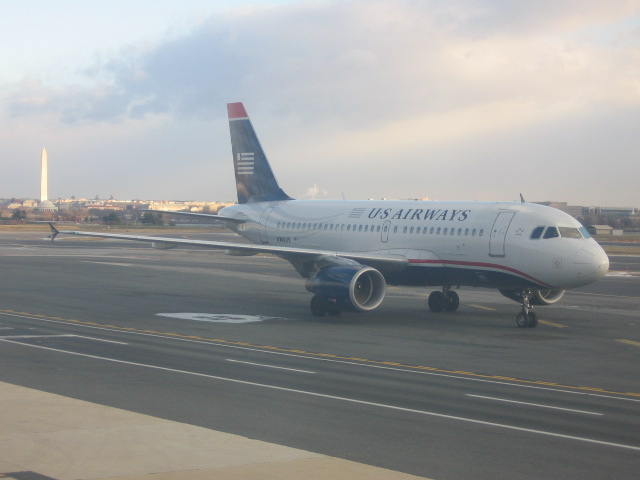
US Airways has denied recent suspicion that it has begun to block award seats made available by its Star Alliance partners for mileage redemption by members of its Dividend Miles program — a practice pioneered by United Airlines, which I first exposed in 2008.

The airline has been silent on the issue since reports about apparent blocking surfaced last fall. Many travelers said they found award inventory on various Star carriers, using one or more of the publicly available sources — the websites of All Nippon Airways, Continental Airlines and Air Canada — but US Airways agents were unable to see those available seats.

To some of us, that looked very much like StarNet blocking — manipulating the alliance’s award “middleware,” which provides access to any Star partner’s inventory on a first-come-first-served basis, to avoid paying other carriers for seats booked on their flights. The patterns resembled those on United, with the most filtering applied to Business and First Class cabins, though some fliers stumbled on coach seats as well. The most affected availability appeared to be on Lufthansa, but also on Swiss, United and others.

In addition, it made financial sense for US Airways to be limiting access to premium partner awards. In the last couple of years, it has in effect been printing miles with lightening speed, as a result of extraordinary promotions it has had, including selling miles at 100-percent bonus. Many Dividend Miles members bought miles and redeemed them for Business and First Class on partner flights, which likely weighed heavily on US Airways’ budget.

Several travel bloggers wrote about the issue, including Gary Leff on “View from the Wing” and Ben Schlappig on “One Mile at a Times.” Leff was more inclined to give the airline the benefit of the doubt, suggesting the problem might have been caused by technical glitches, as well as US Airways agents’ ignorance that some of their partners have First Class in addition to Business.

I’m not a big Dividend Miles fan, though I did help my sister buy miles for a trip to Europe with her family last summer, so it took me some time to look into the issue. I finally got around to it and alerted a US Airways contact at its Phoenix headquarters who has been very helpful in the past — Valerie Wunder, associate manager of media relations. She asked the powers that be and gave me the following response:

“We don’t block award inventory on other airlines, nor do we do the inverse — other Star partners block us from seeing their inventory to maximize their revenues.”

Probably the most frequent difficulty Dividend Miles members have been experiencing has to do with intercontinental First Class awards on Lufthansa, Swiss and others, so I asked Wunder if US Airways may be trying to restrict access to those specific seats.

“We have no restrictions on redemptions, regardless of class,” she said.

However, she offered no explanation for the problem. The mystery continues.

RETURN TO MAIN COLUMN PAGE

Related stories:

Clarifying United’s StarNet blocking

US Airways hears feedback, fixes website

New Lufthansa business class in a year

Continental shows new transparency

Continue reading about US Airways denies StarNet blocking
nkralev on November 2nd, 2010

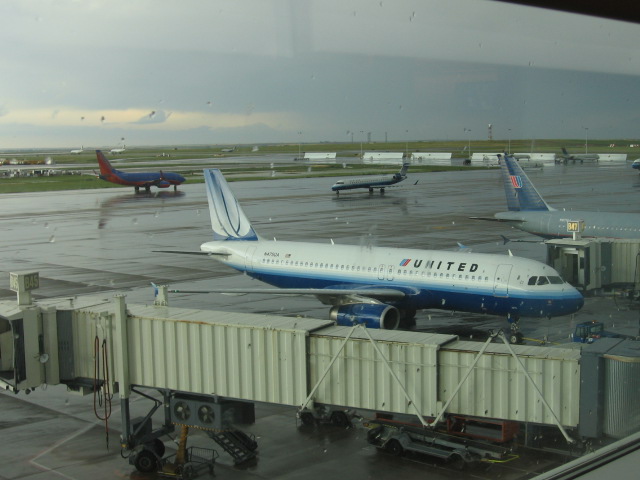
United Airlines fulfilled its promise this week by finally allowing one-way mileage awards on its partners in the global Star Alliance. More importantly, it showed that its Mileage Plus program is truly an industry leader — it didn’t follow American Airlines in taking away stopovers on award tickets, which will save travelers many frequent-flier miles.

Mileage Plus has become one of the most customer-friendly loyalty programs in the world. As odd as it sounds, offering one-way awards is a rather progressive step, given how rare it is in the industry — for no good reason. United has been offering one-way awards on its own flights since February.

Stopovers on international awards are incredibly useful — they are usually not permitted on domestic tickets. I don’t use them all the time, but I do often enough to mourn their loss on United. They are partly responsible for my visits to 82 countries.

When American banned stopovers last year, its justification was that the introduction of one-way awards eliminated the need for stopovers — one can now visit two cities or countries by booking three one-way segments. The problem for customers was that such an award now costs many more miles.

It would have been easy for United to copy American’s move. After all, taking stopovers away would have taken more miles off its books and decrease its liabilities. United has historically matched various practices initiated by its arch rival, but this time it made its own decision. Mileage Plus members should be grateful — preserving stopovers will save them tens of thousands of miles per trip.

I must admit, I was a bit confused about the stopover policy, and an earlier version of this column said United was doing away with them. I was misled by a reservations agent last weekend, and by a sentence on United’s website, saying “That means no stopovers.” It appears that only applies to one-way awards.

I received a comment from a reader who had seen a thread about the column on FlyerTalk.com, which prompted me to speak with a supervisor at Mileage Plus. He checked his resources and assured me that stopover are still permitted on round trips.

I’ve been praising Mileage Plus repeatedly since Graham Atkinson became president two years ago. In February, I wrote about all the right things Atkinson did — one negative thing he couldn’t change was the infamous StarNet award blocking. At the time, he told me that no decision had been made about stopovers.

Atkinson left United in September, as part of the management changes resulting from the merger with Continental, but I’m glad to see that his approach to customer loyalty lives on.

By the way, don’t forget the 24-hour international connection rule, which lets us do a mini-stop en route, so look for those day-long layovers if you want to sample a new country on the cheap.

Continue reading about United keeps free stopovers on awards

nkralev on September 23rd, 2010

Singapore Airlines topped yet another industry ranking this week, and while it usually deserves the awards it wins, there are a few aspects of the way it does business that drive some customers and partner-carriers crazy. Still, don’t expect those practices to change anytime soon.

The latest awards were bestowed by Britain’s Business Traveller Magazine. Singapore was named best airline overall and also won best economy and business class. Best first class went to Emirates, probably because of the shower on its Airbus 380 aircraft.

I have yet to meet anyone who has flown Singapore and didn’t like it, regardless of which cabin they were in. It has long been the world’s leading carrier in hard-product innovation and luxury, often years ahead of its competitors. One of my favorite features is the “Book the Cook” service, which allows passengers to order meals from a long and diverse menu as soon as they buy a ticket.

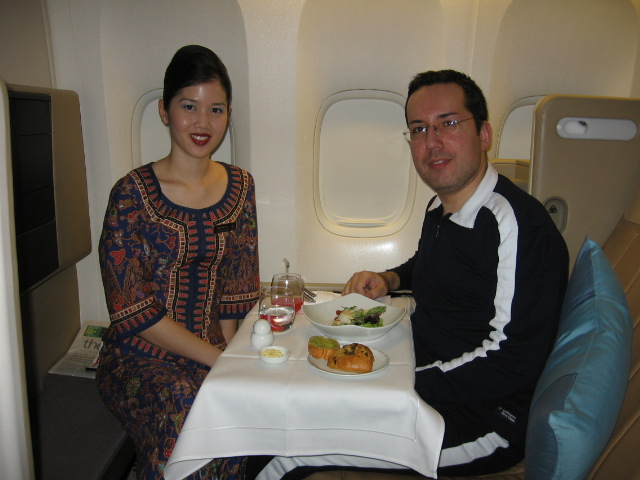
Many travelers point out the incredible attention to detail that Singapore flight attendants pay, but that is not uncommon among top Asian airlines, such as Asiana and All Nippon Airways. What has impressed me the most is that, in first class, the flight attendants anticipate your next need or wish and are ready to satisfy it before you even ask.

Once during a flight, I stood up from my seat to go to the lavatory, which was behind me, and when I turned around, I saw a flight attendant dashing toward the lavatory to open the door for me. I had just enjoyed black caviar as part of a five-course dinner I probably couldn’t afford on the ground, and I loved the bedding of the fully flat seat, but for some reason that gesture meant more than the luxuries.

The trouble with perfection is that it’s impossible 100 percent of the time, and most of Singapore’s policies are written for a perfect world, which is also impossible in the airline industry. Employees of every airline must follow certain rules, but Singapore’s staff has almost no flexibility in making exceptions or bending the rules to respond to a specific case or situation.

A couple of years ago, I flew from New to Singapore, with an hour-long layover in Frankfurt. Even though there was no plane change, all passengers had to get off and re-board. As soon as I reached the gate area, I realized I’d forgotten my cell phone in my seat pocket. I wasn’t allowed back because the cleaning crew had begun working, but a gate agent went to look for the phone. She came back and said it wasn’t there.

I was the last first-class passenger to deplane, and coach and business class passengers weren’t allowed in the first-class cabin, so most likely the phone was stolen by a cleaning crew members. But after a lengthy process that involved more paperwork than I’d expected, the airline refused to offer any good-will gesture or compensation.

There is no question that Singapore has some of the best premium products in the sky, but it may be overvaluing them a bit too much.

Let’s say you’ve paid more than $10,000 for a Star Alliance round-the-world ticket in business class. If you want to fly between Singapore and Los Angeles nonstop, you have to pay an additional $900 surcharge just for that one flight for the privilege of enjoying the “new” business class seats, which are now almost four years old. Charges of $500 and $600 apply to most flight between Singapore and both Europe and North America.

In addition, Singapore often blocks access to those flights by zeroing out the inventory in D booking class, which is the one required for round-the-world tickets.

It’s no secret that Singapore thinks the current round-the-world fares are too low. There are suspicions that it’s one of the driving forces behind the drastic increases in those prices in recent years, although there is no way to know this for a fact, because the Star Alliance uses a blind process based on input from its members to determine the fares.

Even more maddeningly for customers, Singapore bans members of the frequent-flier programs of its partners in the Star Alliance, such as Lufthansa, Air Canada or United Airlines, from using miles on flights with the “new” business-class seats. While the seats are the most spacious in the industry, the ban makes redeeming miles to Europe and North America virtually impossible — there are only two flights with the old seats.

Relations between Singapore and some of its Star partners — especially United — have long been sour, mainly because Singapore thinks it’s superior and doesn’t hide it. I’ve always been amazed that Singapore doesn’t code-share any of United’s flights, but it does code-sharing with US Airways.

There have been rumors that Singapore wants to leave the alliance, but so far they are just rumors.

RETURN TO MAIN COLUMN PAGE

Related stories:

Round-the-world fare mysteries revealed

What to do with empty premium seats?

Airlines require credit cards at check-in

Airlines want budget, premium fliers

Continue reading about Singapore Airlines’ maddening perfection

nkralev on August 19th, 2010

Readers’ interest in United Airlines’ practice of massively blocking award seats otherwise made available for mileage redemption by United’s partners in the global Star Alliance doesn’t seem to subside, judging by the feedback I get and the web traffic on this site’s pages dedicated to the issue. So it’s time to clarify some misconceptions about the infamous StarNet blocking.

Earlier this week, I received a complaint from Norma Brandsberg, a reader from Virginia, that United is “blocking an award through Continental” Airlines. “United’s own site is showing availability,” but “Continental is not seeing the open seats in their system,” she wrote.

Brandsberg mistakenly thought that what she discovered was part of StarNet blocking. However, the controversial practice doesn’t involve seats on United flights — only seats on flights operated by other Star carriers, such as Lufthansa, Thai Airways, Singapore Airlines and others. United denies members of its Mileage Plus program access to those seats to avoid paying its partners for them.

What Brandsberg is comparing are two completely different things. First, she looked at award seats United has made available to book with United miles — inventory reserved only for Mileage Plus members. But then she tried to use Continental miles to book those same seats, only to find out that they are not available to members of Continental’s OnePass or any other Star Alliance program.

Every airline in the alliance has the right to set aside certain award inventory only for its own frequent fliers, and it has no obligation to offer that inventory to its Star partners. The seats it decides to provide to partners are published on the common IT platform known as StarNet. So contrary to Brandsberg’s understanding, United wasn’t “blocking an award through Continental” — rather, United wasn’t offering those seats on StarNet to any of its Star partners.

In a related misunderstanding, many travelers wrongly accuse United of blocking partner seats. For example, they call Swiss International Airlines and are told that seats are available on a certain Swiss flight — they can also see those seats on ExpertFlyer. Then they call United, which is not seeing availability, and conclude that “StarNet blocking” is in force.

That conclusion would be correct only if you confirm that Swiss is offering the seats in question on StarNet. The best way to do that is to consult the All Nippon Airways (ANA) website, which has the most comprehensive free online StarNet tool but requires that you have an ANA account with miles in it. The paid KVS tool is another option, and the Continental and Air Canada websites show limited partner inventory. ExpertFlyer tends to display seats offered by an airline only to its own customers and not to partners.

There have been recent reports from United customers that United is less aggressive with StarNet blocking these days, and of course we all hope that the practice will be discontinued after the merger with Continental.

RETURN TO MAIN COLUMN PAGE

Related stories:

United, Continental execs at odds over loyalty program

United’s ‘award’ blocking an issue in Continental merger

United executive breaks old barriers

Continental shows new transparency

‘Award’ blocks still irk United fliers

United risks customer loyalty over ‘award’ blocking

United yields on ‘award’ blocking

Airlines curb ‘award’ tickets

Continue reading about Clarifying United’s StarNet blocking

nkralev on May 10th, 2010

It’s no secret in the hotel loyalty business that Hilton HHonors has been probably the least creative and attractive among the major programs in recent years. Fortunately, its management has recognized that weakness and begun to address it, albeit cautiously.

While competitors such as Starwood, which includes the Sheraton, Westin and other brands, and to a lesser extent the InterContinental Hotel Groups Priority Club, came up with various promotions quarter after quarter, Hilton’s strategy seemed heavily reliant on name-recognition and reputation.

Jeff Diskin, senior vice president for global customer marketing at Hilton Worldwide, said in an interview last week that the company considers the quality of its hotels and the distribution of its network to be its main strengths…

Continue reading about Hilton embraces ‘games-players’