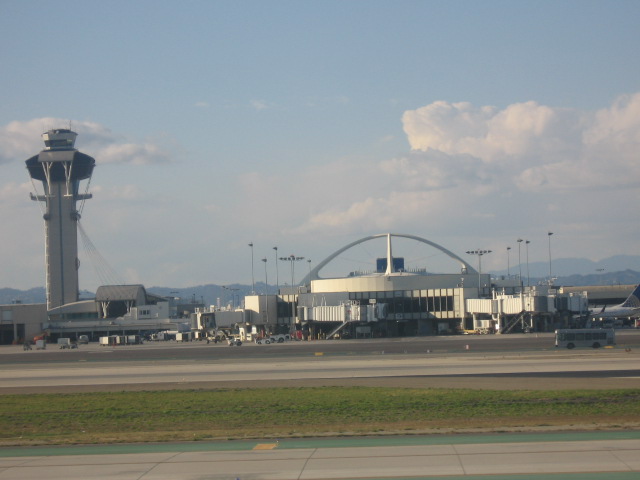
Did you manage to outsmart the airlines before they outsmarted all of us on Saturday? Travelers had about 17 hours to book tickets without paying most government taxes, because of Congress’ failure to authorize funding for the Federal Aviation Administration (FAA) by midnight on Friday. Most carriers started pocketing that money at the very first opportunity they had.
I did book a ticket and saved about $50, but I must admit I didn’t expect the airlines to raise fares so quickly and deprive customers of any savings. So what exactly happened? Shortly after midnight Eastern time (ET) on Friday, when the FAA lost its prerogative to collect taxes, airline reservation systems began dropping those taxes from ticket prices…
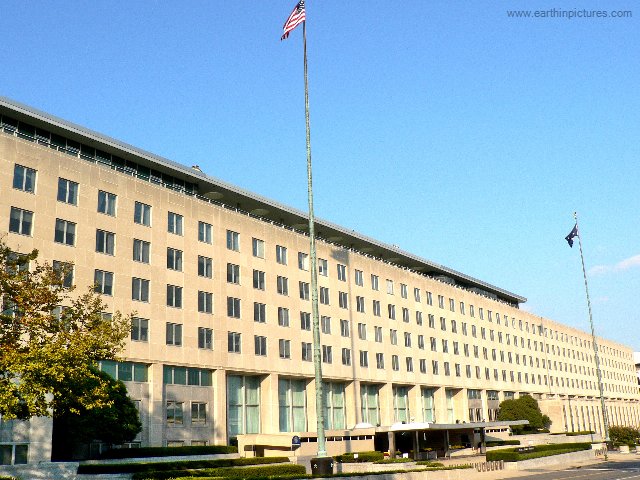
A dispute over the State Department budget has pitted the chairman of the Senate Budget Committee, Sen. Kent Conrad of North Dakota, against a fellow Democrat and head of the Foreign Relations Committee, Sen. John F. Kerry of Massachusetts, and the Obama administration.
Mr. Conrad led an effort to slash President Obama’s $58 billion international affairs request for 2011 by $4 billion, a cut his committee approved last week. Despite protests from Secretary of State Hillary Rodham Clinton and all her living predecessors, the senator stood his ground on Wednesday.
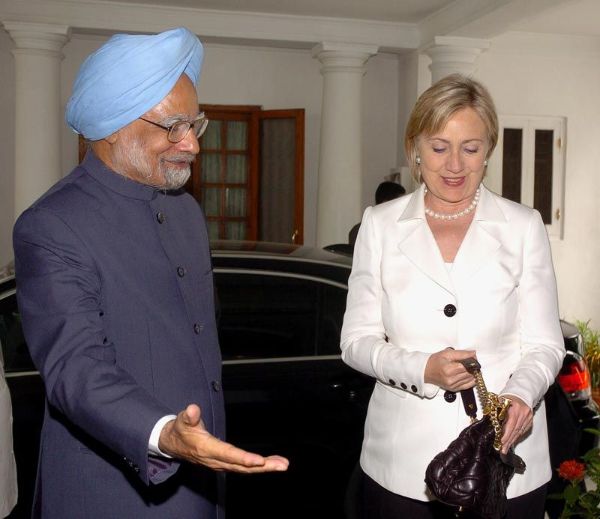
The United States has made new concessions as part of its civilian nuclear agreement with India, further angering arms control advocates, while New Delhi has yet to make it possible for U.S. companies to benefit from the unprecedented deal.
In the most recent accord completed late last month, Washington agreed to Indian demands to increase the number of plants allowed to reprocess U.S.-supplied nuclear fuel from one to two, with the option of another two if India’s needs grow in the future. At the same time, India thus far has failed to pass legislation that would release U.S. companies from liability in case of accidents related to equipment they have provided for two reactors expected to be built under the 2007 U.S.-Indian Nuclear Cooperation Agreement.
The Obama administration is shifting the focus of U.S. public diplomacy efforts to play down the past emphasis on countering violent extremism in order to avoid offending foreign audiences opposed to terrorism.
Judith A. McHale, undersecretary of state for public diplomacy, said in an interview with The Washington Times that “a very narrow segment” of the world’s population is at risk of turning to extremism, and the policies adopted by the Bush administration should be broadened. “Looking back, there was such a focus on countering violent extremism that everything got swept into the same category or the same bucket,” Ms. McHale said.
Ever since electronic permits for foreign travelers to the United States who don’t need a regular visa became mandatory in January, I’ve been getting reports about confusion among both passengers and airport agents about some of the new rules. So I thought I’d try to clear things up.
It’s a particularly good time to do that, because after March 20, the Department of Homeland Security will impose fines on airlines that transport visitors with neither a visa in their passport nor approval by the new Electronic System for Travel Authorization (ESTA). The fines will be $3,300 for each non-compliant passenger…
Have you ever wondered what it’s like traveling with the secretary of state around the world? Although I’ve been doing it for more than eight years, I’ve resisted frequent suggestions by friends and colleagues to write about it.
Now I’ve found an excuse. There is a new secretary — Hillary Rodham Clinton no less — and she has just completed her first overseas trip since taking office. So it’s time to step back from what has become a routine for us in the press corps and try to look at it through a fresh pair of eyes. The State Department usually gives us 13 seats on the secretary’s plane, but this time we got three more, to accommodate the bigger interest in Mrs. Clinton’s maiden voyage to Asia.
Have you heard that trains are “in” again? They have been “out” for so long, it’s almost hard to believe it, but President-elect Barack Obama’s decision to ride the rail into Washington for his inauguration has excited many train lovers.
Since flying became the main form of long-distance transportation in the United States in the past couple of decades, repeated warnings by railroad executives and industry advocates that insufficient funding and out-of-date equipment would lead to the system’s collapse seemed to fall on deaf ears. Finally this fall, Congress more than doubled funding for Amtrak, the semi-public company, in a $13 billion railroad improvement bill sponsored by Reps. James L. Oberstar, Minnesota Democrat, and John L. Mica, Florida Republican…
Thomas R. Pickering was a fresh college graduate in 1953 when he braved the notoriously lengthy entrance process at the State Department, prolonged even further by an ongoing investigation of suspected communists in the agency’s ranks.
Although he was offered a job earlier than he expected, Mr. Pickering by then had enrolled in the graduate program of Tufts University’s Fletcher School of Law and Diplomacy in Medford, Mass. He later left for Australia on a Fulbright scholarship to the University of Melbourne, which was followed by three years in the Navy.
So it was 1959 when the 28-year-old finally became a Foreign Service officer — or, to use the better-known term, a diplomat…
It was lunchtime on April 18, 1983, and the cafeteria of the American Embassy in Beirut was buzzing with customers. At about 1 p.m., a powerful blast tore apart the front of the seven-story building. The bomb, hidden in a van reportedly stolen from the embassy 10 months earlier, killed 63 employees, including 17 Americans.
It was the first time that a U.S. embassy had become a terrorist target, and it forever changed the way the Diplomatic Security Service (DSS), the State Department’s law-enforcement division, operates around the world.
“The bombings of the embassy in West Beirut in 1983 and of the embassy annex in East Beirut in 1984 were a major catalyst for creating the Bureau of Diplomatic Security,” which oversees the DSS, said John C. Murphy, special agent in charge of Secretary of State Colin L. Powell’s protective detail and a DSS agent for 29 years…
Helen Thomas hoped in vain that her 80th birthday on August 4 — a date she shares with the British Queen Mother and Yasser Arafat, the Palestinian leader — would pass unnoticed. “I don’t want anyone to know,” she said. “I don’t see why people have to be stamped by their age — that’s prejudice.”
But nothing made her angrier than the “congratulations” she received on her “retirement”, when she announced in May that she was leaving her front-row seat in the White House press room, where she had reported on eight presidents for United Press International (UPI) over four decades. She was simply changing jobs, and is now a columnist for Hearst Newspapers, the US chain that owns dozens of publications, including the Houston Chronicle and the San Francisco Examiner…
Nicholas Kralev is an author and expert on diplomacy, global affairs and air travel. A former Financial Times and Washington Times correspondent, he has traveled around the world with four U.S. secretaries of state — Hillary Clinton, Condoleezza Rice, Colin Powell and Madeleine Albright. He has flown over 2 million miles and visited 83 countries.Subscribe to updates
Speaking engagements
MAY 14, 2013 — LOUISVILLE, KY
MAY 31, 2013 — BUENOS AIRES
OCT 03, 2013 — ATHENS, GREECE
OCT 07, 2013 — ANKARA, TURKEY
OCT 09, 2013 — ISTANBUL, TURKEY
OCT 15, 2013 — MADRID, SPAIN
OCT 17, 2013 — LISBON, PORTUGAL
OCT 21, 2013 — BERLIN, GERMANYClick here for details
Google Ads