San Francisco

nkralev on March 7th, 2012

The decision by United Airlines’ management to use Continental’s Shares reservations system for the merged carrier has been causing serious problems since its implementation last weekend. So the news that the airline is working on a new version of its IT platform, integrating some of the features of the pre-merger United’s Apollo system, is very welcome, indeed.

It was hardly surprising that CEO Jeff Smisek and his team chose to keep Shares, given that most policies and practices of the combined carrier have followed the way Continental did business under Smisek. But in this case, the decision made good financial sense — Continental has owned Shares for years, while United paid Travelport, the company that owns Apollo.

As I completed the last research trip for my upcoming book on the U.S. Foreign Service on Sunday, I was worried much less than many passengers and United employees, who had warned me not to fly during the first days of the integrated system. The merger was first announced in May 2010, so the company surely had plenty of time to prepare — and if not, it would have delayed integration, I thought.

I was wrong. On the first day of the new era, March 3, I monitored the situation from Frankfurt, where I overnighted on my way back from Iraq. Delays were widespread, which the United employees I talked to the next day attributed largely to their inability to board passengers automatically by scanning boarding passes — each person had to be boarded manually.

The other reason for the problems was how unprepared pre-merger United agents were to use Shares. They had been trained, but obviously not quite enough — actually, it may be more a matter of experience than training.

The real issue is Shares’ complexity, clumsiness, use-unfriendliness and lack of intuitiveness compared to Apollo. That was my first impression when I initially looked at it at three different airports, and it was confirmed by several longtime United employees, some of whom showed me long multiple-page instructions for basic functions, which resembled complex formulas.

Some agents are still having trouble printing boarding passes for flights for which I’d checked in online — one said, “It would have taken me five seconds in Apollo.” Others find it challenging to decipher seat maps.

I didn’t want to make a final judgment on Shares without consulting Continental employees, who have been using the system for years, and I had a chance to do that yesterday. Those agents had been sent to pre-merger United stations to help their inexperienced new colleagues — but from what I could see, there was much more demand than supply.

Those Continental agents, who also had some knowledge of Apollo, agreed with my first impressions of Shares. They also told me that Continental hadn’t invested much in modernizing Shares, but that was about to change. In a few months, they said, there will be a new version combining current features with some of the best Apollo functions.

One can only hope. The question is, why couldn’t integration wait until then? Those poor pre-merger United agents have to learn one system now, and another — apparently less complicated — in a few months?

I asked a corporate contact at United about the new plans and received the following response: “I think you’ve been hearing about a new GUI [graphical user interface] that will be added to Shares later this year. It will make it more user-friendly for our agents. We didn’t want to postpone the customer benefits that were gained by going to one passenger service system — one frequent-flier program, one website, any agent able to help any customer, etc. — by waiting until the GUI was in place.”

A task of this magnitude will always be accompanied by problems, especially at the world’s largest airline. At least for me, however, those problems have been much worse than I expected. Perhaps this is due in part to the higher numbers of pre-merger United employees compared to Continental’s — after all, United was the bigger airline.

Shares is incapable of performing some vital functions that Apollo offered. For example, upgrades using miles or certificates can no longer be waitlisted less than 24 hours before departure. So if your international flight, which you have upgraded with miles, is canceled and you are rebooked on another flight, you won’t be put on an upgrade waitlist on the day of travel. If, however, there is an available upgrade seat, you should be able to get it.

Another problem that is affecting thousands of passengers has to do with upgrades waitlisted in Apollo before the conversion. All segments waitlisted in NF booking class, which United used for upgrades to First Class, converted into ON in Shares. ON inventory exists only on three-cabin aircraft. On two-cabin planes however, the correct code is R. So if you are waitlisted in ON on a two-cabin domestic flight, you will never clear, because there will never be availability in that booking class.

United has a representative on FlyerTalk who monitors various comments, and she has indicated the carrier is aware of the incorrect conversion issue but hasn’t yet found a solution.

One of my favorite features of the old Continental website, which United’s didn’t have, was the information about where your aircraft is coming from. I was very happy it was preserved on the new site, but my happiness has been seriously tempered this week. The tool is offering plenty of erroneous data.

Just one example: Today’s flight 984 from San Francisco to Portland, OR, is operated on a Boeing 757. According to the website, the plane is coming from Monterey, CA. The problem is that the aircraft flying back from Monterey is an Embraer regional jet.

Here is the silver lining in all this: Whatever the problems at the new United, they pale in comparison to the systemic breakdowns that occurred during the US Airways-America West merger in the middle of the last decade.

RETURN TO MAIN COLUMN PAGE

Related stories:

United steps up fake ‘direct’ flights

United, Continental execs at odds over loyalty program

Continental shows new transparency

United executive breaks old barriers

United pilot earns top praise

Continue reading about Did United choose the best rez system?

nkralev on November 22nd, 2011

I’m tired of all the “low-fare tips” in the media — both hearing and reading about them, and giving them myself. Yes, I’m guilty of feeding the media’s hunger for quick “Top 5 tips,” and not happy about having to dumb down a very complex airfare system, which is actually more misleading than helpful.

Those of us who are trained and experienced journalists know very well how to make a specific or even technical topic accessible to a large general audience. I’ve been doing that during my entire professional career.

So it’s understandable that editors and producers across the United States want to write stories or produce TV and radio segments that are easily understood by most of their audience. That’s why I was hardly surprised the first time I was asked for tips on shopping for airfare in a five-minute interview.

While I usually warn listeners and viewers that I’m about to make generalizations, I tell them that, on average, the lowest domestic fares are published on Tuesday and typically last through Thursday. Also, on average, Tuesdays, Wednesdays and Saturdays are said to be the cheapest days to fly.

Why? If you’ve read my book, “Decoding Air Travel,” you know that domestic fares are filed four times a day during the week, and once a day on weekends. You also know that each fare is published with its own rules, one of which is day-of-the-week validity. Some fares are valid on any day but Friday and Sunday, others only on Tuesday and Wednesday, and yet others have no day restrictions at all.

So if I have to generalize, based on all my knowledge and experience, I’d cautiously say that Tuesday, Wednesday and Saturday may be cheaper to fly on than other days.

Unfortunately, some travel writers are taking those generalizations to the extreme. The most recent radio show I was on just yesterday was NPR’s “On Point,” where a guest before me said you should never buy airline tickets on weekends.

Well, I’ve bought plenty of cheap tickets on weekends, ranging from $150 to $250 round trip, including transcontinental ones.

Then last weekend, I read an article about how to get low fares on a website called venturebeat.com, which was based on information provided by Kayak.com. “Don’t buy plane tickets more than 30 day in advance or within 14 days of your trip,” it advised.

Really? I currently have about 10 tickets booked for future travel, and all of them were purchased months ago. The cheapest was less than $150, and the most expensive just over $300. A couple of years ago, I bought a one-way ticket from Washington to San Francisco for $110, only three days before travel.

The article also said that “the best time to buy a plane ticket for the December holidays is the first week of December, up until the 10th.” I realize they didn’t say “the only time,” but I thought I’d mention that my Christmas ticket to Phoenix was bought last spring and cost $240 — that was the actual total price, no discount vouchers included.

So I think very carefully these days before accepting an invitation to appear on radio or TV. I declined one just last week. I initially declined “On Point,” too, but I reconsidered when they agreed to give me a 17-minute segment without another guest, for which I’m immensely grateful.

The other reason was the guest-host, NPR correspondent Jacki Lyden, who also guest-hosted “Weekend Edition” when I was on in August. She has been the only journalist so far who really understands the complexity of the system and doesn’t make me dumb things down and offer questionable tips. Even in the four-minute segment on Weekend Edition, she let me explain the basics of airfares — and that was by far my most effective media appearance in terms of audience response and book sales.

The media should never underestimate the public’s intelligence and curiosity.

RETURN TO MAIN COLUMN PAGE

Related stories:

U.S. fares now filed four times a day

Is media coverage of air travel helpful?

When airfares jump on you for no reason

Proper airfare advertising comes to U.S.

Continue reading about Questioning conventional airfare wisdom

nkralev on January 18th, 2011

If you are a frequent flier, you know there is a war raging between American Airlines and third-party travel providers, such as online agencies and Global Distribution Systems (GDS). It appears things might get worse before they get better, leaving millions utterly confused. So I’ve created a new addition to the “On the Fly” curriculum to help you through the hard times.

The two-hour live seminar, FLY 203: The travel-booking war and the future of airline data distribution, will be first offered in Miami and Honolulu next week, and in Washington, San Juan and San Francisco next month, followed by other cities around the country. If you are not in any of those cities, you can join in from anywhere for an hour-long webinar version, FLY 115: Weathering the travel-booking storm, on Feb. 10.

I’m not advocating any particular position in the current dispute, and my only goal is to give you all relevant information, so you can make the best decisions when it comes to booking your travel.

The new seminar offers a detailed description and explanation of the current airline data distribution model and the fundamentals of today’s booking system. It also looks at the events of the last several weeks and provides a factual rundown of the arguments and positions of all sides involved in the dispute.

Most importantly, the session examines how the current conflict affects travel agencies, companies and individual travelers. It offers specific advice on what they can do to avoid being caught in the crossfire, and to make sure they don’t increase costs and sacrifice convenience and comfort.

Late last year, American banned Orbitz from booking seats on its flights. Earlier this month, Expedia stopped selling American tickets. Meanwhile, Delta removed its data from eight less popular sites. Sabre, the GDS American created more than four decades ago and current owner of Travelocity, announced its intention to drop American data later in the year. In response, American sued, and last week it won a court order temporarily blocking Sabre’s move.

Thus began the very public war — and possibly the start of a new trend in the distribution and sales of air travel products. Airlines incur significant costs by having their flights booked on a GDS, which also prevents them from selling additional products, such as preferred seating, priority boarding and doubling or tripling your frequent-flier miles for a fee. American wants both online and traditional travel agencies to use its DirectConnect channel to lower costs and increase revenue.

The significance of American’s move is much bigger than a dispute with a couple of third-party sites. It seeks to shake up the longtime airline data distribution system, including the GDS model. Travel agents haven’t received airline commissions for years, except for the largest agencies, though a part of the GDS fees airlines pay goes back to agents. American wants to reduce or scrap those fees.

In an indication of where things are going, American CEO Gerard Arpey said in 2009 that third parties should be paying the airlines for access to their data, “rather than us paying them to distribute our product.”

American has imposed “booking source premium” fees on some GDS users. Those fees will have to be either absorbed by travel agencies or passed on to passengers. Critics accuse American of trying to suppress transparency and deny consumers the opportunity to compare various airlines’ fares on the same screen, potentially forcing them to pay higher prices. But American points out that a change in the GDS model — establishing direct channels with airlines — would secure customers’ continued comparison-shopping ability.

So it’s messy out there, and the new seminar will try to make it less so in your mind by giving you specific tools that will help you follow the best booking process for you.

RETURN TO MAIN COLUMN PAGE

Related stories:

Time for travel school — you are invited

Educating the flying public

Announcing ‘On the Fly’ Seminars

Announcing Kralev International travel advisory business

Continue reading about New seminar on travel-booking war

nkralev on October 5th, 2010

Are you one of those travelers who wait until they get to the airport to find out that their flight has been delayed or canceled? It’s time to become a proactive flier and learn how to predict disruptions, so you can get rebooked before anyone else on your flight, with a minimum impact on your travel plans.

Although there is no guarantee that your prediction success rate will be 100 percent, because airlines often swap aircraft, the method I’ve adopted works most of the time. It’s actually rather simple: I track the planes assigned to my flights by matching arrival and departure gates. Continental Airlines makes it even easier by providing the most advanced data in the industry, but more on that later.

The aircraft for a United Airlines flight I recently took from Washington to San Francisco came from Sao Paulo. Had the flight from Brazil been late, I would have known hours in advance, which would have allowed me to get rebooked on the phone before even leaving home.

You might ask why you need to waste time tracking planes and matching gates, when airlines usually send e-mail and phone alerts in case of delays and cancellations. I find that I’m usually ahead of them, because for some reason their systems often take hours to update.

If I see that United 952 from Washington to Frankfurt is four hours late, I know immediately that the return flight 953 will be delayed, too. But I’ve seen United take hours to reflect that in its system, perhaps hoping that the plane will make time in the air. That can be a valid reason to wait for a final determination, as can be the possibility that another aircraft may be found to replace the delayed one.

So why am I so sure Flight 953 won’t depart on time if Flight 952 is four hours late? There is only one Boeing 767 flying to Frankfurt daily, and it operates both 952 and 953, which leaves no room for aircraft substitution. In addition, the turnaround time for that plane on the ground in Frankfurt is less than two hours, so there is no way the plane will leave Frankfurt on time after arriving from Washington four hours late.

Knowing the type of aircraft assigned to your flight would make the gate-matching exercise much faster, especially at a hub like Washington Dulles or Chicago. To make it even easier, you can use your departing airport’s website, which will display all arriving flights in a certain time frame with their gates on the same page. If you know your flight leaves from Gate 72 in Los Angeles, save yourself time by going to the LAX website, rather than the United site.

Most planes, of course, operate several flights a day, so if I have time, I track my planes since their first voyage in the morning. Yesterday, for example, the Boeing 767 I flew on from LA to Chicago had started the day in LA, flown to Denver and Chicago before returning to LA to pick me up. By the way, the tail number of that plane was N666UA.

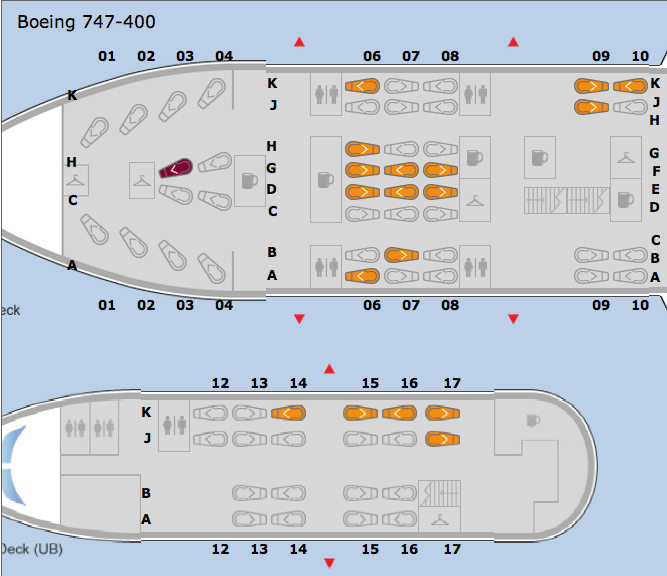
What about aircraft replacement? That’s another reason to do your homework. That flight from Washington to San Francisco I mentioned earlier was scheduled to be operated on a Boeing 767 — with a domestic seat configuration, which means two cabins and those utterly unimpressive domestic first-class seats. As soon as I learned my plane was coming from Sao Paulo, I knew there had been a swap to an internationally configured, three-cabin Boeing 777, so I’d sit in a much more comfortable business-class seat. Since the substitution changed seat assignments, I quickly logged in and grabbed my favorite seat in the business cabin.

All major U.S. carriers’ websites show gate information, but Continental beats them all to the punch by displaying much more valuable data — it actually shows the tail number of the specific aircraft assigned to your flight and tells you where it’s coming from, including the inbound flight’s number. For instance, you are flying from Newark to Berlin on Flight 96 today, your Boeing 767′s tail number is N158CO, and it’s coming from Zurich as Flight 79. Right next to that information on the Continental site is a link to the real-time status of that flight.

Continental goes even further, offering descriptions of beverage and meal services for that particular flight, as well as data on in-seat power, entertainment, aircraft features and seat configuration.

This is a great example of a customer-friendly policy, which the merged United should adopt on its website. In fact, all airlines should provide that information — it would certainly make our lives much easier.

RETURN TO MAIN COLUMN PAGE

Related stories:

Preserving upgrades in case of rebooking

Flight schedule changes overwhelm agents, travelers

Dulles Airport enters the modern age

Continental shows new transparency

Lufthansa agent’s ‘mistake’ stacks up

Continue reading about Predicting flight delays and cancellations

nkralev on June 10th, 2010

It doesn’t happen very often that I fly a new route on United Airlines, especially out of Washington — it seems I’ve flown a huge number of them. But my 467th United flight this week was on the relatively new nonstop service to Moscow.

That flight is flown on a Boeing 767, which means that it’s reconfigured with the new truly flat business-class seats. Even better, upgrading to business on that flight is usually fairly easy, and I was on a pretty high M fare, so I never had any doubt my upgrade would clear.

By the time that happened a week before the flight, I had two choices in terms of window seating: a forward-facing seat in the row before the last or a rear-facing seat in the first row of the business cabin. About six months ago, I would have chosen the first option, but after flying backward from San Francisco to Sydney in December, the direction doesn’t bother me anymore. Each couple of seats feels very much like a private compartment, and you don’t really see anything outside that compartment while seated, so you forget there are other passengers facing in a different direction. I chose the first row because it’s away from the galley and the coach cabin, which makes it quieter and less trafficked.

It was a standard United flight in terms of the service — pretty good, but nothing spectacular. My glass of water never remained empty for too long. A couple of flight attendants asked if I worked for United, because I looked familiar — that tells you how often I’m on those planes.

My routine on long-haul flights begins with changing into my plane pajamas, which are given to first-class passengers on some non-U.S. carriers — this time, I’d taken a set from Lufthansa, but I usually rotate them with sets from SWISS or Singapore Airlines. I used to change after takeoff, but by the time the seat-belt sign is off, the service has already begun, and I’d rather not be in the flight attendants’ way.

During takeoff, I read newspapers — usually the Financial Times, where I used to write, and the International Herald Tribune on flights originating outside the United States. Then I turned on my entertainment system and start a film — “Valentine’s Day” was the first one I watched. It didn’t do well at the box office when it was released in February, despite the all-star cast and the director Gary Marshall, who also did “Pretty Woman.” I thought it was good enough for a plane ride.

After dinner — not-so-tasty chicken breast and cheesecake — and Chardonnay, it was bedtime. The flight left as 5 p.m., so it was too early to sleep. I tried really hard but not very successfully. At least I had a long and nice rest in a flat bed. Later, I watched another film — the very good documentary, “Celine: Through the Eyes of the World.”

Breakfast was disappointing, as it usually is in United business — just a croissant and fruit — and way behind competition, but United has never excelled at its soft product. Only first class gets eggs for breakfast.

This was my seventh time in Moscow, but the first at Domodedovo Airport — I found it much nicer than Sheremetevo. It was my 202th airport overall, according to my profile on FlightMemory.

Continue reading about Flying new United route — rare occurrence