The Indian government is engaging in apparent blackmail of the Star Alliance, following the global airline group’s rejection of Air India’s membership application. New Delhi’s threat to take away traffic rights from Star members is about to test the diplomatic skills of both the affected carriers and the alliance leadership.
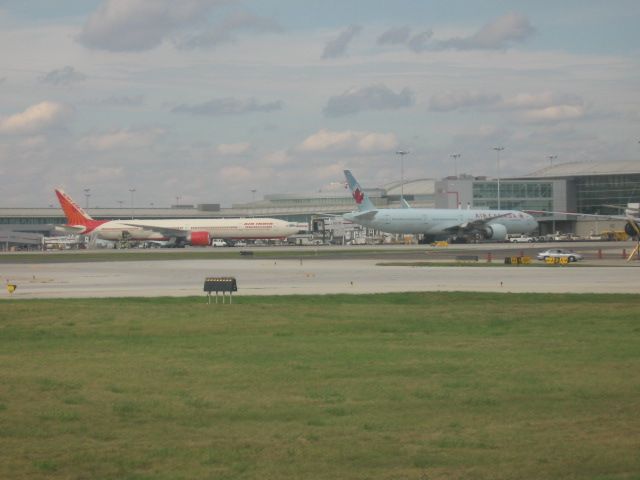
As I wrote in August, Star really, really wanted to add Air India to its network, because of the large and fast-growing Indian market. It spent more time, effort and money on helping Air India meet the membership requirements than it has with any other candidate. At the end, however, Air India’s entrenched corporate culture and internal Indian politics became unbearable, and the alliance gave up.
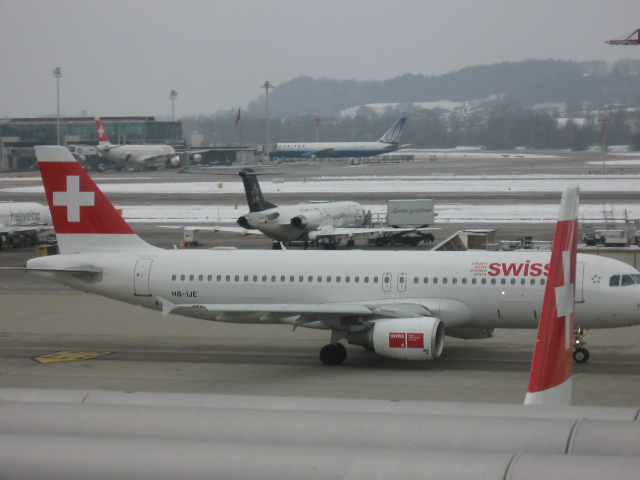
New Delhi wasted no time devising retaliation. Within weeks of Air India’s rejection, the government informed Austrian Airlines and Swiss International Airlines that their traffic rights are in danger, as reported extensively in the Indian press. The official reason was the two carriers’ ownership, in which Germany’s Lufthansa has controlling stakes.
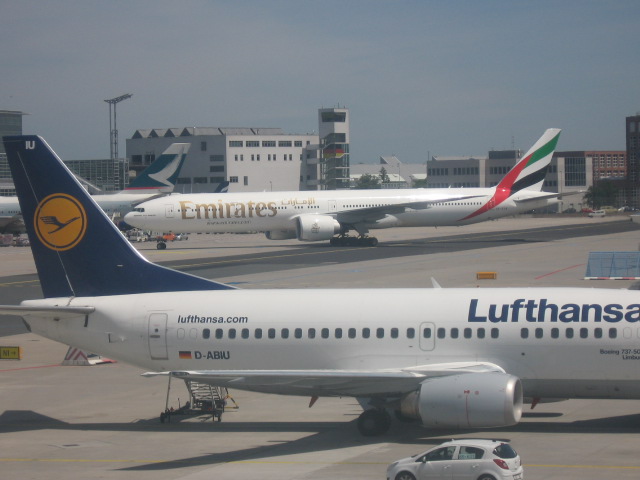
That, of course, has been the case for years, and no one believed this was the real reason for India’s threat. It made another move, refusing to grant landing rights in New Delhi to Lufthansa’s Airbus 380. This time, Indian officials didn’t even try to hide the linkage to Air India’s failed Star application, accusing Lufthansa of sabotaging the Indian bid.
A couple of weeks later, reports appeared in Indian newspapers that Star and Air India had resumed negotiations. That sort of made sense, given India’s multiple threats, but the only sources in those stories were Indian officials — confirmation from Star was suspiciously missing.
So I did a little digging, and it turns out Air India has had no official contacts with the alliance since talks broke down in the summer. There may have been unofficial contacts, but a resumption of negotiations doesn’t happen unofficially.
It’s high time the Indians rethought their priorities and tactics. Blackmail is not the best strategy to earn international respect and recognition for your national carrier.
In the very first column I wrote about Star in 2008, I argued that leading an airline alliance is essentially practicing international diplomacy. The main subject in that piece, then-Star CEO Jaan Albrecht, recently became CEO of Austrian Airlines, so one of his first orders of business was dealing with India again. As if he didn’t have enough of that in the last four years.
Related stories:
AirIndia had no chance with Star Alliance
Is India going too far in curbing airfares?
UAE mixes aviation and foreign policy
Continue reading about India tries to blackmail Star Alliance
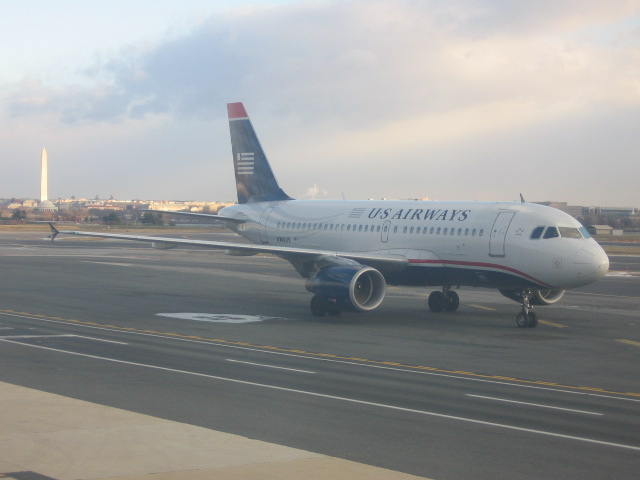
US Airways has denied recent suspicion that it has begun to block award seats made available by its Star Alliance partners for mileage redemption by members of its Dividend Miles program — a practice pioneered by United Airlines, which I first exposed in 2008.
The airline has been silent on the issue since reports about apparent blocking surfaced last fall. Many travelers said they found award inventory on various Star carriers, using one or more of the publicly available sources — the websites of All Nippon Airways, Continental Airlines and Air Canada — but US Airways agents were unable to see those available seats.
To some of us, that looked very much like StarNet blocking — manipulating the alliance’s award “middleware,” which provides access to any Star partner’s inventory on a first-come-first-served basis, to avoid paying other carriers for seats booked on their flights. The patterns resembled those on United, with the most filtering applied to Business and First Class cabins, though some fliers stumbled on coach seats as well. The most affected availability appeared to be on Lufthansa, but also on Swiss, United and others.
In addition, it made financial sense for US Airways to be limiting access to premium partner awards. In the last couple of years, it has in effect been printing miles with lightening speed, as a result of extraordinary promotions it has had, including selling miles at 100-percent bonus. Many Dividend Miles members bought miles and redeemed them for Business and First Class on partner flights, which likely weighed heavily on US Airways’ budget.
Several travel bloggers wrote about the issue, including Gary Leff on “View from the Wing” and Ben Schlappig on “One Mile at a Times.” Leff was more inclined to give the airline the benefit of the doubt, suggesting the problem might have been caused by technical glitches, as well as US Airways agents’ ignorance that some of their partners have First Class in addition to Business.
I’m not a big Dividend Miles fan, though I did help my sister buy miles for a trip to Europe with her family last summer, so it took me some time to look into the issue. I finally got around to it and alerted a US Airways contact at its Phoenix headquarters who has been very helpful in the past — Valerie Wunder, associate manager of media relations. She asked the powers that be and gave me the following response:
“We don’t block award inventory on other airlines, nor do we do the inverse — other Star partners block us from seeing their inventory to maximize their revenues.”
Probably the most frequent difficulty Dividend Miles members have been experiencing has to do with intercontinental First Class awards on Lufthansa, Swiss and others, so I asked Wunder if US Airways may be trying to restrict access to those specific seats.
“We have no restrictions on redemptions, regardless of class,” she said.
However, she offered no explanation for the problem. The mystery continues.
Related stories:
Clarifying United’s StarNet blocking
US Airways hears feedback, fixes website
New Lufthansa business class in a year
Continental shows new transparency
There are so many travel-industry rankings at year’s end, it’s hard to keep track. It’s even harder to figure out which — if any — of them are credible and meaningful. Looking at some of the results, one has to wonder when some of the respondents last flew on the airlines and through the airports they assessed.
Rankings are usually administered by various magazines — one exception are the new Frequent Traveler Awards. In the last several years, I’ve made it a habit to look at the Global Traveler Magazine‘s so-called Tested Awards, most of which make sense. However, as I was reading this year’s results during a flight last week, I couldn’t help but gasp in astonishment at some of the results.
Many of the categories are certainly subjective, and different people’s experiences could easily be different. For example, the in-flight service on the same airline could vary depending on the cabin crew — or even your particular flight attendant.
Still, Lufthansa’s second place for best First Class is surprising. For comparison, Emirates is fifth, Korean Air sixth, and Singapore Airlines eighth. Seriously? Lufthansa is a great airline and it deserves to be in the top 10 — it came out fifth overall in the “Best Airline in the World” category.
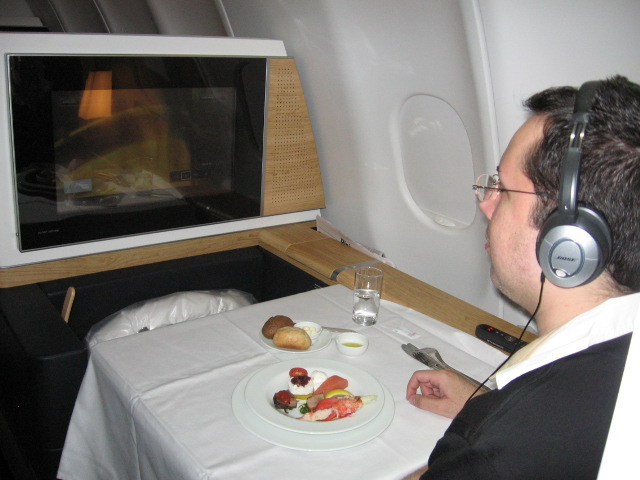
But anyone who has flown in Lufthansa First Class in the last couple of years knows that its hard product lags behind most of its competitors. The most glaring example of that is the tiny TV screen. On the carrier’s Boeing 747 aircraft, First Class is on the upper deck, with 16 seats in a 2-2 configuration, which is the standard for Business Class on most other airlines operating the same aircraft type.
To its credit, Lufthansa has recognized the limits of its product and has undertaken steps to improve it. The above-mentioned 2-2 configuration is about to change to 1-1, which will no doubt disappoint some fliers because it will reduce the number of First Class seats by half, but eight seats is the industry standard and makes a lot of sense.
Lufthansa has finally come out with a new First Class seat on its Airbus 380 planes. Could it be that Global Traveler readers were evaluating those seats? No, because surveys were collected between January and August, and the first Airbus 380 didn’t enter service until late August.
There is one First Class feature on Lufthansa that beats all other airlines to the punch: its First Class Terminal in Frankfurt. But it’s used almost exclusively by Frankfurt-originating passengers, so it’s unlikely its weight in assessing the overall product was predominant for all survey respondents.
Lufthansa was also ranked fifth for best Business Class. Again, if you’ve had a chance to compare its hard product with other Business cabins, you’d probably disagree. One could argue that Lufthansa’s service is better than that of United Airlines, but United’s truly flat seats are among the best in the industry. Lufthansa made the short-sighted decision to install the old Business seats on the Airbus 380, but later announced it would roll out a new hard product next year.
United is the only U.S. carrier in the top 10 of any of the leading overall global categories, taking 10th place for best Business Class and best Business seat design, and fourth place for best First Class design. Its “new” hard product, which was first introduced three years ago, has so far been installed on less than 60 percent of its long-haul fleet.
Deservedly, Lufthansa is missing from the top 10 in any of the best-seat categories. But another perplexing presence in the best Business seat category — ahead of United — is South Korea’s Asiana Airlines. Not only are its current seats not truly flat, but they are less comfortable than comparable products on other carriers, such as Thai Airways. Asiana’s service is, of course, superb, but this is strictly a seat-related category.
In the best global airport category, another surprising result: in third place, Amsterdam has beat out Hong Kong and Munich. In North America, Atlanta came out ahead of San Francisco. Really?
Oh, and did you know that Delta Airlines has the best airport lounges in the world? That’s right, and Lufthansa and Singapore Airlines have been shut out of the top 10 completely. If that’s not madness, I don’t know what is.
Related stories:
Airlines cut back on first-class service
Delayed at the airport? Enjoy!
New Lufthansa business class in a year
Singapore Airlines’ maddening perfection
Continue reading about What’s the real point of airline rankings?
As U.S. and other NATO troops continue to die in Afghanistan, one of the main questions being asked in foreign policy circles is this: How committed are Arab governments to defeating al Qaeda and the Taliban? The United Arab Emirates showed last week that fighting violent extremism is less important than its commercial airlines’ well-being.
Most governments around the world help their carriers in various ways, not only out of national pride, but because a strong airline has a positive impact on a country’s economy. One of the missions of every U.S. embassy is to promote trade and commerce that benefit American companies. That has become an organic part of modern diplomacy.
The UAE, however, has gone farther than most countries do by kicking Canada out of Camp Mirage, a military base used to support operations in Afghanistan. Why? Because Ottawa refused to succumb to the tremendous pressure Abu Dhabi applied in the last several months to secure a significant expansion of flights to Canada for the UAE’s two largest airlines, Emirates and Etihad.
By doing so, the UAE has not only shown that its carriers’ profitability is more important than maintaining good foreign relations — it also risks harming the security of NATO members, and in fact regional and global stability.
The UAE’s ambassador to Canada, Mohammed Abdullah Al-Ghafli, expressed frustration with Canada’s rejection of his government’s demands, saying that “will only negatively impact the populations and economies of both countries.” His prediction may be correct, and some Canadians no doubt share it. Among them is Calgary Mayor David Bronconnier, who said in February that “airlines such as Emirates have an enormous ability to add to our economic vibrancy, business and tourism activity.”
Both Emirates and Etihad have an excellent reputation, and many travelers are happy about their success and wish them no ill. Their well-being is actually good for consumers, because it boosts competition and pushes other carriers to improve. Their competitors, on the other hand, feel differently, accusing Emirates and Etihad of receiving unfair assistance from the UAE government.
However one feels about the two carriers’ growth, holding defense and security hostage to commercial aviation is questionable at best.
The UAE sought to increase the current three flights a week to Toronto by both Emirates and Etihad to daily, and to add flights to Calgary and Vancouver. Air Canada naturally objected, though other airlines would have been affected, too. Many passengers traveling from the Middle East and South Asia to North America now fly first to Europe on Air Canada’s Star Alliance partners Lufthansa, Swiss International Airlines, Britain’s BMI and Austrian Airlines, and some of them connect to Air Canada.
Related stories:
When ‘open skies’ aren’t really open
U.S. has ‘no desire’ to ease airline ownership rules
Continue reading about UAE mixes aviation and foreign policy
Lufthansa appears to have listened to the recent criticism of its decision to install its old angled business-class seats on the newly arrived Airbus 380 aircraft — finally, truly flat seats are planned when its first Boeing 747-800 enters service in late 2011.
Many Lufthansa customers were puzzled and disappointed when the German carrier didn’t bother to introduce fully flat beds on the A380. It was the perfect opportunity — the current seats have been inferior to those of many competitors for years and don’t quite fit the image of a leading airline, which Lufthansa certainly is. In addition, it rolled out brand-new first-class seats on the A380.
“The next major overhaul will be with delivery of the 747-8I in late 2011,” Lufthansa spokesman Martin Riecken said in an e-mail message. “We already have a test seat on one route, but the final design decisions are still not taken. We improved the current business class slightly with the introduction of the A380 in May this year — mainly ergonomic improvements.”
The company has attributed its decision to stick with the old seats to the delayed A380 delivery, saying they were appropriate when the aircraft orders were first made. It’s unclear, however, if Airbus would have allowed Lufthansa to changed its mind, given that interior work didn’t start until just months before the first delivery in May.
It’s unlikely Lufthansa tried to amend its order, judging by its leadership’s previous comments that the old seats, which are lie-flat but not horizontal to the floor and were first installed in 2003, were sufficient for the time being.
“Our existing seat is not at the very top of the market compared with certain [business class] seats offered by some carriers,” Marianne Sammann, general manager for Lufthansa and Austrian Airlines in Britain and Ireland, was quoted as saying in a Wednesday article in Britain’s Business Traveller magazine. “Perhaps with hindsight we would have considered an alternative, but at the time of ordering the A380 our existing seat was the right product.”
Among Lufthansa’s partners in the global Star Alliance, Air New Zealand, Singapore Airlines, Air Canada, United Airlines and Swiss International Airlines offer truly flat beds in business class.
Interestingly, Singapore reacted to the A380 delay differently from Lufthansa — instead of waiting, it installed the new seats on an order of new Boeing 777-300ER aircraft, which began arriving in 2006.
United Airlines rolled out its new seats in 2008, though it has retrofitted only about half of its fleet so far. Still, those seats are much better than Lufthansa’s, and while United’s soft product may not be as good as Lufthansa’s, United is my choice on an overnight flight to Europe.
Last year, Swiss International Airlines put fully flat beds on its new Airbus 330-300 planes, but it currently has only eight of them. Both Swiss and Austrian are owned by Lufthansa, though Austrian’s hard product is inferior to the other two.
Outside the Star Alliance, Air France, Australia’s Qantas Airways and Emirates all introduced new truly flat beds on their A380 aircraft. Air France, however, also disappointed its customers recently by announcing plans not to install the new seats on other aircraft types.
Lufthansa has 15 A380 planes on order, with the option to buy another five. No details about the new business-class seats are available yet, but it’s clear it will take a few years for its entire fleet to be reconfigured.
Related stories:
What to do with empty premium seats?
Airlines cut back on first-class service
Lufthansa agent’s ‘mistake’ stacks up
Continue reading about New Lufthansa business class in a year