nkralev on July 27th, 2010

How do airlines decide what fares qualify as “sales,” and why do they advertise certain fares, but not other, much lower ones? Why is United Airlines promoting a “sale” between Washington and Boston for $109 each way, when there are currently six published lower fares in that market, beginning with $49 each way?

For the most part, I don’t bother to figure out why airlines do certain things anymore. I just gather all the information I need about what they do and try to work with it — or around it. Years of watching fares have taught me not to fall for those “sales,” because in many cases, I can find a much lower price to the same destination, on the same dates and on the same carrier.

Both United and American Airlines are currently advertising two fall sales on their websites. My review of the American fares showed that most of them are indeed the lowest available prices at this time. There are a few small exceptions — for example, I found a fare from New York to San Diego that is $5 lower than the advertised $164.

There are many more and much bigger differences on United. The unadvertised — but published — fares between Washington and Boston, in addition to $49 each way, are $54, $64, $74, $84 and $99. They all have fewer restrictions than the $109 “sale” price.

I say between Washington and Boston — not from Washington to Boston — because domestic fares are the same in either direction, unlike international fares, which are usually very different.

Let’s take another example. The advertised fares between Denver and Los Angeles in two separate United “sales” are $99 and $89 each way. However, I found $68 each way. In addition, Denver-New Orleans is on “sale” for $123 each way, but there is also $109, and even $89.

Some of the advertised United fares are truly the lowest published at this time. For example, $88 each way for Washington-Chicago, $108 for Chicago-Denver, and $157 for Chicago-Los Angeles.

There is another catch that could increase the benefit of the unadvertised fares to you. Typically, “sale” prices require a round-trip purchase. In contrast, most of the lower fares I found have no such condition. In fact, the major U.S. carriers have been publishing more and more truly one-way fares in recent months, which has always been the case with Southwest Airlines and other low-cost carriers.

To United’s credit, some of its current sales don’t require a round-trip purchase. That is, indeed, the prudent thing to do. If a round trip is mandatory, why advertise one-way fares? Of course, for marketing purposes, but I’ve always found that a bit dishonest and deliberately misleading.

I mean no criticism of United for promoting as “sales” fares that are higher than other published fares. I wrote this to warn travelers that they should check all existing fares between two cities before settling for what they think is a “sale” or the best deal.

Those of you who have attended my “On the Fly” Seminars know how easy it is to bring up on your computer screen all fares published by every airline on a certain route in just seconds.

Continue reading about When an airfare sale is not quite a sale

nkralev on July 15th, 2010

A new survey by the Consumer Travel Alliance released this week found that luggage and other additional airline fees increase the average ticket price by up to 50 percent. The truth is, there is a relatively easy way to have most of those fees waived — if only travelers were better educated and more open-minded.

My impression during almost constant global travel for most of the last decade is that people think they know how to travel — but then they complain about being “scammed” by the airlines. My approach has been to learn as much as possible about rules, restrictions and fees, and then to look for ways to waive them and generally make the system work for me.

One of the reasons I started the “On the Fly” Seminars was to educate people how to be better travelers — and to change negative attitudes toward travel. In fact, my FLY 201 class covers exactly how to get those extra fees waived: by achieving elite airline status.

Many people think they don’t travel enough to get elite status or it’s cheaper to fly a different airline every time. I find both of these arguments valid in very few cases.

First, you don’t need to fly 100,000 miles a year. The first elite level in most frequent-flier programs will get your baggage fees waived. Moreover, because of elite benefits offered and recognized across global airline alliances, a silver membership with one carrier will secure those waivers on every member-airline. You can fly on any Star member and credit your miles to any of the Star loyalty programs.

However, mileage requirements to achieve status vary greatly. For example, you need 25,000 miles for Premier on United Airlines, which will give you Star Alliance silver status — but you only need 4,000 miles on the alliance’s newest member, Greece’s Aegean Airlines. Not all fares on United earn 100 percent mileage in Aegean’s program, but right now it gives you 1,000 miles just for signing up. I’m sure if most of you looked at your flight history in the past year, you’d see that you could have qualified had you kept your miles in the same place.

Second, relying on Travelocity or Priceline to tell you which airline has the cheapest ticket and go to a different carrier every time is not the best way to fly in the current environment. Even if you had to pay a bit extra to stay within the same alliance — but if you managed to secure elite status — at the end of the year you most likely spent less money because you didn’t pay luggage fees.

There is no question that airlines should make all those extra fees more transparent earlier in the booking process. There is also little doubt that their frequent-flier programs were created to make money. But they do reward their loyal customers, so if you are going to give them your money, why not learn how to benefit from your loyalty as much as you can?

Continue reading about Avoiding luggage and other airline fees

nkralev on July 9th, 2010

Dealing with flight delays and cancellations is challenging enough for travelers, but for some of us it has an additional complication: How to preserve our upgrades in case of rebooking. My trip to Alaska this week provided a textbook example.

As experienced and creative as I might be in handling flight disruptions, the weather is always my worst enemy. I’ve rarely felt more helpless than I did in Denver on my way to Anchorage. My plane had diverted to Colorado Springs because of a thunderstorm, and my departure time kept being pushed back more times than I cared to count.

I was sitting in United’s Red Carpet Club watching other planes take off and land, but the one I needed was still at another airport. The only reason to smile was the double rainbow that appeared at one point — you can see it in the photo above.

I had no other options. United has only one flight to Anchorage a day from Denver, though it also flies up there from San Francisco and Chicago. Those flights, however, had already left, so connecting was impossible, even if I could make it to those two cities.

At least I didn’t have to worry about missing another flight, rebooking and potentially losing a previously confirmed upgrade, as this was my last segment for the day.

Things were very different, though, on my way back home. The plane coming to Anchorage from Denver was late — another patch of bad weather had diverted in to Wyoming. It was clear I’d miss my connecting flight, so I called United to get rebooked. The flight I wanted was to Washington National (DCA) — there was no upgrade space available, but they were still selling two revenue seats in first class. An alternative was a flight to Dulles Airport (IAD), which had four revenue seats in first class but nothing to upgrade, either.

A supervisor refused to open upgrade space for me despite the second long delay I was experiencing in three days and was only willing to waitlist me for first class on either flight — there were 22 people waitlisted for an upgrade to DCA, and she didn’t think it was fair to jump me over them.

I got really angry — but not because of her refusal. The plane to DCA was a Boeing 757 and had 24 seats in first class, and the one to IAD was a Boeing 767 with 34 seats in first. Until recently, it was very likely that those flights would have had at least a couple of upgrade seats the night before departure.

But in March, United implemented free domestic upgrades for all elites, which they don’t even need to request. So by the time a top elite member needs a seat because of involuntary rebooking, those seats have been given away to customers with much lower status.

When I got to the Anchorage airport, I saw that I was first on the waitlist, and with two seats still open at 4 a.m. Denver time for an 11 a.m. departure, I thought I was pretty safe. But when I landed in Denver, those two seats were gone. I was still at the top of the waitlist, and three people with reservations on the flight hadn’t checked in.

I did get the upgrade at the gate in the end, but this was the closest I’d come to flying in coach in years.

Continue reading about Preserving upgrades in case of rebooking

nkralev on June 17th, 2010

How many busloads of passengers does it take to fill a Boeing 747? Ask the Frankfurt Airport.

With all the innovations and conveniences brought to modern airports, it’s inexplicable to me why airports in some of the most developed countries on the planet remind one of the Third World. Many travelers often complain about London’s Heathrow, but I find Frankfurt no less frustrating.

I realize there are not enough gates with jet bridges, and some airlines prefer “remote” gates because their use is cheaper, but I can’t remember flying through Frankfurt and not being taken to or from a plane by bus at least once. As of this week, I’ve had 111 takeoffs and landings at that airport.

As much as I hate the buses, by now I’m used to the prospect of having to put up with them, especially for flights to certain destinations. Most of the time, such flights are flown on narrow-body aircraft, such as Boeing 737 and Airbus 320, which can be filled with just two busloads.

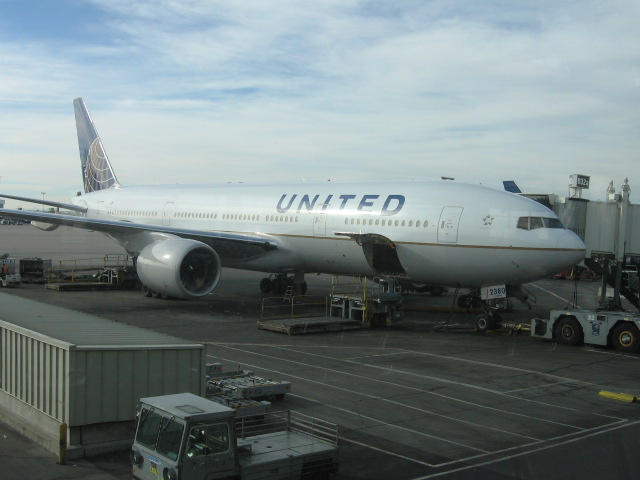
This week, however, I experienced boarding a United Airlines Boeing 747 by bus. I was sure the flight wouldn’t leave on time, and I was right. I can hardly wait for the expansion of Terminal 1 to be completed.

What’s even harder for me to understand is why there aren’t enough gates with jetways at the much newer Munich Airport. I was also disappointed by the transfer experience there this week. With 52 takeoffs and landings, this was the first time I had to change terminals. I arrived at Terminal 1 — courtesy of another bus — and it took me about 45 minutes to reach Terminal 2. The signage was very poor, and the shuttle bus between the terminals runs only once every 20 minutes.

U.S. airports may have their problems, but when was the last time you were taken to the plane by bus?

Continue reading about Tired of ‘remote’ gates in Frankfurt

nkralev on June 10th, 2010

It doesn’t happen very often that I fly a new route on United Airlines, especially out of Washington — it seems I’ve flown a huge number of them. But my 467th United flight this week was on the relatively new nonstop service to Moscow.

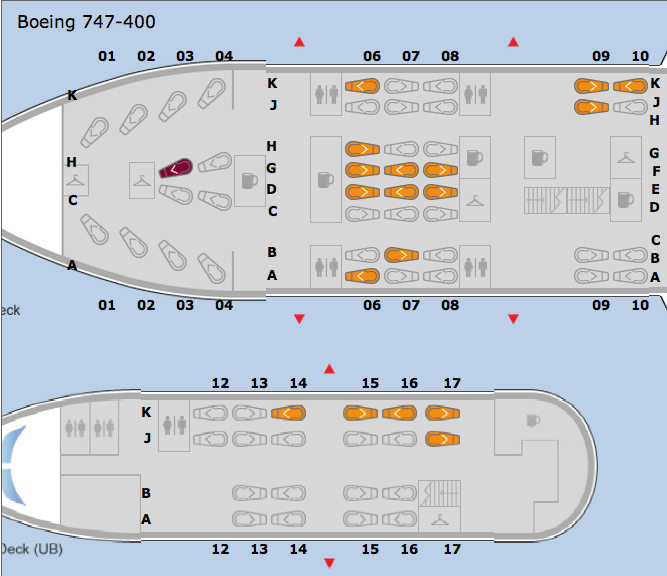
That flight is flown on a Boeing 767, which means that it’s reconfigured with the new truly flat business-class seats. Even better, upgrading to business on that flight is usually fairly easy, and I was on a pretty high M fare, so I never had any doubt my upgrade would clear.

By the time that happened a week before the flight, I had two choices in terms of window seating: a forward-facing seat in the row before the last or a rear-facing seat in the first row of the business cabin. About six months ago, I would have chosen the first option, but after flying backward from San Francisco to Sydney in December, the direction doesn’t bother me anymore. Each couple of seats feels very much like a private compartment, and you don’t really see anything outside that compartment while seated, so you forget there are other passengers facing in a different direction. I chose the first row because it’s away from the galley and the coach cabin, which makes it quieter and less trafficked.

It was a standard United flight in terms of the service — pretty good, but nothing spectacular. My glass of water never remained empty for too long. A couple of flight attendants asked if I worked for United, because I looked familiar — that tells you how often I’m on those planes.

My routine on long-haul flights begins with changing into my plane pajamas, which are given to first-class passengers on some non-U.S. carriers — this time, I’d taken a set from Lufthansa, but I usually rotate them with sets from SWISS or Singapore Airlines. I used to change after takeoff, but by the time the seat-belt sign is off, the service has already begun, and I’d rather not be in the flight attendants’ way.

During takeoff, I read newspapers — usually the Financial Times, where I used to write, and the International Herald Tribune on flights originating outside the United States. Then I turned on my entertainment system and start a film — “Valentine’s Day” was the first one I watched. It didn’t do well at the box office when it was released in February, despite the all-star cast and the director Gary Marshall, who also did “Pretty Woman.” I thought it was good enough for a plane ride.

After dinner — not-so-tasty chicken breast and cheesecake — and Chardonnay, it was bedtime. The flight left as 5 p.m., so it was too early to sleep. I tried really hard but not very successfully. At least I had a long and nice rest in a flat bed. Later, I watched another film — the very good documentary, “Celine: Through the Eyes of the World.”

Breakfast was disappointing, as it usually is in United business — just a croissant and fruit — and way behind competition, but United has never excelled at its soft product. Only first class gets eggs for breakfast.

This was my seventh time in Moscow, but the first at Domodedovo Airport — I found it much nicer than Sheremetevo. It was my 202th airport overall, according to my profile on FlightMemory.

Continue reading about Flying new United route — rare occurrence