William J. Burns has been the secret weapon of U.S. secretaries of state for more than two decades, serving consecutively under three Republicans and three Democrats. So it came as no surprise that John Kerry wanted to be the seventh chief diplomat to lean daily on Burns, currently the country’s highest-ranking career diplomat, by keeping him on as deputy secretary of state, a position to which Burns was appointed by Hillary Clinton.
“Bill is the gold standard for quiet, head-down, get-it-done diplomacy,” Kerry said of Burns. “He is smart and savvy, and he understands not just where policy should move, but how to navigate the distance between Washington and capitals around the world. I worked with Bill really closely from the Senate Foreign Relations Committee, and I’m even more privileged to work with him now every single day. He has an innate knack for issues and relationships that’s unsurpassed…”
Charles Rivkin is an American ambassador of a peculiar kind. He is not a career diplomat but a political appointee, with no previous professional experience in international relations. However, unlike most of his current and former non-career colleagues, he speaks fluently the language of the county he is posted to — France — and is very well plugged-in when it comes to political and social developments there. He has received rave reviews for his performance in Paris both in official State Department audits and from his embassy’s employees.
But it wasn’t Rivkin’s diplomatic skills that landed him the coveted political ambassadorship. Rather, it was his skillful fundraising for President Obama during his 2008 election campaign…
“Going political” is a phrase used in the U.S. Foreign Service to indicate career diplomats’ frustration that yet another ambassadorship has been taken from them and given to a political appointee. For 20 years, the post in Russia has been reserved for professionals because of its difficulty and sensitivity — but that’s about to change.
Although President Obama’s decision to nominate Michael McFaul as the next U.S. ambassador to Moscow, which the White House announced late last week, surprised many in the Foreign Service, it’s unlikely to be met with serious criticism. Despite my recent series of critical columns on political ambassadors, I have no reason to question Obama’s motives in this case, either.
President Obama is a very smart and highly intelligent man who knew more about the world than most presidential candidates do before taking office. So why did he appoint a political ambassador whose tenure has been nothing short of a disgrace, just because she was a significant contributor to his election campaign?
There are some excellent political appointees, but Cynthia Stroum, ambassador to Luxembourg, wasn’t one of them. She was forced to resign last week, following a scathing report of her management style and the damage she did to her embassy by the State Department’s Office of the Inspector General (OIG).
I began the week reminiscing about my travels with four secretaries of state, so I thought I’d end it by answering another question I’m frequently asked: What happened to the three secretaries I covered before Hillary Clinton? Starting with the most recent, they are Condoleezza Rice, Colin Powell and Madeleine Albright.
I’ve also been asked often about the differences between those former chief U.S. diplomats, especially during travel. I usually point out an obvious similarity among them first: None of them is a white male. In fact, the last secretary to fit that description was Warren Christopher, who left office in January 1997, when Albright ended the centuries-old tradition.
One of the questions I’ve been asked most frequently in the last decade is whether I’ve earned any frequent-flier miles from my nearly 200 flights with four U.S. secretaries of state. Sadly, the answer is no — and what makes it even sadder is that my press colleagues accompanying the president do get miles and even elite status.
I’ve known many journalists over the years who were top elites purely as a result of White House travel. Some of them didn’t really use their elite benefits because of their very limited commercial flying. There were also a few who didn’t even know they had the coveted status.
So why the differentiation? The above photo will help explain things. I snapped it while waiting for Secretary of State Hillary Clinton in Beijing a year ago — we flew to Afghanistan that day.
Clinton’s plane is the one of the right — as I wrote last year, it’s the Air Force version of the Boeing 757, also known as C-32. Air Force One — the Boeing 747 on the left — was waiting for President Obama and later took him to Seoul.
The State Department traveling press corps — about a dozen on average — flies on the secretary’s aircraft. Air Force One, however, has enough seats only for a pool of 12, and usually more than 100 reporters go on a foreign presidential trip. There is a rotation for the pool seats on every flight, but most of the time reporters fly on a so-called press plane chartered by the White House, usually from United Airlines.
What you don’t see on the above photo is that, across from the two Air Force planes, to the left of the traffic lane, there was a parked United aircraft, which was of course the press charter.
Everyone on that plane earned United miles, and many of those traveling with the president regularly have 1K status — United’s highest published elite level, requiring 100,000 flown miles per calendar year. Moreover, fliers get first-class mileage credit, which means 150 percent elite-qualifying miles.
Before every trip, different airlines bid for the charter contract, and the White House travel office and the White House Correspondents Association choose the offer they deem best. Although most of the time they select United, for Obama’s trip to Asia last week the winner was Delta Airlines.
The trip took travelers around the world — they flew over the Atlantic en route to India, then went to Indonesia, South Korea and Japan, before returning to Washington via the Pacific. According to the Great Circle Mapper, that’s about 22,000 miles. Delta spokesman Anthony Black declined to say whether the fliers will earn mileage, citing “customer privacy.”
I admit I’ve been a little jealous about all the “missed” miles over the years — almost half a million — but I never wanted to cover the White House because of the domestic politics involved in that beat.
I found another way to earn miles from official trips. After flying almost 100,000 miles with Colin Powell in 2003, I’d had it with non-mileage-earning flights. I still needed to re-qualify for 1K. The following year, I decided that I’d go on the secretary’s plane but would drop off at the last stop and come home commercially. Now I’ve been 1K for a decade.
Some of you might think I was crazy to give up a seat on the secretary’s plane and a hassle-free journey, not having to worry about passport control, customs and sometimes even security screening.
But I thought about it in a different way. I was paying half the price the State Department would charge me — yet, I was getting much better seats as a result of business-class upgrades, mileage credit and better food — yes, even on United.
Related stories:
My trips with Clinton back in the news
In air with Clinton on first trip abroad
Clinton weathers job’s long flights
Press ready for Obama, Clinton travel
The middle of the summer is a good time to review the balance of political appointees vs. career diplomats in ambassadorial posts around the world. Not surprisingly, the familiar 30-percent quota for political appointments of the last several decades remains largely intact.
Actually, for some people, continuing the tradition of awarding presidential campaign contributors with embassies may be surprising, given President Obama’s promise to change the way Washington works during the 2008 election. However, as I wrote a year ago, reality set in soon after Obama took office. According to a list maintained by the American Foreign Service Association (AFSA), the diplomats’ union, of all ambassadors Obama has nominated so far, about 40 percent are political appointees.
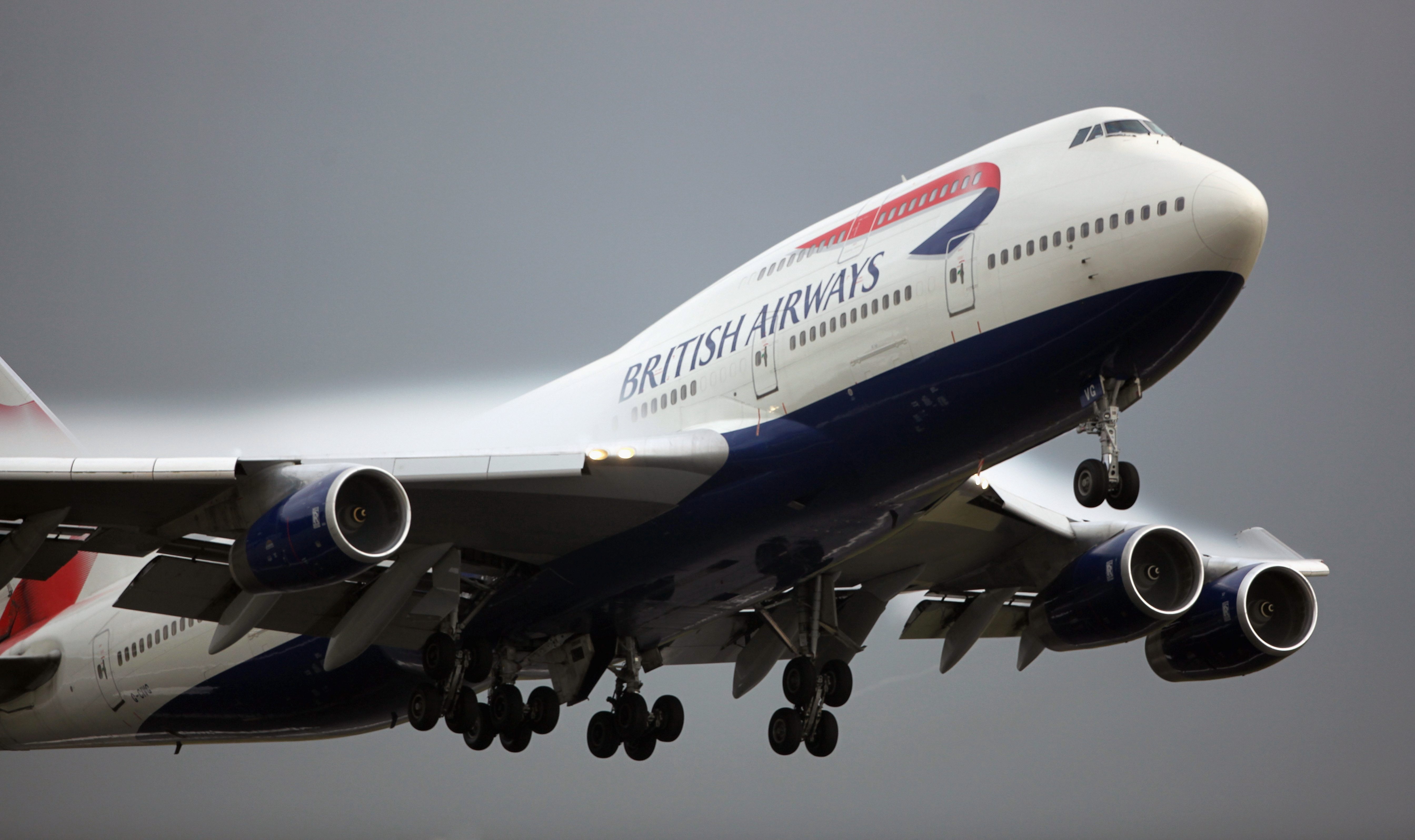
British Prime Minister David Cameron surprised many this week by traveling to Washington for his first official White House visit since taking office on a commercial British Airways flight, instead of taking a dedicated plane, to save money. Now some Americans are wondering if U.S. officials could follow suit.
Having traveled around the world with four U.S. secretaries of state — Hillary Clinton, Condoleezza Rice, Colin Powell and Madeleine Albright — over the last decade, I can see how commercial flying would save the State Department millions of dollars a year. However, it would also guarantee a logistical nightmare.
The Obama administration is shifting the focus of U.S. public diplomacy efforts to play down the past emphasis on countering violent extremism in order to avoid offending foreign audiences opposed to terrorism.
Judith A. McHale, undersecretary of state for public diplomacy, said in an interview with The Washington Times that “a very narrow segment” of the world’s population is at risk of turning to extremism, and the policies adopted by the Bush administration should be broadened. “Looking back, there was such a focus on countering violent extremism that everything got swept into the same category or the same bucket,” Ms. McHale said.
The White House, unaware of historic norms, had been on track to give more than the usual 30 percent of ambassadorial jobs to political appointees until objections from career diplomats forced it to reconsider, administration officials say.
As a result of the reversal, some donors to President Obama’s election campaign — as well as senior advisers and other supporters of the campaigns of Vice President Joseph R. Biden Jr. and Secretary of State Hillary Rodham Clinton — are likely to find their hopes of being rewarded with an embassy dashed. “The White House has come around, and we truly expect that, at the end of the process, the balance will be within historical norms,” said one senior administration official who asked not to be named because he was discussing internal deliberations.
Nicholas Kralev is an author and expert on diplomacy, global affairs and air travel. A former Financial Times and Washington Times correspondent, he has traveled around the world with four U.S. secretaries of state — Hillary Clinton, Condoleezza Rice, Colin Powell and Madeleine Albright. He has flown over 2 million miles and visited 83 countries.Subscribe to updates
Speaking engagements
MAY 14, 2013 — LOUISVILLE, KY
MAY 31, 2013 — BUENOS AIRES
OCT 03, 2013 — ATHENS, GREECE
OCT 07, 2013 — ANKARA, TURKEY
OCT 09, 2013 — ISTANBUL, TURKEY
OCT 15, 2013 — MADRID, SPAIN
OCT 17, 2013 — LISBON, PORTUGAL
OCT 21, 2013 — BERLIN, GERMANYClick here for details
Google Ads