nkralev on December 14th, 2011

The owners of FareCompare.com have apparently decided to destroy what used to be one of the most useful websites for consumer travel. Its best features were removed last weekend, and many of the remaining ones are not working properly. Talk about fixing something that wasn’t broken.

For a couple of years, FareCompare has been talking about catering more to the airline industry than consumers, proposing a system to track mistake fares and alert carriers, so they can correct them. The company has also stepped up advertising — both on the site and in e-mail messages.

Could it be that it feels pressure to make it more difficult for consumers to find better deals and spend less money on air travel?

In both my book and my classes, I stress the importance of monitoring fares and learning when a low fare is published — regardless of travel dates and seat availability — so you can take advantage of it before it disappears. As I say, I want to know what’s possible, and then I’ll do whatever I can to get the best price. That was one of FareCompare’s main strengths.

You could program your account — in the “My Trips” section — to keep track of various city-pairs, specify an airline, if you like, and request e-mail alerts every time a new fare on a certain route was filed. When you logged in, all your saved routes appeared on the same page, showing the current lowest fares, along with their place on an airline’s tariff, and the last several lowest filings on that route for comparison. You could also rearrange the city-pairs by price or other criteria.

The “My Trips” section is still there, but most of its previous functions no longer exist. You can’t rearrange the routes, you can’t specify an airline, you don’t see any data from the tariff, such as fare basis codes and valid dates, and you don’t get historical data for comparison. In fact, as I write this, all my 65 saved routes say that a “price is not currently available.”

There have been problems with e-mail alerts for years, but now they seem to have multiplied — the problems, not the alerts.

Finally, FareCompare was great at giving us idea for trips. For example, if you wanted to get away for a long weekend, you could see a list of destinations either by total price or price per mile. However, the page that used to show how far you could fly for the least amount of money — also known as the FlyerTalk page and incredibly useful to leisure travelers — has been removed. There is a message that a new version is “coming soon,” but no one knows why the old version was taken down before the replacement was ready.

There are already frustrated travelers who have posted in two threads on FlyerTalk. Some of them note the conspicuous silence of FareCompare, which actually started one of the threads in 2008.

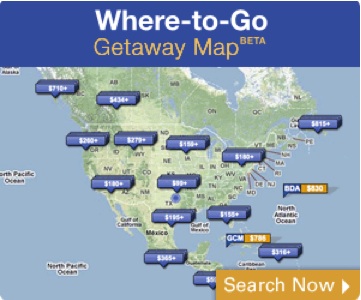
To be fair, the site does have a map showing fares from any given city to any destination in the world, but I have four problems with it: First, it’s very difficult to use graphically, because many fares appear on top of each other due to the cities’ proximity. Second, you have to specify a month in which you want to travel, which leaves out many fares. Third, the tool that specifies an airline isn’t working. Fourth and most important, some fares are simply wrong.

FareCompare is a free site, and I’m sure some people think we have no right to criticize it or have demands. But I think there is rarely a truly “free” site anymore. We pay for using it one way or another — if not with a subscription fee, perhaps by enduring various ads. And who knows where our e-mail addresses end up?

If FareCompare doesn’t restore its most useful tools, it would be handing AirfareWatchdog.com a great opportunity to fill a much-needed void.

RETURN TO MAIN COLUMN PAGE

Related stories:

U.S. fares now filed four times a day

When an airfare sale is not quite a sale

DOT cracks down on airfare advertising

When airfares jump on you for no reason

Proper airfare advertising comes to U.S.

Continue reading about FareCompare guts airfare search tools

nkralev on December 7th, 2011

While most U.S. airlines have learned to be relatively honest with their best customers, many of their foreign peers have not yet realized that travelers are not as stupid as to fall for their PR spin and questionable practices.

It’s time for those carriers to wake up to the fact that it’s the end of 2011, and much in the airline industry is rather transparent to those of us who pay attention. Trying to persuade customers that bad news is actually good may be an essential PR trick, but in today’s hyper-connected world, it’s not hard to figure out someone’s true intentions.

Among the airlines still using the old playbook is British Airways, which is surprising for such a major and quite good global carrier. Last month, it drastically devalued its award redemption chart, but it tried to present that negative change as a positive one.

The clue came with the usage of the world “revitalizing” to describe the changes to the carrier’s frequent-flier program, Executive Club. At least they steered clear of “enhancement,” which is what many U.S. carriers used in the past, inviting much derision from frequent fliers.

British Airways announced a few weeks before the changes took effect that they were coming, but what those changes actually were going to be remained a secret until the very day they were implemented. That move showed gross disrespect for the company’s best customers who deserved much better for their loyalty.

In contrast, many U.S. airlines and hotel companies publish their new charts, as well as other program changes, months in advance. One recent exception was Delta Airlines, which didn’t really have an official global chart for more than a year, until it finally published one in February, effective immediately — actually, much of it was already in use unofficially.

Apparently, British Airways was afraid that many Executive Club members would rush to burn their miles before the last change — after all, there were plenty of miles on its books, partly thanks to its giving away 100,000 miles as a credit-card sign-up bonus. So it said that the number of award miles required for “97 percent of our routes” will stay the same or even go down.

In fact, that turned out to be false. In an attempt to save face when the new chart came out, the airline said it had meant 97 percent of the nonstop routes out of London.

While some of those nonstop routes have indeed become cheaper, there are many Executive Club members outside London who earned their miles hoping to use them for trips to cities other than London. Unfortunately, they are the big losers — the increases in those cases can be over 80 percent. Substantial premiums have been added to connecting and partner flights across the board.

Those changes, along with the huge amounts British Airways charges in taxes and fees on award tickets, have drastically devalued its miles. Just this week, I booked award tickets to Asia for two clients, and I really wanted to help them burn their British Airways miles. However, that particular award had almost doubled in price, and the taxes were over $1,200 per person. So I booked with another airline for nearly half the miles and $85 in taxes.

British Airways in certainly not alone in thinking that customers are stupid. Air Canada quietly started charging fuel surcharges on some partner award tickets earlier this fall. Did it hope no one would notice that they were asked to pay hundreds of dollars more than before? Finally, after Air Canada was exposed on various blogs, it admitted what it was doing and said that even more partner flights would be included in the new program.

And then there is the scandalous behavior of the United Arab Emirates’ Etihad Airways last month.

For two days in October, it advertised a First Class fare from Spain to Australia on its website for less than 400 euro. According to Spanish media reports, about 300 people bought tickets. The first of them traveled 10 days later, when an agent in Brussels noticed the fare and alerted the appropriate department. It was then determined that the fare was a mistake, and the passenger was downgraded to coach without any compensation. The rest of the tickets were canceled.

I’ve written about mistake fares before, but the issue here is not whether Etihad was wrong not to honor the tickets. I said scandalous because of a letter the airline sent to the passengers who decided to put up a fight and wanted to defend their rights through the media.

Etihad hired a law firm in Spain that in no uncertain terms threatened those customers in writing with litigation, if they dared to go to the media. The last time I checked, Spain was a democracy with freedom of speech, and the United Arab Emirates was something quite different. I don’t believe anything has changed since.

RETURN TO MAIN COLUMN PAGE

Related stories:

Airlines neglect non-flying experience

How much slack do the airlines deserve?

U.S. warns airlines on fare mistakes

Singapore Air’s inept agents, dark side

Continue reading about Airlines still think customers are stupid

nkralev on November 22nd, 2011

I’m tired of all the “low-fare tips” in the media — both hearing and reading about them, and giving them myself. Yes, I’m guilty of feeding the media’s hunger for quick “Top 5 tips,” and not happy about having to dumb down a very complex airfare system, which is actually more misleading than helpful.

Those of us who are trained and experienced journalists know very well how to make a specific or even technical topic accessible to a large general audience. I’ve been doing that during my entire professional career.

So it’s understandable that editors and producers across the United States want to write stories or produce TV and radio segments that are easily understood by most of their audience. That’s why I was hardly surprised the first time I was asked for tips on shopping for airfare in a five-minute interview.

While I usually warn listeners and viewers that I’m about to make generalizations, I tell them that, on average, the lowest domestic fares are published on Tuesday and typically last through Thursday. Also, on average, Tuesdays, Wednesdays and Saturdays are said to be the cheapest days to fly.

Why? If you’ve read my book, “Decoding Air Travel,” you know that domestic fares are filed four times a day during the week, and once a day on weekends. You also know that each fare is published with its own rules, one of which is day-of-the-week validity. Some fares are valid on any day but Friday and Sunday, others only on Tuesday and Wednesday, and yet others have no day restrictions at all.

So if I have to generalize, based on all my knowledge and experience, I’d cautiously say that Tuesday, Wednesday and Saturday may be cheaper to fly on than other days.

Unfortunately, some travel writers are taking those generalizations to the extreme. The most recent radio show I was on just yesterday was NPR’s “On Point,” where a guest before me said you should never buy airline tickets on weekends.

Well, I’ve bought plenty of cheap tickets on weekends, ranging from $150 to $250 round trip, including transcontinental ones.

Then last weekend, I read an article about how to get low fares on a website called venturebeat.com, which was based on information provided by Kayak.com. “Don’t buy plane tickets more than 30 day in advance or within 14 days of your trip,” it advised.

Really? I currently have about 10 tickets booked for future travel, and all of them were purchased months ago. The cheapest was less than $150, and the most expensive just over $300. A couple of years ago, I bought a one-way ticket from Washington to San Francisco for $110, only three days before travel.

The article also said that “the best time to buy a plane ticket for the December holidays is the first week of December, up until the 10th.” I realize they didn’t say “the only time,” but I thought I’d mention that my Christmas ticket to Phoenix was bought last spring and cost $240 — that was the actual total price, no discount vouchers included.

So I think very carefully these days before accepting an invitation to appear on radio or TV. I declined one just last week. I initially declined “On Point,” too, but I reconsidered when they agreed to give me a 17-minute segment without another guest, for which I’m immensely grateful.

The other reason was the guest-host, NPR correspondent Jacki Lyden, who also guest-hosted “Weekend Edition” when I was on in August. She has been the only journalist so far who really understands the complexity of the system and doesn’t make me dumb things down and offer questionable tips. Even in the four-minute segment on Weekend Edition, she let me explain the basics of airfares — and that was by far my most effective media appearance in terms of audience response and book sales.

The media should never underestimate the public’s intelligence and curiosity.

RETURN TO MAIN COLUMN PAGE

Related stories:

U.S. fares now filed four times a day

Is media coverage of air travel helpful?

When airfares jump on you for no reason

Proper airfare advertising comes to U.S.

Continue reading about Questioning conventional airfare wisdom

nkralev on October 18th, 2011

North American airfares are now published four times a day during the week, after the Airline Tariff Publishing Company (ATPCO) added earlier this month a filing feed at 4 p.m. Eastern time to the already-existing feeds at 10 a.m., 1 p.m. and 8 p.m.

This means that, at any of those times, a certain fare can be put on the market, changed or pulled off the market. It also means that a fare’s entire lifespan can be as short as three hours.

The 4 p.m. feed had been planned for months, as I wrote in my book “Decoding Air Travel.” Although the airlines update their data 24 hours a day, ATPCO sends that data out to Global Distribution Systems (GDS), which are used by airlines and travel agencies to book flights, four times a day during the week. On weekends, there is only one feed at 5 p.m. ET.

“ATPCO started this new time for the U.S. and Canadian subscription data feed on Oct. 3,” said Jay Brawley, the company’s director of customer marketing. “The weekend feed remains the same.”

Located near Washington Dulles International Airport, ATPCO is owned by 16 of the world’s largest carriers and the Federal Express Corp. Its only and much smaller competitor is SITA, which publishes some fares in Europe, Africa and Asia.

ATPCO sends out feeds with international fares every hour, except for several hours on Saturday night, Brawley said. Discounted international fares typically stay on the market longer than discounted U.S. domestic fares — sometimes for weeks.

The official filing feeds don’t exclude the possibility that a fare may be changed or removed at other times on a booking source directly controlled by the airline, such as its website. In addition, the data changes in those feeds can take an hour or longer to update in various booking systems.

How do you know that a low fare to a city you need to visit has been published? You certainly don’t have to wait for the airlines to announce a sale — in fact, as I’ve written before, “sale” prices are often far from a bargain. Thanks to the transparency provided by the Internet, you can actually keep an eye on fares, through websites like FareCompare.com and AirfareWatchdog.com. You can also subscribe to their e-mail alerts for fares between any two cities.

Reacting to a good fare — meaning booking it — quickly cannot be overestimated. In my book, I give an example of a missed opportunity from January 2008, when I was at the World Economic Forum in Davos, Switzerland, with then-Secretary of State Condoleezza Rice.

Just before she began her speech, I received an e-mail alert from FareCompare about a $99 one-way base fare between Washington and San Francisco. As it happened, I needed to book a trip to San Francisco, but I couldn’t act immediately, since I had to write and file a story for my newspaper. By the time I was free to look into booking a ticket, the fare was gone.

Not that there was anything I could have done in this case, but the experience taught me a valuable lesson: If you get word about a really good fare, book it as soon as you can. Most domestic fares usually stay on the market at least a couple of days, but there is never a guarantee, and some vanish within hours — the airlines can do whatever they want.

RETURN TO MAIN COLUMN PAGE

Related stories:

When an airfare sale is not quite a sale

DOT cracks down on airfare advertising

When airfares jump on you for no reason

Proper airfare advertising comes to U.S.

Airlines, want better GDS model? Unite!

Continue reading about U.S. fares now filed four times a day

nkralev on August 23rd, 2011

In my 18 years in journalism, I always believed that the media’s role is to inform, entertain and educate. These days, the education part seems to be missing in many cases, and one area where that’s quite evident is air travel. With the airline system being so complex and frustrating, should the media be more helpful in guiding travelers through the maze?

I asked myself that question as I was preparing for an interview about my book, “Decoding Air Travel,” on NPR’s Weekend Edition last week. The overwhelming positive response to the interview and the sales numbers — more than 500 books sold in two days — show that the public badly needs help in navigating the airline universe.

But does the media have a responsibility to provide such help? When it reported recently that a frequent flier had flown 10 million miles on United Airlines, should it have used the opportunity — or news peg, as we call it — to tell readers or viewers how they can achieve elite status and accumulate a lot of miles? When it covers various problems passengers experience during a trip, should it offer advice on how to avoid those problems?

That was exactly my intention when I began writing my “On the Fly” Column in the Washington Times three years ago. The newspaper format required me to cover news at times — and not quite “news you can use” — but I did my best to produce columns that educated travelers, based mostly on my own experience and the extensive knowledge I’d acquired while flying around the world for a decade.

I also started paying more attention to other travel writers, which I hadn’t done before because my primary job was covering diplomacy and foreign affairs. I was astonished how little many writers knew about the airline system — and even more astonished that they didn’t realize it.

I later learned that the main reason for that is their limited experience as normal travelers — people like you and me who travel for work or leisure. Those writers get lots of free trips from the industry, and many call in favors during personal travel as well. Most of them have never had top-tier elite status, haven’t had to strategize how to get upgrades or figure out how airfares work.

I keep reading stories that don’t make a difference between nonstop and direct flights, as well as statements that a certain airline will begin to fly to a new destination when it has simply signed a code-sharing agreement with another carrier to put its own number on already existing flights.

The airline system is dysfunctional enough for the media to be adding to the confusion and just entertain the public instead of educating it.

RETURN TO MAIN COLUMN PAGE

Related stories:

My book ‘Decoding Air Travel’ is out

‘Decoding’ eBook and new Book Club

Educating the flying public

Continue reading about Is media coverage of air travel helpful?