nkralev on July 23rd, 2010

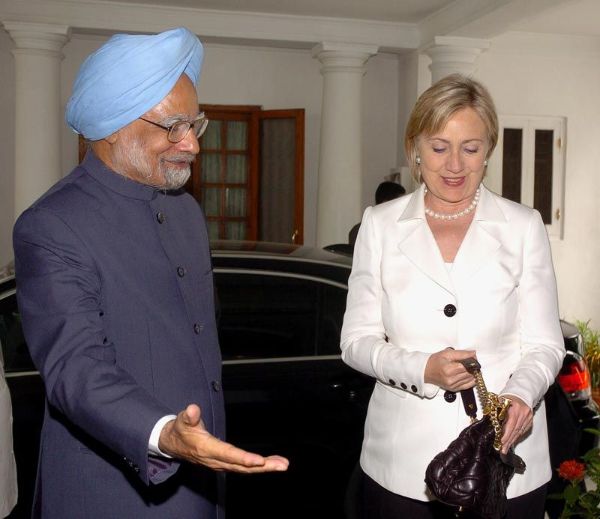
Secretary of State Hillary Clinton this week accomplished a diplomatic feat that her immediate predecessors tried but failed repeatedly to pull off: visiting South Korea, but skipping Japan and China on the same trip. It may sound immaterial, but defying protocol is a tricky thing in diplomacy, especially in Asia.

For years, I’ve been very amused when the State Department would send us in the traveling press corps a note about the secretary plans to visit just South Korea or just China or just Japan. Every time, I’d smirk and bet that he or she would end up going to all three countries — and I was right. That had become a tradition — the Japanese in particular considered it an affront to be ignored by their staunchest ally in favor of Seoul or Beijing.

In early 2008, Condoleezza Rice had to go to South Korean President Lee Myung-bak’s inauguration, and initially had no intention of stopping in Tokyo or Beijing. But after diplomatic pressure from both capitals, she caved in. I skipped Tokyo on that trip.

Clinton herself fell victim to protocol in May. She had to co-chair the so-called U.S.-China Strategic and Economic Dialogue with Treasury Secretary Timothy Geithner in Beijing, and to drop by the 2010 Shanghai Expo in Shanghai. For months, her aides said that no other stops were planned, but in the end, she went to Japan and South Korea, too.

It seems that this time Clinton successfully defied protocol. It helped that she met with her Japanese and Chinese counterparts at the annual meeting of foreign ministers from the Association of Southeast Asian Nations (ASEAN) in Vietnam. But I have little doubt that, in spite of those meetings, the Japanese and Chinese still lobbied for her to drop by their capitals.

By the way, this ASEAN meeting was the first I’ve missed in years. I always thought attending a high-level summit in Southeast Asia in late July was a misery because of the very hot and humid weather, but DC is much worse these days.

Continue reading about Clinton pulls off diplomatic rarity in Asia

nkralev on April 21st, 2010

The United States has made new concessions as part of its civilian nuclear agreement with India, further angering arms control advocates, while New Delhi has yet to make it possible for U.S. companies to benefit from the unprecedented deal.

In the most recent accord completed late last month, Washington agreed to Indian demands to increase the number of plants allowed to reprocess U.S.-supplied nuclear fuel from one to two, with the option of another two if India’s needs grow in the future.

At the same time, India thus far has failed to pass legislation that would release U.S. companies from liability in case of accidents related to equipment they have provided for two reactors expected to be built under the 2007 U.S.-Indian Nuclear Cooperation Agreement. That effectively prevents those firms from starting businesses in the South Asian country…

Continue reading about U.S. offers India new nuke concessions

nkralev on April 9th, 2010

The State Department plans to create seven new senior positions to ensure that a public-diplomacy perspective is always “incorporated” in policy-making around the world, as well as to respond quickly to negative coverage of the United States in foreign media.

In an ambitious strategy that goes beyond any previous efforts to reach out to other countries, the Obama administration “seeks to become woven into the fabric of the daily lives of people” there, its top public-diplomacy official said Wednesday.

“We must do a better job of listening, learn how people in other countries and cultures listen to us, understand their desires and aspirations, and provide them with information and services of value to them,” said Judith A. McHale, undersecretary of state for public diplomacy and public affairs…

Continue reading about State plans new public diplomacy posts

nkralev on March 18th, 2010

Having covered American diplomacy for a decade now, I’ve received many “diplomatic” answers to my questions — but none more so than “Yes, but not really.” I was reminded of it by the recently negotiated Open Skies aviation agreement between the United States and Japan.

The idea of the Open Skies accords, which Washington has with more than 90 countries, was to liberalize air travel between the signatories, allowing flights from any city in the first country to any city in the second without the previously imposed government restrictions.

However, the deal reached with Japan in December has one glaring exception — U.S. carriers can have only four pairs of takeoff and landing slots at Tokyo’s Haneda Airport, and only between 10 p.m. and 7 a.m. Even though the document hasn’t been signed yet, there are no plans to change the Haneda limits…

Continue reading about When ‘open skies’ aren’t really open

nkralev on March 18th, 2010

It’s puzzling why in the United States, one of the most lucrative travel markets in the world, the concept of airport transit hotels is so foreign. There are signs that may be changing, but current plans seem more like baby steps than bold decision-making.

A recent trip to Asia reminded me of the lack of entrepreneurial thinking exhibited by many U.S. airport operators. Readers of this column may remember my praise for terminals in Hong Kong and Singapore earlier this year.

Beyond design, comfort and cleanliness, having such a time- and hassle-saving convenience as a hotel under the same roof as your departure gate makes a lot of sense at a large international airport. It’s not hard to imagine that it could be a moneymaking venture…

Continue reading about Hotels steps away from airport gates