Flying with Obama and earning miles

One of the questions I’ve been asked most frequently in the last decade is whether I’ve earned any frequent-flier miles from my nearly 200 flights with four U.S. secretaries of state. Sadly, the answer is no — and what makes it even sadder is that my press colleagues accompanying the president do get miles and even elite status.
I’ve known many journalists over the years who were top elites purely as a result of White House travel. Some of them didn’t really use their elite benefits because of their very limited commercial flying. There were also a few who didn’t even know they had the coveted status.
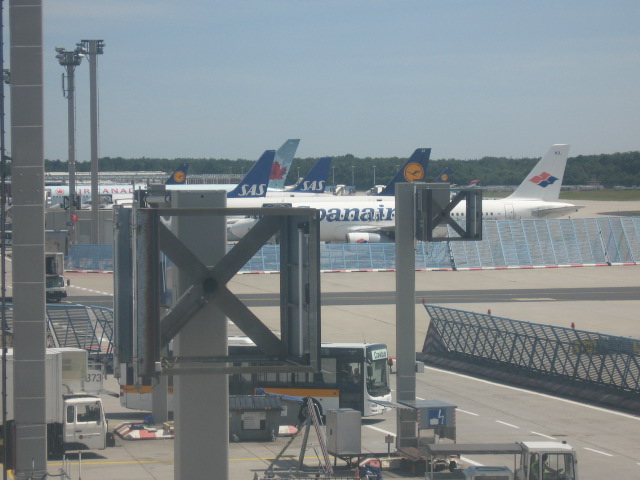
So why the differentiation? The above photo will help explain things. I snapped it while waiting for Secretary of State Hillary Clinton in Beijing a year ago — we flew to Afghanistan that day.
Clinton’s plane is the one of the right — as I wrote last year, it’s the Air Force version of the Boeing 757, also known as C-32. Air Force One — the Boeing 747 on the left — was waiting for President Obama and later took him to Seoul.
The State Department traveling press corps — about a dozen on average — flies on the secretary’s aircraft. Air Force One, however, has enough seats only for a pool of 12, and usually more than 100 reporters go on a foreign presidential trip. There is a rotation for the pool seats on every flight, but most of the time reporters fly on a so-called press plane chartered by the White House, usually from United Airlines.
What you don’t see on the above photo is that, across from the two Air Force planes, to the left of the traffic lane, there was a parked United aircraft, which was of course the press charter.
Everyone on that plane earned United miles, and many of those traveling with the president regularly have 1K status — United’s highest published elite level, requiring 100,000 flown miles per calendar year. Moreover, fliers get first-class mileage credit, which means 150 percent elite-qualifying miles.
Before every trip, different airlines bid for the charter contract, and the White House travel office and the White House Correspondents Association choose the offer they deem best. Although most of the time they select United, for Obama’s trip to Asia last week the winner was Delta Airlines.
The trip took travelers around the world — they flew over the Atlantic en route to India, then went to Indonesia, South Korea and Japan, before returning to Washington via the Pacific. According to the Great Circle Mapper, that’s about 22,000 miles. Delta spokesman Anthony Black declined to say whether the fliers will earn mileage, citing “customer privacy.”
I admit I’ve been a little jealous about all the “missed” miles over the years — almost half a million — but I never wanted to cover the White House because of the domestic politics involved in that beat.
I found another way to earn miles from official trips. After flying almost 100,000 miles with Colin Powell in 2003, I’d had it with non-mileage-earning flights. I still needed to re-qualify for 1K. The following year, I decided that I’d go on the secretary’s plane but would drop off at the last stop and come home commercially. Now I’ve been 1K for a decade.
Some of you might think I was crazy to give up a seat on the secretary’s plane and a hassle-free journey, not having to worry about passport control, customs and sometimes even security screening.
But I thought about it in a different way. I was paying half the price the State Department would charge me — yet, I was getting much better seats as a result of business-class upgrades, mileage credit and better food — yes, even on United.
Related stories:
My trips with Clinton back in the news
In air with Clinton on first trip abroad
Clinton weathers job’s long flights
Press ready for Obama, Clinton travel