Delta Airlines

nkralev on May 22nd, 2012

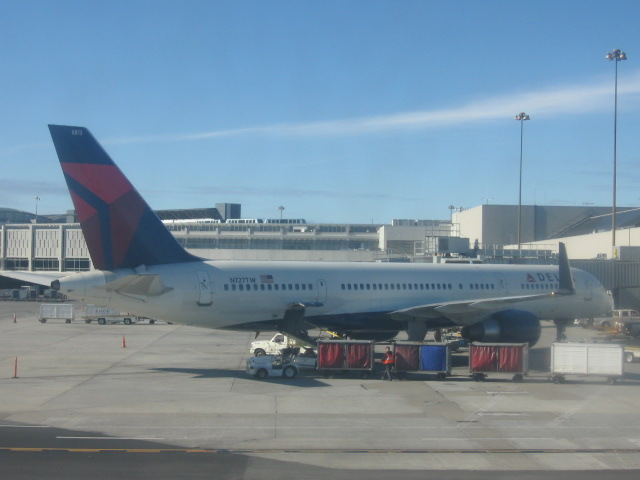
There have been hundreds of media stories in the last week about the Delta Airlines website “glitch” that overcharged members of its loyalty program on airfare across the board, but what none of those stories tells us is how to recognize and fight such airline practices — whether deliberate or accidental.

As this column has pointed out before, airlines try to overcharge customers all the time, and a decade ago, I used to fall for some of those tricks. That’s why I decided to learn the system — and that’s one of the reasons I wrote “Decoding Air Travel.” If you ever needed proof that knowledge means power, look no farther.

So how could you have known that the Delta website was charging you more than the lowest available fare? First, you have to understand what an airline tariff is: A list of all published base fares on a certain route, along with their rules and permitted routing — they carry a code corresponding to a letter of the alphabet. The second thing is the flight inventory, or the number of seats in each booking class made available on a certain flight.

As the shamelessly named Kralev Method teaches you in the book, once you’ve identified the lowest published base fare on the tariff, made sure you can comply with its rules, and found availability in the respective booking class, there should be no reason not to get that fare.

For example, let’s say the lowest base fare on Delta from New York to Los Angeles is a T fare of $150 each way. It has a 14-day advance-purchase requirement and is valid on any day of the week except Friday and Sunday. You want to travel on Thursday and Saturday, which is allowed. Both your outbound and return flights have availability in T class. How do you know that? There are at least a couple of sources you can use, so read the book. Now that all conditions are met, you should get a ticket price of $300 plus about $20 in taxes on nonstop flights, or a total of about $320.

That said, I’ve had many cases in which airline websites have not given me the fare I expected, but I’ve figured out how they were trying to trick me and found a way to get what I deserve. As several screen shots show in the book, I’ve saved hundreds — and even thousands — dollars using my method. One of those savings was more than $350 on a ticket from Washington to Louisville, Ky., and another one was $1,300 on a trip to Chile.

If I can’t get the website to price out correctly, I’d call an airline agent, explain the issue and see if they can get the right fare. They usually can, because they are able to manually input the necessary booking code.

RETURN TO MAIN COLUMN PAGE

Related stories:

Fighting airlines’ attempts to overcharge

The risks of third-party airline bookings

DOT cracks down on airfare advertising

Is the travel-agency model sustainable?

Continue reading about How to recognize and fight airline tricks

nkralev on December 7th, 2011

While most U.S. airlines have learned to be relatively honest with their best customers, many of their foreign peers have not yet realized that travelers are not as stupid as to fall for their PR spin and questionable practices.

It’s time for those carriers to wake up to the fact that it’s the end of 2011, and much in the airline industry is rather transparent to those of us who pay attention. Trying to persuade customers that bad news is actually good may be an essential PR trick, but in today’s hyper-connected world, it’s not hard to figure out someone’s true intentions.

Among the airlines still using the old playbook is British Airways, which is surprising for such a major and quite good global carrier. Last month, it drastically devalued its award redemption chart, but it tried to present that negative change as a positive one.

The clue came with the usage of the world “revitalizing” to describe the changes to the carrier’s frequent-flier program, Executive Club. At least they steered clear of “enhancement,” which is what many U.S. carriers used in the past, inviting much derision from frequent fliers.

British Airways announced a few weeks before the changes took effect that they were coming, but what those changes actually were going to be remained a secret until the very day they were implemented. That move showed gross disrespect for the company’s best customers who deserved much better for their loyalty.

In contrast, many U.S. airlines and hotel companies publish their new charts, as well as other program changes, months in advance. One recent exception was Delta Airlines, which didn’t really have an official global chart for more than a year, until it finally published one in February, effective immediately — actually, much of it was already in use unofficially.

Apparently, British Airways was afraid that many Executive Club members would rush to burn their miles before the last change — after all, there were plenty of miles on its books, partly thanks to its giving away 100,000 miles as a credit-card sign-up bonus. So it said that the number of award miles required for “97 percent of our routes” will stay the same or even go down.

In fact, that turned out to be false. In an attempt to save face when the new chart came out, the airline said it had meant 97 percent of the nonstop routes out of London.

While some of those nonstop routes have indeed become cheaper, there are many Executive Club members outside London who earned their miles hoping to use them for trips to cities other than London. Unfortunately, they are the big losers — the increases in those cases can be over 80 percent. Substantial premiums have been added to connecting and partner flights across the board.

Those changes, along with the huge amounts British Airways charges in taxes and fees on award tickets, have drastically devalued its miles. Just this week, I booked award tickets to Asia for two clients, and I really wanted to help them burn their British Airways miles. However, that particular award had almost doubled in price, and the taxes were over $1,200 per person. So I booked with another airline for nearly half the miles and $85 in taxes.

British Airways in certainly not alone in thinking that customers are stupid. Air Canada quietly started charging fuel surcharges on some partner award tickets earlier this fall. Did it hope no one would notice that they were asked to pay hundreds of dollars more than before? Finally, after Air Canada was exposed on various blogs, it admitted what it was doing and said that even more partner flights would be included in the new program.

And then there is the scandalous behavior of the United Arab Emirates’ Etihad Airways last month.

For two days in October, it advertised a First Class fare from Spain to Australia on its website for less than 400 euro. According to Spanish media reports, about 300 people bought tickets. The first of them traveled 10 days later, when an agent in Brussels noticed the fare and alerted the appropriate department. It was then determined that the fare was a mistake, and the passenger was downgraded to coach without any compensation. The rest of the tickets were canceled.

I’ve written about mistake fares before, but the issue here is not whether Etihad was wrong not to honor the tickets. I said scandalous because of a letter the airline sent to the passengers who decided to put up a fight and wanted to defend their rights through the media.

Etihad hired a law firm in Spain that in no uncertain terms threatened those customers in writing with litigation, if they dared to go to the media. The last time I checked, Spain was a democracy with freedom of speech, and the United Arab Emirates was something quite different. I don’t believe anything has changed since.

RETURN TO MAIN COLUMN PAGE

Related stories:

Airlines neglect non-flying experience

How much slack do the airlines deserve?

U.S. warns airlines on fare mistakes

Singapore Air’s inept agents, dark side

Continue reading about Airlines still think customers are stupid

nkralev on November 2nd, 2011

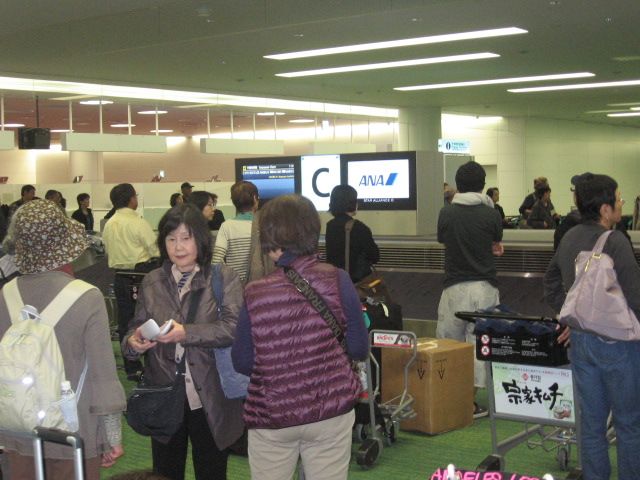
When I landed at Tokyo’s Haneda Airport today, I had one of my easiest, fastest and smoothest international arrival experiences. But I wondered where all those airlines that last year fought and won a fierce battle over the right to fly to Haneda actually were.

It appears the industry overestimated Haneda’s appeal to travelers, and it also might have miscalculated how many passengers remain in Tokyo, as opposed to those who connect to other destinations.

It’s true that the March earthquake and tsunami had a negative impact on travel to Japan in general, but traffic to and from the much bigger Narita Airport has largely recovered.

Haneda’s smaller size and proximity to central Tokyo provide a significant advantage. However, as I first wrote two years ago, most medium- and long-haul flights arrive and depart between 10 p.m. and 7 a.m. — not exactly the most preferred time by the majority of travelers. In addition, onward flight connections from Haneda are extremely limited.

That didn’t seem to bother most airlines last year, when the rights to fly from various foreign cities to Haneda were being awarded by the Japanese and other governments. U.S. carriers in particular made rather bold proposals. In the end, the Department of Transportation gave American Airlines the right to fly from New York, Delta from Detroit and Los Angeles, and Hawaiian Airlines from Honolulu.

American’s flights are nowhere to be found in its winder schedule, though they are planned for next summer. The same goes for Delta’s Detroit flights. It does operate the LA flight throughout the year, as does Hawaiian on the Honolulu route. Air Canada has postponed indefinitely its plan for flights from Vancouver, even though it started selling tickets late last year.

The Japanese carriers have trimmed their plans, too. All Nippon Airways has kept only LA in North America, while Japan Airlines serves San Francisco. European and other long-haul routes are also very few.

British Airways is the only foreign carrier outside Asia and the United States that currently flies to Haneda — and not every day. The Asian carriers include Air China, Asiana, Cathay Pacific, China Airlines, AirAsia, China Eastern, Eva Airways, Korean Air, Malaysia Airlines, Shanghai Airlines, Singapore Airlines and Thai Airways.

Flights loads to and from Haneda are not what those carriers expected — my Singapore Airlines flight was less than half-full in Economy and about two-thirds full in Business Class, where I had two lie-flat seats to myself, though even one would have been just fine.

RETURN TO MAIN COLUMN PAGE

Related stories:

When ‘open skies’ aren’t really open

U.S. flights likely to Tokyo Haneda

Continue reading about Carriers lose appetite for Tokyo Haneda

nkralev on August 2nd, 2011

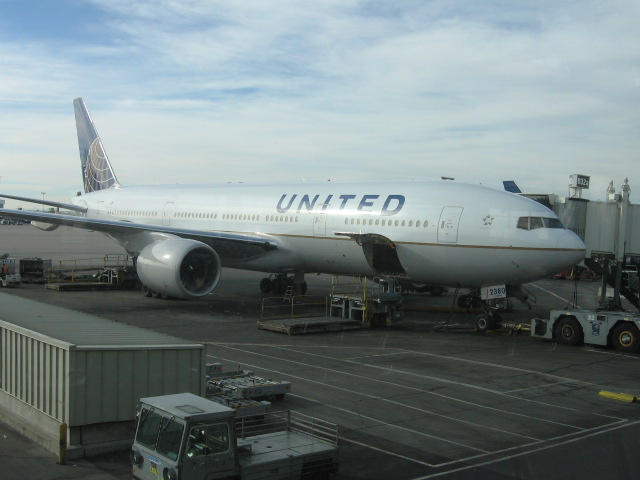
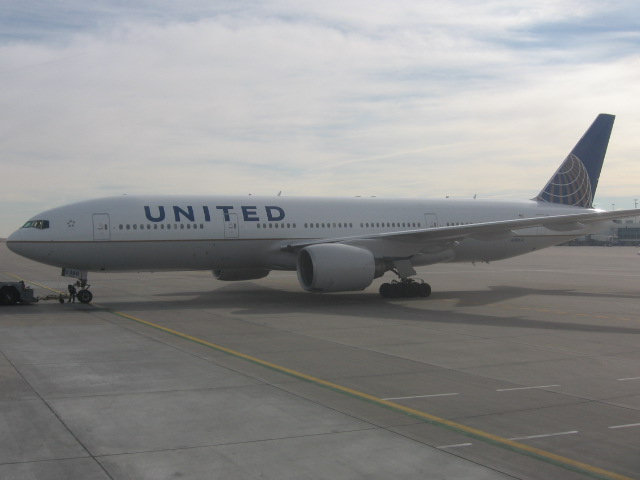
United Airlines, already one of the biggest abusers of fake “direct” flights before its merger with Continental, has increased further the number of those flights in its schedule. Its oddest decision was to introduce fictitious “direct” flights, which consist of two or more segments with nothing in common but their number, between its hubs.

If you are shopping for a ticket from Chicago (ORD) to Denver (DEN), be very careful which flight you book. In addition to 10 daily nonstops with flying time of about 2 hours, United currently has three “direct” flights on that route, but they make a “stop” in Minneapolis (MSP), Des Moines, Iowa, (DSM) and Kansas City, Mo., (MCI), respectively.

Watch out for any indication of that, as obscure as it may be. In most cases, those are not just “stops” — the two “legs” are operated by different aircraft, so they are simply connecting flights. For example, the first “leg” of flight 817 yesterday arrived in Minneapolis at gate E6, but the “continuation” departed from gate E10.

As I’ve written before, most flights labelled “direct” by U.S. carriers are fictitious — they don’t exist in real life. They are meant to make more money for the airlines by tricking customers and perverting a practice that was actually started to help travelers. In fact, they spell nothing but trouble for passengers.

Historically, United and Delta have had more fake “direct” flights in their schedules than any other U.S. carriers, though all airlines engage in that practice.

For years, United has focused on adding at least one domestic tag to most of its international flights. For instance, flight 917 from Frankfurt (FRA) to Washington (IAD) “continues” on to Seattle (SEA), though the second flight has nothing in common with the fist. Yesterday, the flight from FRA was operated by a three-cabin Boeing 777, as usual, and arrived at IAD at gate C1. The flight to SEA was operated by a two-cabin Boeing 757 and departed from gate D4.

In the last several months, United has significantly stepped up the questionable practice on purely domestic flights. Currently, there are very few flights with only one segment. Most flights between Washington National (DCA) and Chicago (ORD) used to be one-leg flights. Now, most are part of fake “direct” flights with two or three segments.

It’s clear why the airline is selling “direct” flights from DCA to San Francisco (SFO) — it wants you to think that you can go all the way to the West coast from DCA with no hassle.

But why on earth is it selling fake “direct” flights from IAD to SFO, given that there are nine nonstops on that hub-to-hub route on most days? In its upcoming winter schedule, it has four “direct” flights between those cities. Two of them have two segments — one “stopping” in Dallas (DFW) and one in SEA. The other two have three segments each — one “stopping” in DEN and Las Vegas (LAS), and the other one in ORD and San Diego (SAN).

Is it possible that United has run out of flight numbers because of the merger? That may be the case with three-digit numbers, but what’s wrong with four-digit ones?

RETURN TO MAIN COLUMN PAGE

Related stories:

DOT should ban fictitious flights

Airlines abuse ‘direct’ flights

United, Continental execs at odds over loyalty program

United StarNet blocking

Continue reading about United steps up fake ‘direct’ flights

nkralev on June 8th, 2011

The U.S. Department of Transportation (DOT) seems semi-serious about false airfare advertising. It fined several airlines this week for violating its rules of disclosing taxes and fees, but it still tolerates the disgraceful “one way based on a required round-trip purchase” manipulation practiced by some carriers.

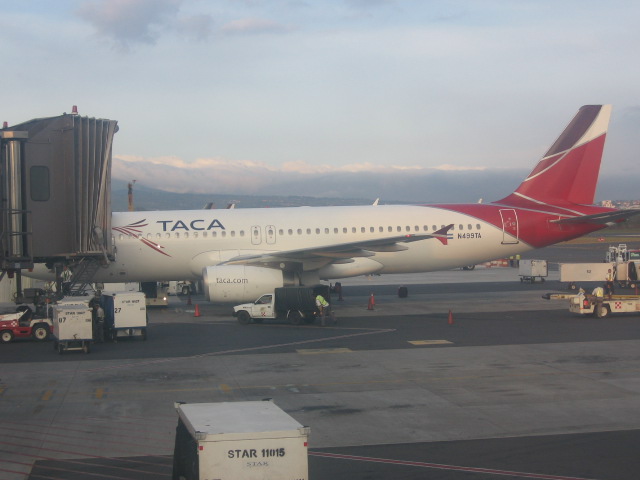
Continental Airlines was fined $120,000 for failing to include fuel surcharges in fares listed on its website. US Airways and TACA, the Central American company, must pay $45,000 and $55,000, respectively, for the same wrongdoing — indicating that fares didn’t include taxes and surcharges, but not disclosing actual amounts.

“Consumers have a right to know the full price they will be paying for airfares,” said Transportation Secretary Ray LaHood. “We established airline price advertising rules to protect the consumer, and will take enforcement action when these rules are violated.”

Starting on Oct. 24, DOT will require airlines to include all taxes, surcharges and government fees in advertised fares — not just using asterisks and fine-print explanations.

However, advertising only half of a ticket price will continue. As I’ve written before, I have nothing against listing one-way fares — when they can be truly bought as such. To this day, American Airlines, Delta, British Airways, Lufthansa and others promote only half of mandatory round-trip purchases on their websites.

In fact, Lufthansa doesn’t even bother to spell out the words, using instead “OW based on RT purchase.” The German carrier doesn’t do those gimmicks on its European sites because of strict European Union rules.

In March, I wrote that United Airlines became the first major U.S. carrier to begin advertising predominantly round-trip fares on its site. Continental has since followed suit. US Airways still uses a mixed method.

One would hope this item will be next on DOT’s agenda.

RETURN TO MAIN COLUMN PAGE

Related stories:

Proper airfare advertising comes to U.S.

Fare sales often lost in translation

When an airfare sale is not quite a sale

Airlines find new way to overcharge fliers

Continue reading about DOT cracks down on airfare advertising