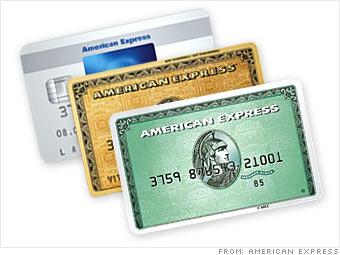
You may have seen TV commercials featuring American Express or Capital One credit cards that promise points or miles with the clout to get you any seat on any airline without blackout dates. Those financial services companies try to distinguish their own loyalty schemes from airline programs, which restrict access to award seats.
Non-airline programs are not affected by award seat limits, because they don’t need award availability to book you on a flight. Instead, they sell you a regular revenue ticket, charge the ticket price on your credit card, then credit the cash amount back to your card and take miles or points out of your account, whose number is based on a standard formula.
Let’s say that you want to use your Capital One miles for a free ticket. The Capital One website performs a flight search and you choose a flight that costs $100. Once the ticket is issued, 10,000 miles will be deducted from your account.
While Capital One values $1 at 100 miles, the American Express Membership Rewards program converts $1 into about 80 points, though the precise number varies based on the type of card you have.
By any measure, that is a lot of points. If we assume that the average U.S. domestic round-trip ticket costs about $500, Capital One will charge you 50,000 miles and American Express 40,000 points. In comparison, you need only 25,000 miles from most airline programs — if there is award availability, which is a big if.
Of course, many airlines will also give you any open revenue seat on any flight, but for double the miles required for a “saver award” — they call it “standard” or “anytime” award. If you need a First or Business Class ticket, the airlines will actually give you a better rate even on a “standard award.” Such an award from North America to Europe in Business Class will be about 200,000 miles. Assuming that the average revenue ticket costs about $5,000, Capital One will charge you 500,000 miles and American Express 400,000 points.
It’s worth noting that the airline mantra about giving you the last available seat on a flight as a “standard award” is changing, and that privilege is no longer available to everyone. For example, it’s one of the benefits of United’s new Mileage Plus Explorer Visa card from Chase, which means that customers who don’t have the card — and are not elite fliers — won’t have access to that last seat.
The real advantage of the tickets purchased with non-airline miles or points is that they earn miles, because they are in effect revenue tickets — the airlines will never know that you didn’t pay money for them.
That same model is used by some hotel loyalty programs, including Starwood and Priority Club, which allow points to be redeemed for flights. Even some airlines offer such options, in addition to their regular award redemption opportunities. For example, United’s Mileage Plus Choices program is very similar to Capital One’s scheme, valuing $1 at 100 miles — only miles earned from Mileage Plus co-branded credit cards can be used for such tickets.
Related stories:
All your loyalty programs on one screen
Flying with Obama and earning miles
Donate miles or money to Haiti?
Continue reading about The benefits of non-airline credit cards
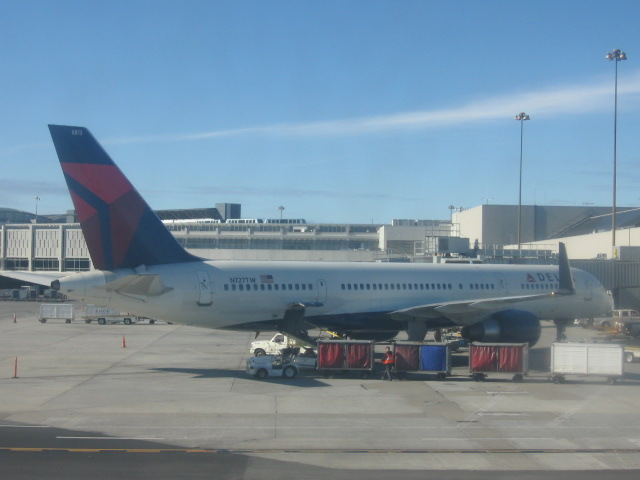
Delta Airlines has cemented its status as the network U.S. carrier with the worst frequent-flier program, further devaluing its long-cheapened SkyMiles. The leadership of the program or the airline — or perhaps both — doesn’t seem to understand what the loyalty business in 2011 is about. It may be time for a new team at the top.
For more than a year, Delta failed to publish an award redemption chart for most of the world, resulting in lack of transparency about how many miles were really needed for an award ticket.
When it finally unveiled a chart this week, the mileage rates on many routes were increased significantly. Many loyal SkyMiles members felt cheated and disrespected, calling Delta’s move a “stunt” in comments posted on FlyerTalk, the largest online travel community.
If you wondered why Delta announced last week the elimination of miles’ expiration, my guess is that it tried to soften the blow of what was coming — and to claim that it cares about its customers. In reality, almost everything SkyMiles has done in recent years has been decidedly customer-unfriendly. I’m not an active SkyMiles member and have no dog in this flight, but I’ve been appalled enough to write about it.
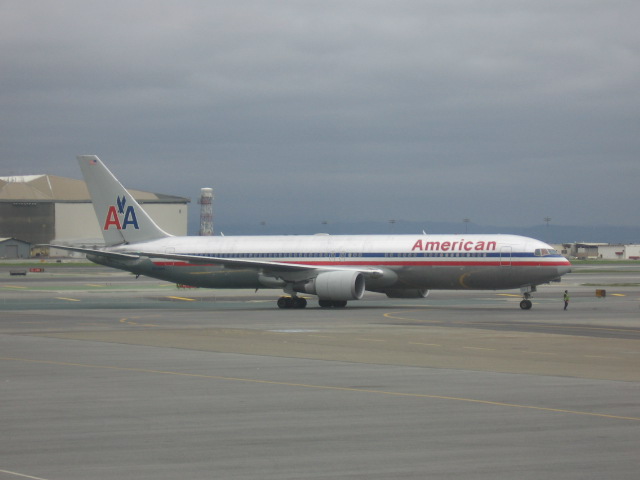
In comparison to its two largest competitors, American and United, Delta’s upgrade and award policies are the most restrictive and inflexible. Its system-wide upgrade certificates are only valid on tickets booked in Y, B and M class, and are not transferable. American’s upgrades can be used on just about any fare and gifted to other people. United’s certificates exclude only the lowest booking classes and can also be transferred.
In 2008, Delta devalued its miles by adding a third award tier, in an attempt to mask its very poor award availability at the lowest level. A year later, it devalued its elite status when it introduced a fourth tier, Diamond, on top of Silver, Gold and Platinum. If that’s not bad enough, Delta also charges some fees that are hard to justify, such as $50 for booking an award originating outside the United States.
The main reason frequent-flier programs exist is not to make customers happy, but to make money — and most of them do. I’ve never considered that a problem. A successful business deserves all the rewards it can get. My problem has been with the way airlines have been trying to make money through their so-called loyalty businesses. For decades, they have had an utterly peculiar philosophy, which can be best described at a “screw the customer” approach, which I explain with a misguided view of what the loyalty business is about.
Fortunately, a few airline executives recently saw the light, and things are starting to change. I’ve written several times about what Graham Atkinson did when he was president of United Mileage Plus for less than two years, beginning in the fall of 2008. He understood the essence of customer loyalty and showed that what’s good for the company doesn’t necessarily have to be bad for customers. While he wasn’t able to end StarNet blocking, he actually listened to customers and reversed decisions based on their feedback.
American’s AAdvantage program also has progressive leadership that rewards top fliers appropriately and has tried to make it easier for members to use their miles. There is still a lot to be desired, but it’s on the right track.
Delta, on the other hand, has been stuck in the 20th century. It seems it’s working hard to perfect the “screw the customer” approach.
Related stories:
United executive breaks old barriers
US Airways hears feedback, fixes website
Customers gain sway over airlines
United keeps free stopovers on awards
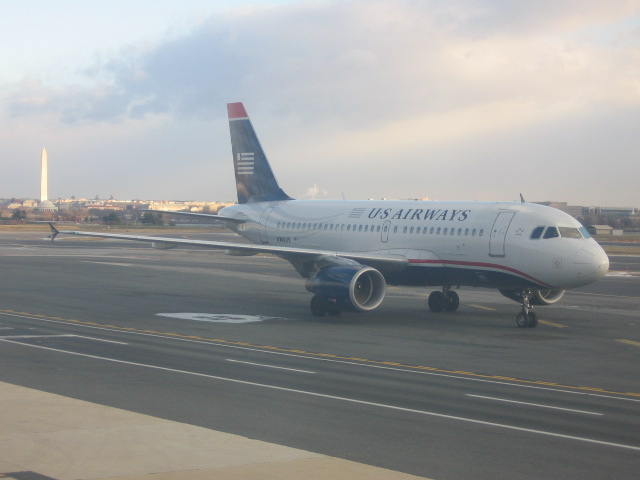
US Airways has denied recent suspicion that it has begun to block award seats made available by its Star Alliance partners for mileage redemption by members of its Dividend Miles program — a practice pioneered by United Airlines, which I first exposed in 2008.
The airline has been silent on the issue since reports about apparent blocking surfaced last fall. Many travelers said they found award inventory on various Star carriers, using one or more of the publicly available sources — the websites of All Nippon Airways, Continental Airlines and Air Canada — but US Airways agents were unable to see those available seats.
To some of us, that looked very much like StarNet blocking — manipulating the alliance’s award “middleware,” which provides access to any Star partner’s inventory on a first-come-first-served basis, to avoid paying other carriers for seats booked on their flights. The patterns resembled those on United, with the most filtering applied to Business and First Class cabins, though some fliers stumbled on coach seats as well. The most affected availability appeared to be on Lufthansa, but also on Swiss, United and others.
In addition, it made financial sense for US Airways to be limiting access to premium partner awards. In the last couple of years, it has in effect been printing miles with lightening speed, as a result of extraordinary promotions it has had, including selling miles at 100-percent bonus. Many Dividend Miles members bought miles and redeemed them for Business and First Class on partner flights, which likely weighed heavily on US Airways’ budget.
Several travel bloggers wrote about the issue, including Gary Leff on “View from the Wing” and Ben Schlappig on “One Mile at a Times.” Leff was more inclined to give the airline the benefit of the doubt, suggesting the problem might have been caused by technical glitches, as well as US Airways agents’ ignorance that some of their partners have First Class in addition to Business.
I’m not a big Dividend Miles fan, though I did help my sister buy miles for a trip to Europe with her family last summer, so it took me some time to look into the issue. I finally got around to it and alerted a US Airways contact at its Phoenix headquarters who has been very helpful in the past — Valerie Wunder, associate manager of media relations. She asked the powers that be and gave me the following response:
“We don’t block award inventory on other airlines, nor do we do the inverse — other Star partners block us from seeing their inventory to maximize their revenues.”
Probably the most frequent difficulty Dividend Miles members have been experiencing has to do with intercontinental First Class awards on Lufthansa, Swiss and others, so I asked Wunder if US Airways may be trying to restrict access to those specific seats.
“We have no restrictions on redemptions, regardless of class,” she said.
However, she offered no explanation for the problem. The mystery continues.
Related stories:
Clarifying United’s StarNet blocking
US Airways hears feedback, fixes website
New Lufthansa business class in a year
Continental shows new transparency
United Airlines fulfilled its promise this week by finally allowing one-way mileage awards on its partners in the global Star Alliance. More importantly, it showed that its Mileage Plus program is truly an industry leader — it didn’t follow American Airlines in taking away stopovers on award tickets, which will save travelers many frequent-flier miles.
Mileage Plus has become one of the most customer-friendly loyalty programs in the world. As odd as it sounds, offering one-way awards is a rather progressive step, given how rare it is in the industry — for no good reason. United has been offering one-way awards on its own flights since February.
Stopovers on international awards are incredibly useful — they are usually not permitted on domestic tickets. I don’t use them all the time, but I do often enough to mourn their loss on United. They are partly responsible for my visits to 82 countries.
When American banned stopovers last year, its justification was that the introduction of one-way awards eliminated the need for stopovers — one can now visit two cities or countries by booking three one-way segments. The problem for customers was that such an award now costs many more miles.
It would have been easy for United to copy American’s move. After all, taking stopovers away would have taken more miles off its books and decrease its liabilities. United has historically matched various practices initiated by its arch rival, but this time it made its own decision. Mileage Plus members should be grateful — preserving stopovers will save them tens of thousands of miles per trip.
I must admit, I was a bit confused about the stopover policy, and an earlier version of this column said United was doing away with them. I was misled by a reservations agent last weekend, and by a sentence on United’s website, saying “That means no stopovers.” It appears that only applies to one-way awards.
I received a comment from a reader who had seen a thread about the column on FlyerTalk.com, which prompted me to speak with a supervisor at Mileage Plus. He checked his resources and assured me that stopover are still permitted on round trips.
I’ve been praising Mileage Plus repeatedly since Graham Atkinson became president two years ago. In February, I wrote about all the right things Atkinson did — one negative thing he couldn’t change was the infamous StarNet award blocking. At the time, he told me that no decision had been made about stopovers.
Atkinson left United in September, as part of the management changes resulting from the merger with Continental, but I’m glad to see that his approach to customer loyalty lives on.
By the way, don’t forget the 24-hour international connection rule, which lets us do a mini-stop en route, so look for those day-long layovers if you want to sample a new country on the cheap.
Continue reading about United keeps free stopovers on awards
The management teams of United Airlines and Continental Airlines have never seen eye to eye when it comes to customer loyalty, and that seems to be causing trouble during their merger preparations. My inside sources tell me that Continental executives don’t quite understand United’s big emphasis on loyalty in recent years.
It also appears that Jeff Foland, who last week was named head of the combined carrier’s frequent-flier program, Mileage Plus, will have a tough job selling United’s current philosophy to his new bosses in the Continental team, which will run the company once the merger is completed, most likely around year’s end.
Even though Foland, who has been United’s senior vice president for worldwide sales and marketing since 2006, didn’t have a direct formal role in Mileage Plus’ decision-making, he is said to be greatly influenced by the way his current superiors and colleagues do business. After all, his entire short career in the airline industry has been spent at United.
In addition, all United call centers, including the only remaining Mileage Plus center in Rapid City, SD, reported to Foland, so he is no stranger to the recent drive to turn the program into a profitable business.
Foland will succeed Graham Atkinson, the current Mileage Plus president, who used to have Foland’s present job. As I wrote in February, Atkinson is responsible for changing United’s overall approach to loyalty by proving that what’s good for customers doesn’t necessarily have to be bad for the company.
Most of the changes he made in less than two years on the job have been welcomed as major improvements by Mileage Plus members, including the introduction of one-way awards and eliminating so-called close-in fees, charged when an award ticket is issued less than three weeks before a trip. The attention Atkinson has paid to customer feedback and the degree to which he has acted on that feedback are extremely rare, if not unprecedented, in any customer-service-driven industry.
The bottom line for the company is that, by making and keeping its most loyal customers happy, Atkinson turned Mileage Plus into a money-making business. The bottom line for customers is that Mileage Plus today is probably the best program in the industry, with the notable exception of StarNet blocking. Hopefully, the practice of massively blocking award seats otherwise made available for mileage redemption by United’s partners in the global Star Alliance will soon be on its way out.
It’s no secret that Continental’s priorities have lied elsewhere under Jeff Smisek, its chairman, president and CEO, who will be CEO of the combined airline. Smisek has won much praise for his management style, which has helped the company’s finances during a tough period and significantly improved both its hard and soft products. Continental has chosen to lure passengers in its premium cabins by lowering business-class fares, while United has kept those fares high, resulting in more upgrades for elite customers.
Although that choice has its merits, Continental’s OnePass is hardly a leading loyalty program. There is nothing wrong with trying to attract more paying business-class passengers, but in the current environment, a strong upgrade product would go a long way to securing long-term customers.
United has that product, and so does American Airlines, United’s main competitor. Even though Mileage Plus and OnePass have aligned some of their features, they remain apart in many respects — and most importantly, in their business philosophies. Hopefully, the unpleasant prospect of losing customers to American will prevent the merged carrier’s management from curtailing the more significant benefits in Mileage Plus compared to OnePass.
Related stories:
Flying new United route — rare occurrence
United’s ‘award’ blocking an issue in Continental merger
United executive breaks old barriers
Customers gain sway over airlines
Continental shows new transparency
Continue reading about United, Continental execs at odds over loyalty program