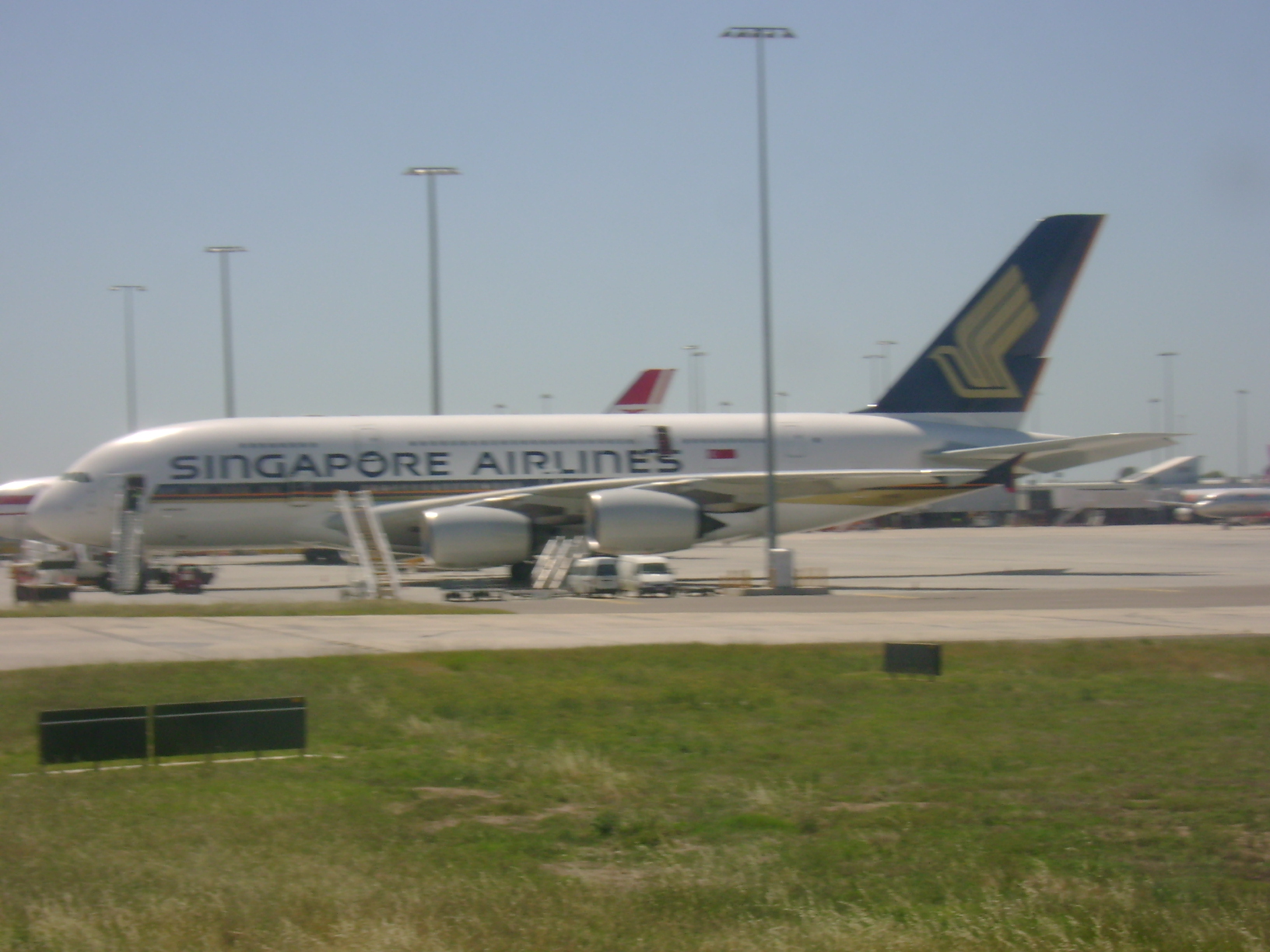
Singapore Airlines

nkralev on April 30th, 2012

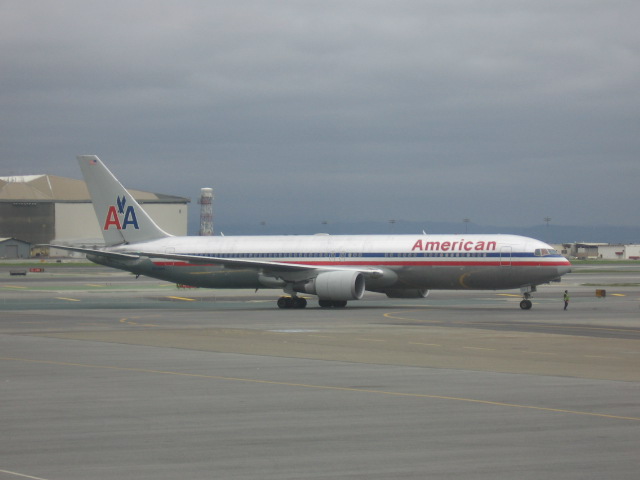
American Airlines has finally decided to take advantage of the problems many United Airlines fliers have experienced since the merger with Continental Airlines was completed on March 3. In an extremely rare move, American is now offering conditions-free top-elite status match to United’s most loyal customers.

Having read and heard about many United customers’ troubles after the carrier adopted Continental’s reservations system — and having encountered some problems myself — I e-mailed American spokesman Tim Smith on March 16. Smith has been the best PR person to deal with at any airline since I started writing my column in the Washington Times in 2008. I asked him whether American had any intention of capitalizing on United customers’ dissatisfaction by stealing some of them away through a status-match offer.

He involved his colleague Stacey Frantz, who works directly with American’s AAdvantage program. She said she couldn’t comment on “marketing strategies,” but it was apparent from her and Smith’s messages that American wasn’t considering such a move at the time. More than a month later, however, it decided to follow my suggestion — not that I’m taking any credit.

When the promotion first started last week, elite United fliers at all levels were eligible, but on Friday, American decided to limit participation only to United Premier 1K members, the highest published level. A memo was sent out to customer service agents on that day. So if you are a 1K, you can get Executive Platinum status on American.

The carrier is not advertising the promotion, so you need to call AAdvantage Customer Service to request an e-mail outlining the offer. Status is valid through February 2013, and all you have to do is submit proof of your current elite status with United. On the rare occasions when American has offered matches in the past, it has extended challenges, meaning you had to fly a certain number of miles during a certain period to qualify. There are no conditions this time. Challenges to Executive Platinum have been even rarer than to other levels.

But is Executive Platinum better than 1K, and is American better than United? Let’s review.

Executive Platinum advantages

This is truly American’s top elite level. Concierge Key, the unpublished super status that George Clooney’s character had in “Up in the Air,” is awarded only by invitation to very few hyper-frequent and high-paying travelers. In contract, United’s Global Services status has been given to so many people — albeit still “by invitation” — that it has somewhat devalued the 1K level.

Executive Platinum members are the only ones eligible for complimentary domestic upgrades that clear as early as 100 hours before a flight — at United, all elite fliers are, and lower-level elites on full-fare tickets trump 1K members on discounted fares. United also aggressively sells domestic upgrades at check-in for as little as tens of dollars to non-elites, while elites linger on waiting lists. As a result, the upgrade rates for 1Ks have gone down significantly.

As for international — or systemwide — upgrades, American is much more generous than United. Executive Platinum members get eight of those so-called eVIP certificates each year, compared to six for 1Ks. More importantly, on American, they are valid on all published fares, while United excludes its five lowest booking classes — S, T, L, K and G — requiring at least W class. That means you need to pay hundreds of dollars more on W class, and if your upgrade doesn’t clear, you’ve wasted your money.

American has the best domestic First Class soft product. It’s the only airline to still use linens and menus during meal service, as well as pillows and blankets on transcontinental flights. United used to have linens, pillows and blankets before the merger with Continental, but it lost them. The food also tends to be better on American. Many of its domestic planes have no in-flight entertainment at all, though wi-fi has been installed on a big part of its fleet.

As an Executive Platinum, you get Emerald status on the global Oneworld alliance, which gives you access to First Class lounges on foreign Oneworld members, such as Cathay Pacific and Qantas. The Star Alliance has only two levels, instead of Oneworld’s three, so United Gold, Platinum and 1K members get the same access to Business Class lounges.

American has dedicated agents working on the Executive Platinum phone line, and they are not only the best trained agents in the airline industry, but also the ones given the most authority and discretion to help customers in any way possible, even if that means sometimes bending the rules. United’s so-called 1K Desk is not really a dedicated desk — those agents service all callers, but 1Ks get priority in the queue.

No one knows if any of the above might change as a result of American’s Chapter 11 restructuring or in a potential merger with US Airways, but this is where things stand right now. For me, American’s main disadvantages are the limits of Oneworld, whose size is about half the Star Alliance’s, the hefty fuel surcharges imposed on award tickets with British Airways flights, and those old McDonnell Douglas planes American still flies. In addition, if you live in a United hub, it might be hard to give up nonstop flights to many destinations in favor of connections on American. That said, American often offers very low fares out of United hubs, while United does the same out of American hubs.

Premier 1K advantages

United offers 1K members so-called regional upgrade certificates, which can be used to confirm an upgrade on North and Central American flights at the time of ticketing — just like using miles or systemwide upgrades. Unfortunately, this year, United reduced the regional certificates from eight to four a year. It also eliminated the two upgrades million-mile fliers used to get annually. It’s worth noting that the Executive Platinum exclusive perk of complimentary upgrades on American compensates for the lack of certificates to a large extent, though those can be confirmed only within 100 of departure.

United offers instant upgrades without requiring any “instrument” to 1Ks on domestic M fares — all elites get the same benefit on the higher Y and B fares — as soon as the time of ticketing. The inventory is controlled separately and is not the same as regular First Class availability (it books in PN class).

United waives same-day confirmed changes on domestic flights for 1Ks, while American doesn’t for Executive Platinums. United also waives award booking, change and redeposit fees on tickets issued with 1K members’ miles — regardless of who the passenger is. American does so only if the Executive Platinum member is the passenger.

United allows stopovers on round-trip international award tickets. American permits those only in U.S. gateways — the city where you leave or arrive in the United States.

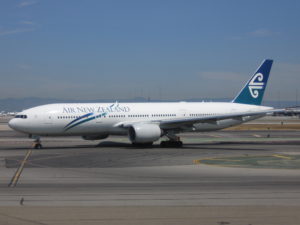
The biggest advantage United has is its membership in the Star Alliance, which has 25 member-carriers, including some of the best in the world, such as All Nippon, Asiana, Singapore, Air New Zealand and Swiss.

The biggest problem with United is that its new management doesn’t value long-term loyalty nearly as much as American’s — or United’s previous leadership team, for that matter. Unfortunately, my prediction in 2010, based on warnings from departing United executives at the time, came true after the merger was finalized. The current management apparently cares much more about making a quick buck. It prefers to sell an upgrade seat from Seattle to Washington Dulles to a non-elite flier for $99, as reported on FlyerTalk by a passenger who took advantage of that offer, rather than give the seat to a 1K member who spends tens of thousands of dollars on United a year. So much for complimentary upgrades.

At the end of the day, the choice is yours. If I’ve missed anything on either airline, feel free to let me know.

RETURN TO MAIN COLUMN PAGE

Related stories:

Did United choose the best rez system?

United, Continental execs at odds over loyalty program

American ends stopovers on ‘awards’

Continental shows new transparency

United executive breaks old barriers

Continue reading about American tries to entice top United fliers

nkralev on November 2nd, 2011

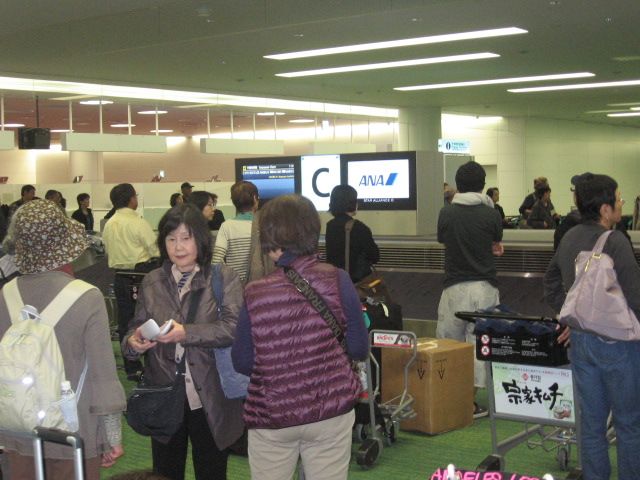
When I landed at Tokyo’s Haneda Airport today, I had one of my easiest, fastest and smoothest international arrival experiences. But I wondered where all those airlines that last year fought and won a fierce battle over the right to fly to Haneda actually were.

It appears the industry overestimated Haneda’s appeal to travelers, and it also might have miscalculated how many passengers remain in Tokyo, as opposed to those who connect to other destinations.

It’s true that the March earthquake and tsunami had a negative impact on travel to Japan in general, but traffic to and from the much bigger Narita Airport has largely recovered.

Haneda’s smaller size and proximity to central Tokyo provide a significant advantage. However, as I first wrote two years ago, most medium- and long-haul flights arrive and depart between 10 p.m. and 7 a.m. — not exactly the most preferred time by the majority of travelers. In addition, onward flight connections from Haneda are extremely limited.

That didn’t seem to bother most airlines last year, when the rights to fly from various foreign cities to Haneda were being awarded by the Japanese and other governments. U.S. carriers in particular made rather bold proposals. In the end, the Department of Transportation gave American Airlines the right to fly from New York, Delta from Detroit and Los Angeles, and Hawaiian Airlines from Honolulu.

American’s flights are nowhere to be found in its winder schedule, though they are planned for next summer. The same goes for Delta’s Detroit flights. It does operate the LA flight throughout the year, as does Hawaiian on the Honolulu route. Air Canada has postponed indefinitely its plan for flights from Vancouver, even though it started selling tickets late last year.

The Japanese carriers have trimmed their plans, too. All Nippon Airways has kept only LA in North America, while Japan Airlines serves San Francisco. European and other long-haul routes are also very few.

British Airways is the only foreign carrier outside Asia and the United States that currently flies to Haneda — and not every day. The Asian carriers include Air China, Asiana, Cathay Pacific, China Airlines, AirAsia, China Eastern, Eva Airways, Korean Air, Malaysia Airlines, Shanghai Airlines, Singapore Airlines and Thai Airways.

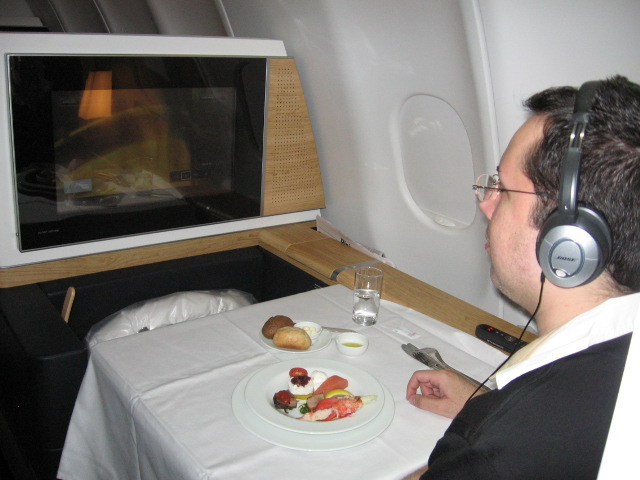
Flights loads to and from Haneda are not what those carriers expected — my Singapore Airlines flight was less than half-full in Economy and about two-thirds full in Business Class, where I had two lie-flat seats to myself, though even one would have been just fine.

RETURN TO MAIN COLUMN PAGE

Related stories:

When ‘open skies’ aren’t really open

U.S. flights likely to Tokyo Haneda

Continue reading about Carriers lose appetite for Tokyo Haneda

nkralev on October 26th, 2011

Why do numerous airlines, including those aspiring to be among the world’s best, keep focusing on improving the in-flight experience, but don’t seem to care what kind of service their customers receive before they even step foot on a plane?

It’s high time they understood that travelers are getting smarter, and mediocre reservation agents won’t be tolerated much longer.

In April, I wrote about my disastrous experience with Singapore Airlines’ award-booking agents, who were so poorly trained they might as well have worked for a third-world carrier. In May, I mentioned British Airways’ arrogance and refusal to offer the slightest apology after losing the luggage of two First Class passengers who had paid $12,500 per ticket.

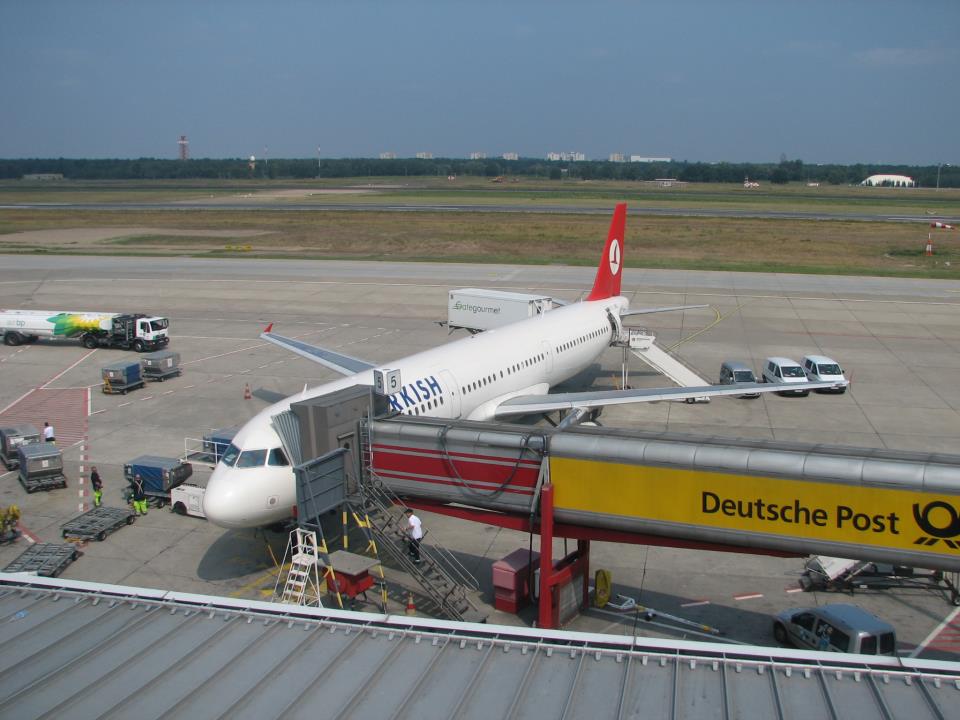
This month, it was Turkish Airlines’ turn. The Star Alliance member has improved significantly in recent years, and spent a lot of money on advertising and public relations. Actor Kevin Costner, who ironically flies mostly on his own private plane — and flew me on it a decade ago for a Financial Times story — was hired to do TV commercials for Turkish. So was NBA star Kobe Bryant. The carrier’s motto is “Globally yours.”

However, in many respects Turkish remains a rather backward regional airline. It’s not that its reservations agents are not well-trained — that’s the case with much more advanced carriers. The bad experience with Turkish begins as soon as you dial the number of its call center.

Even though the center is open only during U.S. business hours, all agents are in Istanbul. There is certainly nothing wrong with that, except that many of them have a very poor command of English, and the connection is so bad you’d think it’s 1950. It sounds as if the airline uses cheap Internet-based technology to keep costs low. Many companies around the world do that, but I haven’t experienced such poor quality in years.

I called Turkish to change the date of a flight, and I knew the original booking class wasn’t available on the new flight, so the ticket would have to be repriced in the higher class. There was no change fee, so only a $265 fare difference had to be paid.

The truly global airlines have a very simple procedure in such cases: The agent reprices the ticket and — often with the help of a supervisor or the rate and ticketing desks — reissues it within minutes. To my utter shock, however, a supervisor informed me that the Turkish reservations center is not capable of reissuing tickets. So the ticket in question could only be reissued at an airport, no later than two hours before departure for a $20 fee — and that’s full-fare Business Class.

Seriously, Turkish Airlines? What year do you think this is? Do you really want to increase lines at airport ticket counters when something this simple can be done over the phone? So much for spending millions of dollars (educated guess) on advertising and PR — you’d be much smarter to invest that money in a 21st century reservations center.

A few days before the above-described experience, I noticed that Turkish doesn’t allow seat assignments to be made on its website, even in long-haul Business Class, and even when a booking is created on the site. I posted that on the carrier’s Facebook page and was informed that seats can be assigned no earlier than seven days before departure.

Why? Isn’t it more complicated to set such artificial deadlines than just allow customers to get a seat as soon as they buy a ticket? This is not a question of charging for seat assignments, because Turkish doesn’t do that. But why waste time calling reservations only to get a seat? It’s not like you’ll have a pleasant experience.

RETURN TO MAIN COLUMN PAGE

Related stories:

Singapore Air’s inept agents, dark side

British Air loses bags on $12,000 ticket

The peculiarities of airline agent training

American’s antiquated ticketing process

Continue reading about Airlines neglect non-flying experience

nkralev on April 19th, 2011

My previously high regard for Singapore Airlines has been sinking quickly in the last week. Dealing with its agents regarding an award ticket has been one of my worst airline experiences in years. Now we learn that the carrier did little to help a passenger who suffered a heart attack during a flight last month.

When I wrote about Singapore’s “maddening perfection” in September, I pointed out that it deserves all the accolades it gets for its on-board products and in-flight services. However, the airline hasn’t quite understood that being a global first-class company means much more than that.

I usually try to stay calm with airline agents on the phone and give them the time they need, even when it’s clear they are not very good. That turned out to be a serious challenge last week with Singapore agents assigned to the carrier’s frequent-flier program, KrisFlyer. It’s stunning how poorly trained they are, even though they are based in Singapore — not India, as their accents suggest. A few years ago, the carrier closed its Los Angeles call center, where agents were much better.

I wanted to change the dates of three out of four flight segments on an award ticket entirely on Air Canada, Singapore’s partner in the global Star Alliance. I booked it a few months ago with the last KrisFlyer miles I’ll ever have. As usual, I’d done my homework using the All Nippon Airways’ website, which is the only site showing award availability on every Star carrier. All flights I requested had an open seat.

Normally, if a Star airline has provided a seat for mileage redemption on StarNet, the alliance’s “middleware,” any member has access to that seat on a first-come-first-served basis. You probably know how that system works from my columns about United’s StarNet blocking.

Still, there is a small chance an agent may not see exactly what I see, due to using different systems, time delays and other variables. So when I called Singapore, I gave the agent my first segment and asked him to check for availability. He wanted to know all three flights. I said I couldn’t book the return unless I knew for sure on what day my outbound flight would be. He responded that he couldn’t look for seats one by one, but had to collect all the information from me before searching.

Most airline agents can tell you immediately whether an award seat is available on a certain flight — they either look at inventory or, in rare cases, request a partner seat and see if the other airline confirms it. I later verified with several other Singapore agents that what my first agent told me is indeed how they do things over there. So I gave him all my three new flights. Having written them down, he wanted to read them back to me before starting his search. That took over a minute of odd stumbling over what one would have thought was someone else’s handwriting.

My patience was almost running out when the real shocker came — he asked on what number he could call me back once he had looked for seats. Seriously? Award seats could vanish in seconds, let alone in whatever time he needed to perform what apparently amounted to a rather complex task. I said I preferred to hold while he was searching.

After keeping me on hold for 15 minutes, he disconnected the call without coming back. I called again and went through the same motions with another agent. Following a 10-minute hold, he said one of the new flights wasn’t available. I went back to the All Nippon website — that seat was gone indeed. After all, it had been more than half an hour since I’d first called.

Make no mistake about it — I lost a seat because of the incompetence and poor training of the Singapore agents, as well as the carrier’s inefficient system. Such lack of professionalism is to be expected from a third-world airline, but not from a carrier that is often named the best in the world in various rankings.

Slightly off point, the second agent also said that another one of the flights I wanted was not available — however, the All Nippon site was still showing an open seat. Even now, several days later, that flight shows as available on the site. I just called Singapore and a third agent said she couldn’t see it. I wonder if Singapore does its own blocking these days, taking its cue from United.

In my September column, I also wrote about Singapore employees narrowly following rules and not applying their own best judgment to specific situations that inevitably arise during air travel. In other words, they don’t really exhibit much humane behavior.

I was still surprised to learn this week about an utterly puzzling Singapore decision in March.

Max Pearson, a co-host of “The World Today” BBC program to which I listen almost every day, flew to London on Singapore on his way back home from covering the Japan earthquake and tsunami. Shortly after taking off from Singapore, he suffered a heart attack. The airline refused his request to return to Singapore or divert the flight to the nearest appropriate airport, so he could get the care he needed.

Singapore says it took the measures it deemed necessary, implying that Pearson’s condition was not serious enough to justify a diversion. Obviously, diversions are very expensive for an airline, but they are covered by insurance. Plus, Pearson had what has been described by media reports as a “life-saving surgery” as soon as he arrived in London.

It remains to be determined if the more than 12 hours Pearson had to endure on the Singapore plane might have complicated his condition.

RETURN TO MAIN COLUMN PAGE

Related stories:

Singapore Airlines’ maddening perfection

What to do with empty premium seats?

Airlines require credit cards at check-in

Airlines want budget, premium fliers

Continue reading about Singapore Air’s inept agents, dark side

nkralev on March 30th, 2011

This should not be news, but it is: U.S. airlines have finally begun advertising some airfares properly, meaning they now show round-trip prices instead of the longtime marketing ploy of “each way based on a required round-trip purchase.” But those are just baby steps, as some taxes and fees are still being excluded.

When I wrote about false fare advertising in 2008, my copy editor at the Washington Times put this headline on my column: “Fare sales often lost in translation.” I compared the deliberately misleading airline practice to the mysterious “Twin Peaks” revelation “The owls are not what they seem.” I also wondered, If a round trip is required, why on earth is only half of the actual fare being advertised?

This month, United Airlines became the first major U.S. carrier to change its policy and advertise predominantly round-trip fares on its website — the only exceptions seem to be last-minute weekend specials. The airline is currently promoting five domestic and four international sales on its site, and they all include round-trip prices and fuel (YQ) surcharges — though some taxes and fees are excluded.

For example, a Business Class fare for a round trip from Los Angeles to Shanghai is shown as $3,513, while the total final price as of today is $3,572, if booked on nonstop flights. A round-trip Business Class fare from Washington to Rome is displayed as $2,411, and the final price is $2,460, if purchased today on nonstop flights. As you see, the differences are not that big.

All other carriers should follow suit. Continental and US Airways display some fares as round trips, but most of their advertising is still being done the old-fashioned way, as is American’s and Delta’s. Southwest, Alaska Airlines and Virgin America show one-way fares but don’t require round-trip purchases.

Although the Department of Transportation has looked into the issue and called on the industry not to deliberately mislead consumers, it has done nothing to stop the controversial practice. The European Union (EU), on the other hand, has been much more proactive on behalf of travelers. That’s why fares in Europe are advertised with the full ticket price.

Some of the European carriers that fly to the United States, such as Spain’s Iberia, are honoring the EU rules globally and displaying actual full prices on their U.S. websites as well. But others, such as British Airways, Air France and Lufthansa, while observing the rules on their home turf, have given in to the pressure from their U.S. competitors and adopted the “one-way based on a round-trip purchase” policy.

In January, all four above-mentioned European airlines offered the same fares from New York to London. The last three advertised $199, while Iberia showed $584, which is what the actual fare was, including all taxes and surcharges. Singapore Airlines, also having the guts to be honest with its customers, promoted a $586 fare from New York to Frankfurt that was truly the final price.

It’s high time the airline mentality of trying to trick customers changed once and for all.

RETURN TO MAIN COLUMN PAGE

Related stories:

Fare sales often lost in translation

When an airfare sale is not quite a sale

Airlines find new way to overcharge fliers

Continue reading about Proper airfare advertising comes to U.S.