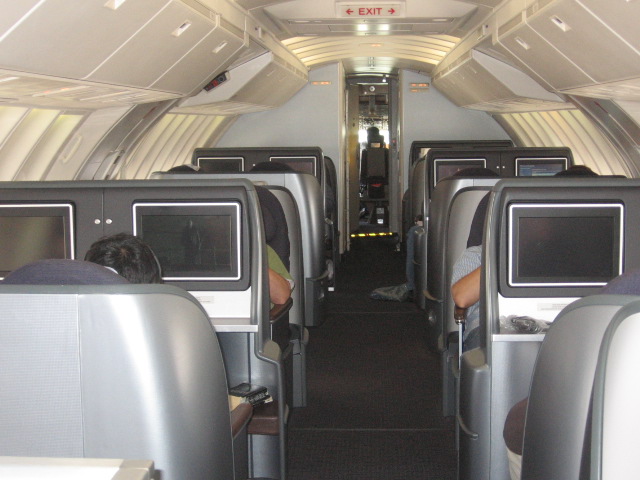
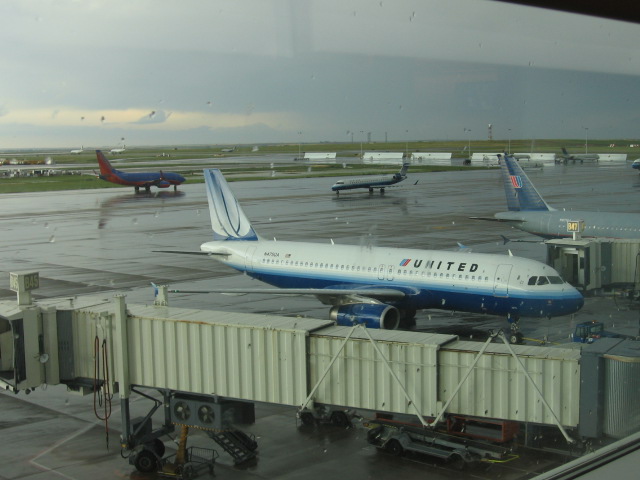
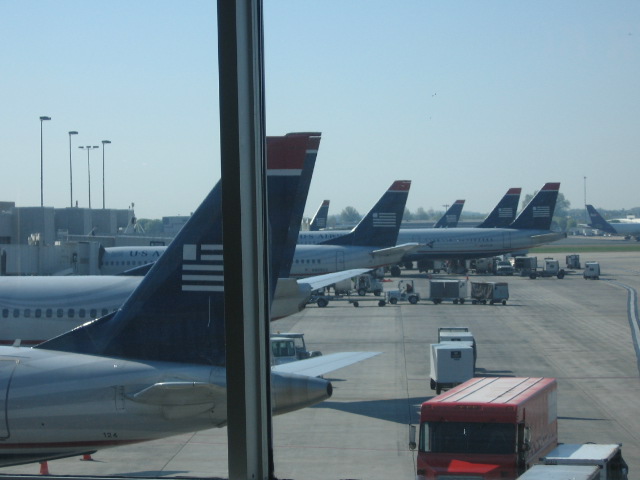
Thai Airways

nkralev on April 17th, 2012

Turkish Airlines has built an impressive business lounge at its hub is Istanbul, with the best sleeping rooms I’ve seen anywhere in the world, including in First Class lounges. The best, that is, until you try to sleep — unless you don’t mind loud noise that even Bose headphones on top of earplugs can’t block out.

As I’ve written before, Turkish has made significant progress in recent years toward becoming a world-class carrier, but it’s still a long way from being anywhere close to the top. It rushes to do something it deems top-notch but doesn’t really think it through — and for high-end customers, a little glitz doesn’t sparkle brightly enough if the entire experience is inconsistent and unpredictable.

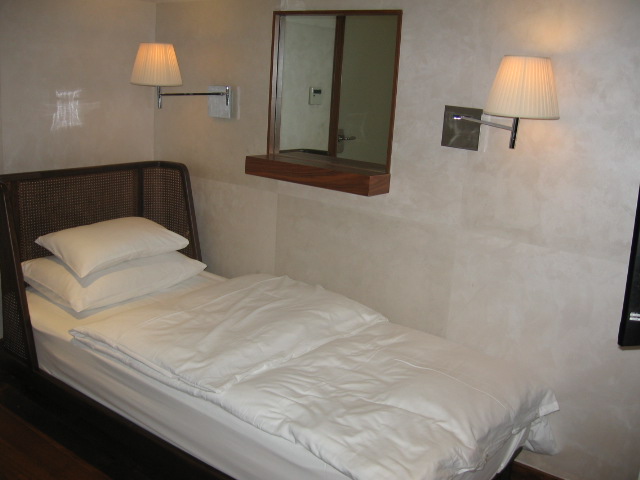
So Turkish designed these fabulous sleeping rooms in its relatively new Istanbul lounge, which are no different from really nice, albeit small, hotel rooms — with a real bed, comfortable and clean linens, desk, closet, bathrobe and slippers. But then it put shower suites right across from the sleeping-room doors, just a few feet away.

Admittedly, my first thought when I saw that setup was, “How convenient.” I used one of those rooms in the early morning hours several weeks ago after misconnecting on my way to Iraq. I took a shower and hoped to get at least three hours of sleep. Unfortunately, halfway through my rest, I was awoken by loud noise coming from passengers using the showers and staff cleaning the suites — not the actual showering and cleaning, but the talking and laughing right outside my door.

Since my earplugs were obviously not helping, I added my Bose headphones as reinforcement, even though sleeping with them is not exactly comfortable — all in vein. There was no more sleep. The glass divide that served as a wall also prevented the room from becoming sufficiently dark, but there are eyeshades for that.

At the end of the day, a great idea and superb product didn’t leave me with a great overall experience because of poor floor design and execution. Perhaps better soundproofing would have minimized the noise, if there was no way to isolate the sleeping room at least somewhat from the main lounge area. One could argue that lying in a real bed is still a luxury at an airport, even if you can’t sleep, but that’s not the point. Why not just put open beds right in the middle of the lounge? Or why have beds at all?

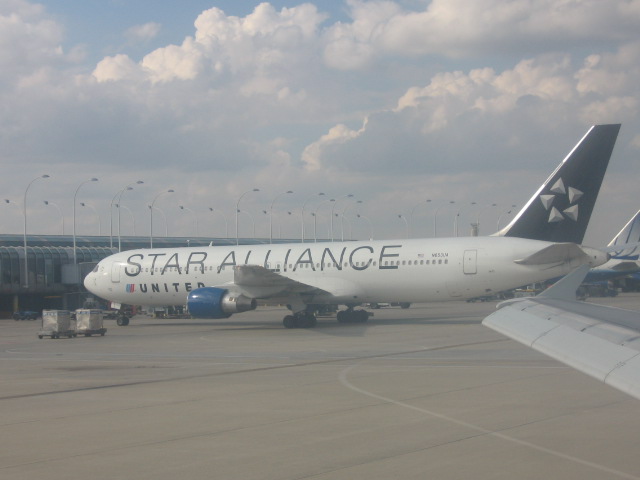
Two weeks earlier, I had used a sleeping room in Thai Airways’ First Class lounge in Bangkok. The rooms and beds weren’t nearly as fancy and comfortable as those in Istanbul, but the main lounge area was much farther away. Both Turkish and Thai are members of the global Star Alliance.

I suppose we can’t have it all.

RETURN TO MAIN COLUMN PAGE

Related stories:

Airlines neglect non-flying experience

Round the world in a week, without pain

Dulles Airport enters the modern age

Military lounges are airport oases

Delayed at the airport? Enjoy!

Continue reading about Rare airport luxury, almost wasted
nkralev on February 15th, 2012

How do you make sure a whirlwind trip round the world in just a week doesn’t wear you out and affect your productivity? Things went surprisingly well for me last week, as I flew from Washington to Munich to Paris to Bangkok to Islamabad, back to Bangkok, on to Seoul and back to Washington, so I thought I’d share the experience.

The first thing I have to say is that I don’t drink coffee or take sleeping pills. My only medicine when it comes to air travel is securing the best comfort and luxury I can — I need my flat beds, gourmet meals, lounges with showers, and sometimes even chauffeur-driven cars to connecting flights. I certainly can’t pay for them, but we’ll come to that momentarily.

Second, if you are going to circle the planet in a week, fly to the east, not the west. As much as I dislike those overnight flights from the U.S. East coast to Europe, because they are too short to get decent sleep, moving in that direction is much better in terms of adjusting to time differences. I was never jet-lagged during or after my journey.

The trip, which was blessed by the State Department, was part of the final research phase for my upcoming book on the U.S. Foreign Service, “America’s Other Army,” during which I visited the U.S. embassies in France, Thailand and Pakistan. Overall, I’ve visited almost 60 diplomatic and consular missions for this project, which began with my 2004 newspaper series, and interviewed more than 600 diplomats and other officials.

I used frequent-flier miles, but instead of getting what would have been a very expensive and restrictive round-the-world ticket, I issued two one-way tickets: One in First Class from Washington to Asia over the Atlantic, with a 24-hour stop in Europe, and another one in Business Class from Asia back home over the Pacific.

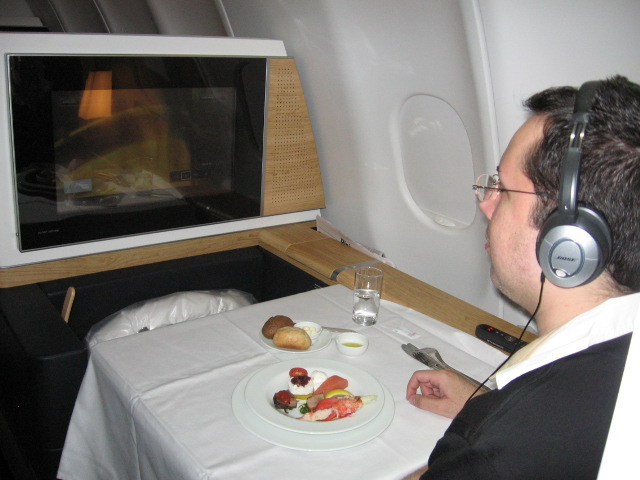
As I wrote in my first book, “Decoding Air Travel,” the best use of miles is for premium cabins. But why did I book First Class on the outbound for 80,000 miles, and not Business for 60,000? When I use miles, I make an effort to fly on the world’s best airlines. Of those, on my departure date Lufthansa was the only option, but it has some of the worst Business Class seats in the civilized world. First Class, on the other hand, is quite good, except for the small TV screen — that’s not the case with a few aircraft that have the new First seats with much bigger screens.

The more important reason for choosing First Class, however, was Thai Airways, which operates its Paris-Bangkok flights on planes leased from India’s Jet Airways that have private cabins with sliding doors in First. I had flown in one of those cabins from Tokyo to Bangkok a couple of months earlier and wanted to experience a much longer flight in such luxury. In addition, Thai Airways offers First Class passengers complimentary full-body massages in its Royal Orchid Spa at the Bangkok airport.

My Lufthansa flight from Washington to Munich was excellent, as expected, with top-notch flight attendants, which can’t be said of the ground staff at Dulles airport. I liked the new design of the pajamas they give First Class passengers. The food was consistent with my previous experiences, including the signature black caviar and several other appetizers. Although the seats are rather old by now, I always found the bed very comfortable.

I broke my habit of not having breakfast on overnight flights to Europe so I could have enough time for a shower in the First Class lounge in Munich before my connecting flight, since I had a full schedule as soon as I arrived in Paris. When it was time to board, I was whisked to my Paris plane in a Porsche.

The ambassador to France, Charles Rivkin, one of the best non-career ambassadors I know, couldn’t have been a better host, opening the doors of both his embassy and residence, and having a dinner in my honor, according to the elegant menu, with some of the top French journalists. My 24 hours in Paris were very productive, thanks to everyone I met, and especially spokesman Paul Patin, who put together my schedule at a very short notice.

It was time for the 11-hour flight to Bangkok, which didn’t disappoint, except for turbulence during most of it — and a 90-minute delay because of a flight attendant who fell ill just as we prepared to take off. After great meals, three films and a few hours of sleep behind closed doors, I was met by a Thai representative upon arrival in Bangkok and driven in a gold cart to the First Class lounge, where I took a shower before heading to the embassy.

Another full day of meetings and interviews followed, including two sessions with Ambassador Kristie Kenney, a career Foreign Service officer and one of the most capable, according to her colleagues — I hadn’t met her before. With the help of embassy spokesman Walter Braunohler, I covered enough ground with employees in several embassy buildings. The only slightly unpleasant part of the day was the 90°F temperature, especially after 20°F in Paris just hours earlier.

There was no time for a massage at the airport in the morning, but I managed to squeeze one in just before I flew to Islamabad in the evening. Unlike my plane from Paris, most Thai aircraft have old unimpressive seats in Business Class — and no First Class. Still, the food and service were up to standard, and I got some sleep before my 10:30 p.m. arrival in Pakistan.

My visit to Embassy Islamabad was the longest part of the trip — two full days and nights — and I was hosted by Ambassador Cameron Munter, whom I’ve known for eight years and consider one of the most brilliant serving U.S. diplomats. I also think he has possibly the most challenging job in the Foreign Service. He has assembled an outstanding team at the embassy, which actually surprised me, given the perception in Washington that few good officers volunteer to serve in Pakistan.

Munter went out of his way to accommodate my research needs, as did his chief of staff, Scott Kofmehl, with help from embassy spokesman Mark Stroh and many others.

On my flight back to Bangkok, I managed to get one of the embassy employees on a coach ticket into Business Class, thanks to an oversold Economy cabin. I had a long enough layover in Bangkok for a light breakfast in the lounge, some work and a foot massage, which is offered to Business Class passengers.

Then my Thai flight to Beijing had a significant mechanical delay, causing me to miss my connection to Washington on United Airlines.

While the Thai staff in the Business lounge scrambled for two hours to find an alternative way to get me home, I decided to apply in practice one of the things I preach in “Decoding Air Travel”: How to turn a negative airline situation into a positive one. In any case, I was looking at an arrival in Washington more than 12 hours later than scheduled, so the goal was to minimize my delay and stay in Business Class — preferably on an airline that has fully flat beds.

Korean Air met those requirements, and I added to my list a very good airline I’d never flown before — in fact, the 52nd carrier on that list. Korean Air is not in the Star Alliance, but to their credit, the Thais agreed to pay the Koreans a full Business Class fare in order to accommodate me, even though I was on an award ticket. They also agreed to let me spend the remaining 10 hours before my flight to Seoul in the First Class lounge, where I had a great lunch, did more work and slept for a few hours in a real bed, in one of their sleeping rooms.

Of course, they wouldn’t have done any of those things had I not been insistent — actually, a pain may be a better description. But I felt it was their fault, and they were responsible for rectifying the situation. I also knew they wouldn’t offer any compensation — Asia doesn’t have the rules Europe, and to some extent the United States, have — so I had to get whatever I could in other forms.

To sum up, my weeklong round-the-world trip didn’t wear me out — and now you know why.

RETURN TO MAIN COLUMN PAGE

Related stories:

Round-the-world fare mysteries revealed

Foreign Service series: America’s other army

The greatest understated U.S. diplomat

Who qualifies to be a U.S. ambassador?

In air with Clinton on first trip abroad

Continue reading about Round the world in a week, without pain

nkralev on November 2nd, 2011

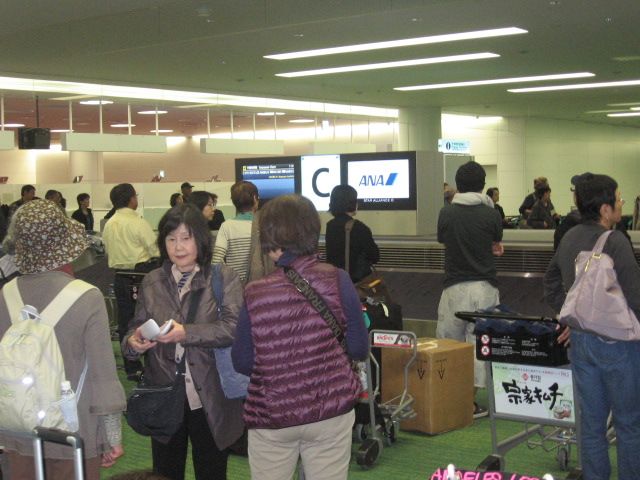
When I landed at Tokyo’s Haneda Airport today, I had one of my easiest, fastest and smoothest international arrival experiences. But I wondered where all those airlines that last year fought and won a fierce battle over the right to fly to Haneda actually were.

It appears the industry overestimated Haneda’s appeal to travelers, and it also might have miscalculated how many passengers remain in Tokyo, as opposed to those who connect to other destinations.

It’s true that the March earthquake and tsunami had a negative impact on travel to Japan in general, but traffic to and from the much bigger Narita Airport has largely recovered.

Haneda’s smaller size and proximity to central Tokyo provide a significant advantage. However, as I first wrote two years ago, most medium- and long-haul flights arrive and depart between 10 p.m. and 7 a.m. — not exactly the most preferred time by the majority of travelers. In addition, onward flight connections from Haneda are extremely limited.

That didn’t seem to bother most airlines last year, when the rights to fly from various foreign cities to Haneda were being awarded by the Japanese and other governments. U.S. carriers in particular made rather bold proposals. In the end, the Department of Transportation gave American Airlines the right to fly from New York, Delta from Detroit and Los Angeles, and Hawaiian Airlines from Honolulu.

American’s flights are nowhere to be found in its winder schedule, though they are planned for next summer. The same goes for Delta’s Detroit flights. It does operate the LA flight throughout the year, as does Hawaiian on the Honolulu route. Air Canada has postponed indefinitely its plan for flights from Vancouver, even though it started selling tickets late last year.

The Japanese carriers have trimmed their plans, too. All Nippon Airways has kept only LA in North America, while Japan Airlines serves San Francisco. European and other long-haul routes are also very few.

British Airways is the only foreign carrier outside Asia and the United States that currently flies to Haneda — and not every day. The Asian carriers include Air China, Asiana, Cathay Pacific, China Airlines, AirAsia, China Eastern, Eva Airways, Korean Air, Malaysia Airlines, Shanghai Airlines, Singapore Airlines and Thai Airways.

Flights loads to and from Haneda are not what those carriers expected — my Singapore Airlines flight was less than half-full in Economy and about two-thirds full in Business Class, where I had two lie-flat seats to myself, though even one would have been just fine.

RETURN TO MAIN COLUMN PAGE

Related stories:

When ‘open skies’ aren’t really open

U.S. flights likely to Tokyo Haneda

Continue reading about Carriers lose appetite for Tokyo Haneda

nkralev on August 8th, 2011

Air India’s entrenched corporate culture and internal Indian politics cost the carrier membership in the global Star Alliance. Although Star’s leadership went out of its way to help the airline meet the group’s more than 200 requirements, it finally gave up the futile effort last week and suspended accession talks.

Not surprisingly, Air India has been trying to assign blame to anyone but itself, pointing a finger at Lufthansa and accusing it of sabotaging the Indian carrier’s potential membership. Regrettably, it appears the airline has learned little from the nearly four-year experience. It needs to do some serious soul-searching if it wants to survive.

Star showed remarkable patience and continued to hope against hope that Air India would live up to its promise and achieve the necessary standards in safety, customer service, on-board experience, operations, etc. The alliance makes decisions based on consensus, and all its members voted to invite Air India in late 2007. The accession process is rather costly for both the candidate and the alliance, so no member voted lightly and fully expected the invitee to become to join the group.

They all underestimated the problems they would encounter. Air India was initially supposed to come on board in March 2009, but Star agreed to extend the qualification period. It really wanted its carriers to gain broader access to the large Indian market.

Star CEO Jaan Albrecht, about whom I’ve written several times, has been saying for years that one of his top priorities is filling the three major “white spots” in the alliance’s network: Brazil, India and Russia. Brazil’s TAM joined in 2010, though its merger with Chile’s LAN has created uncertainty about the new airline’s future allegiance. There is no obvious Russian carrier to be seriously considered at this time.

So it was very important for Star to full the big South Asia “white spot.” Albrecht himself made repeated trips to India in the last year in a tortuous effort to save Air India’s faltering bid.

However, the reality is that Air India never truly had a chance with the oldest and largest global alliance. I felt several times during this process that having Air India as a member anytime soon was more wishful thinking than a realistic expectation. In fact, many frequent travelers feared that Star might lower its standards to accommodate India’s national carrier.

To the alliance’s credit, that didn’t happen. Rejecting Air India’s application was the right decision, no matter how the carrier tries to spin the outcome. The group’s attention in India is now focused on Jet Airways, which is already a code-share partner of several Star carrier, and possibly Kingfisher Airlines — they both have a much stellar reputation than Air India’s.

Star was founded by United Airlines, Lufthansa, Air Canada, Scandinavian (SAS) and Thai Airways. Today, it has 27 members from 25 countries, which have more than 4,000 aircraft in their fleets and fly over 600 million passengers a year on 21,000 daily flights to 1,160 airports in 181 countries.

RETURN TO MAIN COLUMN PAGE

Related stories:

Round-the-world fare mysteries revealed

Is India going too far in curbing airfares?

United StarNet blocking

Continue reading about AirIndia had no chance with Star Alliance

nkralev on December 22nd, 2010

There are so many travel-industry rankings at year’s end, it’s hard to keep track. It’s even harder to figure out which — if any — of them are credible and meaningful. Looking at some of the results, one has to wonder when some of the respondents last flew on the airlines and through the airports they assessed.

Rankings are usually administered by various magazines — one exception are the new Frequent Traveler Awards. In the last several years, I’ve made it a habit to look at the Global Traveler Magazine‘s so-called Tested Awards, most of which make sense. However, as I was reading this year’s results during a flight last week, I couldn’t help but gasp in astonishment at some of the results.

Many of the categories are certainly subjective, and different people’s experiences could easily be different. For example, the in-flight service on the same airline could vary depending on the cabin crew — or even your particular flight attendant.

Still, Lufthansa’s second place for best First Class is surprising. For comparison, Emirates is fifth, Korean Air sixth, and Singapore Airlines eighth. Seriously? Lufthansa is a great airline and it deserves to be in the top 10 — it came out fifth overall in the “Best Airline in the World” category.

But anyone who has flown in Lufthansa First Class in the last couple of years knows that its hard product lags behind most of its competitors. The most glaring example of that is the tiny TV screen. On the carrier’s Boeing 747 aircraft, First Class is on the upper deck, with 16 seats in a 2-2 configuration, which is the standard for Business Class on most other airlines operating the same aircraft type.

To its credit, Lufthansa has recognized the limits of its product and has undertaken steps to improve it. The above-mentioned 2-2 configuration is about to change to 1-1, which will no doubt disappoint some fliers because it will reduce the number of First Class seats by half, but eight seats is the industry standard and makes a lot of sense.

Lufthansa has finally come out with a new First Class seat on its Airbus 380 planes. Could it be that Global Traveler readers were evaluating those seats? No, because surveys were collected between January and August, and the first Airbus 380 didn’t enter service until late August.

There is one First Class feature on Lufthansa that beats all other airlines to the punch: its First Class Terminal in Frankfurt. But it’s used almost exclusively by Frankfurt-originating passengers, so it’s unlikely its weight in assessing the overall product was predominant for all survey respondents.

Lufthansa was also ranked fifth for best Business Class. Again, if you’ve had a chance to compare its hard product with other Business cabins, you’d probably disagree. One could argue that Lufthansa’s service is better than that of United Airlines, but United’s truly flat seats are among the best in the industry. Lufthansa made the short-sighted decision to install the old Business seats on the Airbus 380, but later announced it would roll out a new hard product next year.

United is the only U.S. carrier in the top 10 of any of the leading overall global categories, taking 10th place for best Business Class and best Business seat design, and fourth place for best First Class design. Its “new” hard product, which was first introduced three years ago, has so far been installed on less than 60 percent of its long-haul fleet.

Deservedly, Lufthansa is missing from the top 10 in any of the best-seat categories. But another perplexing presence in the best Business seat category — ahead of United — is South Korea’s Asiana Airlines. Not only are its current seats not truly flat, but they are less comfortable than comparable products on other carriers, such as Thai Airways. Asiana’s service is, of course, superb, but this is strictly a seat-related category.

In the best global airport category, another surprising result: in third place, Amsterdam has beat out Hong Kong and Munich. In North America, Atlanta came out ahead of San Francisco. Really?

Oh, and did you know that Delta Airlines has the best airport lounges in the world? That’s right, and Lufthansa and Singapore Airlines have been shut out of the top 10 completely. If that’s not madness, I don’t know what is.

RETURN TO MAIN COLUMN PAGE

Related stories:

Airlines cut back on first-class service

Delayed at the airport? Enjoy!

New Lufthansa business class in a year

Singapore Airlines’ maddening perfection

Continue reading about What’s the real point of airline rankings?