Washington

nkralev on August 2nd, 2011

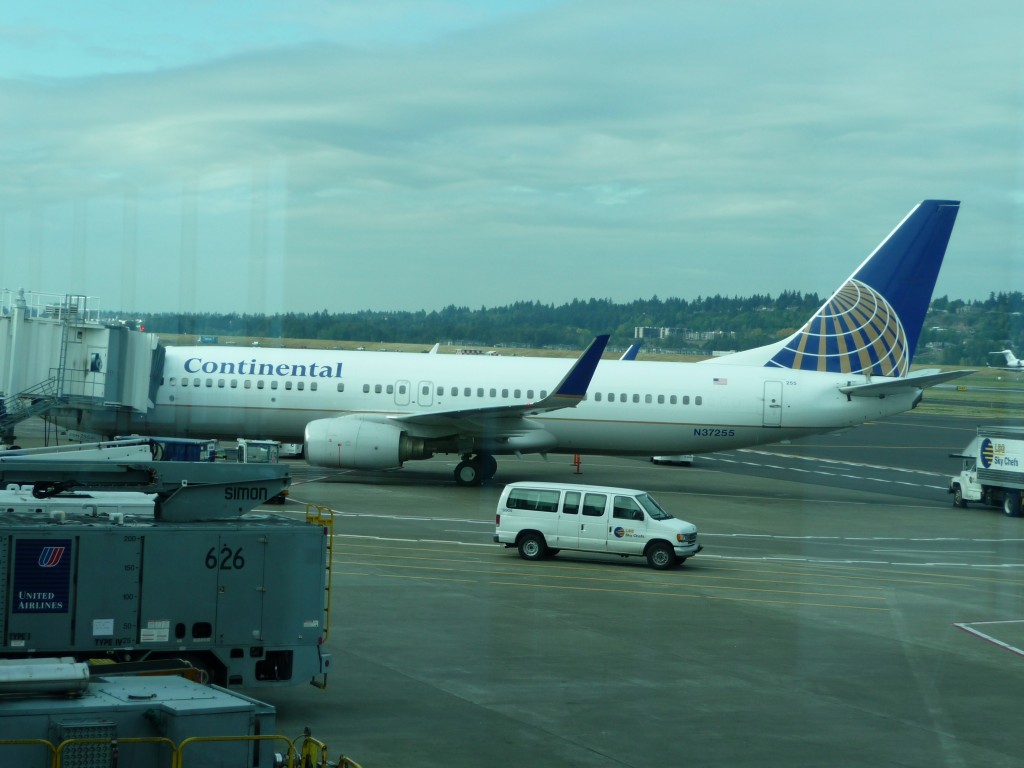
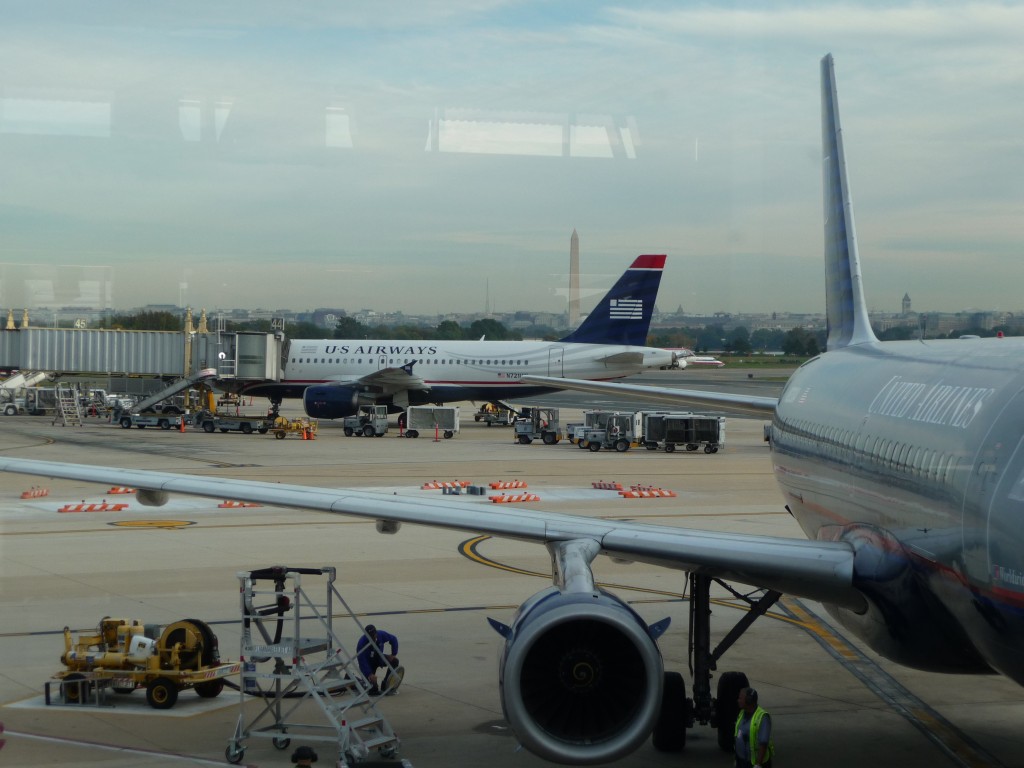
United Airlines, already one of the biggest abusers of fake “direct” flights before its merger with Continental, has increased further the number of those flights in its schedule. Its oddest decision was to introduce fictitious “direct” flights, which consist of two or more segments with nothing in common but their number, between its hubs.

If you are shopping for a ticket from Chicago (ORD) to Denver (DEN), be very careful which flight you book. In addition to 10 daily nonstops with flying time of about 2 hours, United currently has three “direct” flights on that route, but they make a “stop” in Minneapolis (MSP), Des Moines, Iowa, (DSM) and Kansas City, Mo., (MCI), respectively.

Watch out for any indication of that, as obscure as it may be. In most cases, those are not just “stops” — the two “legs” are operated by different aircraft, so they are simply connecting flights. For example, the first “leg” of flight 817 yesterday arrived in Minneapolis at gate E6, but the “continuation” departed from gate E10.

As I’ve written before, most flights labelled “direct” by U.S. carriers are fictitious — they don’t exist in real life. They are meant to make more money for the airlines by tricking customers and perverting a practice that was actually started to help travelers. In fact, they spell nothing but trouble for passengers.

Historically, United and Delta have had more fake “direct” flights in their schedules than any other U.S. carriers, though all airlines engage in that practice.

For years, United has focused on adding at least one domestic tag to most of its international flights. For instance, flight 917 from Frankfurt (FRA) to Washington (IAD) “continues” on to Seattle (SEA), though the second flight has nothing in common with the fist. Yesterday, the flight from FRA was operated by a three-cabin Boeing 777, as usual, and arrived at IAD at gate C1. The flight to SEA was operated by a two-cabin Boeing 757 and departed from gate D4.

In the last several months, United has significantly stepped up the questionable practice on purely domestic flights. Currently, there are very few flights with only one segment. Most flights between Washington National (DCA) and Chicago (ORD) used to be one-leg flights. Now, most are part of fake “direct” flights with two or three segments.

It’s clear why the airline is selling “direct” flights from DCA to San Francisco (SFO) — it wants you to think that you can go all the way to the West coast from DCA with no hassle.

But why on earth is it selling fake “direct” flights from IAD to SFO, given that there are nine nonstops on that hub-to-hub route on most days? In its upcoming winter schedule, it has four “direct” flights between those cities. Two of them have two segments — one “stopping” in Dallas (DFW) and one in SEA. The other two have three segments each — one “stopping” in DEN and Las Vegas (LAS), and the other one in ORD and San Diego (SAN).

Is it possible that United has run out of flight numbers because of the merger? That may be the case with three-digit numbers, but what’s wrong with four-digit ones?

RETURN TO MAIN COLUMN PAGE

Related stories:

DOT should ban fictitious flights

Airlines abuse ‘direct’ flights

United, Continental execs at odds over loyalty program

United StarNet blocking

Continue reading about United steps up fake ‘direct’ flights
nkralev on July 13th, 2011

The transparency of raw airline data in recent years has been hugely important for our ability to secure the lowest fares and build the best itineraries. ExpertFlyer.com has been a pioneer in that endeavor, and now it has taken an extra step by showing government, military and other fares that have long been a mystery to most travelers.

I first began using ExpertFlyer soon after the website launched in 2005, and was happy to pay the $100 annual fee because it has helped me save thousands of dollars.

Last year, when I left the Washington Times and started teaching seminars, I naturally decided to use the site in my classes — and I received a complimentary subscription. In the interest of full disclosure, ExpertFlyer also donated $1,000 to the book tour I’m currently on. That said, I’m not at all obligated to promote the site in this column.

I’m writing about ExpertFlyer because of its usefulness to my readers. As I explain in my book, “Decoding Air Travel,” unless you are a travel agent or otherwise have access to a Global Distribution System (GDS), you are deprived of viewing raw airline data, such as fare tariffs and flight inventory, as it’s published by the carriers — but before it’s processed by automated booking engines.

This week, ExpertFlyer made available special government and military fares, as well as student and senior fares. The last two were not exactly secret in the past and could be searched on airline websites and online travel agencies, but having access to the raw data is no doubt very useful.

Being able to see government fare data, however, is a big deal. Only federal agencies can book tickets at those fares, but even if you never benefit from them, the information is rather revealing for an air travel geek like me.

The most significant feature of government fares is that they are usually much higher than the lowest regularly published fares, because they are fully refundable and changeable — but they are much lower than the normal full-fare prices available to businesses and consumers. Some companies do negotiate contracts with airlines, but the discount they get is typically between 5 and 15 percent.

Let’s look at the current government fare from Washington to Frankfurt on United — a heavily traveled route by federal employees. Because those flights are less than 14 hours long, only coach tickets are allowed. As of today, the base fare is $718 each way ($1,436 round trip) — the fare basis is YCA, which means it’s a full Y fare, earning 150 percent frequent-flier miles and requiring fewer miles to upgrade than discounted fares, and of course no cash “co-pays.”

Now let’s compare that to the lowest published Y base fare available to any of us — it’s $4,037 round trip. These are only the base fares, but as I learned a couple of months ago when I flew on a YCA fare for the first time, the government also enjoys a big discount on fuel surcharges, which run in the hundreds of dollars.

It’s worth noting that the lowest published United fare from Washington to Frankfurt as of today is $603 round trip, but it’s very restrictive and, of course, nonrefundable. United publishes the same transatlantic fares as Star Alliance partners Lufthansa, Air Canada and British Midland, but any flights on foreign carriers must be booked as United code-share numbers under the so-called Fly America Act. The same rule applies to American and its Oneworld partners, as well as Delta and other SkyTeam carriers.

In addition to the Y government fares, U.S. airlines have begun offering equally nonrestrictive fares with fare bases that book into discounted booking classes, such as L and K. Their downside is that they don’t earn bonus miles and upgrades on them are much pricier.

I’m still learning the government airfare system, but one thing I find hard to understand is why Carlson Wagonlit, the travel company that books travel for several federal agencies, charges almost $90 every time one of its agent touches a reservation — whether to issue a ticket, change it or cancel it. So much for “free” changes and cancellations.

RETURN TO MAIN COLUMN PAGE

Related stories:

Should airline booking codes be secret?

Openness rattles airline industry

Is ‘award’-seat data held by copyright?

DOT cracks down on airfare advertising

Continue reading about ExpertFlyer boosts airfare transparency

nkralev on April 21st, 2011

Most of us don’t think we are cut out to be doctors or engineers. Then why do so many of us believe we can be diplomats? Does one need training or a particular background to become a U.S. ambassador? I find myself asking these questions every time I hear about a failed non-career ambassador.

President Obama promised change in Washington, but he continued the decades-long tradition of dishing out ambassadorial posts to people whose only “qualifications” were their big donations to his election campaign. As I’ve written before, the American Academy of Diplomacy and the American Foreign Service Association have called him out on this disgraceful practice.

Many of those political appointees actually do a fine job. Although the two weeks of training they get at the State Department’s Foreign Service Institute are grossly insufficient, they work hard to understand what it takes to handle the international relations of the United States, and what the daily conduct of diplomacy requires from them as civil servants.

But then there are those who think they already know what an ambassador should do and care little about tradition and bureaucracy. None of us admits to liking bureaucracy and we all express disdain for bureaucrats from time to time.

That’s exactly what Douglas W. Kmiec, the U.S. ambassador to Malta, did last week. He blasted a report by the State Department’s Office of the Inspector General (OIG), which criticized him for neglecting his overall duties and engaging in “outside activities [that] have detracted from his attention to core mission goals.”

Instead of focusing on broader foreign policy and national security issues, Kmiec has been spending most of his time promoting his Roman Catholic faith, mainly by writing various articles and speaking about religion, as well as issues such as abortion.

Following the OIG report, Kmiec offered Obama his resignation, vehemently rejecting the investigation’s findings. “I doubt very much whether one could ever spend too much time on this subject,” he wrote in a letter to the president.

Unwittingly, Kmiec hit the nail right on the head. No single issue, with the exception of very few vital national security matters, deserves the time and attention the ambassador has apparently spent on religion. He is certainly not the first political appointee to make one issue the sole emphasis of his tenure.

Previous ambassadors have dedicated themselves to very noble causes, including raising awareness about terrible deceases. A prime example is the focus on fighting cancer that marked Nancy Brinker’s stint as ambassador to Hungary at the beginning of the George W. Bush administration. While that was enormously helpful, many of Brinker’s subordinates and other State Department employees felt that other important issues suffered as a result.

Kmiec is a well-respected law professor and former legal adviser in the Reagan White House. I don’t know him, and I usually try to avoid criticizing people who are my father’s age for no good reason. But just because he has been successful in his field and donated a lot of money to Obama’s 2008 campaign doesn’t necessarily make him a good ambassador by default.

The U.S. Embassy in Malta, which I have visited, may be small, but it still has representatives of many federal agencies with sometimes competing interests and needs to be run by the ambassador in the best possible way. Supporters of appointing political ambassadors often laud their personal relationship with the president, but what good does that relationship do if it’s not put to an effective use?

Obama deserves credit despite his failure to end the longtime practice. He has just launched his re-election campaign and needs support from conservatives like Kmiec, so his resignation is an unnecessary distraction. However, Obama has not tried to defend Kmiec, who said he would leave his post in the summer.

One would hope that the president will think twice before rewarding campaign donors with embassies if he wins the 2012 election. Kmiec is not Obama’s first political ambassador to be embarrassed by an OIG report. As I wrote in February, Cynthia Stroum, ambassador to Luxembourg, was forced to resign because of her poor management style and serious damage done to her embassy.

Kmiec has said he was not pressured to resign and made the decision without outside intervention.

RETURN TO MAIN DIPLOMACY PAGE

Related stories:

The greatest understated U.S. diplomat

Why are political ambassadors tolerated?

Political ambassadorships hold at 30%

Career diplomats protest Obama appointments

Diplomats in the news for wrong reasons

Foreign Service: America’s other army

Continue reading about Who qualifies to be a U.S. ambassador?

nkralev on March 9th, 2011

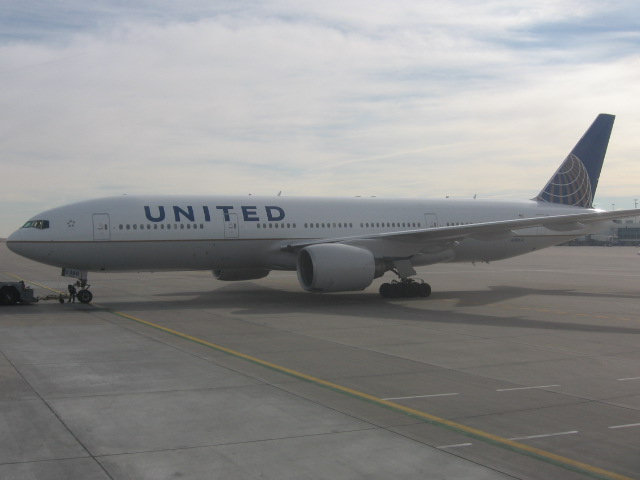
As United and Continental prepare to become one airline, they are making changes that, though necessary, are affecting negatively their customers. One consequence is that upgrades on international flights will be harder to get in the short run, and more expensive in the long run.

The carriers announced last month that they would begin “cross-fleeting” — swapping routes in each other’s network — and some of those changes have already been loaded in their schedules. Both United and Continental will be serving certain routes in the next several months, but each of them is taking over other routes entirely.

For example, all Anchorage flying goes to Continental, as do the Washington-Paris and Washington-Amsterdam routes, now operated by United. The current Continental flights from Newark to Zurich and Brussels, as well as its Houston-Lima flights, will be flown by United.

That practice is not unusual in airline pre-merger situations. While the United-Continental merger was legally completed late last year, they will be operating as separate airlines until they secure a single certificate from the Federal Aviation Administration, which is expected to happen by early next year.

However, United and Continental are implementing the route changes before resolving some technical issues that will harm their customers.

If you are a United 1K flier and have system-wide upgrade certificates, you can’t use them on the previously United flights now operated by Continental — and the other way around. The same applies to your confirmed regional upgrade certificates on domestic flights. As of now, it’s technically impossible for the carriers’ reservations systems to accept upgrade certificates from the other airline’s frequent-flier program.

Mary Clark, a Continental spokeswoman in Houston, confirmed that certificates will be “carrier-specific” for the time being. “We are in the process of aligning the programs, and changes to the current policies will be announced as they are rolled out throughout the year. We aim to fully combine the programs by 2012.”

United is expected to adopt Continental’s reservations system eventually, but until then, there may be another way to resolve the issue. The carriers announced this week that miles can now be transferred between United and Continental accounts. I wonder if they can make it possible for upgrades to be transferred as well. It’s unclear if they looking into such an option yet.

There is another issue with the United system-wide upgrades whose impact is just now becoming apparent. For years, they have been allowed only on tickets booked in W class or higher, which makes S, T, L and K classes ineligible. Continental recently adopted the same rules.

This means that customers often have to spend hundreds of dollars more than the lowest available fare, just to qualify for an upgrade request — and if the upgrade doesn’t clear, they are left with a lot less money and the same coach seat they would have had if they had paid much less for it.

Things are getting even worse. In January, because of the merger, United added a 14th coach booking class, G, which was a regular published booking class on Continental, but on United it was previously an unpublished travel-industry discount class — it didn’t earn miles and was ineligible for upgrades.

Now, instead of four, there are five booking classes ineligible for system-wide upgrades. So what? you might ask — just a small technicality. Not quite. As a result of this change, W fares are getting more expensive. For example, a base fare of $800 that might have booked in W class before, now books in S or T. A few days ago, I helped a friend with a ticket from Washington to Bangkok, and the W base fare was more than $1,400 round trip — including taxes and surcharged, it came up to $1,900.

There is no question that fares have been going up for some time. A few years ago, a W fare to Bangkok was about $900, including taxes. In 2002, an H fare was $900. So the trend is clear and it didn’t start yesterday. But adding one more booking class makes things even worse.

It’s worth pointing out that American Airlines system-wide upgrades are allowed on all published booking classes.

Another negative change as a result of the United-Continental merger is that, similarly to the upgrades, discount vouchers from one airline cannot be used on the other. So if you want to use a United voucher for a ticket to Anchorage, you can’t, because United has given its seasonal service to Continental.

This week, the United website seems to be including Continental flights in electronic certificate-discounted itineraries, but the official policy hasn’t changed. It may be a website glitch, given that it also allows Lufthansa flights, and the vouchers’ terms and conditions specifically say that they are not valid on code-share flights.

One positive merger-related change is that United customers can now avoid StarNet blocking — it has diminished but still exists — by transferring their miles to Continental, which doesn’t block Star Alliance partner award seats.

NOTE: Several months after this column was published, United and Continental made it possible to use upgrades on flights operated by the other airline, including on mixed itineraries.

RETURN TO MAIN COLUMN PAGE

Related stories:

United, Continental execs at odds over loyalty program

United executive breaks old barriers

Keeping United international first class

United StarNet blocking

Continue reading about United fliers hit by pre-merger changes

nkralev on January 18th, 2011

If you are a frequent flier, you know there is a war raging between American Airlines and third-party travel providers, such as online agencies and Global Distribution Systems (GDS). It appears things might get worse before they get better, leaving millions utterly confused. So I’ve created a new addition to the “On the Fly” curriculum to help you through the hard times.

The two-hour live seminar, FLY 203: The travel-booking war and the future of airline data distribution, will be first offered in Miami and Honolulu next week, and in Washington, San Juan and San Francisco next month, followed by other cities around the country. If you are not in any of those cities, you can join in from anywhere for an hour-long webinar version, FLY 115: Weathering the travel-booking storm, on Feb. 10.

I’m not advocating any particular position in the current dispute, and my only goal is to give you all relevant information, so you can make the best decisions when it comes to booking your travel.

The new seminar offers a detailed description and explanation of the current airline data distribution model and the fundamentals of today’s booking system. It also looks at the events of the last several weeks and provides a factual rundown of the arguments and positions of all sides involved in the dispute.

Most importantly, the session examines how the current conflict affects travel agencies, companies and individual travelers. It offers specific advice on what they can do to avoid being caught in the crossfire, and to make sure they don’t increase costs and sacrifice convenience and comfort.

Late last year, American banned Orbitz from booking seats on its flights. Earlier this month, Expedia stopped selling American tickets. Meanwhile, Delta removed its data from eight less popular sites. Sabre, the GDS American created more than four decades ago and current owner of Travelocity, announced its intention to drop American data later in the year. In response, American sued, and last week it won a court order temporarily blocking Sabre’s move.

Thus began the very public war — and possibly the start of a new trend in the distribution and sales of air travel products. Airlines incur significant costs by having their flights booked on a GDS, which also prevents them from selling additional products, such as preferred seating, priority boarding and doubling or tripling your frequent-flier miles for a fee. American wants both online and traditional travel agencies to use its DirectConnect channel to lower costs and increase revenue.

The significance of American’s move is much bigger than a dispute with a couple of third-party sites. It seeks to shake up the longtime airline data distribution system, including the GDS model. Travel agents haven’t received airline commissions for years, except for the largest agencies, though a part of the GDS fees airlines pay goes back to agents. American wants to reduce or scrap those fees.

In an indication of where things are going, American CEO Gerard Arpey said in 2009 that third parties should be paying the airlines for access to their data, “rather than us paying them to distribute our product.”

American has imposed “booking source premium” fees on some GDS users. Those fees will have to be either absorbed by travel agencies or passed on to passengers. Critics accuse American of trying to suppress transparency and deny consumers the opportunity to compare various airlines’ fares on the same screen, potentially forcing them to pay higher prices. But American points out that a change in the GDS model — establishing direct channels with airlines — would secure customers’ continued comparison-shopping ability.

So it’s messy out there, and the new seminar will try to make it less so in your mind by giving you specific tools that will help you follow the best booking process for you.

RETURN TO MAIN COLUMN PAGE

Related stories:

Time for travel school — you are invited

Educating the flying public

Announcing ‘On the Fly’ Seminars

Announcing Kralev International travel advisory business

Continue reading about New seminar on travel-booking war