Business Class

nkralev on February 15th, 2012

How do you make sure a whirlwind trip round the world in just a week doesn’t wear you out and affect your productivity? Things went surprisingly well for me last week, as I flew from Washington to Munich to Paris to Bangkok to Islamabad, back to Bangkok, on to Seoul and back to Washington, so I thought I’d share the experience.

The first thing I have to say is that I don’t drink coffee or take sleeping pills. My only medicine when it comes to air travel is securing the best comfort and luxury I can — I need my flat beds, gourmet meals, lounges with showers, and sometimes even chauffeur-driven cars to connecting flights. I certainly can’t pay for them, but we’ll come to that momentarily.

Second, if you are going to circle the planet in a week, fly to the east, not the west. As much as I dislike those overnight flights from the U.S. East coast to Europe, because they are too short to get decent sleep, moving in that direction is much better in terms of adjusting to time differences. I was never jet-lagged during or after my journey.

The trip, which was blessed by the State Department, was part of the final research phase for my upcoming book on the U.S. Foreign Service, “America’s Other Army,” during which I visited the U.S. embassies in France, Thailand and Pakistan. Overall, I’ve visited almost 60 diplomatic and consular missions for this project, which began with my 2004 newspaper series, and interviewed more than 600 diplomats and other officials.

I used frequent-flier miles, but instead of getting what would have been a very expensive and restrictive round-the-world ticket, I issued two one-way tickets: One in First Class from Washington to Asia over the Atlantic, with a 24-hour stop in Europe, and another one in Business Class from Asia back home over the Pacific.

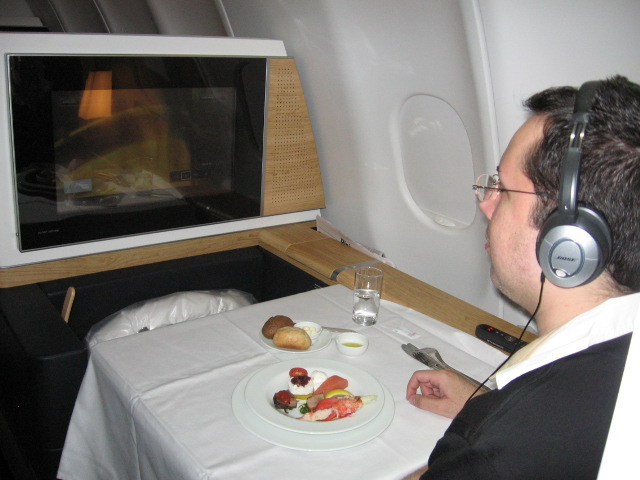
As I wrote in my first book, “Decoding Air Travel,” the best use of miles is for premium cabins. But why did I book First Class on the outbound for 80,000 miles, and not Business for 60,000? When I use miles, I make an effort to fly on the world’s best airlines. Of those, on my departure date Lufthansa was the only option, but it has some of the worst Business Class seats in the civilized world. First Class, on the other hand, is quite good, except for the small TV screen — that’s not the case with a few aircraft that have the new First seats with much bigger screens.

The more important reason for choosing First Class, however, was Thai Airways, which operates its Paris-Bangkok flights on planes leased from India’s Jet Airways that have private cabins with sliding doors in First. I had flown in one of those cabins from Tokyo to Bangkok a couple of months earlier and wanted to experience a much longer flight in such luxury. In addition, Thai Airways offers First Class passengers complimentary full-body massages in its Royal Orchid Spa at the Bangkok airport.

My Lufthansa flight from Washington to Munich was excellent, as expected, with top-notch flight attendants, which can’t be said of the ground staff at Dulles airport. I liked the new design of the pajamas they give First Class passengers. The food was consistent with my previous experiences, including the signature black caviar and several other appetizers. Although the seats are rather old by now, I always found the bed very comfortable.

I broke my habit of not having breakfast on overnight flights to Europe so I could have enough time for a shower in the First Class lounge in Munich before my connecting flight, since I had a full schedule as soon as I arrived in Paris. When it was time to board, I was whisked to my Paris plane in a Porsche.

The ambassador to France, Charles Rivkin, one of the best non-career ambassadors I know, couldn’t have been a better host, opening the doors of both his embassy and residence, and having a dinner in my honor, according to the elegant menu, with some of the top French journalists. My 24 hours in Paris were very productive, thanks to everyone I met, and especially spokesman Paul Patin, who put together my schedule at a very short notice.

It was time for the 11-hour flight to Bangkok, which didn’t disappoint, except for turbulence during most of it — and a 90-minute delay because of a flight attendant who fell ill just as we prepared to take off. After great meals, three films and a few hours of sleep behind closed doors, I was met by a Thai representative upon arrival in Bangkok and driven in a gold cart to the First Class lounge, where I took a shower before heading to the embassy.

Another full day of meetings and interviews followed, including two sessions with Ambassador Kristie Kenney, a career Foreign Service officer and one of the most capable, according to her colleagues — I hadn’t met her before. With the help of embassy spokesman Walter Braunohler, I covered enough ground with employees in several embassy buildings. The only slightly unpleasant part of the day was the 90°F temperature, especially after 20°F in Paris just hours earlier.

There was no time for a massage at the airport in the morning, but I managed to squeeze one in just before I flew to Islamabad in the evening. Unlike my plane from Paris, most Thai aircraft have old unimpressive seats in Business Class — and no First Class. Still, the food and service were up to standard, and I got some sleep before my 10:30 p.m. arrival in Pakistan.

My visit to Embassy Islamabad was the longest part of the trip — two full days and nights — and I was hosted by Ambassador Cameron Munter, whom I’ve known for eight years and consider one of the most brilliant serving U.S. diplomats. I also think he has possibly the most challenging job in the Foreign Service. He has assembled an outstanding team at the embassy, which actually surprised me, given the perception in Washington that few good officers volunteer to serve in Pakistan.

Munter went out of his way to accommodate my research needs, as did his chief of staff, Scott Kofmehl, with help from embassy spokesman Mark Stroh and many others.

On my flight back to Bangkok, I managed to get one of the embassy employees on a coach ticket into Business Class, thanks to an oversold Economy cabin. I had a long enough layover in Bangkok for a light breakfast in the lounge, some work and a foot massage, which is offered to Business Class passengers.

Then my Thai flight to Beijing had a significant mechanical delay, causing me to miss my connection to Washington on United Airlines.

While the Thai staff in the Business lounge scrambled for two hours to find an alternative way to get me home, I decided to apply in practice one of the things I preach in “Decoding Air Travel”: How to turn a negative airline situation into a positive one. In any case, I was looking at an arrival in Washington more than 12 hours later than scheduled, so the goal was to minimize my delay and stay in Business Class — preferably on an airline that has fully flat beds.

Korean Air met those requirements, and I added to my list a very good airline I’d never flown before — in fact, the 52nd carrier on that list. Korean Air is not in the Star Alliance, but to their credit, the Thais agreed to pay the Koreans a full Business Class fare in order to accommodate me, even though I was on an award ticket. They also agreed to let me spend the remaining 10 hours before my flight to Seoul in the First Class lounge, where I had a great lunch, did more work and slept for a few hours in a real bed, in one of their sleeping rooms.

Of course, they wouldn’t have done any of those things had I not been insistent — actually, a pain may be a better description. But I felt it was their fault, and they were responsible for rectifying the situation. I also knew they wouldn’t offer any compensation — Asia doesn’t have the rules Europe, and to some extent the United States, have — so I had to get whatever I could in other forms.

To sum up, my weeklong round-the-world trip didn’t wear me out — and now you know why.

RETURN TO MAIN COLUMN PAGE

Related stories:

Round-the-world fare mysteries revealed

Foreign Service series: America’s other army

The greatest understated U.S. diplomat

Who qualifies to be a U.S. ambassador?

In air with Clinton on first trip abroad

Continue reading about Round the world in a week, without pain

nkralev on October 26th, 2011

Why do numerous airlines, including those aspiring to be among the world’s best, keep focusing on improving the in-flight experience, but don’t seem to care what kind of service their customers receive before they even step foot on a plane?

It’s high time they understood that travelers are getting smarter, and mediocre reservation agents won’t be tolerated much longer.

In April, I wrote about my disastrous experience with Singapore Airlines’ award-booking agents, who were so poorly trained they might as well have worked for a third-world carrier. In May, I mentioned British Airways’ arrogance and refusal to offer the slightest apology after losing the luggage of two First Class passengers who had paid $12,500 per ticket.

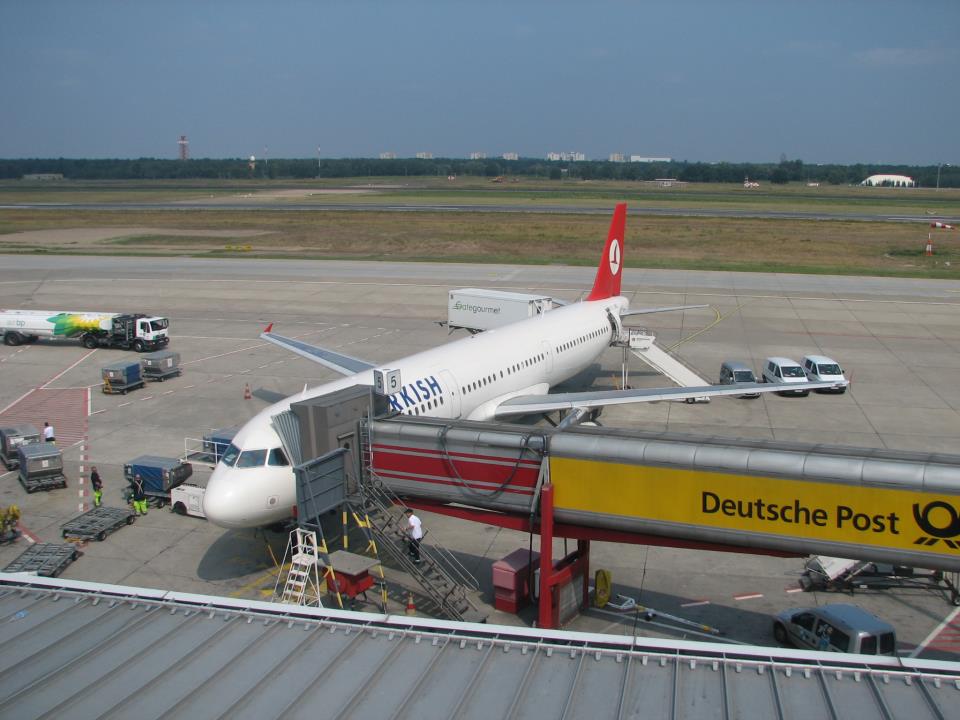
This month, it was Turkish Airlines’ turn. The Star Alliance member has improved significantly in recent years, and spent a lot of money on advertising and public relations. Actor Kevin Costner, who ironically flies mostly on his own private plane — and flew me on it a decade ago for a Financial Times story — was hired to do TV commercials for Turkish. So was NBA star Kobe Bryant. The carrier’s motto is “Globally yours.”

However, in many respects Turkish remains a rather backward regional airline. It’s not that its reservations agents are not well-trained — that’s the case with much more advanced carriers. The bad experience with Turkish begins as soon as you dial the number of its call center.

Even though the center is open only during U.S. business hours, all agents are in Istanbul. There is certainly nothing wrong with that, except that many of them have a very poor command of English, and the connection is so bad you’d think it’s 1950. It sounds as if the airline uses cheap Internet-based technology to keep costs low. Many companies around the world do that, but I haven’t experienced such poor quality in years.

I called Turkish to change the date of a flight, and I knew the original booking class wasn’t available on the new flight, so the ticket would have to be repriced in the higher class. There was no change fee, so only a $265 fare difference had to be paid.

The truly global airlines have a very simple procedure in such cases: The agent reprices the ticket and — often with the help of a supervisor or the rate and ticketing desks — reissues it within minutes. To my utter shock, however, a supervisor informed me that the Turkish reservations center is not capable of reissuing tickets. So the ticket in question could only be reissued at an airport, no later than two hours before departure for a $20 fee — and that’s full-fare Business Class.

Seriously, Turkish Airlines? What year do you think this is? Do you really want to increase lines at airport ticket counters when something this simple can be done over the phone? So much for spending millions of dollars (educated guess) on advertising and PR — you’d be much smarter to invest that money in a 21st century reservations center.

A few days before the above-described experience, I noticed that Turkish doesn’t allow seat assignments to be made on its website, even in long-haul Business Class, and even when a booking is created on the site. I posted that on the carrier’s Facebook page and was informed that seats can be assigned no earlier than seven days before departure.

Why? Isn’t it more complicated to set such artificial deadlines than just allow customers to get a seat as soon as they buy a ticket? This is not a question of charging for seat assignments, because Turkish doesn’t do that. But why waste time calling reservations only to get a seat? It’s not like you’ll have a pleasant experience.

RETURN TO MAIN COLUMN PAGE

Related stories:

Singapore Air’s inept agents, dark side

British Air loses bags on $12,000 ticket

The peculiarities of airline agent training

American’s antiquated ticketing process

Continue reading about Airlines neglect non-flying experience

nkralev on October 5th, 2011

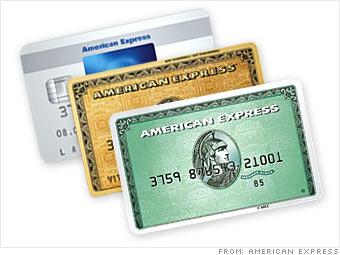
You may have seen TV commercials featuring American Express or Capital One credit cards that promise points or miles with the clout to get you any seat on any airline without blackout dates. Those financial services companies try to distinguish their own loyalty schemes from airline programs, which restrict access to award seats.

Non-airline programs are not affected by award seat limits, because they don’t need award availability to book you on a flight. Instead, they sell you a regular revenue ticket, charge the ticket price on your credit card, then credit the cash amount back to your card and take miles or points out of your account, whose number is based on a standard formula.

Let’s say that you want to use your Capital One miles for a free ticket. The Capital One website performs a flight search and you choose a flight that costs $100. Once the ticket is issued, 10,000 miles will be deducted from your account.

While Capital One values $1 at 100 miles, the American Express Membership Rewards program converts $1 into about 80 points, though the precise number varies based on the type of card you have.

By any measure, that is a lot of points. If we assume that the average U.S. domestic round-trip ticket costs about $500, Capital One will charge you 50,000 miles and American Express 40,000 points. In comparison, you need only 25,000 miles from most airline programs — if there is award availability, which is a big if.

Of course, many airlines will also give you any open revenue seat on any flight, but for double the miles required for a “saver award” — they call it “standard” or “anytime” award. If you need a First or Business Class ticket, the airlines will actually give you a better rate even on a “standard award.” Such an award from North America to Europe in Business Class will be about 200,000 miles. Assuming that the average revenue ticket costs about $5,000, Capital One will charge you 500,000 miles and American Express 400,000 points.

It’s worth noting that the airline mantra about giving you the last available seat on a flight as a “standard award” is changing, and that privilege is no longer available to everyone. For example, it’s one of the benefits of United’s new Mileage Plus Explorer Visa card from Chase, which means that customers who don’t have the card — and are not elite fliers — won’t have access to that last seat.

The real advantage of the tickets purchased with non-airline miles or points is that they earn miles, because they are in effect revenue tickets — the airlines will never know that you didn’t pay money for them.

That same model is used by some hotel loyalty programs, including Starwood and Priority Club, which allow points to be redeemed for flights. Even some airlines offer such options, in addition to their regular award redemption opportunities. For example, United’s Mileage Plus Choices program is very similar to Capital One’s scheme, valuing $1 at 100 miles — only miles earned from Mileage Plus co-branded credit cards can be used for such tickets.

RETURN TO MAIN COLUMN PAGE

Related stories:

All your loyalty programs on one screen

Flying with Obama and earning miles

Donate miles or money to Haiti?


Continue reading about The benefits of non-airline credit cards

nkralev on March 16th, 2011

Today’s column is rather unusual. I’d like to use this space to introduce the world’s first company to bridge the widening gap between the services provided by travel agencies and the growing and diverse needs of the sophisticated modern air traveler.

The launch of a brand-new website means that Kralev International LLC, the company I founded recently, is now officially open for business.

Kralev International is a very different travel consulting and training company. Its mission is to improve its clients’ travel life in ways they never thought possible. It helps both businesses and consumers significantly reduce travel costs, increase convenience, comfort and luxury, and generally navigate the increasingly complex air travel system more effectively.

We are aware of the limitations of a travel agency and the frustrations they cause a busy traveler, who wants much more than an airline booking. We’ve all had questions a travel agent couldn’t answer: Why did I find a lower fare online? How do I secure an upgrade? What’s the best frequent-flier program? How many miles will I earn? Which airlines have flat beds in Business Class to Europe? What’s the best Star Alliance lounge in Tokyo?

Why don’t travel agents have those answers? Because their job is largely limited to booking tickets in an office — not traveling. They have never been in your shoes, globe-trotting and living on the fly, so they don’t truly know your needs. We live your jet-setting life, so we do have those answers.

Our corporate services include strategic travel planning and cost-saving, exclusive air travel intelligence, flight upgrade strategies and tactics, securing elite airline status and frequent-flier account management. We offer both one-time and recurring training sessions, as well as per-trip and retainer-based Executive Privilege consulting services.

Even though we are not a travel agency, we do book complex international itineraries, because we can save you hundreds of dollars per ticket. For consumers, we have customized in-person and web training, and our unique Travel Angel consulting service, which includes frequent-flier account management, upgrade strategies, securing elite-status and booking airline award tickets.

At the bottom of the new site’s homepage, there is a section called “Challenge us.” Anyone planning a trip can take advantage of it. Tell us about the lowest fare you found and challenge us to beat it. We have saved clients up to $1,300 per person in coach and almost $5,000 in Business Class. The biggest savings, of course, are on international tickets.

If you have comments on the new site, which was designed by Blue Water Media in Washington, we’d love to hear your feedback.

RETURN TO MAIN COLUMN PAGE

Related stories:

Corporate travel’s lack of innovation

Educating the flying public

Time for travel school — you are invited

New seminar on travel-booking war

Continue reading about Kralev International launches website

nkralev on February 14th, 2011

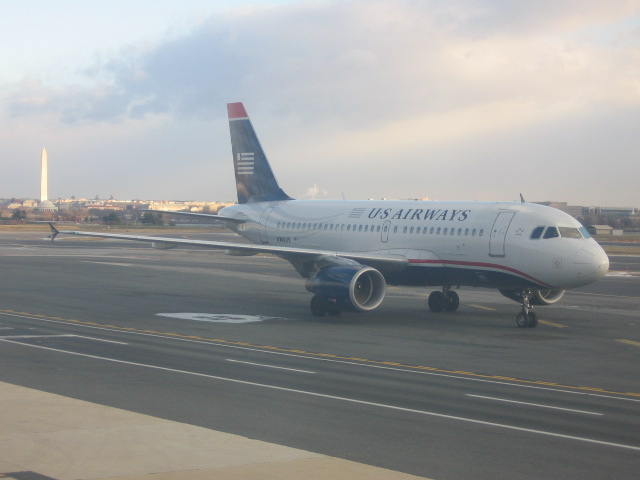
US Airways has denied recent suspicion that it has begun to block award seats made available by its Star Alliance partners for mileage redemption by members of its Dividend Miles program — a practice pioneered by United Airlines, which I first exposed in 2008.

The airline has been silent on the issue since reports about apparent blocking surfaced last fall. Many travelers said they found award inventory on various Star carriers, using one or more of the publicly available sources — the websites of All Nippon Airways, Continental Airlines and Air Canada — but US Airways agents were unable to see those available seats.

To some of us, that looked very much like StarNet blocking — manipulating the alliance’s award “middleware,” which provides access to any Star partner’s inventory on a first-come-first-served basis, to avoid paying other carriers for seats booked on their flights. The patterns resembled those on United, with the most filtering applied to Business and First Class cabins, though some fliers stumbled on coach seats as well. The most affected availability appeared to be on Lufthansa, but also on Swiss, United and others.

In addition, it made financial sense for US Airways to be limiting access to premium partner awards. In the last couple of years, it has in effect been printing miles with lightening speed, as a result of extraordinary promotions it has had, including selling miles at 100-percent bonus. Many Dividend Miles members bought miles and redeemed them for Business and First Class on partner flights, which likely weighed heavily on US Airways’ budget.

Several travel bloggers wrote about the issue, including Gary Leff on “View from the Wing” and Ben Schlappig on “One Mile at a Times.” Leff was more inclined to give the airline the benefit of the doubt, suggesting the problem might have been caused by technical glitches, as well as US Airways agents’ ignorance that some of their partners have First Class in addition to Business.

I’m not a big Dividend Miles fan, though I did help my sister buy miles for a trip to Europe with her family last summer, so it took me some time to look into the issue. I finally got around to it and alerted a US Airways contact at its Phoenix headquarters who has been very helpful in the past — Valerie Wunder, associate manager of media relations. She asked the powers that be and gave me the following response:

“We don’t block award inventory on other airlines, nor do we do the inverse — other Star partners block us from seeing their inventory to maximize their revenues.”

Probably the most frequent difficulty Dividend Miles members have been experiencing has to do with intercontinental First Class awards on Lufthansa, Swiss and others, so I asked Wunder if US Airways may be trying to restrict access to those specific seats.

“We have no restrictions on redemptions, regardless of class,” she said.

However, she offered no explanation for the problem. The mystery continues.

RETURN TO MAIN COLUMN PAGE

Related stories:

Clarifying United’s StarNet blocking

US Airways hears feedback, fixes website

New Lufthansa business class in a year

Continental shows new transparency

Continue reading about US Airways denies StarNet blocking