Continental Airlines
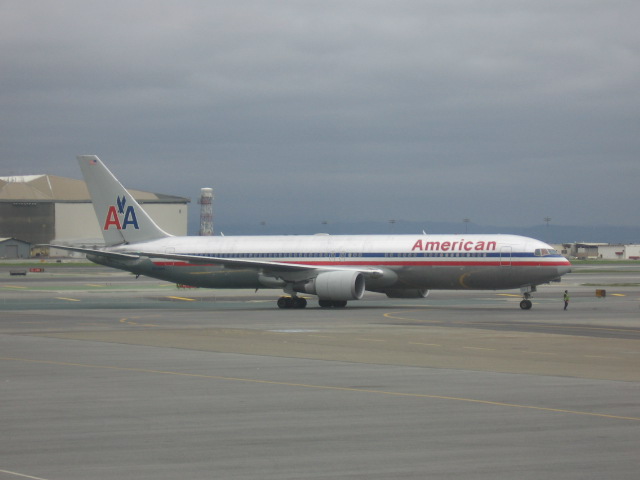
American Airlines has finally decided to take advantage of the problems many United Airlines fliers have experienced since the merger with Continental Airlines was completed on March 3. In an extremely rare move, American is now offering conditions-free top-elite status match to United’s most loyal customers.
Having read and heard about many United customers’ troubles after the carrier adopted Continental’s reservations system — and having encountered some problems myself — I e-mailed American spokesman Tim Smith on March 16. Smith has been the best PR person to deal with at any airline since I started writing my column in the Washington Times in 2008. I asked him whether American had any intention of capitalizing on United customers’ dissatisfaction by stealing some of them away through a status-match offer.
He involved his colleague Stacey Frantz, who works directly with American’s AAdvantage program. She said she couldn’t comment on “marketing strategies,” but it was apparent from her and Smith’s messages that American wasn’t considering such a move at the time. More than a month later, however, it decided to follow my suggestion — not that I’m taking any credit.
When the promotion first started last week, elite United fliers at all levels were eligible, but on Friday, American decided to limit participation only to United Premier 1K members, the highest published level. A memo was sent out to customer service agents on that day. So if you are a 1K, you can get Executive Platinum status on American.
The carrier is not advertising the promotion, so you need to call AAdvantage Customer Service to request an e-mail outlining the offer. Status is valid through February 2013, and all you have to do is submit proof of your current elite status with United. On the rare occasions when American has offered matches in the past, it has extended challenges, meaning you had to fly a certain number of miles during a certain period to qualify. There are no conditions this time. Challenges to Executive Platinum have been even rarer than to other levels.
But is Executive Platinum better than 1K, and is American better than United? Let’s review.
Executive Platinum advantages
This is truly American’s top elite level. Concierge Key, the unpublished super status that George Clooney’s character had in “Up in the Air,” is awarded only by invitation to very few hyper-frequent and high-paying travelers. In contract, United’s Global Services status has been given to so many people — albeit still “by invitation” — that it has somewhat devalued the 1K level.
Executive Platinum members are the only ones eligible for complimentary domestic upgrades that clear as early as 100 hours before a flight — at United, all elite fliers are, and lower-level elites on full-fare tickets trump 1K members on discounted fares. United also aggressively sells domestic upgrades at check-in for as little as tens of dollars to non-elites, while elites linger on waiting lists. As a result, the upgrade rates for 1Ks have gone down significantly.
As for international — or systemwide — upgrades, American is much more generous than United. Executive Platinum members get eight of those so-called eVIP certificates each year, compared to six for 1Ks. More importantly, on American, they are valid on all published fares, while United excludes its five lowest booking classes — S, T, L, K and G — requiring at least W class. That means you need to pay hundreds of dollars more on W class, and if your upgrade doesn’t clear, you’ve wasted your money.
American has the best domestic First Class soft product. It’s the only airline to still use linens and menus during meal service, as well as pillows and blankets on transcontinental flights. United used to have linens, pillows and blankets before the merger with Continental, but it lost them. The food also tends to be better on American. Many of its domestic planes have no in-flight entertainment at all, though wi-fi has been installed on a big part of its fleet.
As an Executive Platinum, you get Emerald status on the global Oneworld alliance, which gives you access to First Class lounges on foreign Oneworld members, such as Cathay Pacific and Qantas. The Star Alliance has only two levels, instead of Oneworld’s three, so United Gold, Platinum and 1K members get the same access to Business Class lounges.
American has dedicated agents working on the Executive Platinum phone line, and they are not only the best trained agents in the airline industry, but also the ones given the most authority and discretion to help customers in any way possible, even if that means sometimes bending the rules. United’s so-called 1K Desk is not really a dedicated desk — those agents service all callers, but 1Ks get priority in the queue.
No one knows if any of the above might change as a result of American’s Chapter 11 restructuring or in a potential merger with US Airways, but this is where things stand right now. For me, American’s main disadvantages are the limits of Oneworld, whose size is about half the Star Alliance’s, the hefty fuel surcharges imposed on award tickets with British Airways flights, and those old McDonnell Douglas planes American still flies. In addition, if you live in a United hub, it might be hard to give up nonstop flights to many destinations in favor of connections on American. That said, American often offers very low fares out of United hubs, while United does the same out of American hubs.
Premier 1K advantages
United offers 1K members so-called regional upgrade certificates, which can be used to confirm an upgrade on North and Central American flights at the time of ticketing — just like using miles or systemwide upgrades. Unfortunately, this year, United reduced the regional certificates from eight to four a year. It also eliminated the two upgrades million-mile fliers used to get annually. It’s worth noting that the Executive Platinum exclusive perk of complimentary upgrades on American compensates for the lack of certificates to a large extent, though those can be confirmed only within 100 of departure.
United offers instant upgrades without requiring any “instrument” to 1Ks on domestic M fares — all elites get the same benefit on the higher Y and B fares — as soon as the time of ticketing. The inventory is controlled separately and is not the same as regular First Class availability (it books in PN class).
United waives same-day confirmed changes on domestic flights for 1Ks, while American doesn’t for Executive Platinums. United also waives award booking, change and redeposit fees on tickets issued with 1K members’ miles — regardless of who the passenger is. American does so only if the Executive Platinum member is the passenger.
United allows stopovers on round-trip international award tickets. American permits those only in U.S. gateways — the city where you leave or arrive in the United States.
The biggest advantage United has is its membership in the Star Alliance, which has 25 member-carriers, including some of the best in the world, such as All Nippon, Asiana, Singapore, Air New Zealand and Swiss.
The biggest problem with United is that its new management doesn’t value long-term loyalty nearly as much as American’s — or United’s previous leadership team, for that matter. Unfortunately, my prediction in 2010, based on warnings from departing United executives at the time, came true after the merger was finalized. The current management apparently cares much more about making a quick buck. It prefers to sell an upgrade seat from Seattle to Washington Dulles to a non-elite flier for $99, as reported on FlyerTalk by a passenger who took advantage of that offer, rather than give the seat to a 1K member who spends tens of thousands of dollars on United a year. So much for complimentary upgrades.
At the end of the day, the choice is yours. If I’ve missed anything on either airline, feel free to let me know.
Related stories:
Did United choose the best rez system?
United, Continental execs at odds over loyalty program
American ends stopovers on ‘awards’
Continental shows new transparency
United executive breaks old barriers
Continue reading about American tries to entice top United fliers
Nearly 3,000 U.S. diplomats have urged United Airlines to extend to them a waiver from its more expensive and “unfriendly” new pet travel policy that the carrier has granted the military, the diplomats’ union said. While it took United just days to exempt the military, it has been mulling the State Department’s request for weeks.
The biggest hurdle appears to be the lack of understanding by United’s management — as is the case with most people — what the Foreign Service does, and why diplomats’ service to their country is no less important than the military’s. That’s exactly why — long before this issue arose — I decided to write my upcoming book “America’s Other Army.”
“Our immediate goal is for United to extend the waiver they have granted our military colleagues to civilian federal employees traveling on official ‘permanent change of station’ orders,” said Susan Johnson, president of the American Foreign Service Association (AFSA). “This would allow federal employees assigned to embassies and missions abroad to continue to ship companion animals not eligible to travel in cabin as accompanied baggage at excess baggage rates, and makes use of professional pet shippers, freight forwarders, or cargo handlers optional.”
AFSA first sent a letter to United’s CEO Jeff Smisek on March 2, the day before the new policy took effect, Johnson said. The policy, known as PetSafe, had been used by Continental Airlines for more than decade, according to a former Continental employee whose daughter is in the Foreign Service. After the United-Continental merger was completed, the combined carrier’s pet policy followed what Continental used to do — just like almost everything else, including the reservations system, about which I wrote earlier this month. Smisek was Continental’s CEO.
Under the old policy, which was similar to that of most other airlines, pets that were too big to take in the cabin could be checked as excess luggage handled by the carrier, at an average rate of about $250 per each way. PetSafe requires that those animals be treated as cargo. In many countries, all cargo is subject to inspections and other customs formalities, which are typically handled by third-party vendors. The fees for those services range from hundreds to thousands of dollars.
Following the military’s outcry late last month, United quickly decided to allow personnel traveling to a new station to check pets as luggage and avoid a third-party provider — and the higher fees. However, United spokeswoman Mary Ryan said in an e-mail message, “We do not have plans to extend this exemption to anyone beyond military members who are traveling on orders or permanent change of station only.”
Mike Oslansky, senior manager for cargo marketing, customer service and business systems, responded to AFSA’s letter to Smisek, saying that United developed the waiver for the military “in recognition of the commitment made by members of our military and the family members (including the four-legged ones) who share in their sacrifice” and intends to limit this “special process” to military families only, Johnson said.
It seems United’s management doesn’t think that American diplomats make any sacrifices when serving in Iraq, Afghanistan, Pakistan, Sudan, the Congo and many other extremely dangerous places. Not all diplomats are posted to London and Paris — not that those “cushy” in most people’s minds posts are not dangerous, judging by the 2005 London terrorist attacks or last week’s murders in the French city of Toulouse.
By many accounts, PetSafe has been very successful domestically. United takes care of the pets without using third-party vendors, it automatically transfers the animals to connecting flights on its own aircraft and keeps them in air-conditioned facilities during layovers. Although the pets are checked in as cargo, there are no customs or other bureaucratic formalities, so the service is not too expensive.
However, that doesn’t work internationally most of the time. Very few diplomats take a nonstop flight to their new post. In some cases, they make two or even three connections. In each city, they are now forced to leave the passenger terminal, walk or take a taxi to the cargo terminal, collect their pets, recheck them in — often on a different airline, which could add more fees — then return to the passenger terminal, go through security again, and finally arrive at their next gate. By the time all that happens, they may well miss their connecting flight. Even worse if a single parent with small children is trying to accomplish those tasks.
Because of the so-called Fly America Act, the federal government must book its employees on U.S. carriers — on full-fare tickets. Foreign Service members and their families often end up on United, and many of them are elite MileagePlus members. The State Department and its 50,000 employees around the world have supported United for decades. Not to mention that one of the missions of the Foreign Service is to help create and expand business opportunities for U.S. companies, and airlines tend to benefit from that significantly.
The State Department is not seeking a waiver from the new policy for all 50,000 employees. In fact, more than 30,000 are locally hired foreign nationals who don’t travel as much as the American officials. At issue are only the 12,000 Foreign Service members — a fraction of the overseas military personnel — and only when they change posts, not Washington-based officials who may travel several times a month. After all, anyone moving from Bolivia to Uganda would find PetSafe very challenging, indeed.
Patrick Kennedy, undersecretary of state for management, has spoken with Marc Anderson, United’s senior vice president of corporate and government affairs, Johnson said, but that conversation has yet to produce results. More than 2,800 AFSA members have sent e-mail messages to Smisek and other United executives, she added.
“I love the Foreign Service,” an officer in Southeast Asia told me, “but moving my family is getting harder and harder.”
Related stories:
Foreign Service: America’s other army
Round the world in a week, without pain
Did United choose the best rez system?
United, Continental execs at odds over loyalty program
Continental shows new transparency
United executive breaks old barriers
Continue reading about Diplomats decry new United pet policy
The decision by United Airlines’ management to use Continental’s Shares reservations system for the merged carrier has been causing serious problems since its implementation last weekend. So the news that the airline is working on a new version of its IT platform, integrating some of the features of the pre-merger United’s Apollo system, is very welcome, indeed.
It was hardly surprising that CEO Jeff Smisek and his team chose to keep Shares, given that most policies and practices of the combined carrier have followed the way Continental did business under Smisek. But in this case, the decision made good financial sense — Continental has owned Shares for years, while United paid Travelport, the company that owns Apollo.
As I completed the last research trip for my upcoming book on the U.S. Foreign Service on Sunday, I was worried much less than many passengers and United employees, who had warned me not to fly during the first days of the integrated system. The merger was first announced in May 2010, so the company surely had plenty of time to prepare — and if not, it would have delayed integration, I thought.
I was wrong. On the first day of the new era, March 3, I monitored the situation from Frankfurt, where I overnighted on my way back from Iraq. Delays were widespread, which the United employees I talked to the next day attributed largely to their inability to board passengers automatically by scanning boarding passes — each person had to be boarded manually.
The other reason for the problems was how unprepared pre-merger United agents were to use Shares. They had been trained, but obviously not quite enough — actually, it may be more a matter of experience than training.
The real issue is Shares’ complexity, clumsiness, use-unfriendliness and lack of intuitiveness compared to Apollo. That was my first impression when I initially looked at it at three different airports, and it was confirmed by several longtime United employees, some of whom showed me long multiple-page instructions for basic functions, which resembled complex formulas.
Some agents are still having trouble printing boarding passes for flights for which I’d checked in online — one said, “It would have taken me five seconds in Apollo.” Others find it challenging to decipher seat maps.
I didn’t want to make a final judgment on Shares without consulting Continental employees, who have been using the system for years, and I had a chance to do that yesterday. Those agents had been sent to pre-merger United stations to help their inexperienced new colleagues — but from what I could see, there was much more demand than supply.
Those Continental agents, who also had some knowledge of Apollo, agreed with my first impressions of Shares. They also told me that Continental hadn’t invested much in modernizing Shares, but that was about to change. In a few months, they said, there will be a new version combining current features with some of the best Apollo functions.
One can only hope. The question is, why couldn’t integration wait until then? Those poor pre-merger United agents have to learn one system now, and another — apparently less complicated — in a few months?
I asked a corporate contact at United about the new plans and received the following response: “I think you’ve been hearing about a new GUI [graphical user interface] that will be added to Shares later this year. It will make it more user-friendly for our agents. We didn’t want to postpone the customer benefits that were gained by going to one passenger service system — one frequent-flier program, one website, any agent able to help any customer, etc. — by waiting until the GUI was in place.”
A task of this magnitude will always be accompanied by problems, especially at the world’s largest airline. At least for me, however, those problems have been much worse than I expected. Perhaps this is due in part to the higher numbers of pre-merger United employees compared to Continental’s — after all, United was the bigger airline.
Shares is incapable of performing some vital functions that Apollo offered. For example, upgrades using miles or certificates can no longer be waitlisted less than 24 hours before departure. So if your international flight, which you have upgraded with miles, is canceled and you are rebooked on another flight, you won’t be put on an upgrade waitlist on the day of travel. If, however, there is an available upgrade seat, you should be able to get it.
Another problem that is affecting thousands of passengers has to do with upgrades waitlisted in Apollo before the conversion. All segments waitlisted in NF booking class, which United used for upgrades to First Class, converted into ON in Shares. ON inventory exists only on three-cabin aircraft. On two-cabin planes however, the correct code is R. So if you are waitlisted in ON on a two-cabin domestic flight, you will never clear, because there will never be availability in that booking class.
United has a representative on FlyerTalk who monitors various comments, and she has indicated the carrier is aware of the incorrect conversion issue but hasn’t yet found a solution.
One of my favorite features of the old Continental website, which United’s didn’t have, was the information about where your aircraft is coming from. I was very happy it was preserved on the new site, but my happiness has been seriously tempered this week. The tool is offering plenty of erroneous data.
Just one example: Today’s flight 984 from San Francisco to Portland, OR, is operated on a Boeing 757. According to the website, the plane is coming from Monterey, CA. The problem is that the aircraft flying back from Monterey is an Embraer regional jet.
Here is the silver lining in all this: Whatever the problems at the new United, they pale in comparison to the systemic breakdowns that occurred during the US Airways-America West merger in the middle of the last decade.
Related stories:
United steps up fake ‘direct’ flights
United, Continental execs at odds over loyalty program
Continental shows new transparency
United executive breaks old barriers
Continue reading about Did United choose the best rez system?
It’s no secret that the U.S. government wastes huge amounts of money on airfare, and that waste has been institutionalized. So it’s hardly a surprise that Republican presidential candidate Ron Paul has done the same, as an Associated Press story pointed out yesterday.
The reason for the story was the apparent discrepancy between Paul’s crusade against excessive government spending and his own spending. But while he did waste taxpayers’ money, he didn’t break any rules. So perhaps it’s time for the rules to change.
Government employees are usually required to buy full-fare tickets — meaning Y or B booking class — when traveling on business. The main reason for that is to have the flexibility to change and cancel those tickets for free.
Because of the massive amount of business the federal government gives the airlines, they provide it with special fares, which still carry the Y and B codes but are much cheaper than the regular published Y and B fares. For instance, the discount on a round-trip coach ticket to Europe can be over $2,500. I gave a specific example in a column last July.
However, those special fares are still much more expensive than the lowest published fares, which of course come with penalties for changes and cancellations — and while most of them are non-refundable, one can almost always use the amount paid, minus the change fee, for a future ticket.
I would guess that buying regular non-special fares and paying the penalty if necessary would be much cheaper than purchasing full-fare tickets. History shows that changes are not made too frequently.
There is another source of waste. Although the government fares are free to change and cancel, that “free” applies only to the airlines, meaning there are no airline-imposed penalties. Booking government travel is handled by large travel agencies, which charge as much as $90 per transaction — every time one of their agents touches a ticket to issue, change or cancel it.
First and Business Class tickets are usually allowed only on very long intercontinental flights, though each government agency can set its own policy. The rules are often bent for top management, and members of Congress certainly fall in that category.
The AP story said that Paul flew in paid First Class dozens of times since May 2009 on Continental flights between Washington and his Texas district. In addition, even when his office bough coach tickets, he often got upgraded, because Continental offers instant upgrades on Y and B fares, depending on availability.
So while it may be more prudent for Paul to put his money where his mouth is, the much bigger question is whether the current rules for government air travel need a fresh look.
In fact, any government agency could probably save millions if it used the Kralev Method from “Decoding Air Travel.” Pardon the shameless plug, but I’d be happy to teach them.
Related stories:
ExpertFlyer boosts airfare transparency
Myths vs. realities of celebrity travel
In air with Clinton on first trip abroad
Clinton weathers job’s long flights
Continue reading about Rethinking government air travel costs
United Airlines, already one of the biggest abusers of fake “direct” flights before its merger with Continental, has increased further the number of those flights in its schedule. Its oddest decision was to introduce fictitious “direct” flights, which consist of two or more segments with nothing in common but their number, between its hubs.
If you are shopping for a ticket from Chicago (ORD) to Denver (DEN), be very careful which flight you book. In addition to 10 daily nonstops with flying time of about 2 hours, United currently has three “direct” flights on that route, but they make a “stop” in Minneapolis (MSP), Des Moines, Iowa, (DSM) and Kansas City, Mo., (MCI), respectively.
Watch out for any indication of that, as obscure as it may be. In most cases, those are not just “stops” — the two “legs” are operated by different aircraft, so they are simply connecting flights. For example, the first “leg” of flight 817 yesterday arrived in Minneapolis at gate E6, but the “continuation” departed from gate E10.
As I’ve written before, most flights labelled “direct” by U.S. carriers are fictitious — they don’t exist in real life. They are meant to make more money for the airlines by tricking customers and perverting a practice that was actually started to help travelers. In fact, they spell nothing but trouble for passengers.
Historically, United and Delta have had more fake “direct” flights in their schedules than any other U.S. carriers, though all airlines engage in that practice.
For years, United has focused on adding at least one domestic tag to most of its international flights. For instance, flight 917 from Frankfurt (FRA) to Washington (IAD) “continues” on to Seattle (SEA), though the second flight has nothing in common with the fist. Yesterday, the flight from FRA was operated by a three-cabin Boeing 777, as usual, and arrived at IAD at gate C1. The flight to SEA was operated by a two-cabin Boeing 757 and departed from gate D4.
In the last several months, United has significantly stepped up the questionable practice on purely domestic flights. Currently, there are very few flights with only one segment. Most flights between Washington National (DCA) and Chicago (ORD) used to be one-leg flights. Now, most are part of fake “direct” flights with two or three segments.
It’s clear why the airline is selling “direct” flights from DCA to San Francisco (SFO) — it wants you to think that you can go all the way to the West coast from DCA with no hassle.
But why on earth is it selling fake “direct” flights from IAD to SFO, given that there are nine nonstops on that hub-to-hub route on most days? In its upcoming winter schedule, it has four “direct” flights between those cities. Two of them have two segments — one “stopping” in Dallas (DFW) and one in SEA. The other two have three segments each — one “stopping” in DEN and Las Vegas (LAS), and the other one in ORD and San Diego (SAN).
Is it possible that United has run out of flight numbers because of the merger? That may be the case with three-digit numbers, but what’s wrong with four-digit ones?
Related stories:
DOT should ban fictitious flights
Airlines abuse ‘direct’ flights
United, Continental execs at odds over loyalty program
Continue reading about United steps up fake ‘direct’ flights