Hotels

nkralev on March 23rd, 2011

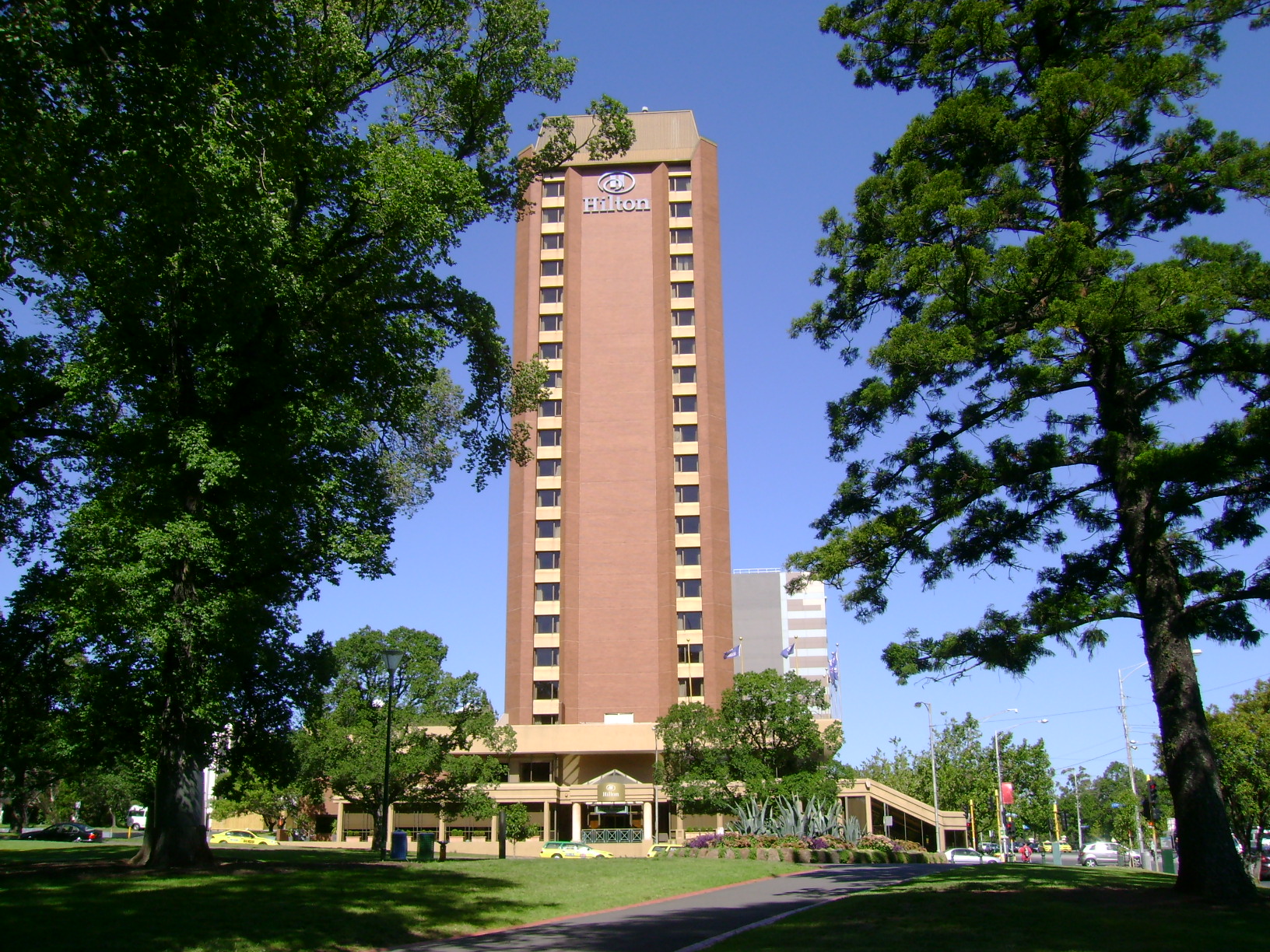
When it comes to elite status downgrades, the landing can be either hard or soft, and each company in the travel industry has its own rules. Hilton’s harsh and inflexible policy has just made it easier for me to defect — a move I’ve been contemplating for more than a year.

I have previously written columns critical of Hilton HHonors, the hotel chain’s loyalty program. I haven’t enjoyed it, because I like the person in charge of the program — Jeff Diskin, senior vice president for global customer marketing at Hilton Worldwide. However, Hilton HHonors has lost much of its competitiveness in recent years.

I’ve been a Diamond member of the program consistently since 2003, and the Hilton chain was my first choice when booking hotel rooms for years. If it had no properties in the place I was going to — or they were too expensive — my second choice was Starwood, the program that includes Sheraton, Westin and St. Regis, among other brands.

I have two main criteria when I assess hotel loyalty schemes. The first is the meaningfulness of the benefits that come with elite status. The second is the number of points accrued on paid hotel stays and the points needed for an award stay. On both fronts, Hilton HHonors has fallen behind its competitors. Top elite benefits are not as good as those at Starwoord or Hyatt, for example, and award rates have been significantly inflated — more so when compared to other programs’ points devaluation.

My travel slowed down in 2010 — I flew just over 100,000 miles instead of the 200,000 the previous year — and I knew I wouldn’t accrue the 28 stays required to maintain my Diamond status. Many companies, including Starwood and the airline British Midland (BMI), offer elite members who haven’t met the requirements for re-qualification a soft landing — they downgrade you to the next lower elite tier, not the bottom one, regardless of how many points or miles you’ve accumulated in the last year.

I had only two stays with Starwood in 2010, and I needed 10 to qualify for Gold status. However, as a Platinum member last year who lost the status for 2011, I was given Gold status anyway. The same thing happened with my BMI membership — I went from Gold to Silver, even though I didn’t credit a single mile to my BMI account in 2010.

Ironically, I almost had the number of stays needed for Gold Hilton status but was still downgraded from Diamond to Silver last week. I could have had Silver after only four stays, instead of the 14 I made. I knew about Hilton’s hard-landing policy but thought that getting closer to the required 16 stays might help. On a trip to Las Vegas in December, my non-Hilton hotel was included in a prepaid package. Still, I decided to book a room at the Hilton and pay extra — that was my 14th stay.

However, Hilton HHonors showed no appreciation whatsoever. So I got Starwood Gold after two stays, but 14 stays weren’t enough for Hilton. I realize there are official policies, but that’s not the point. There are many ways to reward customer loyalty, especially after seven years of qualifying for Diamond status — not with credit card spending, but with actual hotel stays.

Hilton Worldwide has some great properties. The Conrad hotels are among my favorites, particularly those in Asia. I’ve been delaying the inevitable, but Hilton HHonors just made it easier to say goodbye. The program no doubt still works for many travelers, but it doesn’t work for me — and that’s what matters.

RETURN TO MAIN COLUMN PAGE

Related stories:

Hilton embraces ‘games-players’

Hilton or Starwood? Not even a close call

Hilton, InterContinental cross swords

Hilton devalues its loyalty program

Continue reading about Hilton tries hard to lose my business
nkralev on February 1st, 2011

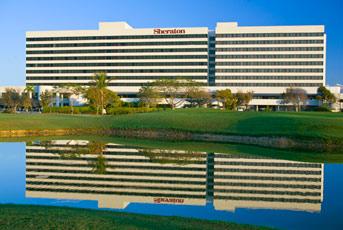
I’m no expert in hotel management, but it seems reasonable to expect that, when a Wyndham property becomes a Sheraton, there would be a transition period — even just one day — during which the hotel would be closed to make various changes. That didn’t happen in Miami, and hundreds of guests are still being disserviced as a result every day.

I stayed at the Sheraton Miami Airport last week and was stunned how easily a hotel can get away with charging high rates but failing to provide basic necessities, such as heat. I’m all for letting the market determine prices, except that guests book rooms at the Sheraton not knowing they will be cold and their TV won’t work.

I realize it’s warm in Miami this time of year, and the temperature reached the low 70s the day I checked in at the Sheraton — but at night it fell to about 50F. For me, that’s cold. Moreover, most U.S. hotels are obsessed with air-conditioning, and my rooms are often frigidly cold when I arrive. I expected to be warm in Miami — if I wanted cold, I would have stayed in DC.

The heating capability of my air-conditioner in Miami was disabled, and the only thing I could do was to at least turn off the cold, but not much had changed three hours later. The temperature outside dropped, and cold air from the hallway was coming in through the unusually wide gaps under my door and on the side.

I had work to do but wasn’t being very productive, so I thought I’d watch a little TV to take my mind off the cold. Another surprise: Most channels on the fancy flat TV didn’t work. I approached the desk to call guest services and realized there was no phone on it. There was one on the nightstand.

By the way, I was in one of the hotel’s best rooms, according to the clerk who checked me in. I’d used my Starwood points to reserve an upgraded room, even though I should have received a free upgrade as a Platinum Starwood member.

I went down to the front desk and alerted the same clerk about the phoneless desk, thinking it was probably an oversight. I couldn’t remember the last time I’d stayed at a hotel of that category that didn’t have a phone on the desk. I’d been at the Hampton Inn at the Miami airport the night before, and that much cheaper property had two phones in the room. Obviously, it’s not a big deal, but there are certain standards hotels are required to respect to maintain their category.

The clerk said he’d never heard of any hotel room having two phones. Minutes later, an engineer who came to my room told me a different story. The hotel had been a Wyndham property until Dec. 15, 2010, when it became a Sheraton overnight. The new management decided it would keep it open and save money by fixing things over the following few months with guests in the building.

There had been desk phones, in addition to those on nightstands, but the new masters got rid of them — it wasn’t clear if they will be replaced. The TV problems were due to some work being done as part of the transition.

As for the temperature, the engineer said the heating equipment in most rooms had been dilapidated for years, but the previous management decided not to fix it. Moreover, they also ordered all portable heaters disposed of. Only 14 of the hotel’s 405 rooms still had a heating capability, and I was eventually moved to one of them. I lost the upgrade I’d paid for, but that was no longer important.

Perhaps the Sheraton’s new management could have been less greedy and closed the hotel for a few days until all problems got taken care of. It would have lost some revenue, but it would have been the proper thing to do.

RETURN TO MAIN COLUMN PAGE

Related stories:

Hilton or Starwood? Not even a close call

How not to sell hotel rooms

Hotels find smoking fines hard to charge

Great hotel and non-smoking conference in Moscow

Continue reading about Wyndham today, Sheraton tomorrow

nkralev on October 1st, 2010

Are you tired of logging in to dozens of accounts for your airline, hotel and rental car loyalty programs? It was high time a website came along that displayed all those balances on one page, so you can see quickly when your miles expire or how many more hotel points you’ve earned since your last log-in.

Last year, I received an e-mail message from one of the founders of AwardWallet.com, suggesting I write a column about the new site. I wanted to wait until I’d tried it, and that took a while, but now that it’s been a few months since I signed up, I’m glad it came along.

The site supports hundreds of programs, including schemes for credit cards, dining and shopping, such as OpenTable, iDine and CVS’ ExtraCare, and it’s constantly adding new ones. All you need to do is provide the user name and password for each of your accounts, and the next time you log in, all your balances will be displayed on the same page.

Another page shows your upcoming trips — but you don’t need to do anything extra to create those trips. Because your AwardWallet account is already linked to all your airline and hotel programs, as soon as you book a plane ticket or make a hotel reservation, it’s automatically added to AwardWallet. The site also e-mails reminders to check in for your upcoming flight online.

There are some little quirks that can be a bit annoying, but they seem to be beyond AwardWallet’s control. For example, when a schedule change occurs for a booked itinerary and the ticket is reissued, the site creates a completely new trip but doesn’t delete the old one.

Still, the service the site provides for free is unique, useful and will make your life quite a bit easier.

RETURN TO MAIN COLUMN PAGE

Related stories:

Keeping track of your trips

Continue reading about All your loyalty programs on one screen

nkralev on September 20th, 2010

If you are in the hospitality business and a potential customer inquires about a product or service you are not offering at the moment, would you suggest an alternative or simply send the person away? The reservations office at the Dorchester South Beach Hotel did the latter last week, which I attributed to poorly trained staff.

I noticed on TravelZoo’s Twitter page a very attractive deal at the Dorchester, promising a room “across the street from the ocean in Miami’s trendy South Beach Art Deco District for $69 per night.” I just booked a trip to Miami in January, and though it seemed the promotion wouldn’t last that long, I thought I’d inquire anyway.

I called the hotel’s in-house reservations number, and an agent named Alvaro told me the low rate was valid only through late October. I expected he’d ask about my dates and at least check what rates he could offer — if not try to persuade me that the Dorchester’s standard prices are cheaper than the competition and I should absolutely stay there.

But Alvaro was in such a hurry to get rid of me that not only did he care little about when I wanted to visit, but I had no desire to ask about the January rates myself. I hung up in astonishment, but then I thought that it was Saturday and perhaps he was alone in the office and had other calls to answer — although I didn’t hear the phone ringing.

So I called back, only to receive the same apathy. Alvaro answered my question by telling me the standard rate was $179, and then reluctantly checked that a weekend night was $30 more. His tone and terse responses were the same as before. He obviously had no interest in even trying to win me over as a customer.

I expect his boss cares more than he does, but the Dorchester is a reputable hotel and should train its staff better. We all get annoyed sometimes when sales representatives go over the top trying to get us to buy something, even if it’s not remotely close to what we were looking for in the first place. But I’ve rarely encountered such poor customer service at what is supposed to be a luxury hospitality company.

RETURN TO MAIN COLUMN PAGE

Related stories:

Travel companies teach customer-service lessons

Hotels offer flexibility to earn loyalty

Top hotel benefits suddenly denied

Hotel rates too high? Get creative!

Continue reading about How not to sell hotel rooms

nkralev on August 27th, 2010

If you check in to a smoke-free hotel, you are usually warned that you’d be fined for smoking in your room and even required to initial a written warning. It turns out, however, that you can easily get away with no charge unless a hotel employee catches you while smoking.

I stayed at one of those smoke-free hotels in Wichita, Kan., this week and initialed one of those pieces of paper saying the fine would be $250 if the smoking ban wasn’t observed. I’ve never smoked and am, in fact, allergic to smoke, so I was very happy with the policy. But as soon as I opened the door to my assigned room, the unpleasant smell hit me.

The only other available room was a penthouse-style suite, so I was of course happy to move. My first night was, indeed, smoke-free, but the following night things changed. I smelled cigarette smoke on the suite’s lower level, but the bedroom on the upper level seemed fine, so I didn’t complain to the hotel staff.

Big mistake. Early in the morning, I was awoken by that smell. I asked housekeeping to come and figure out the source of the smell, so I wouldn’t be charged the fine. They reported that the guest in the room below mine had been smoking. I said I hoped he’d be fined — only to be told that he’d just checked out, and they couldn’t fine him unless they had caught him in the act. “It’s my word against his,” the housekeeping supervisor said.

Had I complained the night before while he was smoking, things would have been different. That was the last time I hesitate before complaining in a hotel.

RETURN TO MAIN COLUMN PAGE

Continue reading about Hotels find smoking fines hard to charge