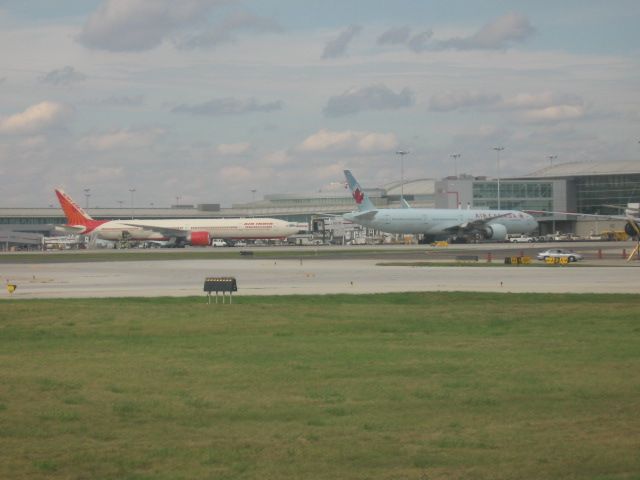
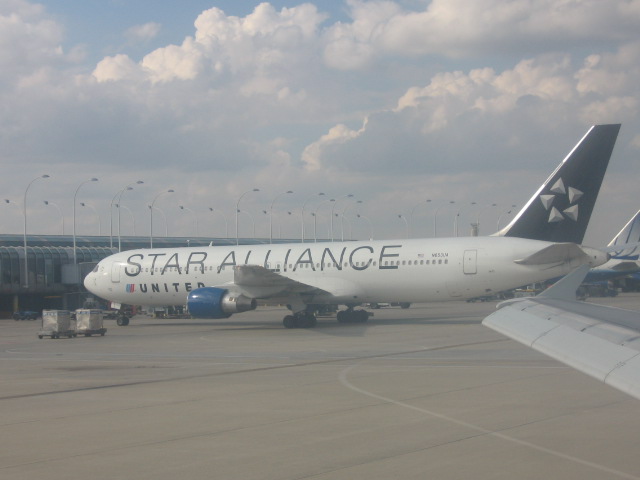
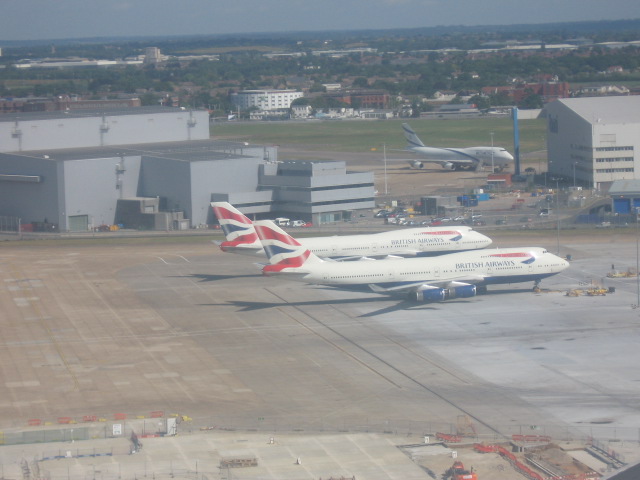
The Indian government is engaging in apparent blackmail of the Star Alliance, following the global airline group’s rejection of Air India’s membership application. New Delhi’s threat to take away traffic rights from Star members is about to test the diplomatic skills of both the affected carriers and the alliance leadership.
As I wrote in August, Star really, really wanted to add Air India to its network, because of the large and fast-growing Indian market. It spent more time, effort and money on helping Air India meet the membership requirements than it has with any other candidate. At the end, however, Air India’s entrenched corporate culture and internal Indian politics became unbearable, and the alliance gave up.
New Delhi wasted no time devising retaliation. Within weeks of Air India’s rejection, the government informed Austrian Airlines and Swiss International Airlines that their traffic rights are in danger, as reported extensively in the Indian press. The official reason was the two carriers’ ownership, in which Germany’s Lufthansa has controlling stakes.
That, of course, has been the case for years, and no one believed this was the real reason for India’s threat. It made another move, refusing to grant landing rights in New Delhi to Lufthansa’s Airbus 380. This time, Indian officials didn’t even try to hide the linkage to Air India’s failed Star application, accusing Lufthansa of sabotaging the Indian bid.
A couple of weeks later, reports appeared in Indian newspapers that Star and Air India had resumed negotiations. That sort of made sense, given India’s multiple threats, but the only sources in those stories were Indian officials — confirmation from Star was suspiciously missing.
So I did a little digging, and it turns out Air India has had no official contacts with the alliance since talks broke down in the summer. There may have been unofficial contacts, but a resumption of negotiations doesn’t happen unofficially.
It’s high time the Indians rethought their priorities and tactics. Blackmail is not the best strategy to earn international respect and recognition for your national carrier.
In the very first column I wrote about Star in 2008, I argued that leading an airline alliance is essentially practicing international diplomacy. The main subject in that piece, then-Star CEO Jaan Albrecht, recently became CEO of Austrian Airlines, so one of his first orders of business was dealing with India again. As if he didn’t have enough of that in the last four years.
Related stories:
AirIndia had no chance with Star Alliance
Is India going too far in curbing airfares?
UAE mixes aviation and foreign policy
Continue reading about India tries to blackmail Star Alliance
Air India’s entrenched corporate culture and internal Indian politics cost the carrier membership in the global Star Alliance. Although Star’s leadership went out of its way to help the airline meet the group’s more than 200 requirements, it finally gave up the futile effort last week and suspended accession talks.
Not surprisingly, Air India has been trying to assign blame to anyone but itself, pointing a finger at Lufthansa and accusing it of sabotaging the Indian carrier’s potential membership. Regrettably, it appears the airline has learned little from the nearly four-year experience. It needs to do some serious soul-searching if it wants to survive.
Star showed remarkable patience and continued to hope against hope that Air India would live up to its promise and achieve the necessary standards in safety, customer service, on-board experience, operations, etc. The alliance makes decisions based on consensus, and all its members voted to invite Air India in late 2007. The accession process is rather costly for both the candidate and the alliance, so no member voted lightly and fully expected the invitee to become to join the group.
They all underestimated the problems they would encounter. Air India was initially supposed to come on board in March 2009, but Star agreed to extend the qualification period. It really wanted its carriers to gain broader access to the large Indian market.
Star CEO Jaan Albrecht, about whom I’ve written several times, has been saying for years that one of his top priorities is filling the three major “white spots” in the alliance’s network: Brazil, India and Russia. Brazil’s TAM joined in 2010, though its merger with Chile’s LAN has created uncertainty about the new airline’s future allegiance. There is no obvious Russian carrier to be seriously considered at this time.
So it was very important for Star to full the big South Asia “white spot.” Albrecht himself made repeated trips to India in the last year in a tortuous effort to save Air India’s faltering bid.
However, the reality is that Air India never truly had a chance with the oldest and largest global alliance. I felt several times during this process that having Air India as a member anytime soon was more wishful thinking than a realistic expectation. In fact, many frequent travelers feared that Star might lower its standards to accommodate India’s national carrier.
To the alliance’s credit, that didn’t happen. Rejecting Air India’s application was the right decision, no matter how the carrier tries to spin the outcome. The group’s attention in India is now focused on Jet Airways, which is already a code-share partner of several Star carrier, and possibly Kingfisher Airlines — they both have a much stellar reputation than Air India’s.
Star was founded by United Airlines, Lufthansa, Air Canada, Scandinavian (SAS) and Thai Airways. Today, it has 27 members from 25 countries, which have more than 4,000 aircraft in their fleets and fly over 600 million passengers a year on 21,000 daily flights to 1,160 airports in 181 countries.
Related stories:
Round-the-world fare mysteries revealed
Is India going too far in curbing airfares?
Continue reading about AirIndia had no chance with Star Alliance
One of this column’s goals is to point out nuisances in the air travel system and help you avoid them or minimize their negative impact. As I welcome the many readers who have become subscribers since my book, “Decoding Air Travel,” came out, I’d like to tell you about one such nuisance.
As my regular readers are well aware by now, I always know in what booking class a future ticket will be issued. I search for availability in that booking class and choose flights with available seats. That’s why, even if I have to make a reservations with an agent on the phone, I know how much the ticket will cost before I make the call.
The only time when this strategy fails is when I need an airline to book a seat on a partner-carrier, and the ticketing airline’s agent can’t “see” availability in the respective booking class in the partner’s inventory. I’m not talking about award seats, so comparisons with United’s StarNet blocking practice would be misplaced — this is about revenue tickets fully paid for with money, not miles.
So why don’t agents see availability in a certain booking class or fare bucket on another carrier? It usually has to do with the Global Distribution System (GDS) they use to book tickets. For example, United currently uses Apollo and Lufthansa Amadeus. Although most of the time the two systems show identical data, there may be occasional delays, and a United agent may not see a Lufthansa seat displayed as available on Amadeus.
I can explain most things in the airline world, but British Airways and Iberia posed a new challenge last month that left me utterly perplexed. The two companies and Oneworld alliance members merged last fall, and they both use Amadeus, which would mean that their agents should see the same data on their screens — at least it would mean so to a logically thinking person. That person, however, would be wrong.
I was booking a trip for a friend, who is also a client, from Washington to Africa in Business Class. He has Gold status with BA and wanted to fly BA to London and connect to Madrid and on to Africa on Iberia.
According to the BA website, his destination doesn’t exist — many airline sites don’t show cities they don’t fly to, but it’s high time BA added the airports served by Iberia now that they are one company. Fine, I thought, what’s the other option? Naturally, the Iberia site, as the Washington-London BA flight could be booked as an Iberia code-share. There was one problem, though: Iberia priced the desired itinerary almost $4,000 higher than BA.
Clearly, the only thing left to do was to call BA — an exercise I don’t look forward to because of the long waiting time. When I finally got an agent at BA’s call center in Jacksonville, Fla., she said there were no available seats in Business Class on Iberia’s flight from Madrid to the African destination, which I’m not revealing on purpose.
I thought she was joking. Amadeus was showing seven open seats in the full-fare Business booking class I needed, which is J class on Iberia. BA doesn’t code-share that particular flight, so it had to be booked a “true” Iberia flight number.
I started scratching my head. How was it possible for BA’s Amadeus-powered computers to show no seats at all when there were seven? Perhaps it had to do with the point of sale (POS) — I’ve seen airlines alter the inventory on the same flight, depending on where you view the data. But both the BA agent in Florida and I were in the U.S. Still, I changed the POS from the U.S. to Europe, but there was no difference. I also called Iberia to verify the seats were indeed available, and Iberia’s agent in Miami saw exactly what I did.
The BA agent tried to explain the discrepancy by telling me that Iberia hadn’t “given” BA any seats, but I immediately asked her to stop making stuff up. There is no such thing as one airline “giving seats” to another — anyone can book a seat if the operating airline has published it in its inventory, even if the second carrier is not a partner of the first.
Despite all the mystery and frustration, that wasn’t the end of the world, I thought. I asked the BA agent to waitlist the segment in question. My plan was to call back in case another agent could find a way to “see” the seat I needed, and if that failed, I would call Iberia and have them clear the waitlist, since their agent had confirmed availability earlier.
I’ve done just that with Star Alliance carriers several times. For example, Singapore Airlines tends to be stingy with D class availability on intercontinental flights. Star uses D class on round-the-world Business Class tickets, and Singapore deems those fixed fares too cheap. If I issue a ticket with another carrier, it might waitlist a Singapore segment. I’d then call Singapore and ask a supervisor to clear the waitlist if he or she found it appropriate. I’ve also done that with Lufthansa, Japan’s All Nippon Airways, South Korea’s Asiana and others.
However, that simple procedure proved too hard for the merged BA and Iberia, both of which use Amadeus, as mentioned earlier. When I called Iberia back, the agent saw available J seats but said that only BA could clear the waitlist. Except that BA couldn’t, because its agents saw no seats. The Iberia agent’s claim sounded odd, because Iberia controls its own inventory, and I thought it had a way to indicate electronically to BA that a waitlisted seat can be confirmed. So I called back but got the same response from another agent.
Then I phoned BA again and asked the agent to call Iberia, hoping the waitlist could be cleared that way. After keeping me on hold for about 20 minutes, the agent hung up without coming back on the line.
I’d had enough of both carriers’ nonsense, so I took matters in my own hands. I called Iberia yet again and asked the agent to book just that one segment in question separately from the original booking. He gave me the new record locator, and I called BA again, explained the situation and asked that agent if she could incorporate the second booking into the initial one and issue the ticket that way.
She couldn’t but a supervisor was able to do it. Part of me was grateful, but the other part was frustrated that the previous BA agents I’d spoken with never offered me the option I eventually thought of, and wasted hours of my time.
What sort of a merger have BA and Iberia created if they can’t perform the most basic airline function — booking available seats on each other’s flights?
Related stories:
British Air loses bags on $12,000 ticket
The peculiarities of airline agent training
American’s antiquated ticketing process
United fliers hit by pre-merger changes
Continue reading about British Air, Iberia’s dysfunctional merger
The U.S. Department of Transportation (DOT) seems semi-serious about false airfare advertising. It fined several airlines this week for violating its rules of disclosing taxes and fees, but it still tolerates the disgraceful “one way based on a required round-trip purchase” manipulation practiced by some carriers.
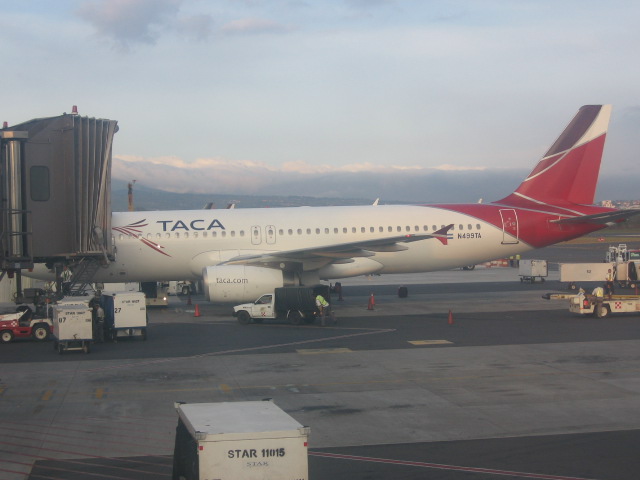
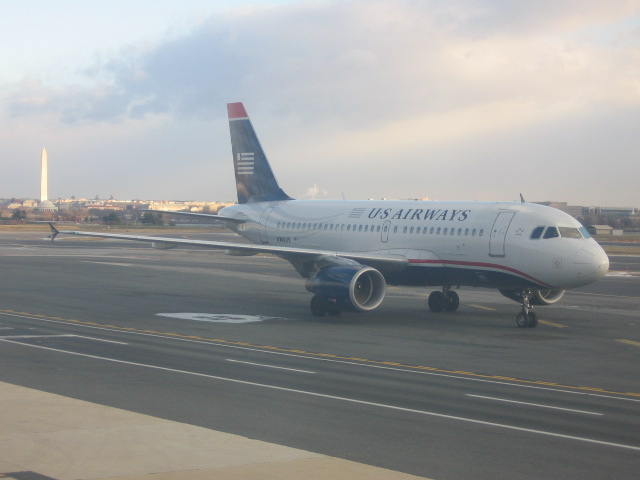
Continental Airlines was fined $120,000 for failing to include fuel surcharges in fares listed on its website. US Airways and TACA, the Central American company, must pay $45,000 and $55,000, respectively, for the same wrongdoing — indicating that fares didn’t include taxes and surcharges, but not disclosing actual amounts.
“Consumers have a right to know the full price they will be paying for airfares,” said Transportation Secretary Ray LaHood. “We established airline price advertising rules to protect the consumer, and will take enforcement action when these rules are violated.”
Starting on Oct. 24, DOT will require airlines to include all taxes, surcharges and government fees in advertised fares — not just using asterisks and fine-print explanations.
However, advertising only half of a ticket price will continue. As I’ve written before, I have nothing against listing one-way fares — when they can be truly bought as such. To this day, American Airlines, Delta, British Airways, Lufthansa and others promote only half of mandatory round-trip purchases on their websites.
In fact, Lufthansa doesn’t even bother to spell out the words, using instead “OW based on RT purchase.” The German carrier doesn’t do those gimmicks on its European sites because of strict European Union rules.
In March, I wrote that United Airlines became the first major U.S. carrier to begin advertising predominantly round-trip fares on its site. Continental has since followed suit. US Airways still uses a mixed method.
One would hope this item will be next on DOT’s agenda.
Related stories:
Proper airfare advertising comes to U.S.
Fare sales often lost in translation
When an airfare sale is not quite a sale
Airlines find new way to overcharge fliers
Continue reading about DOT cracks down on airfare advertising
This should not be news, but it is: U.S. airlines have finally begun advertising some airfares properly, meaning they now show round-trip prices instead of the longtime marketing ploy of “each way based on a required round-trip purchase.” But those are just baby steps, as some taxes and fees are still being excluded.
When I wrote about false fare advertising in 2008, my copy editor at the Washington Times put this headline on my column: “Fare sales often lost in translation.” I compared the deliberately misleading airline practice to the mysterious “Twin Peaks” revelation “The owls are not what they seem.” I also wondered, If a round trip is required, why on earth is only half of the actual fare being advertised?
This month, United Airlines became the first major U.S. carrier to change its policy and advertise predominantly round-trip fares on its website — the only exceptions seem to be last-minute weekend specials. The airline is currently promoting five domestic and four international sales on its site, and they all include round-trip prices and fuel (YQ) surcharges — though some taxes and fees are excluded.
For example, a Business Class fare for a round trip from Los Angeles to Shanghai is shown as $3,513, while the total final price as of today is $3,572, if booked on nonstop flights. A round-trip Business Class fare from Washington to Rome is displayed as $2,411, and the final price is $2,460, if purchased today on nonstop flights. As you see, the differences are not that big.
All other carriers should follow suit. Continental and US Airways display some fares as round trips, but most of their advertising is still being done the old-fashioned way, as is American’s and Delta’s. Southwest, Alaska Airlines and Virgin America show one-way fares but don’t require round-trip purchases.
Although the Department of Transportation has looked into the issue and called on the industry not to deliberately mislead consumers, it has done nothing to stop the controversial practice. The European Union (EU), on the other hand, has been much more proactive on behalf of travelers. That’s why fares in Europe are advertised with the full ticket price.
Some of the European carriers that fly to the United States, such as Spain’s Iberia, are honoring the EU rules globally and displaying actual full prices on their U.S. websites as well. But others, such as British Airways, Air France and Lufthansa, while observing the rules on their home turf, have given in to the pressure from their U.S. competitors and adopted the “one-way based on a round-trip purchase” policy.
In January, all four above-mentioned European airlines offered the same fares from New York to London. The last three advertised $199, while Iberia showed $584, which is what the actual fare was, including all taxes and surcharges. Singapore Airlines, also having the guts to be honest with its customers, promoted a $586 fare from New York to Frankfurt that was truly the final price.
It’s high time the airline mentality of trying to trick customers changed once and for all.
Related stories:
Fare sales often lost in translation
When an airfare sale is not quite a sale
Airlines find new way to overcharge fliers
Continue reading about Proper airfare advertising comes to U.S.