nkralev on September 14th, 2010

Chris Guillebeau has achieved what few others have — just one of hundreds of travel bloggers when he set out to become a writer less than three years ago, his first book made Amazon.com’s Top 100 list as soon as it was published last week. Now he is on an “unconventional book tour” that will take him to all 50 states.

If you’ve read my profile of Guillebeau in the Washington Times, you won’t be surprised by the “unconventional” designation. His blog on “life, work and travel” is called “The Art of Non-Conformity,” and that’s also the book’s title.

“I help people live unconventional lives — to think differently, question assumptions and authority, find out what they are passionate about and overcome gatekeepers,” he told me during a visit to Washington last year. “For me, a large part of challenging authority involves looking for alternatives to the way most people do things.”

The way Guillebeau became a writer was certainly alternative to the standard path, which I took by working as a journalist in the so-called mainstream media for 18 years and writing for established publications like the Financial Times. At 32 — four years my junior — he has succeeded without the help of a reputable newspaper or another gatekeeper. Since early 2008, when he created his blog, he has attracted thousands of readers, and many of them have become dedicated followers — he calls them a small army.

Although he didn’t need anyone else to publish his writings in order to reach his audience directly, his ambition was to write a book, and there are certainly gatekeepers to overcome in that endeavor. But the number of his existing readers and his idea were enough to land him a book agent, who was able to negotiate a publishing contract with the Penguin Group. Incidentally, Penguin is owned by Pearson PLC, the British company that also owns the Financial Times.

In Guillebeau’s words, the central message of the book is: “You don’t have to live your life the way other people expect you to. You can do good things for yourself and make the world a better place at the same time. Here’s how to do it.” This is where you get the book and find out.

The other unconventional aspect of Guillebeau’s book tour is that Penguin didn’t have money to organize a tour, which is a rare luxury these days, so he decided to self-finance it.

You will no doubt notice the graphic similarities between the book’s cover and Guillebeau’s website. They were both created by Reese Spykerman, a very talented American designer currently living in Asia, where I met her last year — of course, Guillebeau had something to do with that encounter.

I had corresponded with Guillebeau by e-mail and written about him in my column as early as 2008, but he didn’t mention his book project until our first phone conversation in early 2009. I called him from Elmendorf Air Force Base in Alaska, during a refueling stop on my way back from Asia with Secretary of State Hillary Clinton.

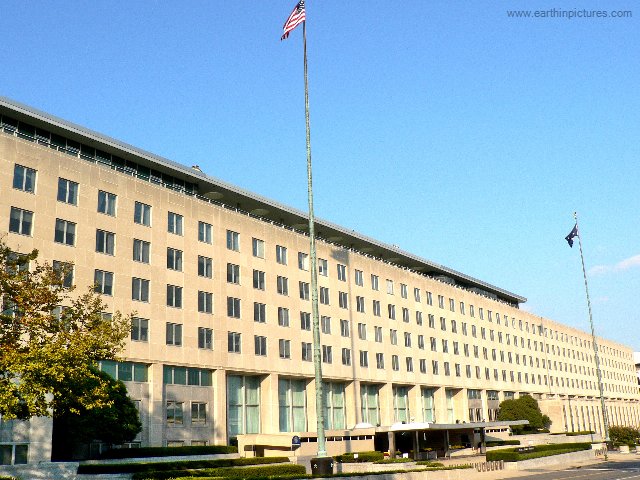
When he came to Washington last fall, I invited him to the State Department and showed him the briefing room and my office — more precisely, my cubicle in the correspondents’ room. Over lunch in the cafeteria, we did the interview on which the Times profile was based.

As you can see from my website, I’ve interviewed many famous people — Sharon Stone, Denzel Washington, Kevin Costner, John Malkovich, Conan O’Brien, Walter Cronkite, Larry King, Colin Powell and Condoleezza Rice, to name a few — but sometimes it’s talking to and writing about real people that gives a journalist more professional satisfaction.

Ironically, now I’m in the position Guillebeau was in two years ago, trying to build a small business — and I find myself learning from his experience. His project was to help people lead unconventional lives, mine is to educate people how to be better travelers. We are both passionate about democratizing travel — making it more affordable, comfortable and enjoyable for more people — so don’t be surprised if we work together in the future.

RETURN TO MAIN COLUMN PAGE

Related stories:

Alternative job pays off for blogger

The ethics of travel blogs

Announcing Kralev International travel advisory business

Time for travel school — you are invited

Educating the flying public

Continue reading about ‘Unconventional book tour’ in 50 states

nkralev on August 12th, 2010

My name was involved in a curious intrigue this week. One of Secretary of State Hillary Clinton’s aides, in an attempt to get back at the Washington Times for a recent series of critical stories about Clinton’s deputy Jacob Lew, leaked to a reporter unpaid bills for trips I took with the secretary last year.

I understand the bills are now being settled, following yesterday’s story on the Foreign Policy magazine’s website. I was the Times’ diplomatic correspondent for nine years, until June.

When reporters travel with the secretary, the State Department charges their respective media for the plane ride and any costs incurred on the ground, such as motorcade vehicles and filing centers. Sometimes, those bills are sent out months after a trip, but every time I received one, I gave it to the appropriate person at the Times, along with the original trip authorization from senior management.

I’m told that four unpaid bills have been sitting in a folder in the accounting office for months. Shortly before I left the paper, I was asked how important it is to pay them quickly, given the Times’ tight finances. I pointed out that the bills are overdue, but that was the last time the subject came up.

The Times has had a new editor since January, and it’s possible the issue was never raised with him. It appears he has now made sure the matter is resolved.

This was certainly a very creative way for the State Department to get its money back. Isn’t the Washington game just precious? The stories the Times has been running about Lew have to do with his financial disclosures from his time at Citigroup, before joining the Obama administration. Since I haven’t worked at the paper for two months, I obviously had nothing to do with those stories — nor did I have a hand in any articles about Lew that may have been written before my departure.

Lew has been deputy secretary of state for management since January 2009, and earlier this summer, President Obama chose him as the next director of the White House Office of Management and Budget — a post he held at the end of the Clinton administration.

Continue reading about My trips with Clinton back in the news

nkralev on July 30th, 2010

The middle of the summer is a good time to review the balance of political appointees vs. career diplomats in ambassadorial posts around the world. Not surprisingly, the familiar 30-percent quota for political appointments of the last several decades remains largely intact.

Actually, for some people, continuing the tradition of awarding presidential campaign contributors with embassies may be surprising, given President Obama’s promise to change the way Washington works during the 2008 election.

However, as I wrote a year ago, reality set in soon after Obama took office. According to a list maintained by the American Foreign Service Association (AFSA), the diplomats’ union, of all ambassadors Obama has nominated so far, about 40 percent are political appointees.

That number, though, is a bit misleading, because almost all political appointees change when a new president moves into the White House — unlike career diplomats, who typically remain in their posts for another year or two. It’s more appropriate to look at all embassies around the world — not just Obama’s nominees — and the AFSA list shows 29.7 percent political appointees out of 185 positions globally. That number is slightly lower than it was during the last years of George W. Bush’s presidency.

Another interesting number is that of the nominated but not-yet-confirmed career diplomats under Obama — there are 40 in each category. In contrast, of 55 political appointees, 52 have been confirmed by the Senate.

This issue is understandably controversial for Foreign Service members, and there was a time last year when the White House was on its way to nominating more than 30 percent political appointees. As I reported then, Secretary of State Hillary Clinton had to interfere.

“Why is ours the only profession where it’s considered acceptable to appoint someone without any experience?” Steven B. Kashkett, AFSA’s acting president, said at the time. “Would you appoint someone to head a hospital without medical experience?”

Continue reading about Political ambassadorships hold at 30%

nkralev on July 23rd, 2010

Secretary of State Hillary Clinton this week accomplished a diplomatic feat that her immediate predecessors tried but failed repeatedly to pull off: visiting South Korea, but skipping Japan and China on the same trip. It may sound immaterial, but defying protocol is a tricky thing in diplomacy, especially in Asia.

For years, I’ve been very amused when the State Department would send us in the traveling press corps a note about the secretary plans to visit just South Korea or just China or just Japan. Every time, I’d smirk and bet that he or she would end up going to all three countries — and I was right. That had become a tradition — the Japanese in particular considered it an affront to be ignored by their staunchest ally in favor of Seoul or Beijing.

In early 2008, Condoleezza Rice had to go to South Korean President Lee Myung-bak’s inauguration, and initially had no intention of stopping in Tokyo or Beijing. But after diplomatic pressure from both capitals, she caved in. I skipped Tokyo on that trip.

Clinton herself fell victim to protocol in May. She had to co-chair the so-called U.S.-China Strategic and Economic Dialogue with Treasury Secretary Timothy Geithner in Beijing, and to drop by the 2010 Shanghai Expo in Shanghai. For months, her aides said that no other stops were planned, but in the end, she went to Japan and South Korea, too.

It seems that this time Clinton successfully defied protocol. It helped that she met with her Japanese and Chinese counterparts at the annual meeting of foreign ministers from the Association of Southeast Asian Nations (ASEAN) in Vietnam. But I have little doubt that, in spite of those meetings, the Japanese and Chinese still lobbied for her to drop by their capitals.

By the way, this ASEAN meeting was the first I’ve missed in years. I always thought attending a high-level summit in Southeast Asia in late July was a misery because of the very hot and humid weather, but DC is much worse these days.

Continue reading about Clinton pulls off diplomatic rarity in Asia

nkralev on July 22nd, 2010

British Prime Minister David Cameron surprised many this week by traveling to Washington for his first official White House visit since taking office on a commercial British Airways flight, instead of taking a dedicated plane, to save money. Now some Americans are wondering if U.S. officials could follow suit.

Having traveled around the world with four U.S. secretaries of state — Hillary Clinton, Condoleezza Rice, Colin Powell and Madeleine Albright — over the last decade, I can see how commercial flying would save the State Department millions of dollars a year. However, it would also guarantee a logistical nightmare.

Most people don’t know that Clinton has been taking commercial flights since she became secretary of state, but that happens only when she goes home to New York from DC. Work-related flights to New York are flown on small Air Force planes.

On foreign trips, the security detail and the staff accompanying the secretary make for a large entourage that would be hard to accommodate on one commercial aircraft in business or first class. Knowing the security requirements, I’m guessing regular passengers would be required to board two hours before takeoff.

More importantly, the secretary often visits more than one country in one day, so trying to accomplish that commercially is practically impossible. Not to mention that nonstop flights don’t exist to many destinations most of the time.

Last year, I wrote two columns detailing Clinton’s first trip as America’s chief diplomat.

Rice used to take a smaller plane than the C-32 — the Air Force version of the Boeing 757 — on quite a few trips. That required most of the staff and press corps to fly commercially, which was fine with me, since I flew much more comfortably and got tons of frequent-flier miles.

Apparently, Cameron didn’t have the limitations mentioned above, and there are plenty of nonstop stop between London and DC. It’s impressive, though, that he flew in business class — not first — and his meetings in DC were arranged around the British Airways schedule, according to the British press. His two immediate predecessors, Gordon Brown and Tony Blair, also flew on a BA plane, but it was chartered and dedicated to them.

Speaking of the State Department and saving money on travel, I’ve witnessed excessive spending of taxpayers dollars for years, but that’s a topic for another column.

Continue reading about British leader flies to DC commercially